

Watch a dog greet its owner after a long day. Notice the octopus that retreats from a tank it clearly associates with discomfort. Observe bees rolling small wooden balls around, apparently for no reason other than what looks suspiciously like play. These moments raise a question that science has circled for decades without quite landing on a firm answer: is there something it actually feels like to be an animal?
Questions around consciousness have long sparked fierce debate, in part because conscious beings might matter morally in a way that unconscious things don’t. That single implication stretches across biology, philosophy, ethics, and law. It’s not an abstract puzzle confined to lecture halls. The way we answer it shapes how billions of animals are treated every day, in farms, labs, aquariums, and homes across the world.
#1 The New York Declaration: A Turning Point in Scientific Thinking
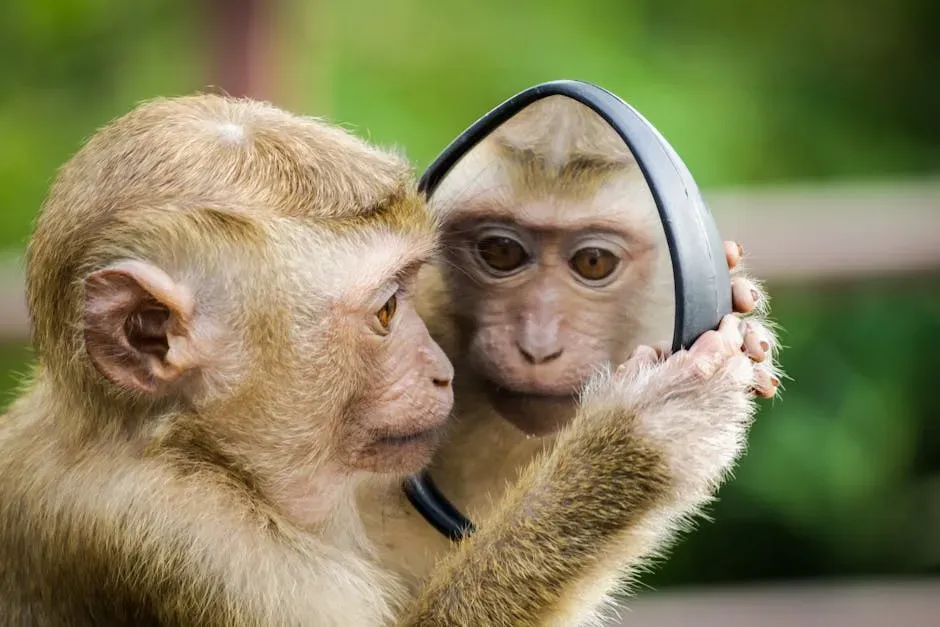
In April 2024, something notable happened at New York University. A group of scientists at a conference in New York proposed the New York Declaration on Animal Consciousness, which was subsequently signed by over 500 scientists and philosophers. The declaration states that consciousness is realistically possible in all vertebrates, including reptiles, amphibians, and fishes, as well as many invertebrates including cephalopods, crustaceans, and insects.
The declaration stops short of arguing that animal consciousness is certain or proven. Instead, it argues that decades of literature now show “strong scientific support” for the idea that mammals and birds are conscious, and the “realistic possibility” of consciousness in creatures from reptiles to octopi, crabs, and insects.
Nearly 40 researchers initially signed the declaration when it was first presented at a conference at New York University, marking a pivotal moment as a flood of research on animal cognition collides with debates over how various species ought to be treated. This was not merely an academic exercise. It was a formal signal that the scientific community’s understanding of the animal mind had genuinely shifted.
#2 What Exactly Is Animal Consciousness, and Why Is It So Hard to Measure?
The question of animal consciousness is sometimes called the distribution question: which animal species share with us humans the enigmatic capability for conscious awareness? It is a philosophical question that stems from what is known as the “other minds problem.”
The American philosopher Thomas Nagel spelled out this point of view in an influential essay titled “What Is it Like to Be a Bat?” He argued that an organism is conscious “if and only if there is something that it is like to be that organism,” and that no matter how much we know about an animal’s brain and behavior, we can never really put ourselves into the mind of the animal and experience their world as they do.
By consciousness, the New York Declaration is referring to sentience, awareness, and the ability to experience positive and negative interactions with the world, such as pain and pleasure. That working definition is deliberately broad. It deliberately avoids demanding the kind of complex self-reflective awareness humans use to write philosophy papers, focusing instead on whether there is any felt experience at all. Scientists argue that in the case of animal feelings, the only escape from relying solely on behavior is to understand the neural basis of feelings and determine the neural computations necessary for them.
#3 Surprising Animals That Are Pushing the Boundaries of What We Know
Bees play by rolling wooden balls, apparently for fun. The cleaner wrasse fish appears to recognize its own visage in an underwater mirror. Octopuses seem to react to anesthetic drugs and will avoid settings where they likely experienced past pain. Taken individually, each of these findings might be explained away. Taken together, they start to form something harder to dismiss.
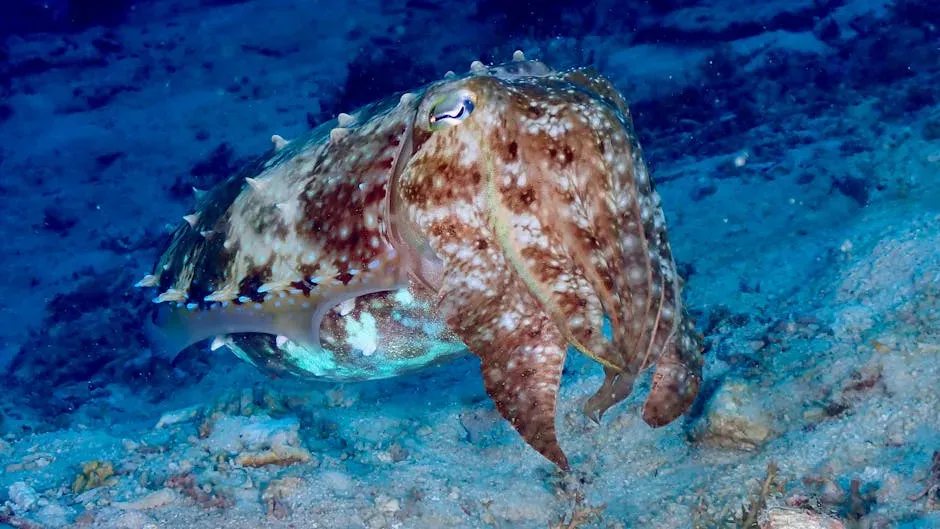
Recent studies have also revealed that garter snakes recognize their own scent, indicating a degree of self-awareness, and that cuttlefish can remember details of specific past events, indicating episodic-like memory. Cuttlefish remembering past events is a genuinely striking finding. Episodic-like memory was once considered a hallmark of more complex minds.
A 2025 review applied a five-dimensional framework of consciousness to corvids, examining sensory, evaluative, temporal, and self-related aspects of their experience. Drawing on behavioral and neurological evidence, the authors argue that corvids exhibit sophisticated cognitive capacities across all dimensions, including high perceptual acuity, emotional evaluation, episodic-like memory, future planning, and possible forms of self-awareness and theory of mind. Crows planning for the future. Bees at play. The picture of the animal mind keeps expanding in directions most scientists did not anticipate even a generation ago.
#4 Where the Science Gets Complicated: The Case for Caution
Some findings are suggestive, but they are far from definitive. Making a public declaration that there is “strong evidence” of phenomenal consciousness in animals suggests we can already reliably and unequivocally measure it, which is not yet the case. This is a legitimate concern that deserves space in the conversation.
At the NYU conference itself, one scientist in the front row told a presenter that he worried the declaration would be perceived as irresponsibly overstating the evidence. That kind of internal scientific friction is actually healthy. It is how disciplines avoid drifting into advocacy dressed up as research.
Evidence of mirror self-recognition in non-primates remains controversial, typically due to the difficulties in interpreting performance in the mark test by animals whose morphologies constrain clear attempts to remove the mark, or methodological issues with the marking procedure and design. The mirror test is often cited as a benchmark of self-awareness, but it may simply not translate well across species with radically different bodies and senses. While not claiming definitive proof of consciousness, recent reviews support the growing consensus that certain animals are plausible sentient beings and propose they serve as model groups for the comparative study of non-mammalian consciousness.
#5 Why This Question Has Real-World Consequences

Expanding the sphere of consciousness means expanding our ethical horizons. Even if we can’t be sure something is conscious, we might err on the side of caution by assuming it is, which philosopher Jonathan Birch calls the precautionary principle for sentience. That principle has practical weight. It suggests that uncertainty itself is not a reason to do nothing.
The New York Declaration asserts that “when there is a realistic possibility of conscious experience in an animal, it is irresponsible to ignore that possibility in decisions affecting that animal.” That framing shifts the moral burden. It is no longer on those who want to protect animals to prove consciousness beyond doubt. It is on those who would dismiss it to make an equally solid case for doing so.
A team of researchers has also outlined a new approach for better understanding animal consciousness, describing a “marker method” that scientists can use to assess it. The method involves identifying behavioral and anatomical features associated with conscious processing in humans and searching for similar properties in nonhumans. This kind of methodological progress matters enormously. Without better tools, the debate risks becoming circular. With them, it might finally move forward.
Where Does This Leave Us?
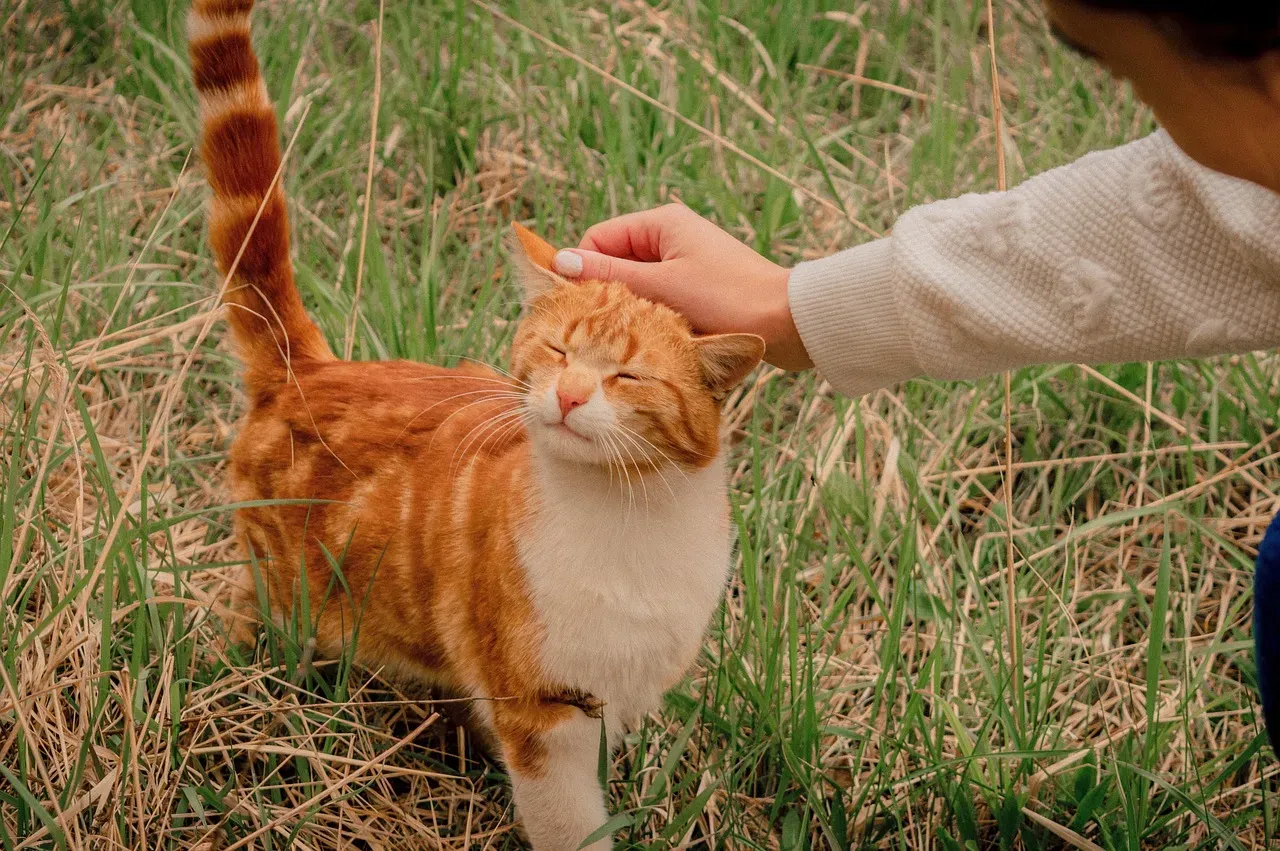
Science rarely delivers clean endings, and the question of animal consciousness is no exception. The Cambridge Declaration on Consciousness in 2012 concluded that “humans are not unique in possessing the neurological substrates that generate consciousness,” and the flourish of research in animal cognition in the ensuing decade has yielded remarkable findings of conscious activity, often in previously overlooked species.
The empirical evidence indicates at least a realistic possibility of conscious experience in all vertebrates and many invertebrates, and the growing body of research suggests that scientists may have overestimated the degree of neural complexity required for consciousness. That single sentence quietly rewrites a very old assumption about what kinds of minds the living world is allowed to contain.
Perhaps the most honest position we can hold right now is one of informed humility. The evidence is pointing somewhere. It is pointing toward a world that is considerably more alive with experience than we once assumed. Whether a lobster genuinely feels pain, whether a bee has anything resembling joy, whether a crow can worry about tomorrow – these are not just philosophical puzzles. They are questions that, depending on how we answer them, carry the weight of moral responsibility. And that, ultimately, is what makes the science of animal consciousness so difficult to look away from.

- 10 Ways to Create a Wildlife-Friendly Backyard Habitat - July 16, 2026
- Which Zodiac Signs Feel the Deepest Connection to Big Cats - July 16, 2026
- 10 Most Dangerous Hikes in The US - July 16, 2026