

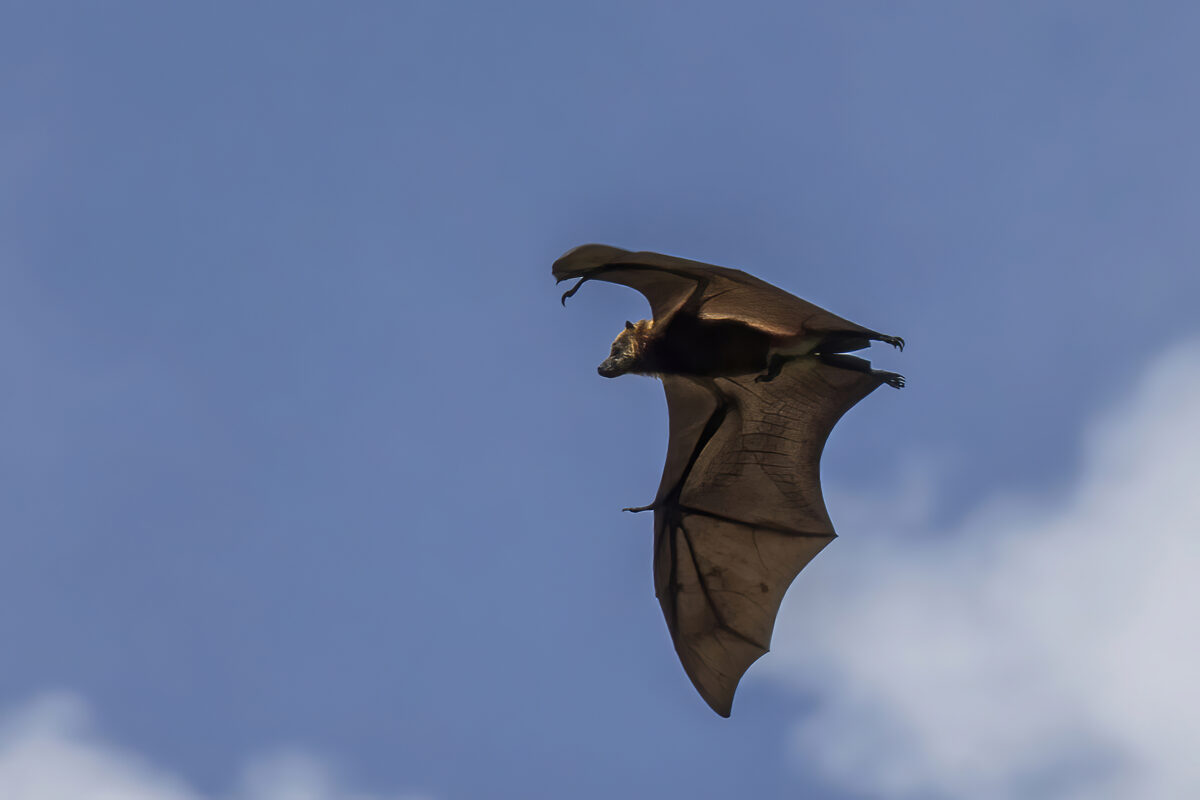
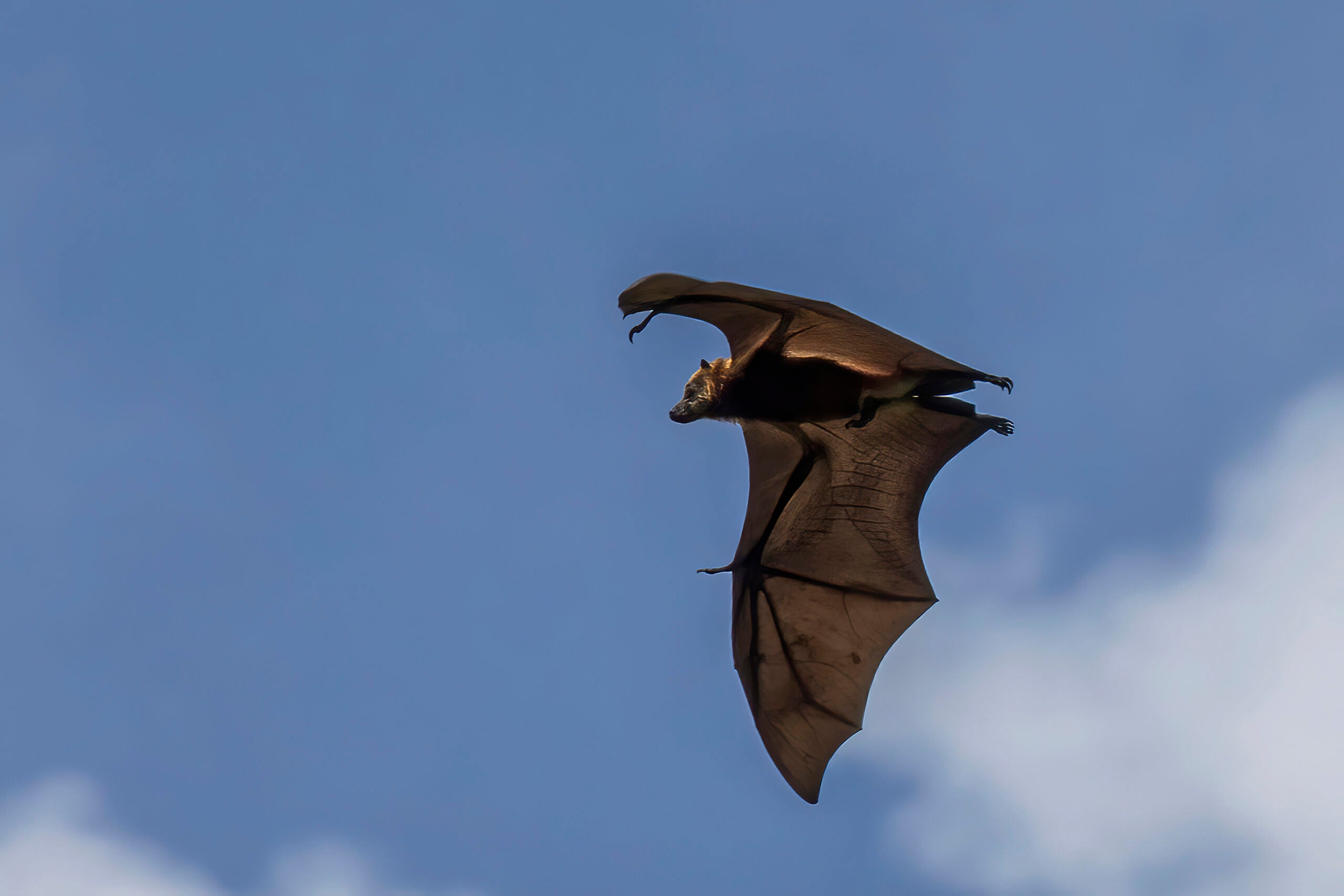
Unique Foragers Amid Growing Perils (Image Credits: Upload.wikimedia.org)
Eastern Australia witnesses nightly spectacles as massive colonies of flying foxes, also known as fruit bats, sweep across the landscape with wingspans reaching one meter. These creatures transport pollen and seeds over vast distances, playing a pivotal role in regenerating eucalypt forests that underpin the nation’s timber sector. Researchers unveiled the first economic assessment of these services in a study published last month, underscoring the bats’ contributions amid mounting environmental pressures.[1][2]
Vast Reach of the ‘Bat Ripple’
Scientists mapped the foraging influence of flying foxes using data from 1,209 roosts across continental Australia, spanning four mainland species. They termed this footprint the “Bat Ripple,” estimating it covered between 11.6 million and 41.4 million hectares – comparable in scale to entire countries.[1] This area included forests, plantations, and restoration zones, highlighting the bats’ broad ecological sway.
The grey-headed flying fox, Pteropus poliocephalus, emerged as a focal point due to extensive monitoring. From 465 roosts, these bats reached up to 246,573 square kilometers at their maximum foraging range, facilitating the growth of a median 91.6 million new trees each year. Such dispersal and pollination efforts connected fragmented habitats, bolstering forest resilience.
Monetary Might in Pollination Services
The study delivered precise figures on economic benefits, targeting the eucalypt timber industry. Pollination by grey-headed flying foxes alone generated a median value of AUD $611 million annually, with a 90% uncertainty interval spanning AUD $271 million to $955 million. These conservative estimates stemmed from Monte Carlo simulations incorporating roost data, foraging distances, and timber productivity metrics.[1]
Key assumptions included a pollination dependence ratio of 58% for eucalypts and per-hectare timber values. Sensitivity tests revealed robustness: halving the dependence ratio dropped the median to $303 million, while doubling it raised it to $918 million. Author Alexander Braczkowski noted to Mongabay that these pollination services “may be responsible for generating between AUD $271 million and $955 million annually for the Australian timber industry.”[2]
| Scenario | Median Value (AUD million/year) | 90% Uncertainty Interval |
|---|---|---|
| Base Case | 611 | 271–955 |
| 50% Lower Dependence | 303 | 0–649 |
| 50% Higher Dependence | 918 | 578–1,160 |
Unique Foragers Amid Growing Perils
Flying foxes outpaced other pollinators with nightly distances up to 50 kilometers, far exceeding birds like the topknot pigeon or regent honeyeater. First author Alfredo Ortega González emphasized, “There is no bird that can move the distance, on average, that a flying fox can move in a night.”[2] Their high-canopy access and seed loads from figs amplified tree recruitment, with models projecting 20.4 million to 378.2 million trees yearly across ranges.
Populations faced severe declines, however. At least 34 heat stress events struck eastern roosts since 1994, exacerbated by wildfires. The spectacled flying fox teetered at a “tipping point,” while over 80% losses hit some colonies in recent extremes. Professor Justin Welbergen, unaffiliated with the study, described impacts: “A single hot afternoon can result in mortality on a regional scale and in biblical proportions, with tens of thousands of dead flying foxes.”[2][3]
- Climate-driven heatwaves caused mass die-offs.
- Historical culls treated bats as pests, including napalm use.
- Deforestation shrank foraging habitats.
- Four species monitored: grey-headed, black-headed, little red, spectacled.
- CSIRO data (2012–2022) tracked 414,230 individuals.
Shifting Perceptions for Conservation
Once vilified as nuisances – blamed for noise, smells, and even pandemics – flying foxes now stood revealed as keystone species. The study excluded values from seed dispersal, nutrient cycling, or carbon storage, where Australia’s forests hold 10.5 billion tonnes. Ortega González urged prioritization: “They are really important, much more important than the general public can imagine.”[2]
Researchers called for policy shifts to protect roosts and corridors. Enhanced conservation could safeguard timber yields, biodiversity, and ecosystem stability. The findings aligned with global precedents, like Mexican bats aiding tequila production.
- Flying foxes’ “Bat Ripple” spans up to 41.4 million hectares, dwarfing other dispersers.
- Grey-headed species alone may add $271–955 million yearly to timber via pollination.
- Urgent threats from heat and fire demand immediate protection measures.
As Australia grapples with climate challenges, recognizing flying foxes’ worth offers a pathway to resilient forests and economies. Their decline risks unraveling these benefits, from tree regeneration to industry prosperity. What do you think about prioritizing these bats? Tell us in the comments.

- Urban Coyotes Show Remarkable Adaptability, Learning to Thrive in City Environments - July 22, 2026
- Beavers Are Nature’s Engineers, Creating Vital Habitats for Other Wildlife Species - July 21, 2026
- The Recovery of the California Condor Offers Hope for Other Critically Endangered Birds - July 21, 2026