

A Breakthrough in Evolutionary Simulations (Image Credits: Unsplash)
Animals facing rapid environmental shifts, such as those driven by climate change, often rely on behavioral adjustments to survive. These changes – shifting diets, habitats, or activity patterns – can buffer the immediate pressures of maladaptation. A recent computational model developed by researchers illuminates how this behavioral flexibility influences long-term evolutionary trajectories, revealing patterns that challenge traditional views on adaptation speed and species diversity.
A Breakthrough in Evolutionary Simulations
Carlos A. Botero, an associate professor in the Department of Integrative Biology at The University of Texas at Austin, created a novel model to explore these dynamics.[1][2] The simulation tracked populations of thousands of individuals across hundreds of generations, focusing on the evolution of a single physical trait, such as the thickness of thermal insulation. Unlike prior approaches that cataloged specific behaviors, this model treated behavioral flexibility as a general capacity – a meta-trait that modulates selective pressures.
Environmental changes rendered initial traits suboptimal, prompting behavioral tweaks to mitigate fitness costs. The setup allowed researchers to predict adaptation rates without detailing every possible response. Botero published the findings in Nature Communications on March 13, 2026.[3]
High Flexibility Leads to Evolutionary Stasis
Highly flexible lineages exhibited slower rates of bodily evolution. Behavioral adjustments effectively neutralized maladaptation, reducing the urgency for physiological changes. As Botero noted, “Evolution of the body is slow in flexible lineages not because it is more difficult but rather because it is not really needed. For these species, behavioral adjustments take the sting out of maladaptation so there is no pressure to change.”[1]
This buffering preserved genetic variation within populations and enhanced short-term persistence. Over limited timescales or in constrained niches, such stasis prevailed. The model demonstrated that flexibility acted as a shield, decoupling immediate survival from rapid trait shifts.
The Goldilocks Zone Sparks Rapid Diversification
Moderately flexible species told a different story. These lineages balanced buffering with ongoing selection, enabling faster evolution when ecological opportunities arose. Botero explained, “Intermediate behavioral flexibility – not too high and not too low – enables individuals to explore new habitats and tolerate a reasonable amount of environmental change without entirely preventing the need to adapt their bodies as well.”[1]
In simulations with abundant niches, moderate plasticity produced the most new forms and species. This “Goldilocks” pattern highlighted optimal buffering: enough to survive suboptimal conditions, but not so much as to halt optimizing selection. Low-flexibility groups evolved traits quickly but risked extinction without exploration capacity.[2]
Behavioral Shifts in the Wild
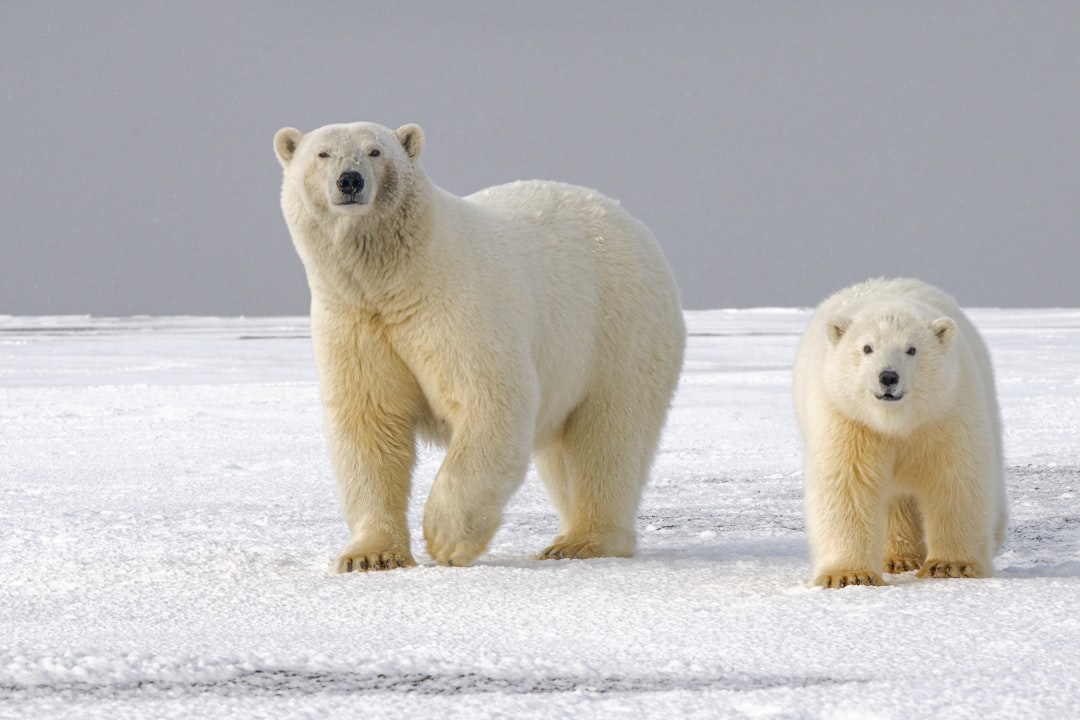
Real animals illustrate these principles. California marmots and ground squirrels have moved to wetter vegetation and steeper slopes to escape rising heat. Polar bears, confronting shrinking sea ice, now spend more time onshore and incorporate bird eggs and reindeer into their diets.
Lake trout in Ontario sought cooler depths and switched to smaller prey as surface waters warmed. These adjustments mirror the model’s flexible capacity, buying time for potential evolutionary responses. Such examples underscore behavioral plasticity’s prevalence across taxa.
| Flexibility Level | Evolutionary Rate (Body Traits) | Speciation Potential |
|---|---|---|
| High | Slow | Low to Moderate |
| Moderate | Fastest (with opportunities) | High |
| Low | Fast | Low |
Rethinking Risks in a Changing World
The model urges a reassessment of conservation strategies. Slow evolutionary rates no longer signal inevitable vulnerability; flexibility can mediate risks. This perspective aids predictions for climate-impacted species, emphasizing behavioral profiles over trait speeds alone.[4]
Botero’s work bridges short-term ecology and long-term evolution, clarifying how quick fixes shape enduring paths. It invites broader scrutiny of plasticity’s role across lineages.
Key Takeaways
- High behavioral flexibility slows physical evolution by buffering selection.
- Moderate flexibility drives the fastest diversification in expansive environments.
- These patterns challenge assumptions linking slow evolution to high extinction risk.
Behavioral flexibility emerges not just as a survival tactic, but as a pivotal evolutionary architect. As climates shift faster, understanding this balance could prove vital for safeguarding biodiversity. What implications do you see for endangered species? Share your thoughts in the comments.

- Urban Coyotes Show Remarkable Adaptability, Learning to Thrive in City Environments - July 22, 2026
- Beavers Are Nature’s Engineers, Creating Vital Habitats for Other Wildlife Species - July 21, 2026
- The Recovery of the California Condor Offers Hope for Other Critically Endangered Birds - July 21, 2026