

You probably think you know what a bald eagle sounds like. Picture a massive bird soaring across a bright sky, wings spread wide, and then imagine that piercing screech you’ve heard in every movie featuring America’s national symbol. Here’s the thing, though. That sound is a complete lie.
The majestic screech you’re familiar with actually belongs to the red-tailed hawk. Despite being one of the most iconic and easily recognized birds in the world, not much is known about how bald eagles communicate. Let’s be real, if you heard the actual voice of a bald eagle without knowing what it was, you’d probably think it came from a gull having a bad day. The reality sounds kind of like a seagull with laryngitis, and researchers are just starting to unravel the complex meanings behind these unexpected vocalizations. What we’re discovering is that these birds possess a communication system far more sophisticated than anyone imagined, hidden beneath chirps and chatters that seem almost laughably unimpressive for such a powerful creature.
The Hollywood Deception That Fooled a Nation
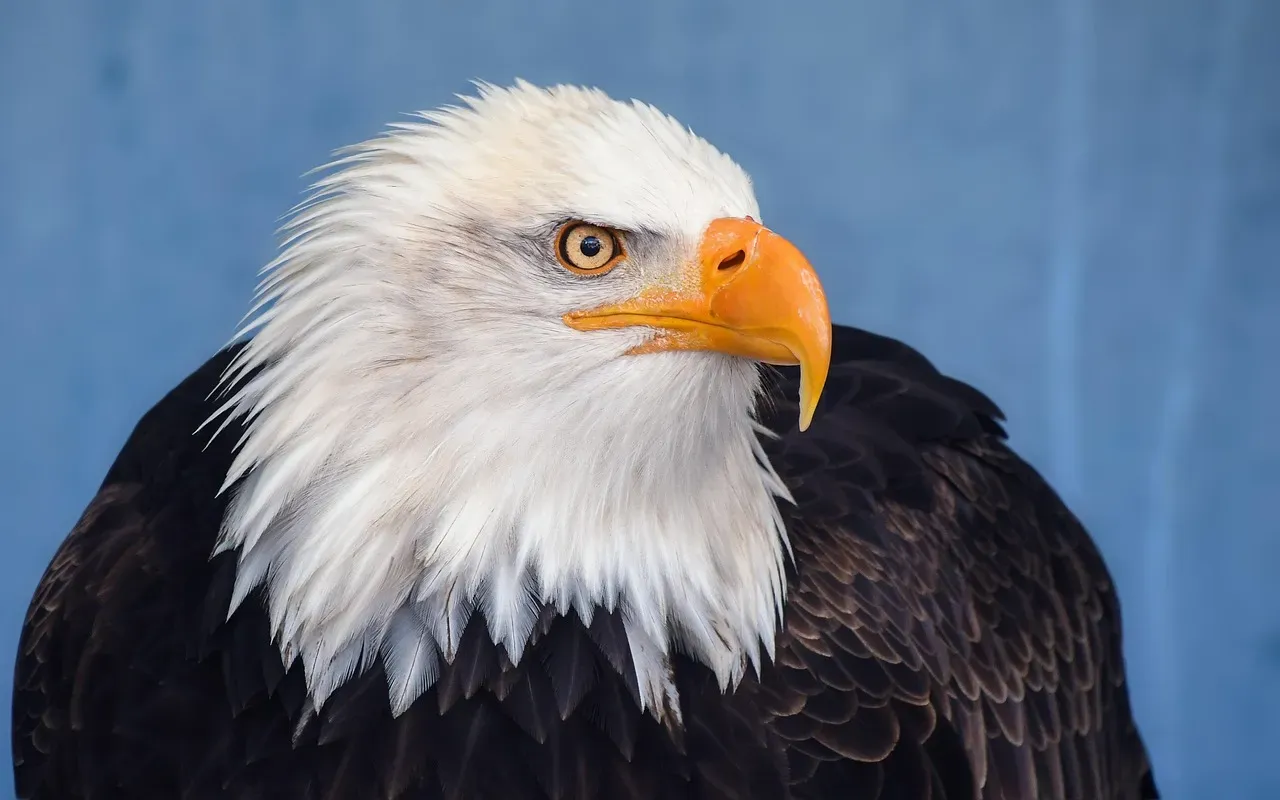
Let’s start with the elephant in the room. The public’s misunderstanding of the Bald Eagle’s sound stems almost entirely from decades of cinematic misrepresentation, with Hollywood sound editors seeking to match the eagle’s visual majesty with an equally dramatic sound. Filmmakers decided long ago that the actual voice of a bald eagle just wasn’t cutting it for the big screen.
The piercing, raspy scream commonly heard in films, television shows, and commercials is, in fact, the genuine call of the Red-tailed Hawk. It’s hard to say for sure, but this might be one of the most successful audio frauds in entertainment history. The dubbing is rampant in TV and movies, to the point where even Beyoncé’s album features the wrong bird sound.
Think about it. We’ve been conditioned to associate power and freedom with a sound that doesn’t even belong to the bird we’re looking at. This sound was deemed more suitable for conveying the power and awe that filmmakers wished to project onto the eagle, creating an auditory expectation that reality can never match. I think it says something fascinating about human psychology that we needed to manufacture majesty where actual majesty already existed.
What Bald Eagles Actually Sound Like
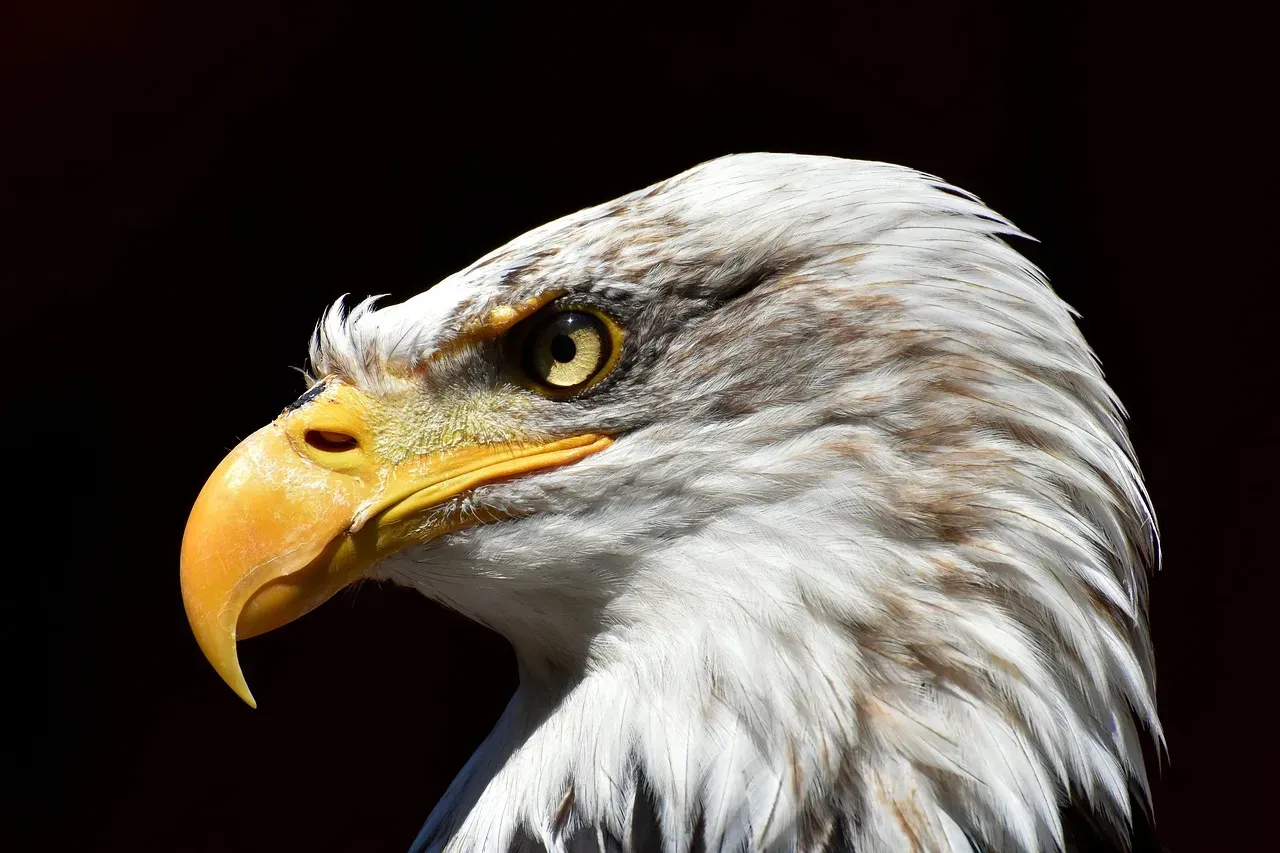
For such a powerful bird, the Bald Eagle emits surprisingly weak-sounding calls – usually a series of high-pitched whistling or piping notes. The go-to sound is called a chatter. Many may compare this sound to a laugh or snicker, which honestly doesn’t inspire much fear or respect when you first hear it.
Adult eagles primarily use two main types of calls: the peal and the chatter. The peal is a high-pitched, drawn-out sound, often written phonetically as a series of kwik-kwik-kwik-kee-kee-kee notes that sometimes resemble the cry of a large gull, typically used when the eagle is in flight or engaging in long-distance communication. The chatter is different, though equally unimpressive to untrained ears.
Its call is compared to a snickering laugh and consists of seven or eight notes sounded quickly and haltingly in a way that sounds very labored, written to sound like ki-ki-ki-ki-ki-ki-ker. I know it sounds crazy, but this labored, almost choking sound is what comes from one of nature’s most fearsome predators. The disconnect between appearance and sound couldn’t be more dramatic.
The Mystery of What They’re Actually Saying
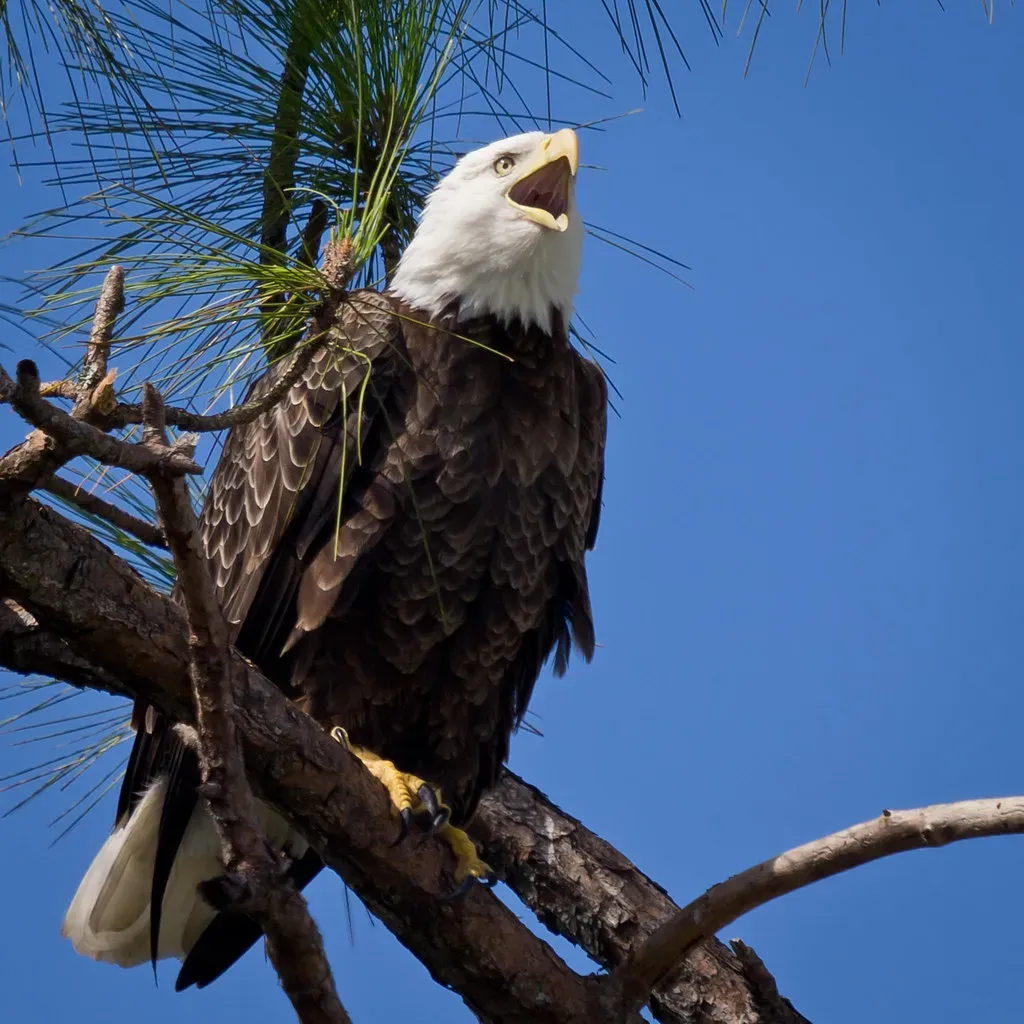
Here’s where things get really interesting. Despite being one of the most prevalent forms of adult bald eagle calls, researchers aren’t sure what the meaning of the chatter call is, though their meanings are often left unknown. Scientists can record these sounds all day long, yet the actual message being transmitted remains largely mysterious.
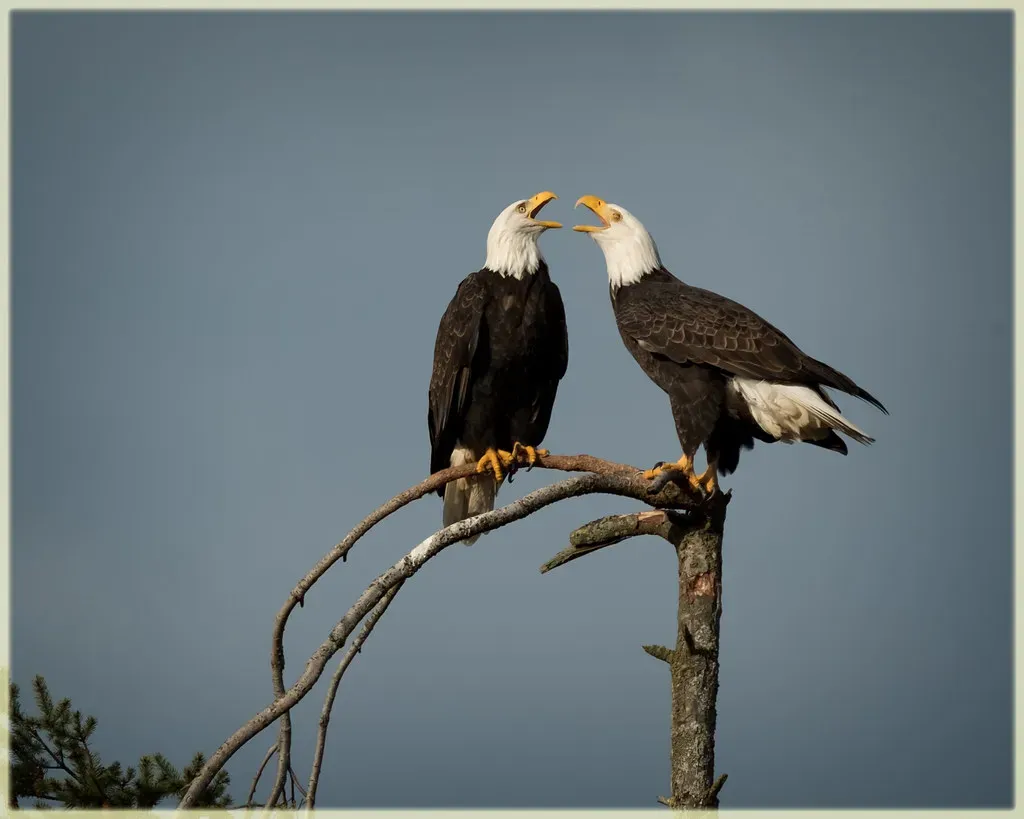
Bald eagle vocalizations can signify nest defense, mate attraction, food solicitation, and even alarm at potential threats. The problem is figuring out which call means what in which context. Vocalizations are particularly important for maintaining territory and communicating with a mate, with communication between bonded pairs involving call-and-response vocalizations, sometimes referred to as duets, which help to reinforce their relationship and coordinate activities like nest exchange.
One observer noted something remarkable. An eagle pulled a fish onto a dock and started to call loudly, and within a few minutes it was joined by three or four other eagles, suggesting there must be a specific call indicating food is on the table. Yet this potential dinner bell call hasn’t been formally documented or studied. We’re essentially eavesdropping on conversations we don’t fully understand.
There is no direct evidence of vocal learning in bald eagles, meaning researchers aren’t even certain whether baby eagles learn their calls from their parents or if the sounds are purely instinctual. The language is there, complex and functional, yet we’re just beginning to crack the code.
The Female’s Unique Mating Call
The female may repeat a single, soft, high-pitched note that has been called unlike any other calls in nature, apparently signaling her readiness for copulation. This is one of the few bald eagle vocalizations that scientists feel confident about interpreting. This sound appears rarely in the species, only when the female is prepared to begin the breeding process.
What makes this call even more fascinating is that it serves a dual purpose in the animal kingdom. In many raptor species, this exact vocalization is co-opted by the female early on in the breeding season to beg for food from her partner. She essentially mimics the sound of a baby bird to test whether her potential mate will be a good provider.
The female’s mating call is thought to be a unique and distinctive sound in nature, described as wholly unique. Males don’t make this particular sound at all, making it one of the clearest examples of gender-specific communication in the species. It’s a rare moment of clarity in an otherwise confusing acoustic landscape.
Baby Eagles and Their Developing Vocabulary
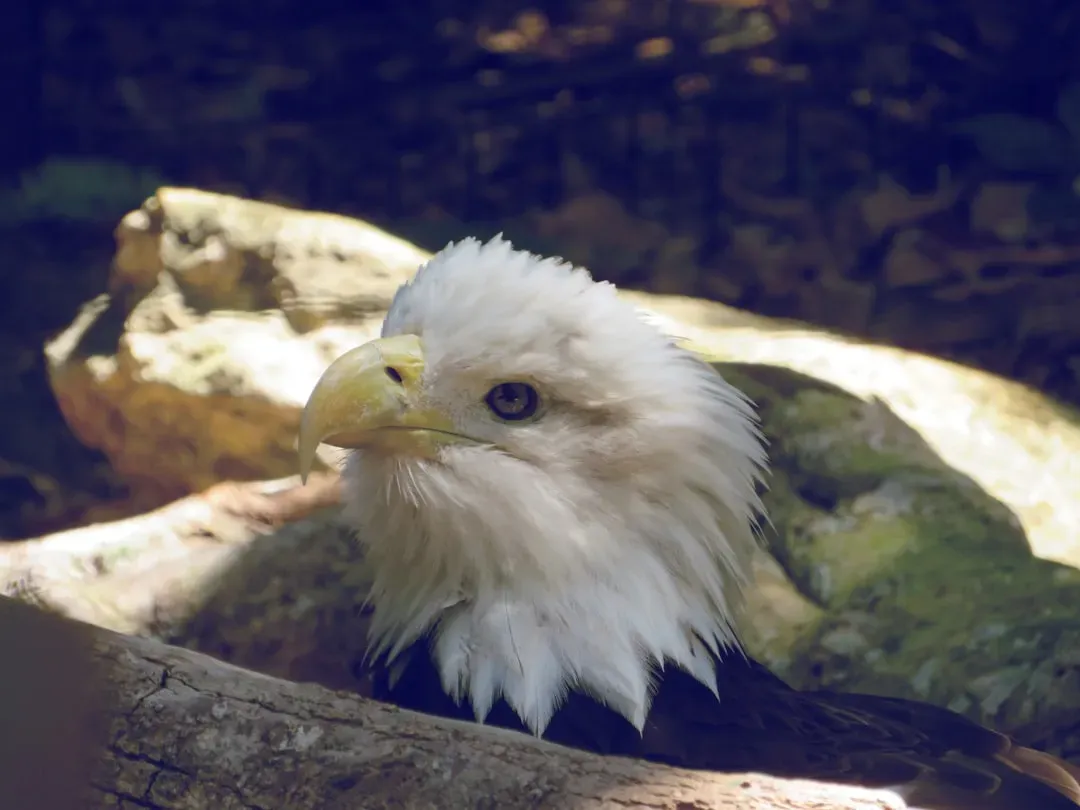
After hatching, the vocalizations produced by the Bald Eagle is a single toned peep, with little change in frequency, used early in life to communicate with adults if the bird is frightened or feels in danger. Baby birds start simple, basically. Cheeps or chirps are the main form of communication between young bald eagles and their parents, serving as a way to beg for food, an alarm call, and communication with adults.
The transformation happens quickly, though. Sounds develop in volume and complexity, so that by day 30, the call has some of the basic characteristics of adult vocalizations. Think about that. Within a month, these chicks go from simple peeps to multi-note calls that already resemble what adults produce.
After four weeks, the young Bald Eagles also develop wail and Peal calls, with the peal call often given in response to humans approaching the Bald Eagles as a high-pitched cry that has three to five notes that sound like a gull followed by six or seven rapid notes. The juvenile peal serves as an alarm system, warning everyone nearby that danger is approaching. The juvenile’s peal call becomes its primary way of expressing that a specific threat is nearby, showing that even young eagles understand the importance of vocal communication for survival.
Conclusion
The secret language of bald eagles remains largely undeciphered, a reminder that even our most iconic species can surprise us. Despite being one of the most iconic and easily recognized birds in the world, not much is known about how bald eagles communicate, with their meanings often left unknown. We’ve spent decades listening to the wrong sound in movies while the real voices of these magnificent birds went largely ignored and unstudied.
What we do know suggests a communication system of remarkable complexity, with different calls for mating, territorial defense, parent-child interaction, and possibly even coordinating group activities like communal feeding. The fact that so much remains mysterious in 2026 speaks to how much we’ve underestimated these creatures. Their weak-sounding chirps and chatters may lack Hollywood drama, yet they carry information we’re only beginning to understand. What other conversations are happening right above our heads, in languages we haven’t learned to hear? What do you think we’ll discover next about these remarkable birds?

- What It Means When Robins Stay Through an Unusually Cold Winter - August 5, 2026
- The Strange Fish Turning Up in Lakes Across the Midwest - August 5, 2026
- According to Irish Folklore, Ravens Were Guardians of Forgotten Wisdom - August 5, 2026