

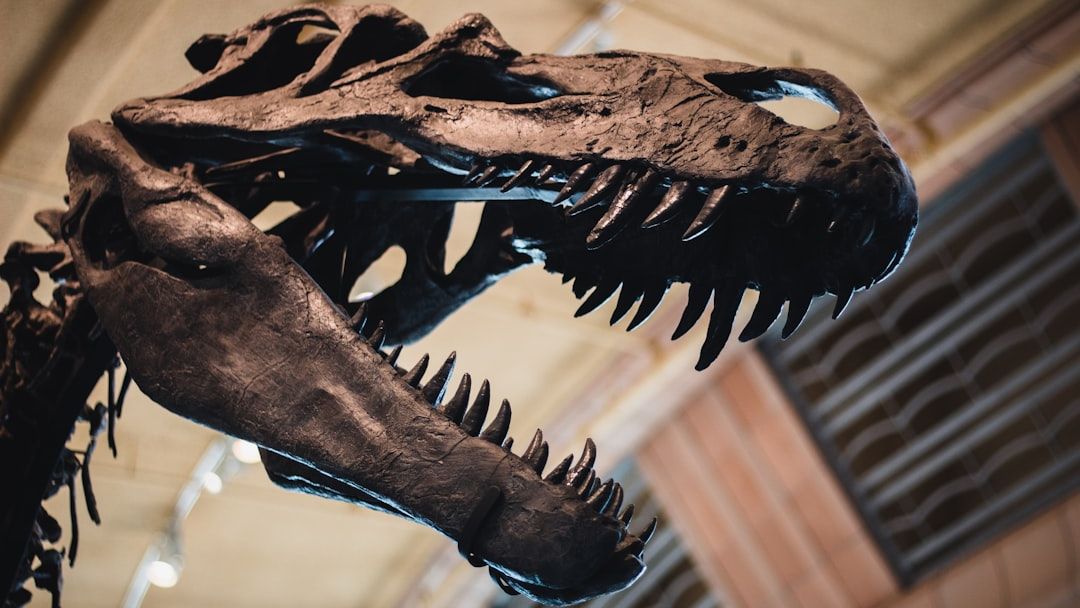
Advancements in imaging technology have brought paleontologists closer to understanding how dinosaurs healed from injuries, even after 66 million years. Researchers examining a massive Tyrannosaurus rex specimen known as Scotty uncovered a network of ancient blood vessels within a fractured rib. These structures, preserved through an extraordinary process, offer a rare glimpse into the physiology of these long-extinct giants. The find underscores how modern tools are revealing details once thought lost forever.
A Close Call for Scotty
The Tyrannosaurus rex dubbed Scotty ranks among the largest and most complete T. rex skeletons ever studied. During its life, the dinosaur suffered a significant injury to one of its ribs, which showed clear signs of beginning to heal before its death around 66 million years ago. This healing process left behind traces that endured through eons of fossilization. Scientists focused on this rib because such injuries provide a window into how dinosaurs responded to trauma.
What made this specimen particularly promising was its size and preservation state. The rib’s dense bone had protected delicate internal features from complete degradation. Initial examinations hinted at unusual structures inside, prompting a deeper investigation. This discovery emerged from routine analysis but quickly escalated due to its potential implications.
High-Tech Peering into the Past
To explore the fossil without causing damage, the team turned to synchrotron X-rays generated by particle accelerators. These powerful beams allow for non-destructive imaging at a microscopic level, far surpassing traditional methods. The technique illuminated a web of vessels within the bone, structures enriched with iron that had survived mineralization. Such precision revealed details invisible to standard scans.
Particle accelerators, typically associated with physics research, proved ideal for this paleontological challenge. The X-rays penetrated the fossil’s matrix, mapping out the vessels’ intricate paths. This approach confirmed the presence of soft-tissue remnants, a rarity in Mesozoic-era remains. The process demanded collaboration across disciplines, blending expertise in paleontology and advanced physics.
Iron-Rich Clues to Healing Mechanisms
The preserved vessels appeared as iron-rich networks, likely remnants of blood flow during the rib’s repair. Iron from hemoglobin concentrated in these areas as the dinosaur’s body mobilized resources to mend the break. This preservation occurred as organic material mineralized, replacing soft tissues with durable compounds over millions of years. The structures’ complexity suggested active vascular activity right up to the injury’s early recovery phase.
While dinosaur DNA remains elusive, these findings bridge a gap between skeletal evidence and physiological processes. The iron signatures point to blood vessels functioning much like those in modern animals, challenging assumptions about fossilization limits. Researchers noted the vessels’ role in nutrient delivery during healing, mirroring patterns seen in birds and reptiles today. Still, questions persist about the full extent of soft-tissue survival in other fossils.
Reshaping Views on Dinosaur Biology
This breakthrough prompts a reevaluation of how dinosaurs processed injuries and maintained their massive bodies. Previous studies relied on bone growth rings or healed fractures, but direct vascular evidence adds depth to those interpretations. It suggests that certain conditions can preserve delicate features longer than expected, opening doors to similar discoveries elsewhere. Paleontologists now anticipate applying synchrotron imaging to other specimens.
Though the vessels fall short of yielding genetic material, they humanize these apex predators by revealing shared biological traits. The research highlights fossilization’s selective nature, where iron-rich elements endure while others vanish. Future work may target additional T. rex bones or related species for comparable traces.
What matters now: Synchrotron scans could become standard for high-value fossils, potentially uncovering more preserved soft tissues and refining models of dinosaur health and resilience.
Scotty’s rib stands as a testament to the enduring power of scientific innovation. By illuminating vessels from a predator’s final days, it reminds us that the dinosaur record holds more surprises. These insights, grounded in careful analysis, steadily build a richer picture of life in the Cretaceous, one fossil at a time.

- Urban Coyotes Show Remarkable Adaptability, Learning to Thrive in City Environments - July 22, 2026
- Beavers Are Nature’s Engineers, Creating Vital Habitats for Other Wildlife Species - July 21, 2026
- The Recovery of the California Condor Offers Hope for Other Critically Endangered Birds - July 21, 2026