


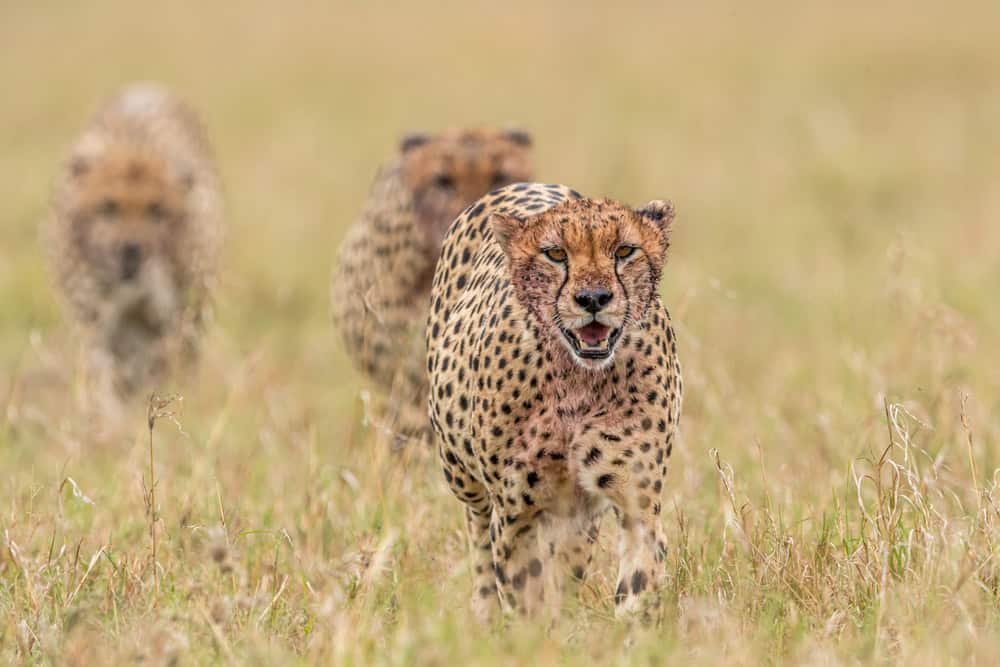
Cheetahs, renowned as the planet’s fastest land animals, have captivated the imagination of wildlife enthusiasts and researchers alike. These sleek, graceful felids are specialized predators that primarily inhabit the grasslands and savannas of Africa, with a small population in Iran. Apart from their speed, which can reach up to 75 mph, another intriguing aspect of cheetah biology is their unconventional mating strategy. Understanding these strategies not only provides insight into their survival and reproductive success in the wild but also informs conservation efforts.
Cheetah Social Structure: A Unique Arrangement
🔥 Would you like to save this?
We'll email this post to you, so you can come back to it later!
Unlike many big cats that are solitary by nature, cheetahs exhibit a unique social structure. Males are known to form “coalitions,” often with siblings, which strengthen their ability to control and defend territories. These coalitions typically consist of 2 to 4 males. On the other hand, females lead a solitary life except during mating. A female cheetah’s territory usually overlaps with several male territories, setting the stage for their distinctive mating dynamics.
Mating Strategies: A Competitive Field

🔥 Would you like to save this?
We'll email this post to you, so you can come back to it later!
Cheetahs employ a polygynous mating strategy, where males mate with multiple females and females can mate with multiple males. This results in a complex web of reproductive relationships. Females are known to advertise their estrus state through scent marking and vocalizations, which attracts males from various coalitions. This competitive environment emphasizes the importance of physical and territorial dominance among male coalitions.
Female Choice and Genetic Diversity

🔥 Would you like to save this?
We'll email this post to you, so you can come back to it later!
A notable aspect of cheetah reproduction is the female’s polyandrous behavior, where she may mate with multiple males over a short period. This behavior serves to enhance genetic diversity within her offspring. Genetic diversity is crucial for species survival, as it improves overall population resilience to diseases and environmental changes. In cheetahs, with their historically low genetic variability due to a past population bottleneck, such reproductive strategies are especially valuable.
Coalition Dynamics and Implications for Breeding Success

🔥 Would you like to save this?
We'll email this post to you, so you can come back to it later!
The coalitions formed by male cheetahs are not merely social alliances but play a critical role in reproductive success. By forming coalitions, males increase their chances of dominating mating territories, thus enhancing their opportunities to reproduce. A strong coalition can effectively exclude rival males, ensuring that its members have priority access to receptive females in their territory.
Challenges in Mating: The Role of Territory

🔥 Would you like to save this?
We'll email this post to you, so you can come back to it later!
The outcome of cheetah mating strategies is heavily influenced by territorial dynamics. Males must patrol and defend their territories aggressively against rival coalitions, often leading to intense competition. However, the vast territories and natural predation risks in the wild can challenge these efforts. Predators like lions and hyenas also pose risks both to juvenile cheetahs and adult hunters, indirectly affecting successful mate guarding and rearing of offspring.
Conservation Implications

🔥 Would you like to save this?
We'll email this post to you, so you can come back to it later!
Understanding the mating behaviors and social structures of cheetahs is critical for formulating effective conservation strategies. At present, cheetah populations are under significant threat from habitat loss, human-wildlife conflict, and dwindling prey. Conservation programs that account for their unique social and reproductive structures are more likely to succeed. Efforts to maintain intact landscapes that support both female and male territorial arrangements can aid in fostering sustainable populations.
Conclusion: The Fascinating Complexity of Cheetah Reproduction

🔥 Would you like to save this?
We'll email this post to you, so you can come back to it later!
The mating strategies of cheetahs are as dynamic and finely tuned as the animals themselves. Their social structures, marked by coalition building and competitive mating tactics, are integral to their survival. As conservationists strive to protect these magnificent creatures, a deeper understanding of their mating strategies offers invaluable insights. By appreciating the complexity of their reproductive behaviors, we can better ensure that cheetahs continue to grace our planet for generations to come.

From exploring the marine wonders in the Azores and witnessing the vast savannas of Kenya, to delving deep into the rich biodiversity of South Africa and traversing iconic landscapes in Australia and the US like Yellowstone, Chris's experiences are vast.
With a penchant for diving alongside sharks, the ocean holds a special place in his heart.
Through his academic insights, he champions wildlife conservation, striving with 'Animals Around The Globe' to cultivate a profound connection between humans and animals, enhancing our mutual appreciation.
Connect with him at Feedback@animalsaroundtheglobe.com.
- 15 Wild Animals You Might Spot in U.S. National Parks - November 5, 2026
- Top 10 Animals and Wildlife in Hawaii - November 4, 2026
- Top 10 Animal Encounters in Europe - November 3, 2026