
Worried about unexpected vet bills?
Pet insurance can cover thousands in unexpected vet costs. Get a free quote from Lemonade in under 2 minutes.
Get My Free Quote →Sponsored · Opens Lemonade.com
Most people walk past a crow without giving it a second thought. It’s a black bird, perched on a fence, watching you with those sharp, glassy eyes. Nothing remarkable. Except that it may be silently sizing up whether you’re a threat, remembering your face, and planning its next meal using tools it fashioned itself.
Crows and other corvids exhibit remarkable intelligence, including tool use, problem-solving, memory, and even social awareness, challenging long-held assumptions that such cognitive abilities are exclusive to humans or primates. The science has been catching up to what crow-watchers suspected for years: these birds are operating on a level that genuinely surprises researchers.
A Brain Built Differently, But Built to Think
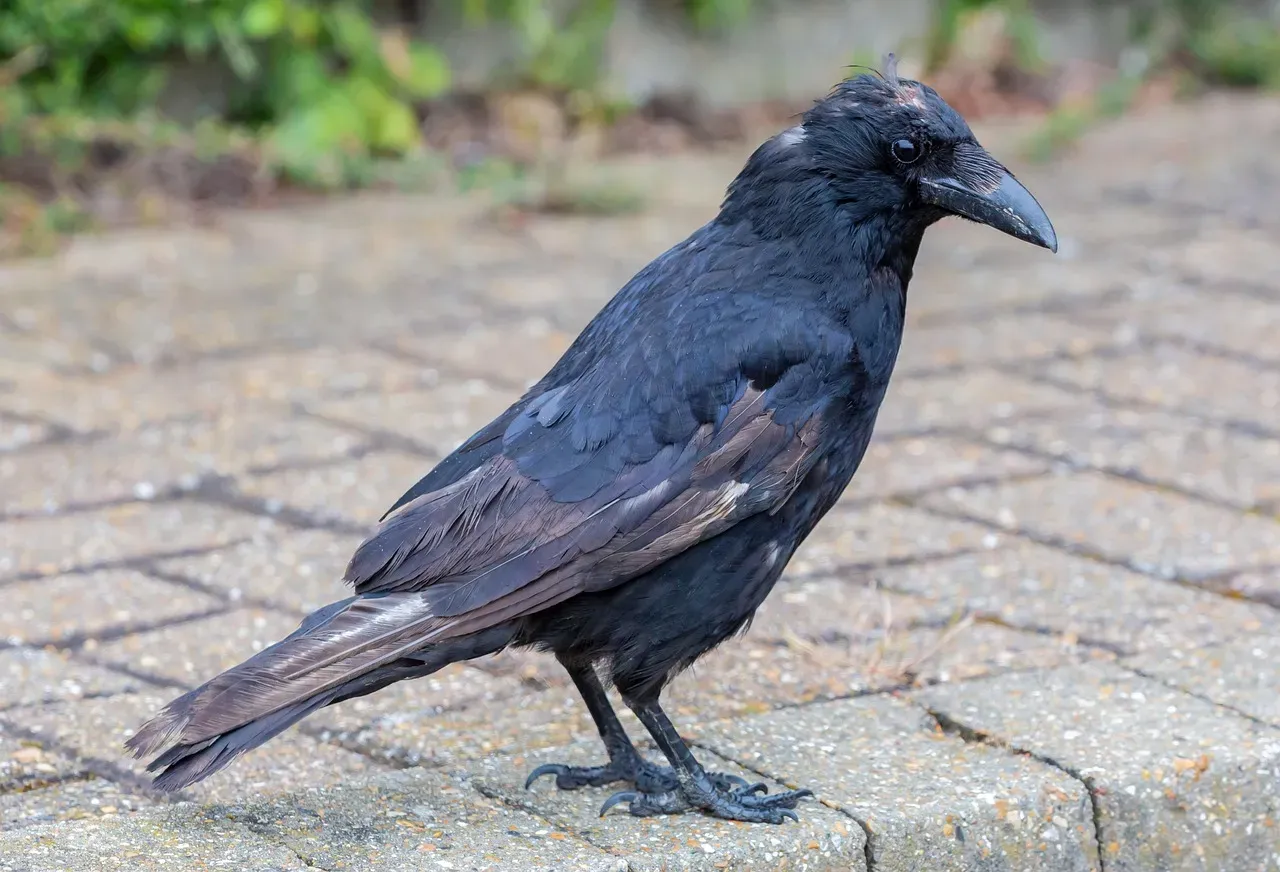
The first instinct is to assume that brain size determines intelligence. Crows are small animals, so the assumption goes, they can’t possibly be that smart. That assumption is wrong.
The crow brain has roughly twice as many neurons as a primate brain of equal mass. While small compared to many mammals, it’s incredibly densely packed with neurons. That density matters enormously.
The avian brain, although structurally different from the primate brain, exhibits surprising similarities in certain areas associated with intelligence. Crows possess a highly developed forebrain known as the pallium, which is responsible for higher cognitive functions. Neurobiological investigations have shown that this region is crucial for the birds’ problem-solving abilities and complex cognitive tasks.
Because bird brains appear to be less developed than primate brains, scientists long believed birds were incapable of high-level functions like problem-solving, decision making, and maintaining a working memory. What research now suggests is that, in the 320 million years since birds and primates split, each has developed different brain structures, but those differently composed brains have developed similar cognitive capabilities.
Tool Use That Goes Beyond Instinct
One of the most remarkable demonstrations of crow intelligence is their sophisticated tool use. New Caledonian crows are particularly famous for crafting tools from materials in their environment. These birds methodically strip branches and shape them into hooks for retrieving insects from tree crevices.
In one famous experiment, a crow named Betty spontaneously bent a straight piece of wire into a hook to retrieve food from a tube, demonstrating an understanding of causality and physical properties that was previously thought to be uniquely human. This wasn’t a trained behavior. It was improvised.
In laboratory settings, crows have been observed not only using found tools but actually creating them to specific specifications based on the challenges presented. They can fashion different tools for different purposes, showing an understanding of the relationship between tool design and functionality.
A native of New Caledonia and the Loyalty Islands in the Pacific Ocean, the New Caledonian crow makes tools from sticks or leaves to draw tasty grubs from hollows in trees. The crows also combine tools when they need to. That combination of tools is what elevates their behavior into a different category entirely.
Multi-Step Puzzles and Mental Planning
Using a single stick to reach food is impressive enough. What researchers found next was harder to explain away.
New Caledonian crows were presented with a series of metatool problems where each stage was out of sight of the others. The crows were able to mentally represent the sub-goals and goals of metatool problems, keeping in mind the location and identities of out-of-sight tools and apparatuses while planning and performing a sequence of tool behaviors.
New Caledonian crows have shown a striking aptitude for problem solving and using tools, including a skill known as “metatool use” in which they use one tool to obtain another. Their performance on this type of task was in fact comparable to that of great apes and surpassed that of several monkey species.
In experiments paralleling the “marshmallow test” used with children, New Caledonian crows have forgone immediate rewards for more valuable delayed outcomes. In some trials, they selected tools that would only become useful after a delay, a decision requiring the mental representation of a future state. Planning for the future isn’t something most animals are known for.
The Aesop Connection: Water, Stones, and Physics
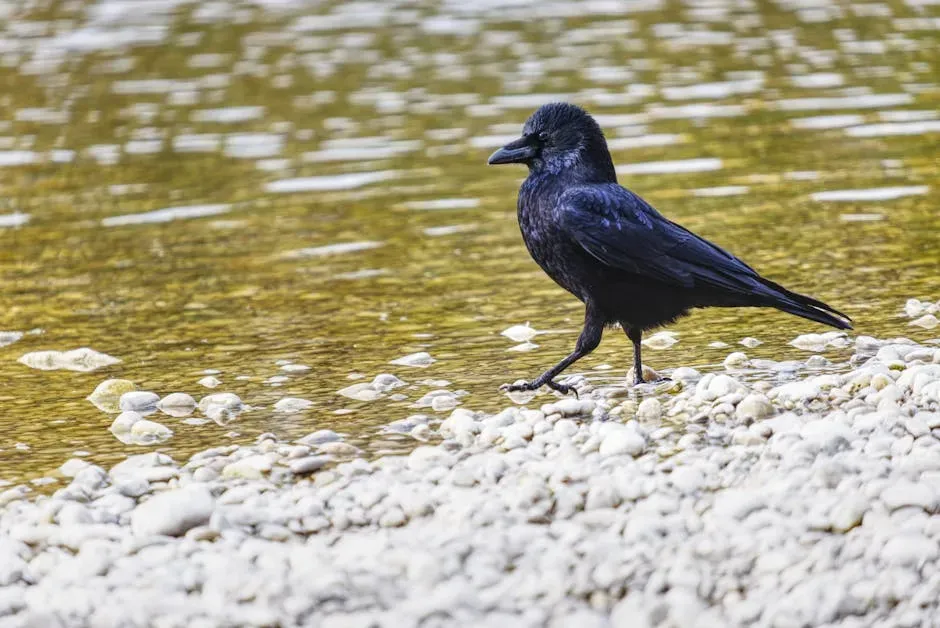
There’s an old fable, attributed to Aesop, in which a thirsty crow drops pebbles into a narrow pitcher to raise the water level high enough to drink. For centuries it was treated as a moral tale, a bit of ancient storytelling. Then scientists decided to test it.
A 2014 study showed that New Caledonian crows, rooks, and European jays can solve an Aesop’s Fable challenge, dropping stones into a water-filled tube to bring a floating bit of food within reach, something children generally can’t do until age seven. These birds were the first nonhuman animals to solve the task.
When presented with tubes containing water and floating food rewards that were out of reach, crows selectively dropped dense objects rather than floating ones into the water to raise the level. They also chose tubes with higher water levels when given options, showing an understanding that less effort would be needed to reach the reward.
While conducting her PhD study at the University of Auckland, Sarah Jelbert recreated the Crow and the Pitcher fable, showing that New Caledonian crows had the cognitive ability to solve multi-step problems. Jelbert’s study, which included six tests, seemed to show that after being given objects with different weights, the crows were able to select objects that had a greater effect on the water level. Understanding buoyancy is not a trivial feat for any animal.
Face Recognition, Grudges, and Social Intelligence
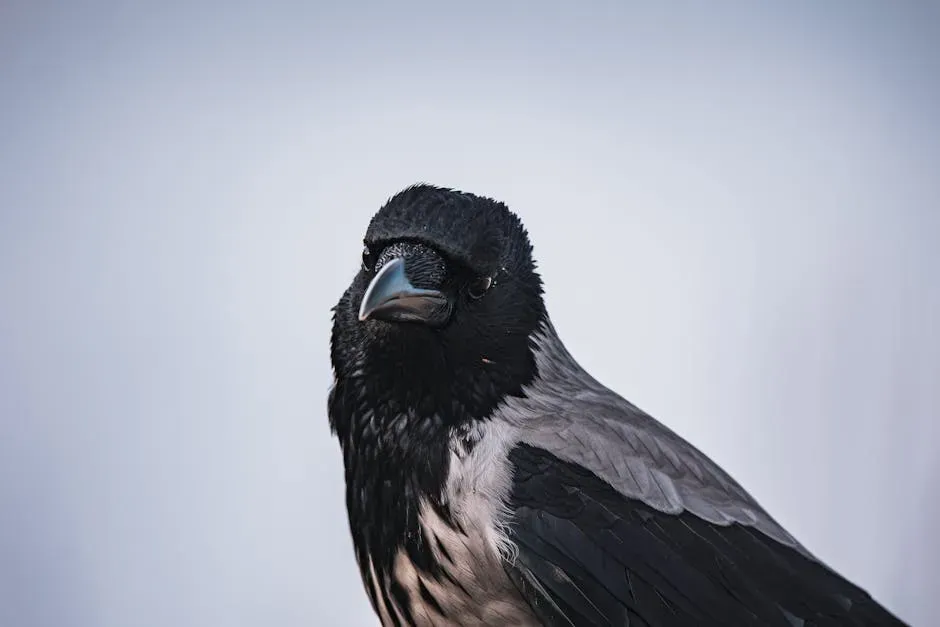
Crow intelligence isn’t limited to objects and puzzles. Their social awareness is equally striking, and in some ways more personal.
Crows can recognize dozens of individual conspecifics and maintain long-term social relationships, remembering past interactions and using this information to guide future behaviors. Some studies indicate they can even recognize specific human faces for years and communicate this information to other crows who haven’t directly experienced those humans.
Crows can recognize individual human faces and seem to hold grudges. If a person is mean to a crow, that bird might harass that specific individual for years afterwards and even teach other crows to do the same. That transmission of social knowledge across individuals is a hallmark of culture, not just instinct.
Research has revealed a fascinating aspect of crow intelligence: cultural transmission. Crows can learn from one another and pass on behaviors and knowledge across generations. This cultural exchange suggests that crows possess a form of social learning, similar to humans and some other highly intelligent animals.
Urban Crows: Adapting Intelligence to City Life
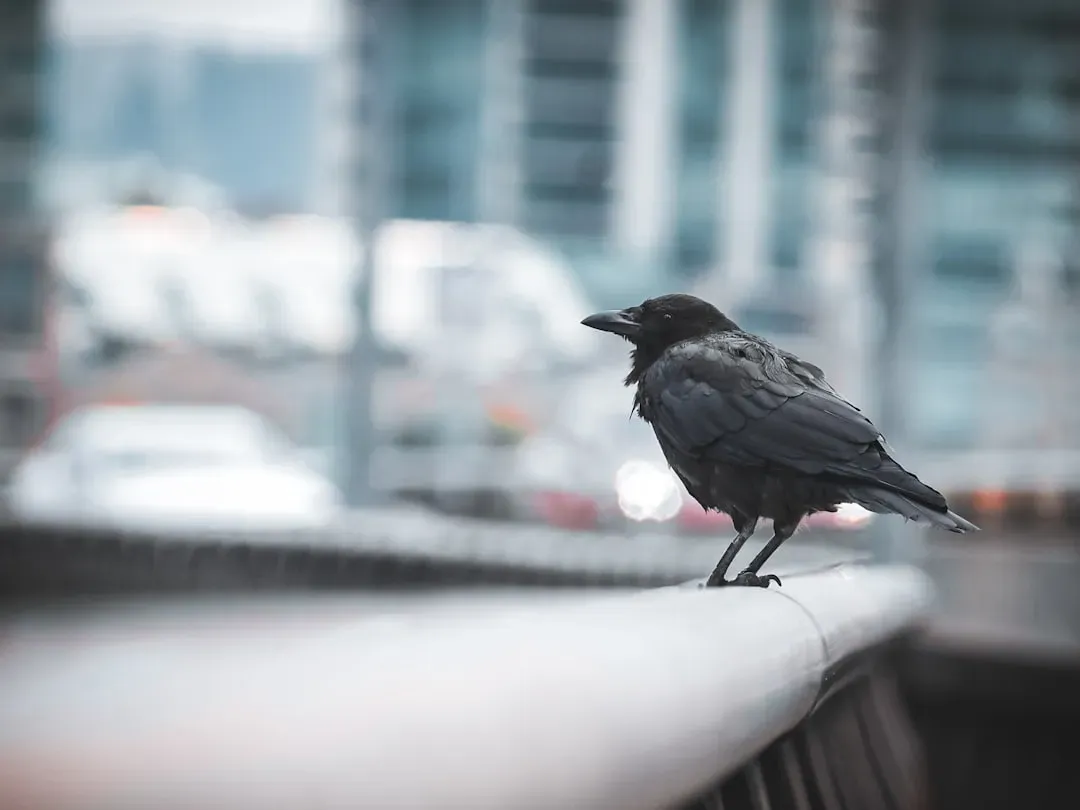
Perhaps nowhere is crow intelligence more visible than in cities, where these birds have learned to work with human infrastructure rather than around it.
Crows in Japan drop nuts onto roads for cars to crack. They wait for traffic lights before retrieving food. This shows timing awareness and risk assessment, allowing them to exploit human systems safely. The behavior has been documented repeatedly and isn’t an accident.
Crows thrive in human-altered environments partly because of their exceptional problem-solving abilities. Urban crows regularly face novel challenges not encountered in their ancestral environments, and their success depends on developing creative solutions.
Researchers have made startling discoveries in recent years about a crow’s ability to communicate, solve problems, remember people, and use tools. What they’re discovering about crow brains is changing how scientists understand intelligence and bringing into question our accepted version of evolution. Cities, it turns out, may be acting as a kind of accelerated intelligence test that crows keep passing.
Conclusion: Rethinking What It Means to Be Smart
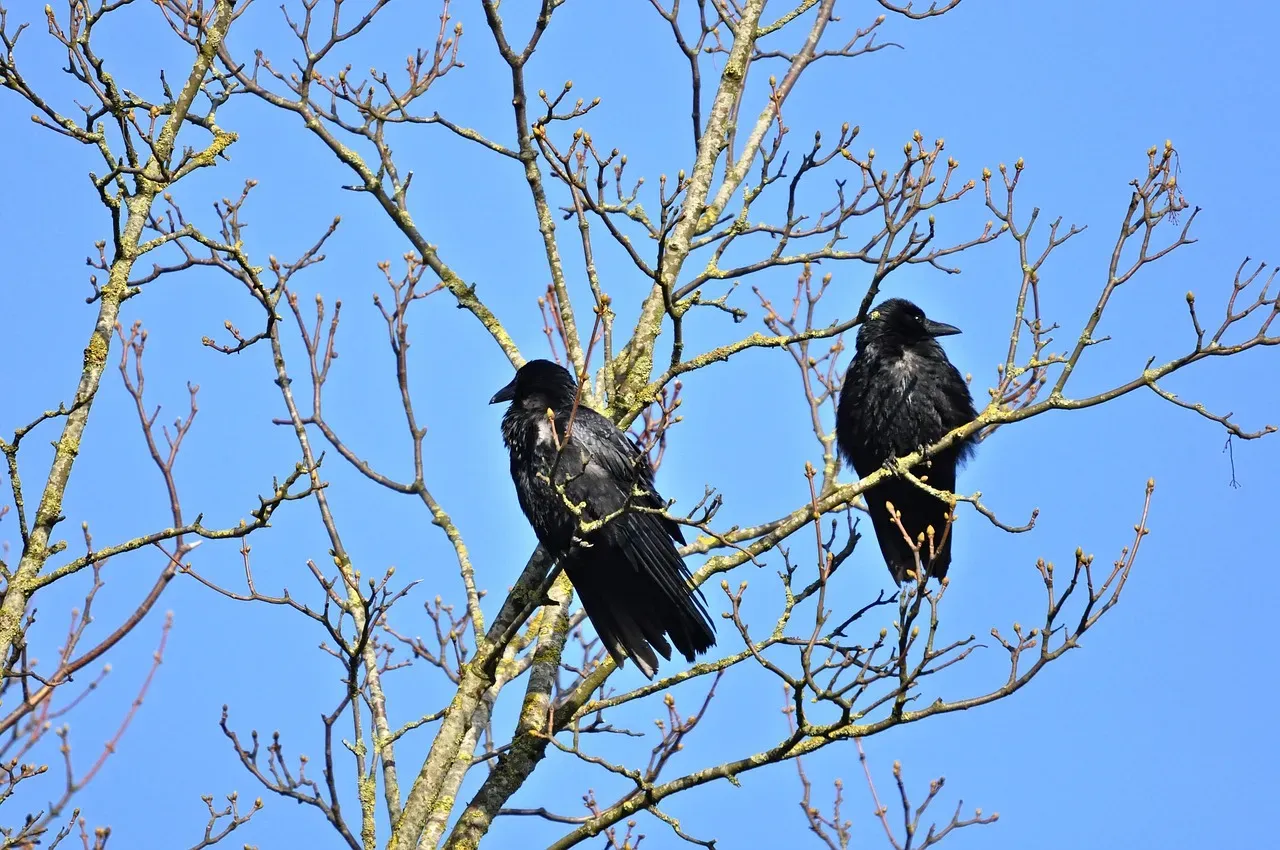
The crow sitting on that fence isn’t just watching you. It’s processing, categorizing, and likely remembering. The research accumulated over recent decades paints a picture of an animal whose cognitive life is far richer than its reputation suggests.
Corvids, particularly crows and magpies, exhibit cognitive abilities comparable to human toddlers, including tool use, self-recognition, and social inference. That comparison isn’t flattery directed at birds. It’s a genuine recalibration of where we place intelligence in the natural world.
Intelligence takes many forms, and different animal species have developed unique behavioral and cognitive toolkits to adapt to the environmental challenges and evolutionary pressures that they face. The crow is a clean example of that principle. It didn’t evolve to look like us, think like us, or use a brain structured like ours. It evolved its own path to the same destination.
What makes crows so compelling isn’t just the wire-bending or the stone-dropping. It’s the reminder that minds come in many shapes, and some of the sharpest ones are perched right outside your window.
Worried about unexpected vet bills?
Pet insurance can cover thousands in unexpected vet costs. Get a free quote from Lemonade in under 2 minutes.
Get My Free Quote →Sponsored · Opens Lemonade.com
