

Ever catch yourself wondering if your dog really knows when you’re having a rough day? That uncanny moment when they nuzzle closer just as you’re feeling low isn’t coincidence. There’s something remarkable happening beneath that furry exterior, something scientists are only now beginning to fully understand.
Dogs have lived alongside humans for thousands of years, evolving not just physically but cognitively in ways that make them uniquely attuned to us. Their bond with humans goes deeper than simple companionship. It’s woven into their very biology, their brains, and their extraordinary sensory abilities. What we’re discovering is that dogs possess an almost supernatural ability to read our emotional states through multiple channels we barely notice ourselves.
They Read Your Face Like an Open Book
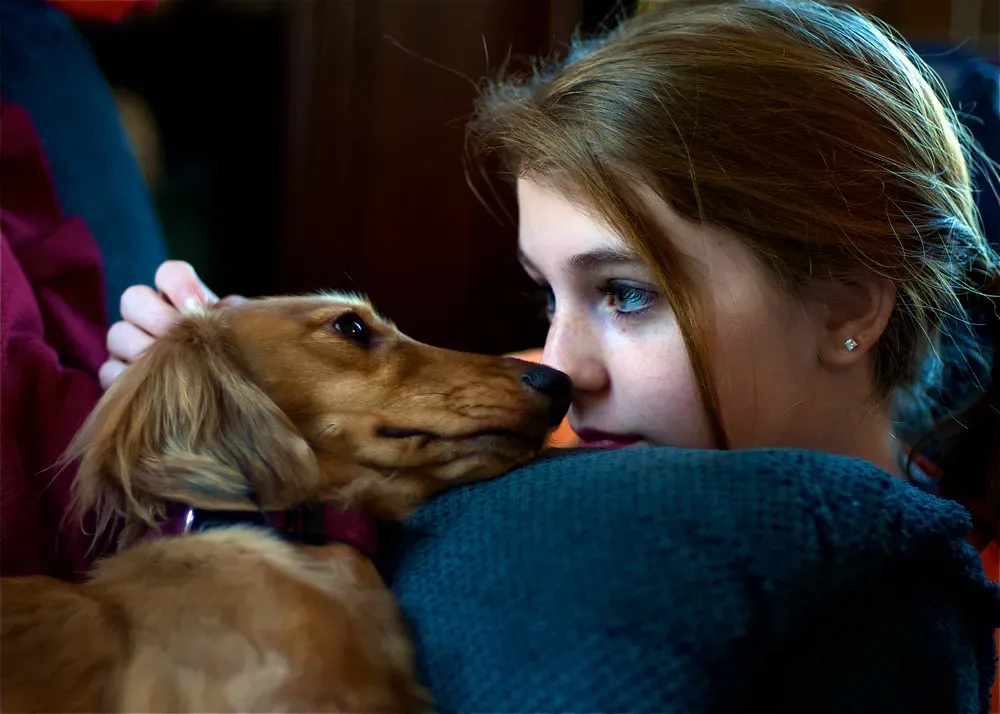
Dogs can recognize emotions in humans by combining information from different senses, and they must form abstract mental representations of positive and negative emotional states. This isn’t just about learning tricks or responding to commands. It’s genuine emotional recognition.
Dogs can recognize six basic emotions including anger, fear, happiness, sadness, surprise, and disgust, processing these with changes to heart rate and gaze. Think about that for a second. Your dog isn’t simply reacting to your tone of voice or body posture. They’re actively interpreting the subtle shifts in your facial expressions, much like another human would.
Research has revealed something even more fascinating. Dogs may have a natural inclination to focus on the left side of the human face, and they tend to gaze more at the left side when trying to determine emotions. This left-gaze bias might be linked to how the brain processes emotional information. It’s as if dogs have learned exactly where to look to get the most accurate reading of how we’re feeling.
What makes this ability so striking is its sophistication. Dogs have the ability to integrate two different sources of sensory information into a coherent perception of emotion in both humans and dogs. They’re not just seeing a smile or hearing a laugh in isolation. They’re putting it all together like pieces of a puzzle.
Dogs behaved differently depending on their owner’s emotion, performing better at a training task with a happy owner, and they indeed perceive differences in human emotion. Let’s be real, this means your mood genuinely affects your dog’s behavior and performance. They’re that connected to your emotional state.
Your Stress Has a Smell, and They Know It

Here’s where it gets truly wild. Research showed that dogs can detect stress from sweat and breath samples alone. Your anxiety, your fear, your stress – it all creates a chemical signature that wafts off your body, completely imperceptible to other humans but crystal clear to your dog.
Dogs are able to sense rising cortisol levels in our sweat or breath and react accordingly, and their super-sensitive noses allow them to smell changes in hormones, including cortisol. Cortisol is the hormone our bodies release when we’re stressed. Turns out, it has an odor, and dogs are experts at detecting it.
Studies have taken this further. The stress smell made dogs slower to approach an ambiguous bowl location, and this effect was not seen with the relaxed smell. What this means is that when dogs smell human stress, they actually become more pessimistic and cautious themselves. They adopt a more negative emotional state, mirroring what we’re experiencing.
When exposed to fear sweat samples, dogs’ heart rates went up and they sought comfort from their owners, while when exposed to happy samples, dogs were more relaxed. It’s not subtle. Their entire physiology changes in response to our emotional scent.
This ability likely evolved for survival reasons. Being able to sense stress from another member of the pack was likely beneficial because it alerted them of a threat that another member of the group had already detected. Dogs learned over millennia that if their human companion is stressed, there might be danger nearby. Better pay attention.
Their Brains Are Wired to Understand Us

The connection between dogs and humans isn’t just behavioral. It’s biological. Dogs possess voice-processing regions in their temporal cortex that light up in response to vocal sounds. They have dedicated brain areas specifically for processing human speech, remarkably similar to structures in our own brains.
Research revealed that dogs’ brains light up in ways similar to humans when they hear human voices, suggesting that dogs and humans share similar emotional processing mechanisms. I know it sounds crazy, but the neural pathways dogs use to understand us mirror our own. Evolution has fine-tuned their brains for this exact purpose.
Emotionally charged sounds like a laugh, a cry, or an angry shout activate dogs’ auditory cortex and the amygdala, a part of the brain involved in processing emotions. They’re not just hearing noise. They’re experiencing an emotional response to the emotional content of what you’re saying. That’s pretty remarkable when you think about it.
Something else worth mentioning. Seeing a familiar human face activates a dog’s reward centres and emotional centres, meaning your dog’s brain is processing your expressions in feelings. Just looking at you triggers a cascade of emotional and reward responses in their brain. You make them feel something real and powerful.
Thousands of years living as our companions have fine-tuned brain pathways for reading human social signals, and while a dog’s brain may be smaller than a wolf’s, it may be uniquely optimised to love and understand humans. Dogs might have smaller brains than their wolf ancestors, yet they’ve become specialists in something wolves never mastered – understanding us.
The Oxytocin Connection Binds You Together

There’s a chemical love story happening between you and your dog. When dogs and humans make eye contact, both experience a surge of oxytocin. Oxytocin is often called the love hormone or bonding hormone. It’s the same chemical released between mothers and their babies.
Studies revealed that dogs possess oxytocin responses similar to humans, underlying their capacity for forming strong emotional connections. This shared biochemical response creates a feedback loop. You look at your dog, your oxytocin rises, they feel it, their oxytocin rises, and the bond strengthens. It’s a mutual affection amplifier.
This chemical bond helps explain why the connection feels so profound. Dogs don’t just observe emotions, they can catch them too through emotional contagion, a basic form of empathy where one individual mirrors another’s emotional state, and this doesn’t require complex reasoning. When you’re happy, they feel happy. When you’re sad, they feel sad.
Honestly, this emotional contagion is fascinating. A study found that some dog-human pairs had synchronised cardiac patterns during stressful times, with their heartbeats mirroring each other. Their hearts literally beat in sync with ours during moments of stress. That’s not just companionship. That’s profound physiological connection.
The practical implications are significant too. Research has shown that petting a dog actually lowers the stress hormone cortisol. The relationship is reciprocal. They sense our stress, we pet them for comfort, and that physical connection actually reduces the very hormone they detected in the first place. It’s a beautiful biological feedback system.
They Use Your Emotions to Make Decisions

Dogs don’t just passively observe our emotions. They actively use that information to guide their own behavior. Dogs can utilize emotional information to find food, as seen in a study where dogs chose the box that the human pretended to be happy about. They’re reading our cues and making strategic decisions based on what we’re feeling.
Dogs use their sensitivity to humans to learn about potentially dangerous objects through social referencing, and when owners are anxious, dogs inhibit their movements toward the object, while if owners are relaxed, dogs move toward it and interact with it sooner. This is called social referencing, and it’s incredibly sophisticated. They’re looking to us for emotional guidance about their environment.
Dogs behaved differently depending on the owner’s emotional state, gazing and jumping less at owners when they were sad, and their compliance with commands was also diminished. Your sadness changes how they interact with you. They become more subdued, less demanding. Whether that’s empathy or learned association is debated, but the behavior is consistent.
Here’s something to consider. While analysis shows dogs behave differently based on their owner’s emotions, researchers say it’s unlikely dogs are empathizing with us, and dogs seem to keep their distance when owners are sad. They might not be feeling your pain in the way another human would, yet they’re definitely responding to it in meaningful ways.
Still, the functional value is undeniable. Dogs can make functional use of the emotional information they obtain from heterospecific visual emotional displays and utilise this information during decision-making. They’re gathering data from our expressions and body language, then using that intelligence to navigate their world more effectively.
This Ability Shapes Their Role in Our Lives
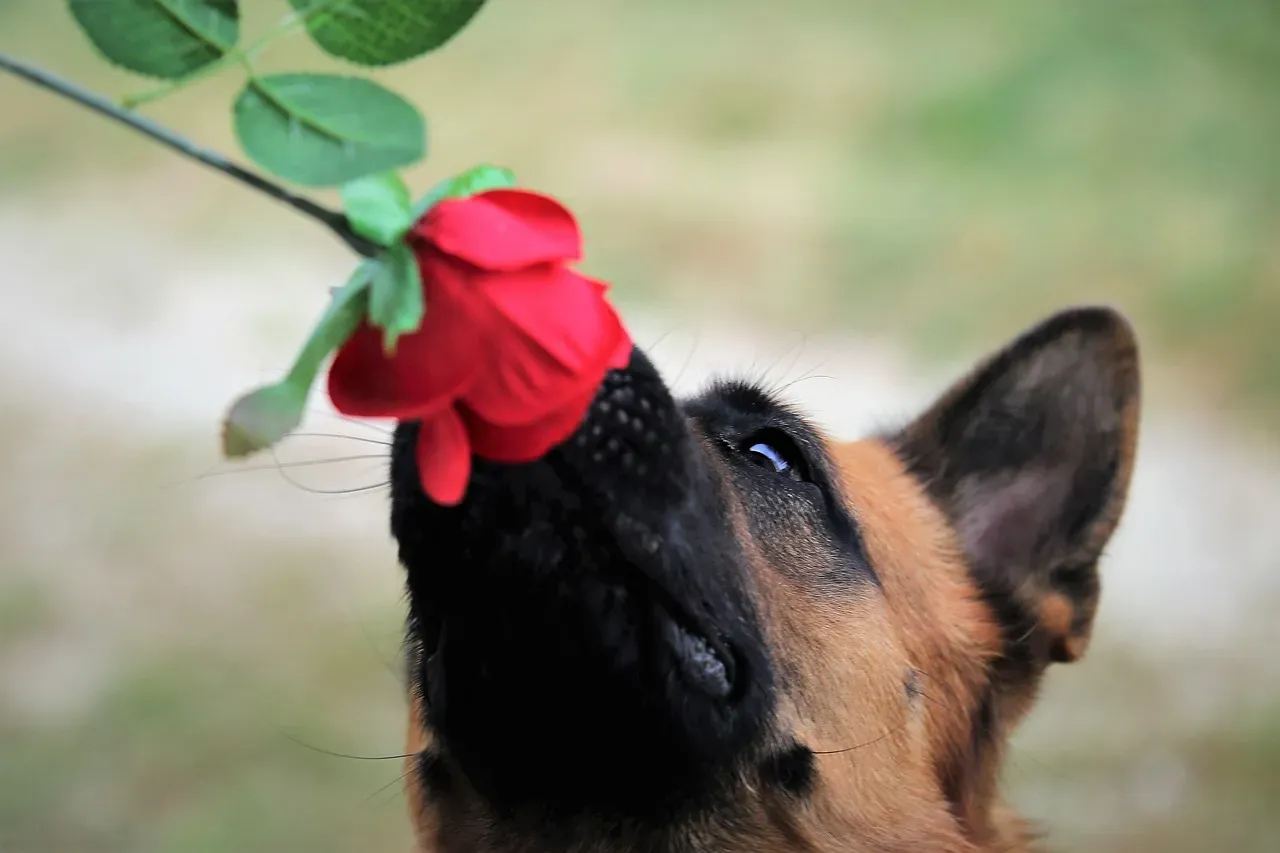
Understanding how dogs sense our emotions opens up powerful applications, particularly for service work. The results could have applications to training anxiety and PTSD service dogs, and knowing there is a detectable odour component to stress may raise discussion into the value of olfactory-based training. Currently, most service dogs are trained to respond to visual cues, but scent-based training could be even more effective.
Your stress impacts your dog’s well-being, influencing their emotions and the decisions they make. This has welfare implications. If we’re constantly stressed, our dogs are absorbing that negativity and becoming more anxious themselves. The emotional exchange goes both ways, for better or worse.
By better understanding how dogs respond to human emotions, researchers hope that humankind’s relationship with our best friend will only improve, leading to improved training regimes, fewer confrontations, and new areas of cooperation. Knowledge is power. The more we understand about this emotional intelligence, the better we can communicate with and care for our dogs.
Dogs’ social cognition facilitates interaction with humans, and the ability to read and respond appropriately to emotional cues may have been and may still be key for the establishment of these interspecific bonds. This sixth sense isn’t a party trick. It’s the foundation of why dogs fit so seamlessly into human families. They evolved to understand us because it benefited them, and now it benefits us both.
The broader lesson is humbling. We often think of ourselves as the superior species, the ones doing the understanding. Yet dogs have developed capabilities specifically designed to decode us. They’ve spent thousands of years becoming experts in human emotion while we’re only now catching up to understanding what they’ve known all along.
Conclusion
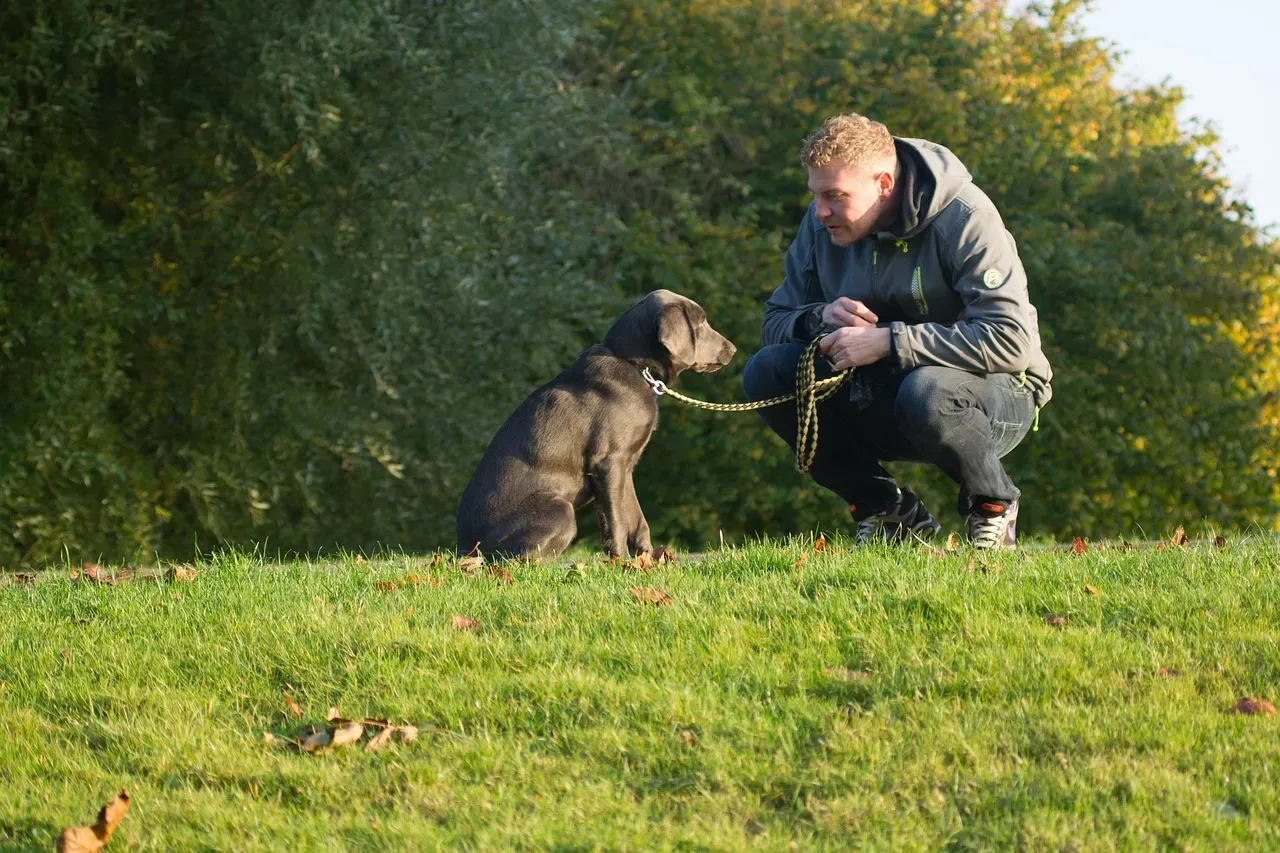
Dogs truly possess an extraordinary ability to sense and respond to human emotions through multiple channels including facial expressions, vocal tones, body language, and even the chemical scent of our stress. Their brains have evolved specialized regions for processing our emotional signals, their hearts can synchronize with ours during stressful moments, and they use the emotional information they gather to make decisions about their environment. This isn’t anthropomorphism or wishful thinking. It’s documented science revealing the depth of the bond between humans and dogs.
The relationship is mutual and biochemical, strengthened by oxytocin and emotional contagion. When we’re happy, our dogs feel it. When we’re stressed, they smell it and their mood shifts too. This emotional intelligence makes them invaluable as companions, therapy animals, and service dogs. It also reminds us of our responsibility – our emotional states affect them deeply.
Perhaps what’s most remarkable is that this ability developed over millennia of coevolution, with dogs becoming specialists in understanding the one species that mattered most to their survival: us. They’ve mastered reading humans in ways that even we don’t fully understand about ourselves yet. What do you think – have you noticed your dog responding to your emotions in ways that surprised you?

- The 6 Zodiac Signs Whose Spirit Animals Reveal Their Darkest Secrets - August 15, 2026
- 10 Things You Should Never Do Around Cats (Even If You Think They Like It) - August 15, 2026
- What Legendary Animal Are You According to Your Zodiac Sign - August 15, 2026