

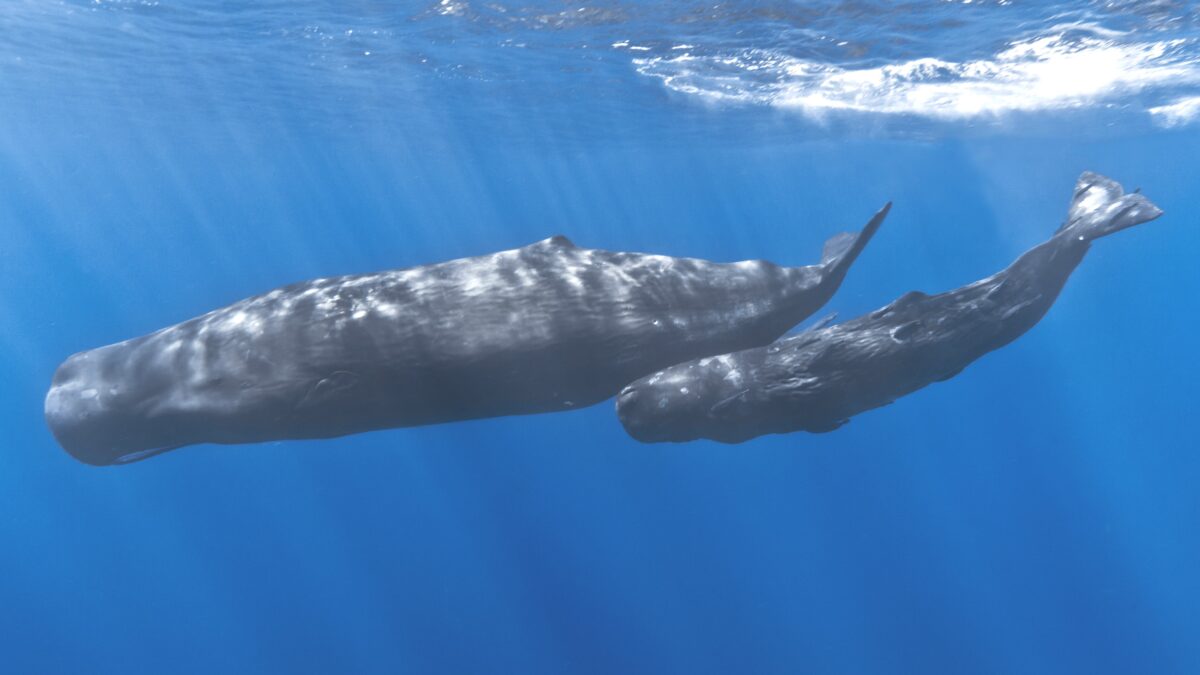
There are moments in nature that stop you cold. Moments so rare, so quietly extraordinary, that even the scientists watching them unfold can barely believe what they’re seeing. This was one of those moments.
Off the sun-drenched coast of the Azores, a group of researchers witnessed something that almost never gets documented: a sperm whale giving birth in the open ocean, followed by something even more remarkable happening right after. What unfolded next gave scientists a window into sperm whale society that they had only theorized about before. Let’s dive in.
A Once-in-a-Lifetime Observation in the Atlantic
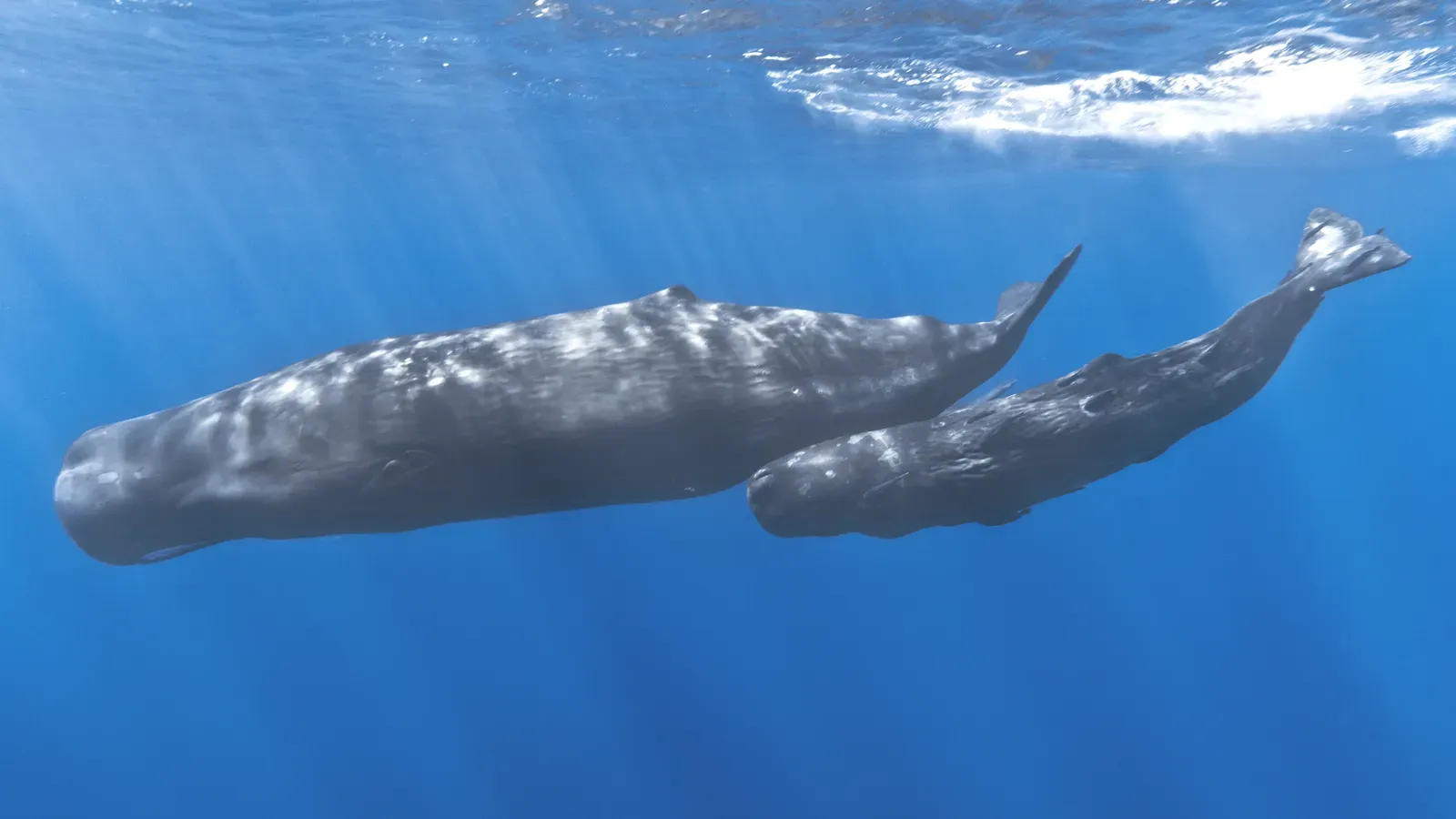
Let’s be real, the ocean keeps most of its secrets buried deep. Sperm whales are massive, they spend enormous amounts of time in the dark abyss, and catching one in the act of giving birth is, statistically speaking, like winning a lottery you didn’t even know you’d entered. Researchers from the Azores Whale Watching and marine biology teams documented the event in remarkable detail, making it one of the most scientifically valuable cetacean birth observations on record.
The birth took place in the waters surrounding the Azores archipelago, a known hotspot for sperm whale activity in the North Atlantic. What made this different from the handful of other recorded whale births wasn’t just the birth itself. It was what happened immediately afterward that truly set this observation apart and sent ripples through the marine biology community.
The Birth Itself: Raw, Messy, and Breathtaking
Sperm whale calves are born tail-first, which is common among cetaceans and helps prevent drowning during delivery. The newborn, already enormous by most standards, needed to reach the surface quickly to take its first breath. That urgent, instinctive scramble to the surface is one of the most viscerally alive things you can witness in the natural world. Honestly, just thinking about it gives you chills.
The birth was accompanied by a cloud of biological fluid in the water, a telltale sign researchers use to confirm an active or very recent delivery. The team observed the mother closely, watching her movements and posture as the calf emerged. Everything about the scene was visceral, immediate, and deeply moving in a way that no nature documentary quite prepares you for.
What Happened Next: A Social Response Like No Other
Here’s the thing about sperm whales: they are not solitary creatures. They live in complex, matriarchal social units, and the females in a group are known to cooperate in raising young. What researchers observed after this birth took that understanding to a new level entirely.
Other females in the group began gathering around the newborn almost immediately. This collective response, a kind of welcoming committee of sorts, suggested that the social bonds within sperm whale pods are even more active and deliberate than previously understood. It wasn’t random. It looked, to put it simply, intentional.
Caregiving Behavior That Challenges What We Thought We Knew
The post-birth caregiving behavior observed was genuinely surprising. Multiple adult females were seen positioning themselves near the calf in what researchers interpreted as protective and supportive behavior. Think of it like a midwife scenario, except the midwives are twelve-meter-long apex predators of the deep ocean.
This kind of allomaternal care, where females other than the biological mother assist in caring for a newborn, has been documented in other cetacean species like dolphins and orcas. Seeing it so clearly expressed in sperm whales right at the moment of birth adds a critical data point to what scientists understand about how these animals structure their social lives. It’s hard to say for sure how universal this behavior is, but this observation strongly suggests it’s not a fluke.
Why the Azores Are a Crucial Location for Whale Research
The Azores sit in the middle of the North Atlantic in a way that makes them almost uniquely suited for sperm whale observation. The underwater topography drops off dramatically near the islands, creating deep-water conditions that sperm whales actively seek out for feeding. Researchers based there have built up decades of photographic identification records, allowing them to track individual animals across years.
This long-term presence matters enormously. It means that when something extraordinary happens, like this birth, scientists aren’t starting from scratch. They can cross-reference the animals involved with existing data, understand their family histories, and place the behavior in a much richer context. The Azores, in many ways, function as a living laboratory for sperm whale science.
The Rarity of Documenting Cetacean Births in Real Time
To appreciate how significant this is, consider how infrequently whale births are actually witnessed by humans. Sperm whales can dive to depths of over two kilometers and spend enormous stretches of time completely out of sight. A female’s pregnancy lasts roughly fourteen to sixteen months, and births don’t happen on a predictable schedule that researchers can plan around.
Most of what science knows about whale reproduction comes from historical whaling records, stranded animals, or extremely fragmented observations. A clean, documented, in-the-wild birth with behavioral data attached is extraordinarily rare. The fact that this one came with footage and detailed notes from experienced researchers makes it even more valuable. It fills in gaps that have existed in cetacean science for a very long time.
What This Discovery Means for Sperm Whale Conservation
Understanding how sperm whales reproduce and raise their young has direct implications for conservation. Sperm whales are currently listed as vulnerable on the IUCN Red List, and populations in certain regions have not fully recovered from the era of commercial whaling that decimated their numbers throughout the nineteenth and twentieth centuries. Knowing that newborn calves may depend on group-level caregiving makes the social unit itself a conservation priority, not just the individual animal.
If disrupting a pod disrupts the survival chances of a newborn, that changes how we should think about vessel traffic, noise pollution, and other human pressures in known sperm whale habitats. This single observation has the potential to inform policy in meaningful ways, which is a remarkable amount of weight to carry for one morning’s worth of footage off the Azores coast. Nature, as ever, has more to teach us than we ever expect.
A Final Thought Worth Sitting With
What strikes me most about this story isn’t the birth itself, as extraordinary as that is. It’s the caregiving. It’s the image of those other females converging, instinctively, around a new life in the middle of a vast and indifferent ocean. There’s something in that image that feels deeply familiar, even across the enormous evolutionary distance between us and them.
Sperm whales have been on this planet far longer than humans have. They communicate in complex patterns of clicks called codas. They grieve. They cooperate. They, apparently, show up for each other in the most vulnerable of moments. This observation is a reminder that the ocean holds communities, not just creatures. That deserves both our wonder and our protection.
What do you think: does witnessing this kind of animal behavior change how you see our responsibility toward the ocean? Drop your thoughts in the comments below.

- Urban Coyotes Show Remarkable Adaptability, Learning to Thrive in City Environments - July 22, 2026
- Beavers Are Nature’s Engineers, Creating Vital Habitats for Other Wildlife Species - July 21, 2026
- The Recovery of the California Condor Offers Hope for Other Critically Endangered Birds - July 21, 2026