

The planet is now on an unstoppable course to breach one of the most critical limits ever set in climate science. According to the United Nations Environment Programme’s Emissions Gap Report 2025, Earth will almost certainly exceed 1.5 °C (2.7 °F) of global warming above pre-industrial levels within the next decade. The report, released ahead of the COP30 climate summit in Brazil, marks the clearest acknowledgment yet that current pledges and policies are nowhere near enough to prevent surpassing this symbolic boundary of the Paris Agreement.
Scientists stress that crossing 1.5 °C does not signify an immediate planetary catastrophe — but it does mean entering an era of rapidly escalating heat waves, storms, and sea-level rise. The findings underscore a stark truth: without drastic and immediate emission cuts, the goal of limiting warming to 1.5 °C will move permanently out of reach, reshaping ecosystems and economies around the globe.
What Does the 1.5 °C Threshold Mean?

The 1.5 °C figure refers to the rise in global average temperature above the pre-industrial baseline (usually mid- to late-1800s). The Paris Agreement set this as an aspirational limit because scientists have found that many of the worst climate impacts accelerate sharply once that level is exceeded. The UNEP report uses it as a symbolic and practical benchmark.
Crossing 1.5 °C doesn’t automatically mean immediate collapse of ecosystems or societies — but it does raise the risks significantly: more frequent and intense extreme weather events, greater stress on food and water systems, and higher vulnerability for many regions. The UNEP report emphasizes that moving past 1.5 °C means the “window of safe operations” is rapidly closing.
Why the UNEP Says the World Will Cross It Soon
According to the 2025 Emissions Gap report, current greenhouse-gas emissions trajectories, coupled with national commitments (which are inadequate), point toward the threshold being breached by no later than 2035. And the phrasing “in the next decade” signals that even sooner is plausible.
Key factors include: global emissions remain high, many countries’ policies and pledges are not deep enough, and even if all current commitments were fully implemented, they still fall short of keeping warming at or under 1.5 °C. The gap between what is needed and what is pledged remains substantial.
The Emissions Gap: What Is It and How Big Is It?
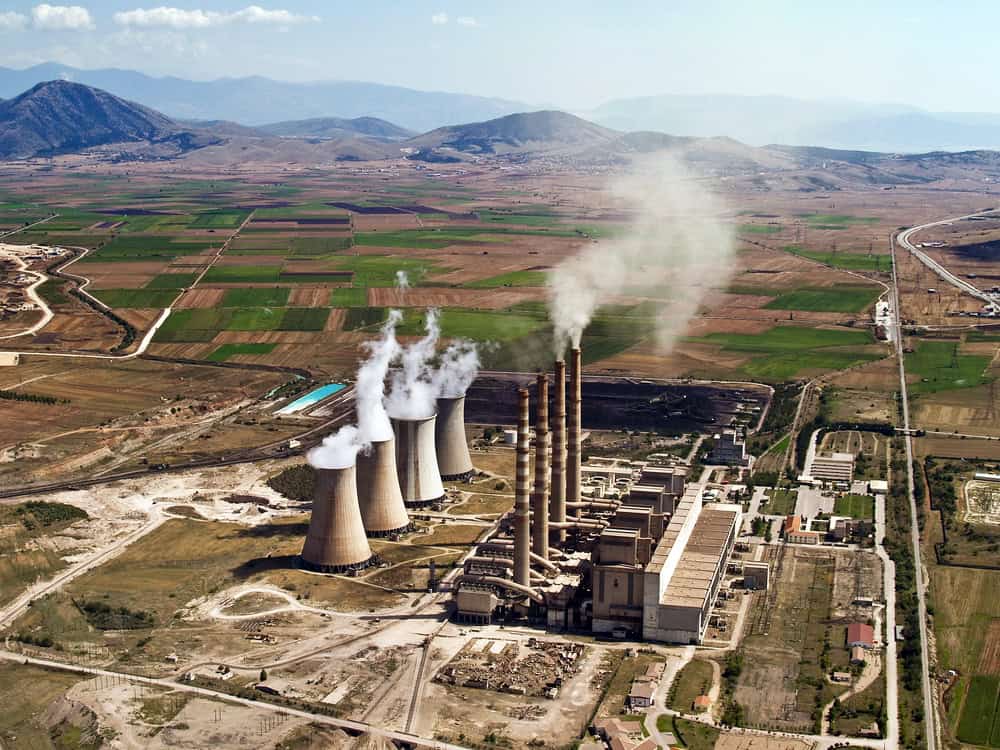
The “emissions gap” refers to the difference between the greenhouse-gas emissions reductions needed to meet a given temperature target (like 1.5 °C) and the reductions expected based on existing policies and commitments. UNEP uses it as a measure of how far off we are.
In simple terms, UNEP finds that even if countries fulfil all their current pledges, the world is still headed past 1.5 °C. The more emissions remain high, the faster we exhaust the “carbon budget” (the total allowable emissions before passing thresholds). The report emphasises that this gap must be closed — yet is not currently being closed at the needed rate.
Regional and Sectoral Implications of Breaching 1.5 °C
While the threshold is global, its impacts are uneven. Some regions — such as low-lying coastal zones, small island states, and parts of the Global South — are already experiencing disproportionate harm from climate change (sea level rise, extreme heat, erratic rainfall). Crossing 1.5 °C means those risks intensify.
In sectors like agriculture, infrastructure, health, and water, the report warns of escalating strain. For example: food security may be at greater risk, infrastructure design standards (built for past climate norms) may become obsolete more quickly, and health systems may face higher burdens from heat, vector-borne diseases and climate-related disasters.
What the Timeline Looks Like — and Why It Matters
The UNEP report argues that passing the threshold within a decade is not just a distant projection — it is increasingly likely. That matters because once the threshold is crossed, certain climate impacts become harder (or near-impossible) to reverse, and the options for steering global warming back down become more limited and more costly.
Moreover, crossing 1.5 °C does not mean temperatures stop at that point. It means we are on a trajectory where 1.5 °C is a milestone, not a finish-line. Without massive acceleration of emission cuts globally, further warming into the 2 °C range or more becomes likely, with exponentially larger risks.
Why This Was Announced Now — Context of COP30 and the Report

The timing matters: the report was released just days before the COP30 climate summit in Brazil. It serves as a clear signal to policymakers, negotiators and the public that the “1.5 °C era” is coming — and that decisions made at the summit and in national policy frameworks will likely determine whether we breach it sooner or later.
By framing the breach as “official” and imminent, the UNEP report reframes the climate conversation: instead of “Can we stay under 1.5 °C?” the question becomes “How soon will we cross it, and what do we do after that?” The shift underscores urgency.
What It Means for Action — and What Can Still Be Done
Breaching 1.5 °C doesn’t mean all hope is lost — but it means the margin for manoeuvre shrinks. The report emphasizes the need for rapid, deep, and sustained reductions in greenhouse-gas emissions — especially CO₂, methane and other short-lived climate pollutants.
It also highlights that adaptation — preparing for and responding to climate impacts — becomes far more important. For many regions and sectors, the report implies that even if 1.5 °C is exceeded, the severity of harms, speed of change and scale of adaptation challenge depend strongly on how much further warming occurs beyond that level. Closing the emissions gap and accelerating climate finance, innovation, technology transfer and infrastructure resilience are all part of what remains doable.
The 2025 UNEP Emissions Gap report delivers a stark message: the global average temperature threshold of 1.5 °C is no longer a far-off ambition but a near-term reality. Humanity is on track to cross it within the next decade unless global emissions decline quickly and deeply. While some impacts may become harder to avoid, the upcoming years remain critical — choices made today will shape whether the breach occurs a little later or much sooner, and how much additional warming follows. The challenge is immense, but the time to act is now.

- Rescuer Wrestles Injured Swan To Save Him While Loyal Mate Refuses To Leave His Side - August 6, 2026
- 19 Animals That Stay Loyal for Life - August 6, 2026
- 12 Cutest Small Towns in America - August 6, 2026