

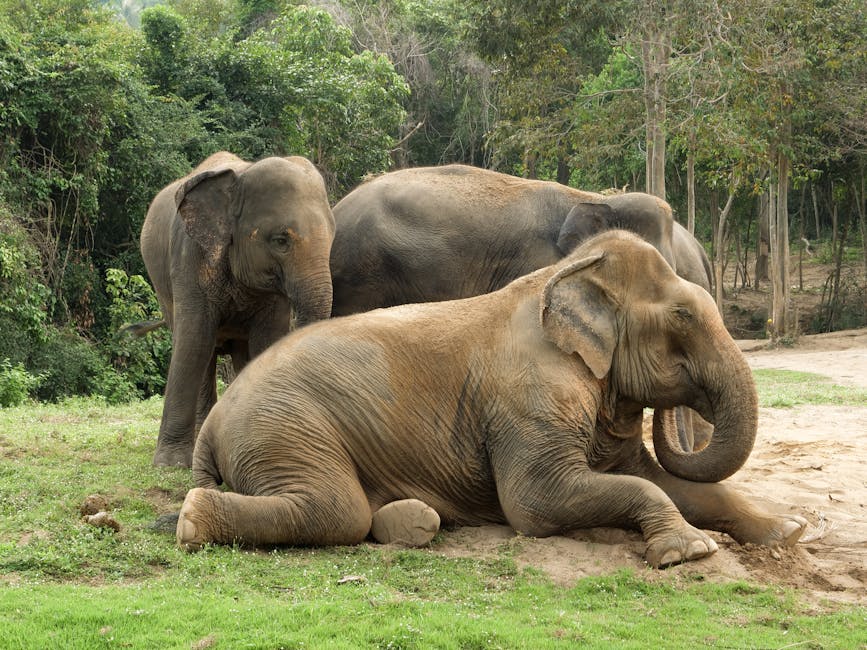
Recognizing Elephants as Temporal Beings (Image Credits: Pexels)
Emerging research into elephants’ perception of time challenges traditional conservation approaches by highlighting their rich temporal lives.
Recognizing Elephants as Temporal Beings
Elephants possess a profound awareness of time that shapes their behaviors and social structures in ways humans are only beginning to understand. Khatijah Rahmat, a postdoctoral researcher at the Max Planck Institute for the History of Science in Germany, examines this concept of animal temporality – their ability to interpret duration and history.[1][2] Her work seeks to legitimize elephants as beings with memories and futures, much like people. This perspective fosters deeper empathy and questions long-held assumptions about animal cognition.
Rahmat argues that viewing animals through a temporal lens transforms policy discussions. “How we envision an animal’s relationship to time influences whether we see them as feeling, remembering beings,” she stated. “My aim is to encourage a more dynamic view of their place in the world when we recognize them as equally temporal beings.”[1] Such recognition could redefine evidence in conservation science.
Eco-Cultural Heritage Sustains Herds
Matriarchs serve as living archives, recalling water sources and migration routes from decades past. These elder females guide herds through familiar landscapes, drawing on collective knowledge accumulated over generations. When poachers remove these leaders, herds suffer destabilization, marked by social aggression and erratic behaviors reminiscent of post-traumatic stress.[1]
Studies by researchers like Gay Bradshaw document these trauma responses. Surviving elephants exhibit heightened anxiety and disrupted social bonds. Conservation efforts must therefore prioritize protecting these knowledge keepers to preserve herd stability and ecological wisdom.
Human Impacts Warp Temporal Rhythms
Rapid deforestation and urbanization upend elephants’ longstanding patterns. Traditional paths vanish, and seasonal resource-sharing arrangements with humans break down. In places like Malaysia’s Belum Forest, elephants now forage at night to avoid conflict, forming unusual male alliances in response to habitat loss.[1]
Past traumas from poaching or conflict linger, altering behaviors across groups. Orphaned juveniles, for instance, have attacked unrelated species like rhinos, signaling deep psychological scars. Rahmat’s analysis reveals how these disruptions demand conservation strategies that account for historical grievances and adaptive resilience.
Individual Histories Forge Unique Traits
Each elephant accumulates personal experiences that influence personality, learning, and emotional responses. These individual timelines intertwine with group histories, enabling mourning rituals and strategic planning. Such depth underscores elephants’ cognitive sophistication beyond instinct.
Rahmat draws from indirect observations, as lab replication proves impossible for wild temporal experiences. Her doctoral thesis from the University of Oxford outlined these dynamics, emphasizing real-world phenomena like memory-driven navigation.[2]
Shifting Conservation Beyond Numbers
Traditional metrics focus on population counts, yet elephant temporality calls for attention to intangible elements: cultural heritage, unresolved traumas, and ecosystem roles. Policies should integrate psychological recovery, rewilding protocols, and habitat designs that support natural rhythms.[1]
Rahmat envisions broader impacts. “It increases the depth of empathy we can have for animals,” she noted. “It can really push the concepts of policy … but it also can really challenge some of our current, basic assumptions about how we think about logic and evidence.”[1] This holistic view promises more effective protection amid growing human pressures.
Key Takeaways
- Elephants interpret time through eco-cultural heritage, human disruptions, and personal histories, evidenced by matriarch memories and trauma responses.
- Conservation must safeguard intangible assets like knowledge transmission and psychological health, not just headcounts.
- Embracing animal temporality deepens empathy and refines policies for long-term species survival.
By honoring elephants’ temporal worlds, humanity gains tools for coexistence. What steps should conservationists take next? Share your thoughts in the comments.

- Urban Coyotes Show Remarkable Adaptability, Learning to Thrive in City Environments - July 22, 2026
- Beavers Are Nature’s Engineers, Creating Vital Habitats for Other Wildlife Species - July 21, 2026
- The Recovery of the California Condor Offers Hope for Other Critically Endangered Birds - July 21, 2026