

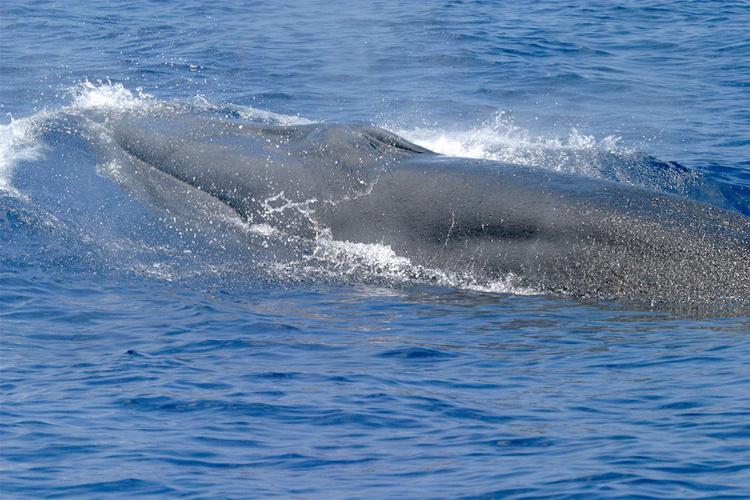
Imperiled Marine Life Faces New Risks (Image Credits: Wikimedia)
Gulf of Mexico – A rare federal panel known as the “God Squad” convened on Tuesday and unanimously approved a sweeping exemption for oil and gas operations from Endangered Species Act requirements.[1][2] The decision, the first of its kind in more than three decades, came at the request of top Trump administration officials seeking to accelerate domestic energy production.[3] Environmental advocates immediately decried the move as a reckless threat to imperiled marine life in one of the nation’s most productive offshore drilling regions.
The ‘God Squad’ Steps In After Decades of Dormancy
The Endangered Species Committee, nicknamed the “God Squad” for its authority to override protections that could determine a species’ survival, met for the first time since 1992.[2] Chaired by Interior Secretary Doug Burgum, the group includes high-level officials from agencies such as the Departments of Agriculture, Defense, and the Environmental Protection Agency, along with the Army, NOAA, and the Council of Economic Advisers.[3] Congress created the committee in 1978 following a Supreme Court case involving the snail darter fish and the Tellico Dam, allowing exemptions only in extraordinary circumstances.
This marked just the third exemption ever granted under the law, and the first invoked explicitly for national security reasons.[2] The closed-door session at the Interior Department lasted briefly, bypassing traditional evidentiary hearings and public input processes.[1] Administration officials framed the action as essential amid global tensions and rising energy costs.
National Security Cited to Fast-Track Fossil Fuel Production
Defense Secretary Pete Hegseth requested the exemption, arguing that Endangered Species Act consultations had “chilled” development in the Gulf.[1] He linked the push to recent Iranian actions, stating, “Recent hostile action by the Iranian terror regime highlights yet again why robust domestic oil production is a national security imperative.”[1] The move stemmed from President Trump’s National Energy Emergency declaration, which directed quarterly reviews of environmental barriers to drilling.
The Gulf already produced 1.9 million barrels of oil per day last year, despite record U.S. output nationwide.[3] Critics questioned the urgency, noting no specific projects triggered the request and production levels remained high. Still, the panel approved relief for the entire federal oil and gas program in the region, potentially unlocking vast lease areas.
Imperiled Marine Life Faces New Risks
The exemption removes requirements for federal agencies to consult on impacts to listed species before approving leases, seismic surveys, or drilling.[4] NOAA’s recent biological opinion had flagged threats like vessel strikes and noise pollution, mandating measures such as speed restrictions in whale habitats.
Species now vulnerable include:
- Rice’s whale, with an estimated 51 individuals left, already decimated by the 2010 Deepwater Horizon spill that killed about 20% of its population;[3]
- Sperm whales, endangered and prone to entanglement and seismic survey harm;
- Five sea turtle species: hawksbill, Kemp’s ridley, leatherback, loggerhead, and green, all threatened by spills and vessel collisions;[4]
- Gulf sturgeon, exposed to oil in nearshore areas.
Over two dozen other Gulf species hold protected status, amplifying concerns over spills from thousands of platforms and wells.
Environmentalists Vow Legal Challenges
Groups like the Natural Resources Defense Council labeled the decision a “direct assault” on wildlife.[4] NRDC’s Andrew Wetzler warned, “This convening of the God Squad for the first time in 30 years is about giving oil and gas companies a free pass to drive incredible wildlife to extinction in the name of billionaire profits.”[4]
The Center for Biological Diversity sued to halt the meeting but lost in court.[3] Experts like law professor Zygmunt Plater called it “the antithesis of the way the God committee has worked in the past,” emphasizing its role as a last-resort clause.[3] Further litigation looms as advocates argue the broad scope lacks legal grounding.
Key Takeaways:
- The exemption covers all federal oil and gas activities in the Gulf, bypassing ESA consultations.
- First “God Squad” use for national security; unanimous vote by seven top officials.
- Risks extinction for species like Rice’s whale amid ongoing threats from drilling.
This landmark ruling underscores the Trump administration’s prioritization of energy independence over longstanding conservation mandates. As legal battles unfold, the Gulf’s fragile ecosystem hangs in precarious balance. What do you think about this decision? Tell us in the comments.

- Urban Coyotes Show Remarkable Adaptability, Learning to Thrive in City Environments - July 22, 2026
- Beavers Are Nature’s Engineers, Creating Vital Habitats for Other Wildlife Species - July 21, 2026
- The Recovery of the California Condor Offers Hope for Other Critically Endangered Birds - July 21, 2026