


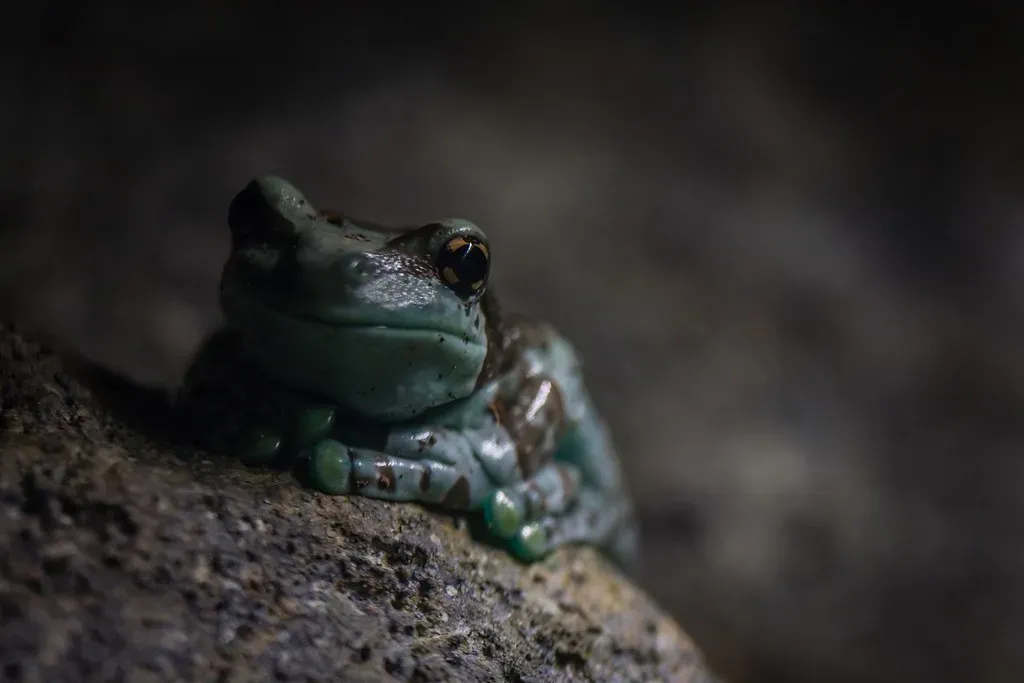
In the steamy Amazon rainforests, a determined dyeing poison frog father embarks on grueling ascents that push the limits of amphibian endurance. These vibrant blue-legged males, no bigger than a thumbnail, hoist one tadpole at a time onto their backs for the long haul upward. Their mission targets remote canopy pools, far beyond the reach of ground-dwelling predators. This paternal heroism, spotlighted in recent footage from French Guiana, reveals nature’s fierce commitment to the next generation. What compels such risk remains a captivating puzzle in the wild.
The Treacherous Ascent Through the Treetops
Each climb spans over 60 feet, navigating slick bark and gusty winds with suction-cup toes for grip. The father repeats this marathon dozens of times per clutch, carrying up to 20 tadpoles individually over hours or days. Precision proves vital, as a single slip could doom the wriggling passenger below. Predators like snakes and birds lurk along these vertical paths, heightening every inch of the journey. Remarkably, hormonal changes suppress the male’s feeding urges, channeling all energy into this vital transport. Researchers observe that only the fittest complete these treks unscathed.
Canopy Nurseries: A Predator-Proof Haven
Lowland streams swarm with fish and insects eager to devour thousands of unprotected tadpoles. By relocating offspring to phytotelmata – tiny water pockets in epiphytes or tree holes – fathers shield them from aquatic threats. These elevated spots brim with algae and, in this case, even milk frog tadpoles as ready meals for the growing poison frog young. Survival odds soar dramatically here, with estimates showing over 80 percent higher success rates than stream-raised siblings. Humidity and shade in the canopy mimic perfect conditions for metamorphosis, which spans four to six weeks. This strategy slashes competition, giving each tadpole ample space to thrive.
Evolutionary Adaptations Amid Looming Dangers
Dyeing poison frogs evolved paternal care within the Dendrobatidae family, diverging from egg-abandoning kin through specialized mucus for tadpole adhesion. Genetic studies highlight post-mating shifts that prioritize offspring over self-preservation. Clutch sizes hover around 30 to 40, though predation and falls whittle numbers to 15 to 25 survivors per season. Habitat loss from logging fragments these arboreal routes, while pollution and droughts parch vital pools. Populations have plunged nearly 50 percent in some areas over the last decade. Conservation efforts in protected Amazon reserves aim to stem this tide.
Final Thought
This frog father’s odyssey embodies nature’s raw tenacity, turning parenthood into an extreme sport for survival. One safe tadpole at canopy height signals hope amid biodiversity pressures. How far would you go for your young? Share your thoughts in the comments.
Source: Original YouTube Video

- Urban Coyotes Show Remarkable Adaptability, Learning to Thrive in City Environments - July 22, 2026
- Beavers Are Nature’s Engineers, Creating Vital Habitats for Other Wildlife Species - July 21, 2026
- The Recovery of the California Condor Offers Hope for Other Critically Endangered Birds - July 21, 2026