

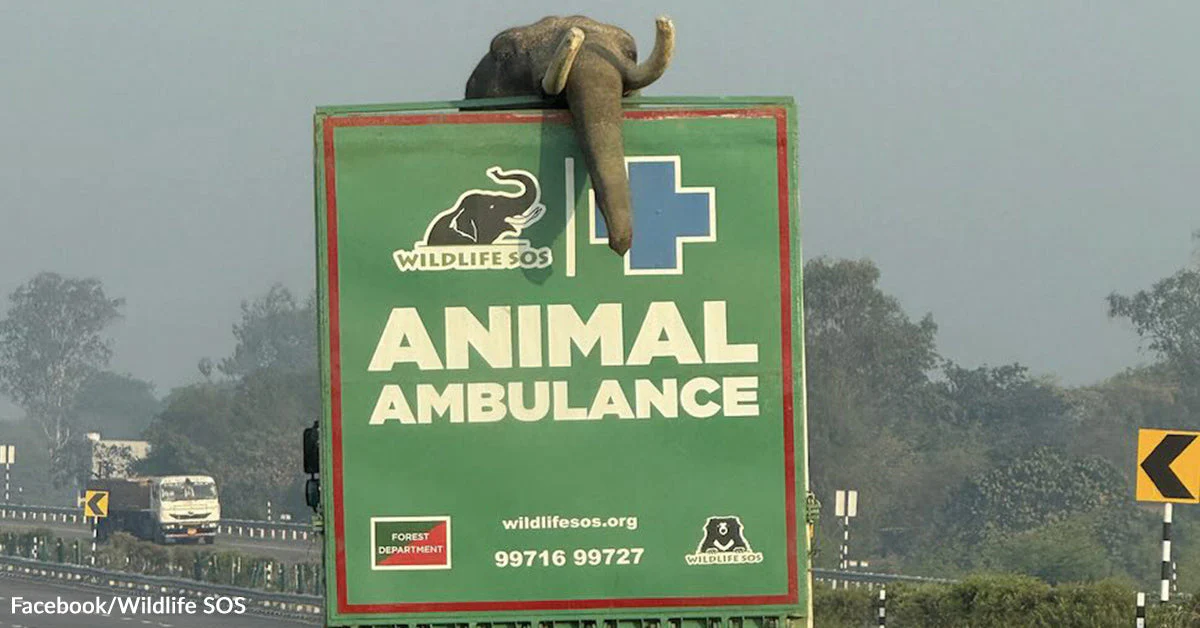
Veer’s Painful Past Comes to Light (Image Credits: Facebook)
Rural Uttar Pradesh, India – Wildlife SOS marked a milestone in animal welfare with the debut of its custom-built Elephant Ambulance. The vehicle transported a 27-year-old male elephant named Veer, who endured years of abuse as a “begging elephant,” to a specialized care facility. This innovative rescue highlighted new possibilities for saving large animals in distress.[1]
Veer’s Painful Past Comes to Light
Veer spent much of his life soliciting money on streets, a grueling role that left him with a severe leg injury. Wildlife SOS teams discovered him in a remote area, where chronic pain had severely limited his mobility. Veterinarians conducted an immediate examination to assess the damage accumulated over decades of labor.
The organization acted swiftly upon reports of his condition. Technicians provided initial stabilization to prepare him for the long trip ahead. This on-site care proved crucial before any movement could begin.[1]
Engineering a Mobile Sanctuary
The Elephant Ambulance stands out as more than a transport vehicle; it functions as a rolling treatment center. Engineers designed it to handle an elephant’s immense size and weight, complete with secure entry ramps and interior supports. Straps and harnesses distribute pressure away from injured areas during transit.
Special access panels allow staff to monitor vital signs and deliver medications without disturbance. Elephants must stand while the vehicle moves to prevent added strain on wounds, but planned stops enable rest periods. Wildlife SOS developed this tool to bridge gaps in traditional rescue methods.[1]
- Custom ramps for safe loading and unloading.
- Harness system to shift weight from limbs.
- Vital monitoring ports for continuous care.
- Spacious interior minimizing stress.
- Rest stop compatibility for multi-day trips.
Navigating the Multi-Day Trek
Loading Veer required patience and expertise from the team. They guided him gently into the ambulance after confirming his stability. The convoy then embarked on a journey spanning several days to the Elephant Conservation and Care Center in Mathura.
Frequent halts allowed Veer to lie down and recover strength. Staff remained vigilant, adjusting care as needed through the vehicle’s features. This methodical approach ensured his safety throughout the challenging route.[1]
New Beginnings at the Care Center
Upon reaching Mathura, Veer joined over 30 other rescued elephants at the facility. He now receives round-the-clock veterinary attention, tailored nutrition, and enrichment activities. Wildlife SOS integrates modern and alternative therapies, such as adapted elephant acupuncture for pain relief.
Nikki Sharp, executive director of Wildlife SOS USA, emphasized the rescue’s dual nature. “Veer’s rescue represents both urgency and hope,” she stated. “The urgency lies in responding quickly when an elephant is found in distress and needs specialized care. The hope comes from knowing that with the right tools, like the elephant ambulance and a skilled veterinary team, the organization can now respond faster and more safely than ever before.”[1]
Natasha Ashok from Wildlife SOS noted progress with acupuncture. The technique, drawn from ancient practices, has shown remarkable improvements in other elephants’ chronic conditions.
Key Takeaways
- The Elephant Ambulance enables safer, faster long-distance rescues for injured elephants.
- Veer’s case underscores the toll of exploitation on working animals in India.
- Innovations like specialized vehicles and therapies offer real paths to recovery.
This debut mission signals a brighter future for elephant welfare. Wildlife SOS continues to expand its capabilities, turning desperate situations into stories of renewal. What do you think about these advancements in animal rescue? Tell us in the comments.

- Urban Coyotes Show Remarkable Adaptability, Learning to Thrive in City Environments - July 22, 2026
- Beavers Are Nature’s Engineers, Creating Vital Habitats for Other Wildlife Species - July 21, 2026
- The Recovery of the California Condor Offers Hope for Other Critically Endangered Birds - July 21, 2026