

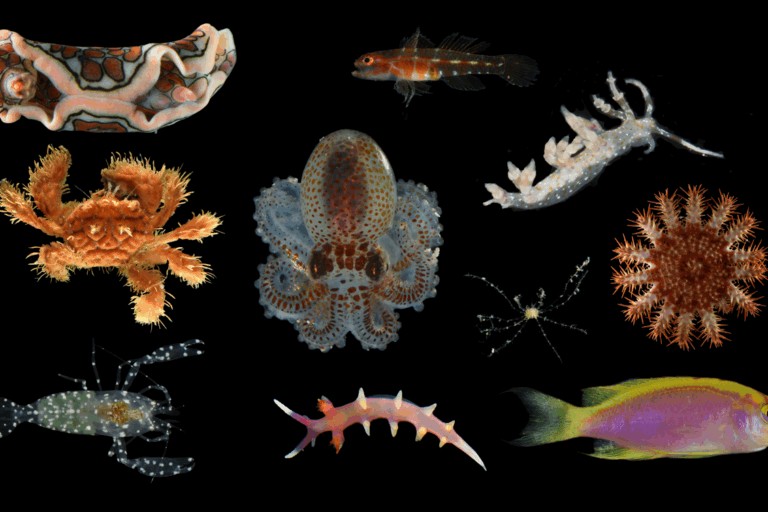

A Perilous Descent into the Unknown (Image Credits: Imgs.mongabay.com)
Guam – Beneath the waves in the Pacific Ocean’s elusive twilight zone, researchers have brought to light an array of bizarre and beautiful marine creatures that had evaded human eyes for centuries.
A Perilous Descent into the Unknown
Diving into the mesophotic reefs, where sunlight fades into perpetual dimness, demands extraordinary skill and courage from scientists. These depths, stretching from about 100 to 330 feet below the surface, pose risks that rival space exploration. Divers face nitrogen narcosis, extreme pressure, and limited visibility, yet they press on to catalog life forms that thrive in this shadowy realm. The recent expedition off Guam’s coast highlighted these challenges, as teams retrieved monitoring devices after months of submersion.
Experts from the California Academy of Sciences led the effort, pushing the boundaries of deep-reef exploration. Their work not only uncovered biodiversity but also underscored the fragility of these ecosystems. Strong currents and technical rebreathers added to the peril, making each dive a calculated gamble. Still, the rewards proved immense, with footage capturing moments of pure wonder amid the hazards.
Strange New Inhabitants of the Twilight
Among the discoveries, a translucent goby fish caught attention for its ghostly appearance, its internal structure faintly visible through sheer skin as it glided silently. Nearby, a sea slug sported vivid yellow spots, resembling a festive garment in the muted blues of the deep. An orange fish with prominent eyes darted for cover among coral branches, its form adapted perfectly to this low-light world. These species, along with others like peculiar crustaceans and anemones, represent a snapshot of evolution in isolation.
The team identified 20 such newcomers, each offering clues to the ocean’s vast untapped diversity. Some featured bioluminescent traits, while others displayed camouflage that blends seamlessly with the reef. This variety points to a thriving, yet vulnerable, community far from the sunlit shallows. Researchers noted how these finds expand our understanding of marine adaptation, revealing patterns unseen in shallower waters.
Innovative Tools Unlock the Depths
To access this hidden world, scientists deployed specialized “deep-sea hotels” – sturdy monitoring stations equipped with cameras and sensors. These devices, anchored to the seafloor, recorded activity over extended periods without disturbing the habitat. Retrieval missions then allowed for detailed analysis of the footage and samples collected. The approach minimized human impact while maximizing data yield, a key innovation in mesophotic research.
Collaboration with local experts in Guam ensured culturally sensitive operations, integrating traditional knowledge with modern technology. The stations captured not just species but also environmental shifts, such as subtle temperature rises affecting coral health. This method has set a precedent for future expeditions, proving that passive observation can yield active discoveries.
- Translucent gobies with visible skeletons
- Polka-dotted sea slugs in bright yellow
- Bulging-eyed orange fish hiding in corals
- Bioluminescent anemones pulsing softly
- Camouflaged crustaceans mimicking reef textures
- Rare deep-water sponges with unique structures
Broader Implications for Ocean Health
Beyond the excitement of new species, the expedition revealed concerning signs of climate change in these deeper realms. Warmer waters appeared to stress coral formations, potentially disrupting food chains that link surface and deep-sea life. Mesophotic reefs serve as refuges for species fleeing shallower bleaching events, making their protection urgent. The findings call for expanded conservation efforts in the Pacific, where human activities like fishing threaten these zones.
International bodies have taken note, with calls for protected marine areas around Guam. The discoveries emphasize the twilight zone’s role in global biodiversity, acting as a bridge between sunlit and abyssal ecosystems. Sustaining these habitats requires global cooperation, from reducing carbon emissions to regulating deep-sea exploration. As oceans warm, such insights become vital for predicting ecological shifts.
Key Takeaways
- 20 new species identified in Guam’s mesophotic reefs highlight untapped ocean biodiversity.
- Deep-sea monitoring devices offer a low-impact way to study hard-to-reach ecosystems.
- Evidence of warming trends underscores the need for immediate conservation measures.
These revelations from Guam’s twilight zone remind us that the ocean still holds profound secrets, urging a deeper commitment to its preservation. What surprises might the deep reveal next, and how can we safeguard these wonders? Share your thoughts in the comments.

- Urban Coyotes Show Remarkable Adaptability, Learning to Thrive in City Environments - July 22, 2026
- Beavers Are Nature’s Engineers, Creating Vital Habitats for Other Wildlife Species - July 21, 2026
- The Recovery of the California Condor Offers Hope for Other Critically Endangered Birds - July 21, 2026