

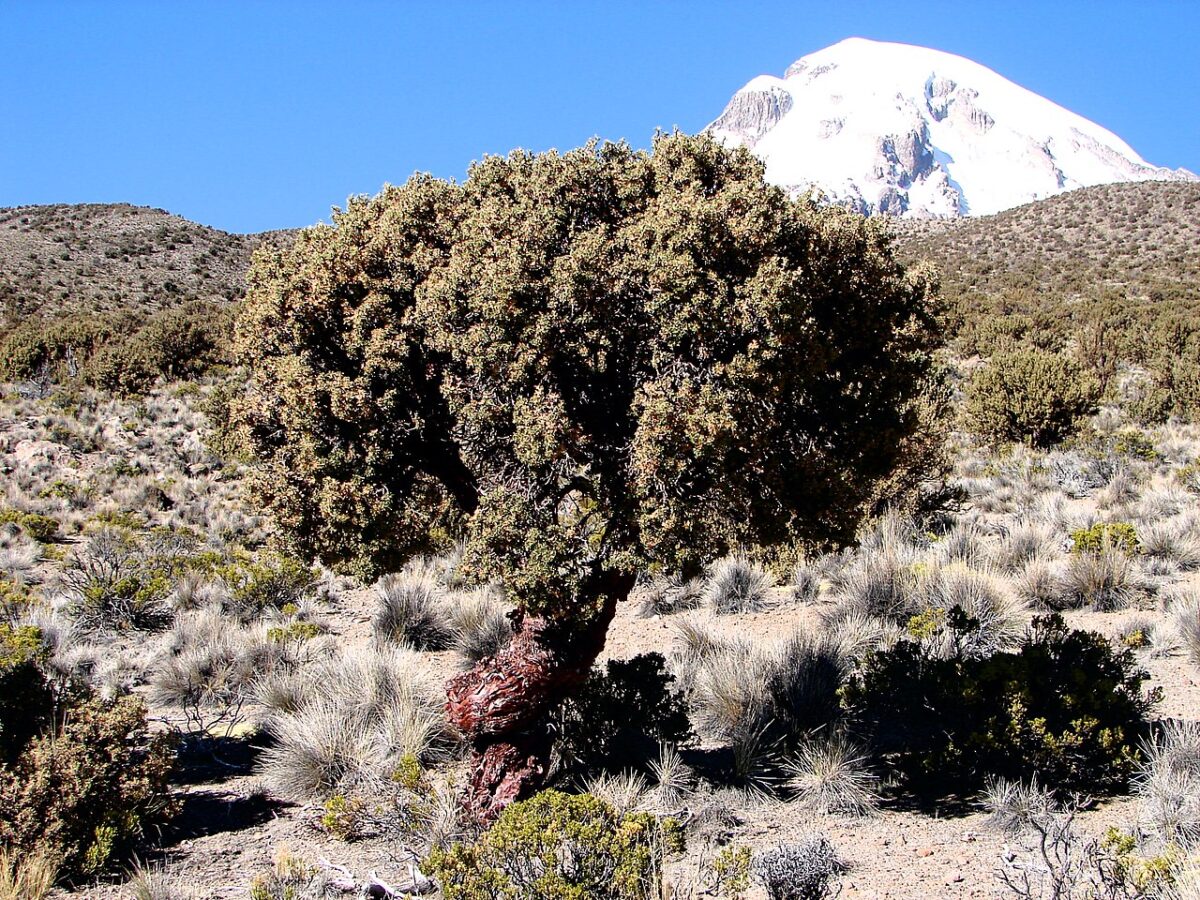
Polylepis Trees: Survivors of Extreme Heights (Image Credits: Imgs.mongabay.com)
The high Andes – where jagged peaks pierce the sky and winds howl relentlessly – host some of the world’s most tenacious woodlands, now showing promising signs of recovery through targeted restoration.
Polylepis Trees: Survivors of Extreme Heights
Polylepis trees stand out for their ability to endure conditions that would fell most vegetation. These hardy species grow at elevations reaching 5,000 meters, where thin air and rocky terrain dominate. Their gnarled trunks and peeling bark serve as natural armor against ultraviolet radiation and freezing temperatures. Researchers have long marveled at how these trees form the upper limit of forest cover in the Andes, just below permanent snowlines.
Deforestation over decades reduced these forests dramatically, leaving fragmented patches vulnerable to erosion and invasive species. Local communities, dependent on the ecosystems for water and grazing, recognized the urgency of intervention. Efforts began with small-scale planting, but scaled-up initiatives have transformed the landscape. A recent study documented survival rates exceeding expectations, proving the trees’ innate resilience translates to restored sites.
Restoration Efforts Gain Momentum Across Borders
Initiatives like Acción Andina united organizations from Ecuador, Peru, Bolivia, and beyond to plant millions of native saplings. By 2025, the project had restored over 12 million Polylepis trees, focusing on degraded slopes and ravines. Community leaders coordinated with scientists to select optimal sites, ensuring seedlings received initial protection from livestock and weather. This collaborative approach emphasized local knowledge, blending traditional practices with modern techniques such as drip irrigation in pilot areas.
The study, published in late 2025, tracked plots planted years earlier and found that more than 70% of trees survived beyond a decade. Factors like soil preparation and companion planting with other natives boosted outcomes. Participants reported fewer landslides in treated zones, highlighting immediate practical benefits. Such data encouraged further investment, with global partners stepping up to expand coverage.
Measuring Success in Harsh Terrain
Evaluating restoration in the high Andes demands rigorous methods, given the remote locations and variable climate. Teams used satellite imagery and ground surveys to monitor growth, carbon sequestration, and biodiversity shifts. The research revealed that restored forests not only persisted but also supported returning wildlife, including rare birds and small mammals. One key metric showed increased water retention, vital for downstream agriculture.
Challenges persisted, such as occasional droughts that tested young trees’ limits. Yet, adaptive strategies like mulching with local materials improved moisture levels. The study’s authors noted that long-term monitoring remains essential to refine approaches. Overall, the findings affirmed that Polylepis restoration yields stable ecosystems over time.
Ecosystem and Community Benefits Unfold
Beyond tree survival, these projects revitalize entire habitats. Polylepis woodlands act as corridors for species migration and buffers against climate extremes. In restored areas, pollinators and herbivores returned, signaling healthier food webs. Communities gained sustainable resources, from firewood to medicinal plants, fostering economic stability.
Education programs trained locals in nursery management, empowering women and youth in conservation roles. The initiative’s success inspired similar efforts in other mountain regions worldwide. As glaciers recede, these forests could play a larger role in water security for millions.
- Enhanced biodiversity through habitat connectivity.
- Reduced soil erosion on steep slopes.
- Improved water quality for Andean rivers.
- Carbon storage to combat global warming.
- Cultural preservation via indigenous involvement.
Key Takeaways
- Restored Polylepis forests demonstrate over 70% long-term survival rates in extreme conditions.
- Community-led planting has restored millions of trees across five South American countries.
- These efforts yield broader benefits, from wildlife recovery to water resource protection.
Polylepis restoration in the high Andes exemplifies how perseverance and science can reclaim fragile ecosystems, offering hope for mountain environments everywhere. What steps can we take to support such global initiatives? Share your thoughts in the comments.

- Urban Coyotes Show Remarkable Adaptability, Learning to Thrive in City Environments - July 22, 2026
- Beavers Are Nature’s Engineers, Creating Vital Habitats for Other Wildlife Species - July 21, 2026
- The Recovery of the California Condor Offers Hope for Other Critically Endangered Birds - July 21, 2026