
Sixty-six million years ago, a rock roughly the size of a small city slammed into the Earth and ended the age of dinosaurs. It was catastrophic, total, and final. Then, in the summer of 1993, Steven Spielberg did something arguably more lasting to our understanding of those animals: he made them roar, spit venom, hunt with human intelligence, and stalk people in the dark using motion-based vision. The meteor killed the dinosaurs. The movie just might have buried the science.
When Jurassic Park first hit theaters in 1993, it inspired a generation of dinosaur enthusiasts and helped usher in what many called a new golden age of paleontology. But it also froze the public’s perception of dinosaurs in time, and popularized inaccuracies that people still believe are true today. The problem isn’t that it was a bad film. It was a spectacular one. The problem is that it was also the most powerful science teacher most people ever had, and it got a lot wrong.
#1: The Movie That Ate Public Science
There’s a statistic that paleontologists find both flattering and alarming. Unlike living species of animals, the idea of what dinosaurs were like is often associated with their appearances in films like Jurassic Park. With no living, breathing example, people tend to base their understanding more heavily on media portrayals. That’s the core of the problem. There are no dinosaurs at a zoo, no documentary crews filming them in the wild, and no way for the average person to check the movie’s version against reality.
At one point, Jurassic Park was the highest-grossing movie of all time, bringing in over a billion dollars when it was first released in 1993. With this great success came a renewed public interest in dinosaurs. Unfortunately, it also led to many new misconceptions about them, particularly how they looked and behaved. The reach of the franchise only widened over three decades of sequels, merchandise, theme park rides, and lunchboxes, each one reinforcing the same set of flawed images into the minds of successive generations.
#2: The T. Rex That Couldn’t See You Standing Still
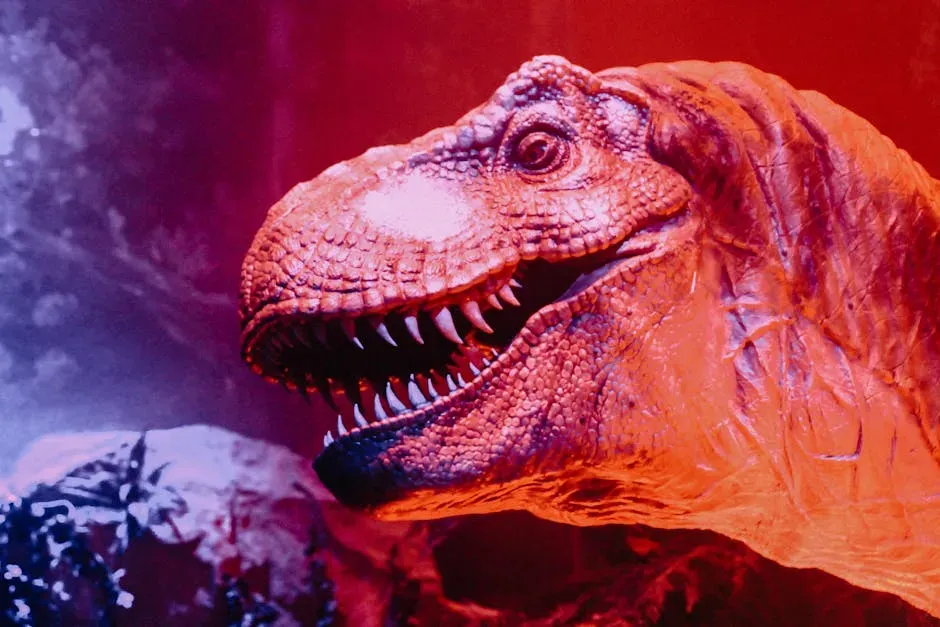
Arguably the most quoted piece of fictional dinosaur science in cinema history is Dr. Alan Grant’s desperate instruction during that rain-soaked scene: “Keep absolutely still. Its vision is based on movement.” It’s memorable, thrilling, and completely made up. Scientists never made any basis for motion-based vision in Tyrannosaurus. Every paleontologist knows that T. rex had binocular vision, with eyes pointed forward rather than at the sides of its head. The line was a creative choice, not a scientific one.
New technology has debunked the myth that the Tyrannosaurus Rex’s vision is based on movement. CT scans of T. rex skulls have allowed scientists to visualise the brain cavity, revealing that T. rex had binocular vision, with a strong depth of 3D perception. It could also hear a range of sounds and had a great sense of smell. In short, if a T. rex was hunting you, staying still would have been about as useful as a raincoat. Their large olfactory bulbs and nerves relative to their brain size indicate they may have had a sense of smell roughly equivalent to modern vultures, capable of detecting things from kilometers away.
#3: The Velociraptor That Never Existed
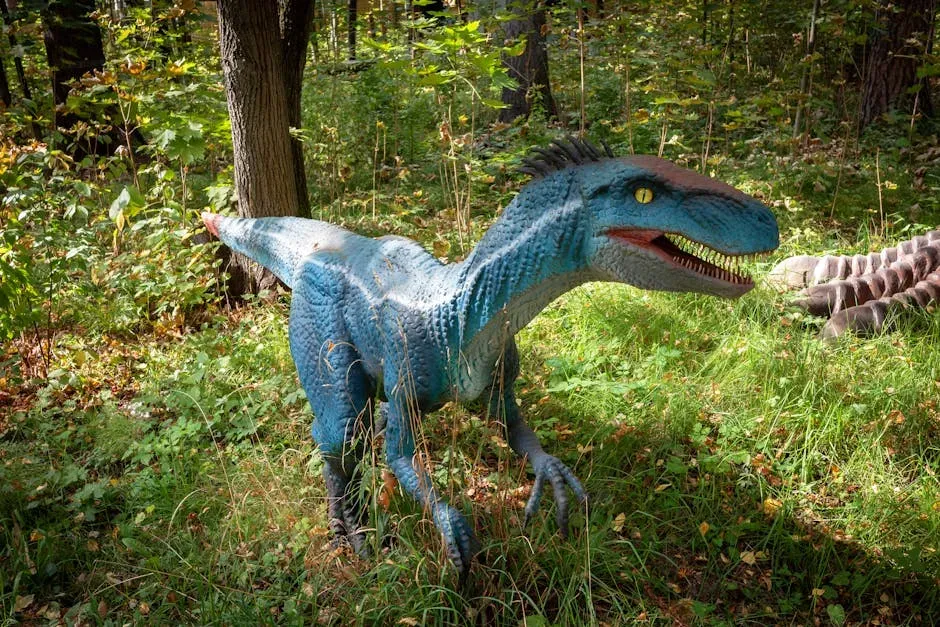
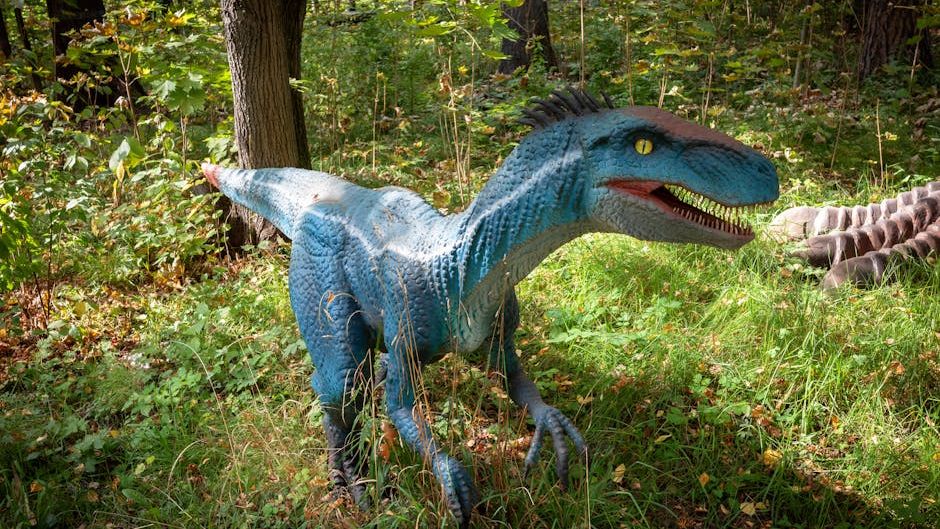
The kitchen scene. The breathing through the fog. The door handle. Few predators in film history have been as terrifying as Jurassic Park’s Velociraptors, which is remarkable given how different they were from the actual animal. In reality, Velociraptor was roughly the size of a turkey, considerably smaller than the approximately two-meter-long and ninety-kilogram reptiles seen in the novels and films, which were actually based on the related genus Deinonychus. The animals hunting children in that kitchen were never Velociraptors in any meaningful biological sense.
Size wasn’t the only thing they got wrong. Back in 1993, that’s how scientists thought Velociraptor and Deinonychus would have looked. But starting in the mid-1990s, there has been a vast number of discoveries of feathered dinosaurs. It’s now considered absolutely certain that they would have been covered in feathers and may well have had long, display-type feathers on their forearms. The sleek, scaly, six-foot killing machine of pop culture is essentially a fictional creature wearing a real dinosaur’s name.
#4: Feathers: The Discovery the Franchise Kept Ignoring
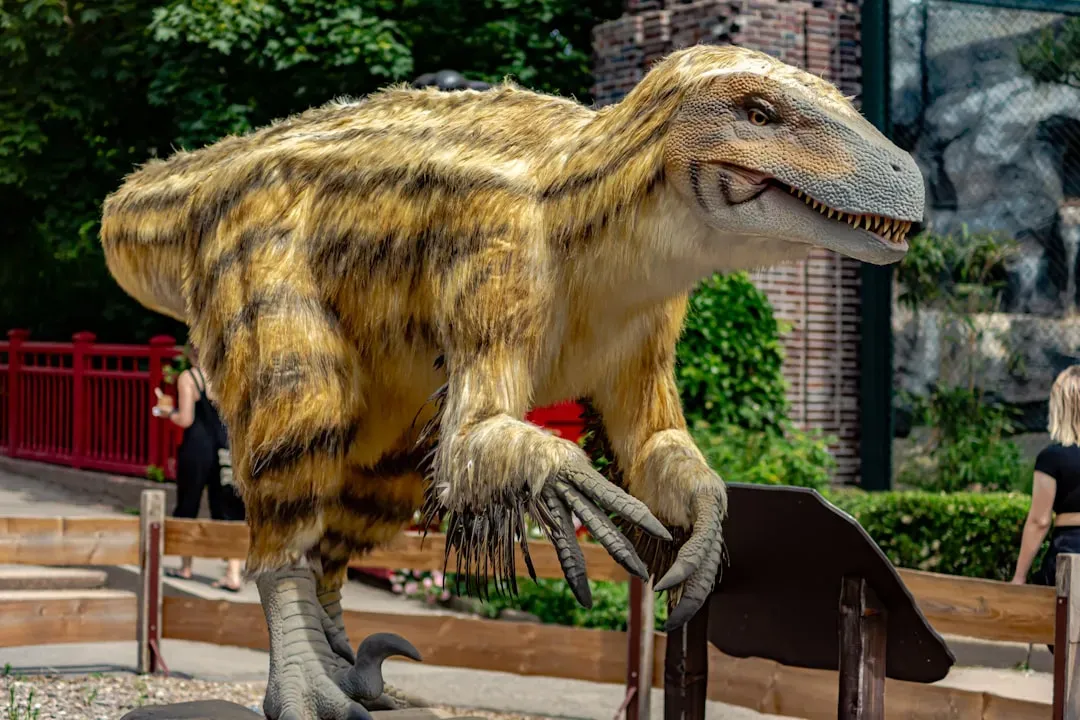
The feather problem runs deeper than just the Velociraptor. Paleontology has evolved significantly since Jurassic Park first hit theaters in 1993. Back then, dinosaurs were still widely depicted as scaly, reptilian creatures, often sluggish and cold-blooded. Modern research paints a very different picture. Many theropods, including Velociraptor, are now believed to have been feathered, warm-blooded, and highly agile. The franchise had opportunities over three decades to update this, and largely chose not to.
Jurassic Park and its sequel The Lost World were released before the discovery that dromaeosaurs had feathers, so the Velociraptor in both films was depicted as scaled and featherless. For Jurassic Park III, the male Velociraptor was given quill-like structures along the back of the head and neck, but these did not resemble the feathers Velociraptor would have had in reality. The Jurassic World sequel trilogy ignored the feathers of Velociraptor entirely, adhering to the designs from the original Jurassic Park. Science moved forward. The movies stayed put.
#5: The Dilophosaurus and the Frill That Never Was
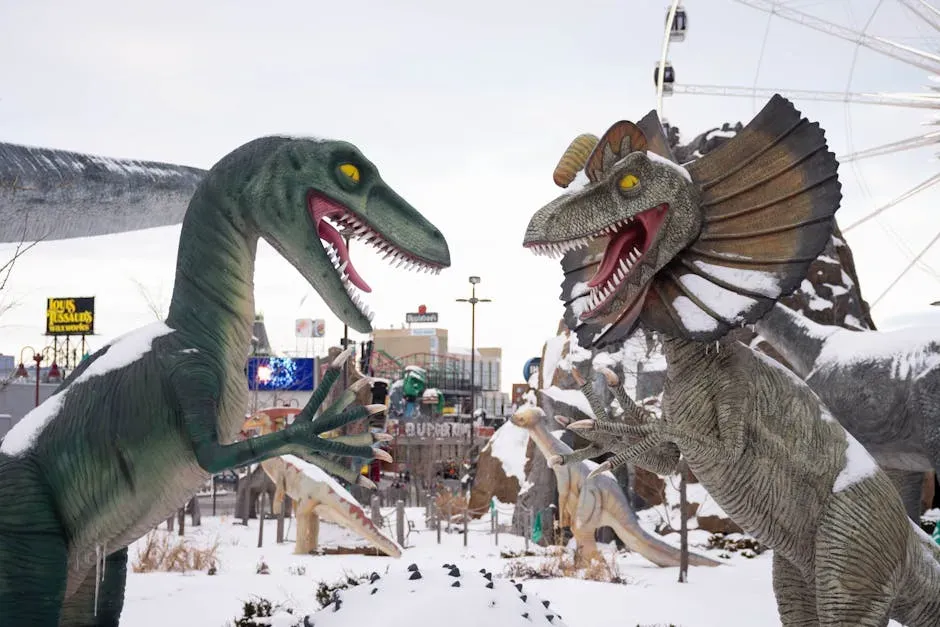
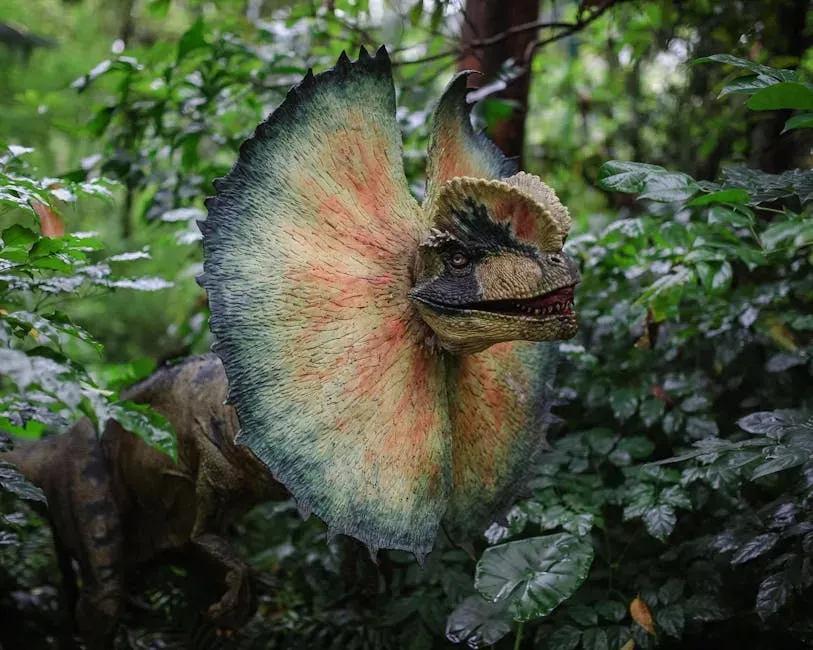
The scene is etched into cinema memory: the small dinosaur with the charming disposition that suddenly unfurls a spectacular neck frill and spits blinding venom directly into Dennis Nedry’s face. Deeply satisfying as a narrative moment. Almost entirely fabricated as science. Dilophosaurus was a sleek, fast predator with a head crowned by two elegant, crest-like bones likely used for display. While pop culture turned it into a venom-spitting menace with an expanding neck frill, science tells a different story. There’s no evidence Dilophosaurus ever spat venom, and the iconic frill is pure Hollywood.
For many paleontologists, the Dilophosaurus remains one of the most frustrating franchise myths. There’s simply no evidence it had a frill, and no proof that any dinosaur was venomous. What makes this particularly sticky is how thoroughly the image has spread. The Jurassic Park depiction of Dilophosaurus has been taken up by other media. Several video games feature Dilophosaurus modeled after the representations in Jurassic Park, meaning the myth now lives several layers deep in popular culture, far beyond the original film.
#6: The Roar That Was Never Real
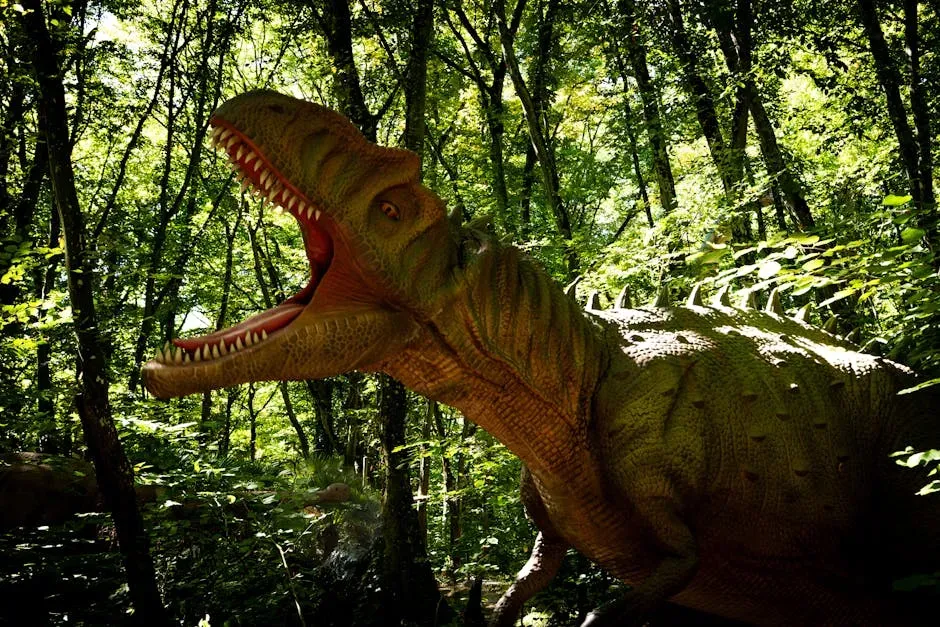
Close your eyes and think of a dinosaur. You almost certainly heard a roar just now. That sound is so deeply embedded in our cultural imagination that it feels like a fact of nature. It isn’t. The iconic Jurassic Park roar wasn’t based on fossil evidence or scientific modeling. Instead, it was a sound designer’s creative blend of animal recordings. The T. rex’s roar was an edited mix of a baby elephant, tiger growls, and alligator hisses, all slowed down and layered to feel primal and terrifying. It was brilliant filmmaking. It was not biology.
Scientists theorize that many dinosaurs may have produced closed-mouth vocalizations, by inflating their esophagus or tracheal pouches while keeping their mouth closed, producing something comparable to a low-pitched swooshing, growling, or cooing sound. In 2025, researchers described Pulaosaurus qinglong in the journal PeerJ, identifying it as only the second non-avian dinosaur preserved with a bony voice box. The dinosaur likely chirped, cooed, and produced complex calls. It sounded more like a bird than a beast. The roar, in other words, may be one of the most universally believed myths in all of popular science.
#7: Dinosaur DNA and the Amber Problem
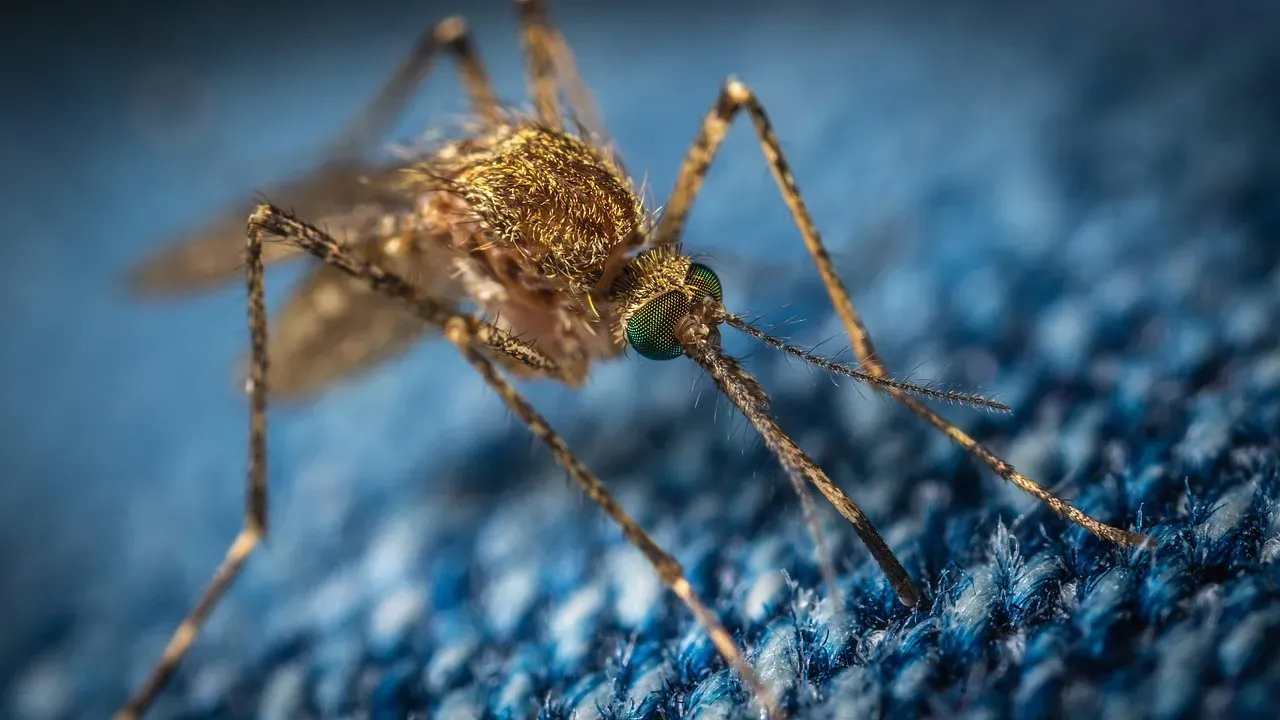
The premise of the entire Jurassic Park universe hinges on a simple, enticing idea: mosquitoes trapped in amber preserved dinosaur blood, and that blood still contains usable DNA millions of years later. It’s elegant storytelling. It’s also scientifically impossible. The oldest DNA that has been recovered from the fossil record is well under a million years old, and non-bird dinosaurs all died out sixty-five million years ago. Because DNA is a fragile molecule, it’s not thought to have survived as far back as the Jurassic period.
One question that paleontologists didn’t often have to field before Jurassic Park is whether dinosaur DNA exists and if dinosaurs can be cloned. Now it’s a fixture of public appearances and school visits, a question driven entirely by a single film’s premise. Until recently, the oldest DNA successfully retrieved was about 500,000 years old, and that record has since been pushed to 1.2 million years. When you’re talking about dinosaurs, you’re talking about more than sixty million years. The gap between what the movie implies and what chemistry actually allows is immense.
#8: Why the Myths Keep Living, Thirty Years On
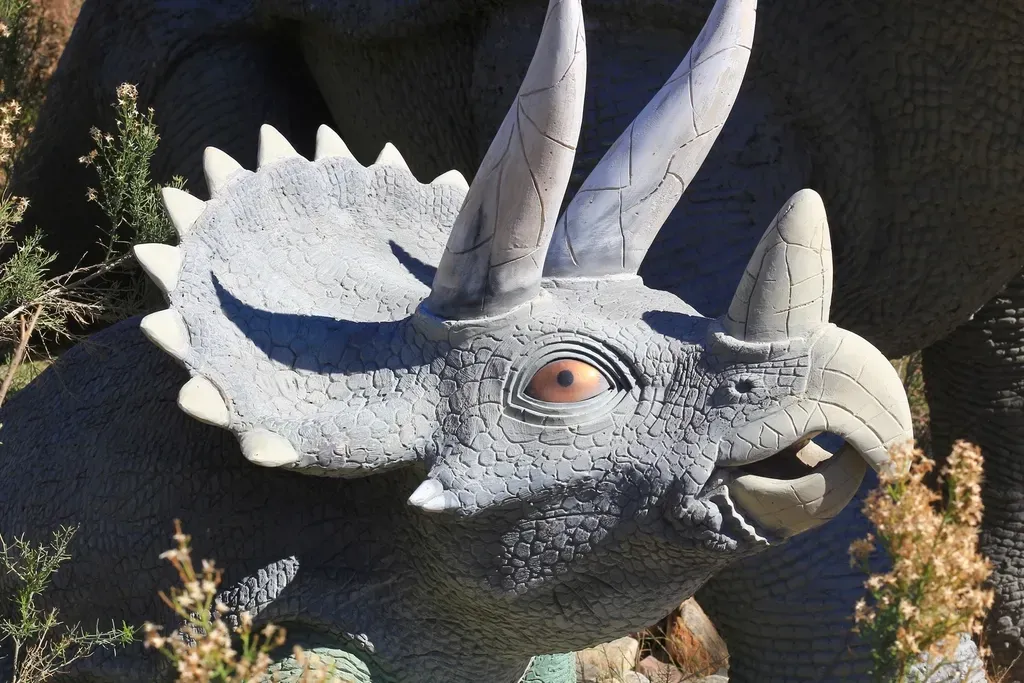
The misconceptions about dinosaurs created by Jurassic Park are still present in today’s media, and many believe these to be factual. Despite paleontologists’ best efforts to have dinosaurs portrayed as accurately as possible in film, including in recent Jurassic World installments, very few recent projects have hit the scientific mark. The franchise has now spanned six films and more than three decades, and each new entry essentially resets public understanding back to 1993.
The impact has been so strong that even museum exhibits began featuring roaring dinosaurs, despite knowing the sound wasn’t accurate. Paleontology educators often feel caught between public expectations and scientific reality. Replace the classic roar with a low-frequency rumble or a rhythmic boom, and visitors might think something’s wrong. That’s the real depth of the problem. The movie hasn’t just misinformed people. It has shaped what people expect science to confirm, making correction feel like a disappointment rather than a discovery.
Conclusion: The Most Influential Science Teacher of the Last Century
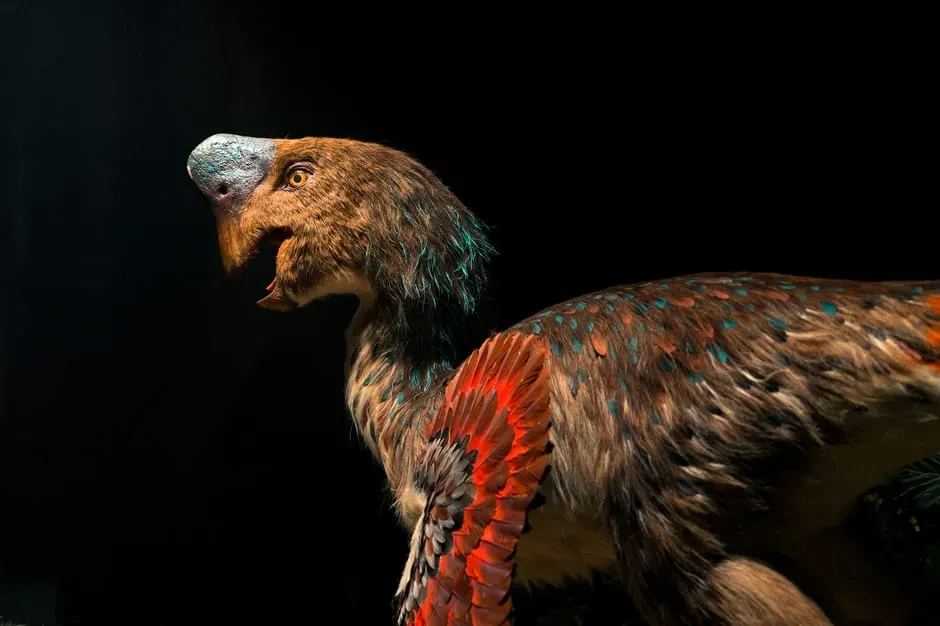
Jurassic Park will always be a masterpiece of filmmaking. Nothing here changes that. What it changed, in ways Spielberg almost certainly didn’t intend, was the baseline assumptions of an entire global audience about what these animals were, how they moved, how they sounded, and what they looked like. Jurassic Park sparked a renewed interest in paleontology, and after three decades and two film trilogies, it continues to inspire people to dig in and learn more about these animals who roamed the Earth millions of years ago. That part is genuinely valuable.
The work of correcting the record falls to scientists who work in museums, write papers, and give school talks, all while competing with one of the most culturally embedded film franchises in history. The gap between scientific evidence and public perception remains wide, largely because of Jurassic Park’s enduring cultural footprint. Paleontology keeps advancing. Feathered fossils keep emerging. New vocal anatomy is being described as recently as 2025. The science is richer and stranger than any blockbuster has yet dared to show. Perhaps the most curious thought to leave you with is this: the real dinosaurs, with their feathers and their low booming calls and their hawk-sharp vision, would have been every bit as terrifying as the ones on screen. They just would have looked, sounded, and hunted nothing like you’ve been told.
