


The bald eagle, America’s national symbol, is not only remarkable for its impressive wingspan and piercing gaze but also for its extraordinary nest-building abilities. These magnificent birds construct some of the largest nests in the avian world—often exceeding the size of a standard bathtub. These massive structures, known as eyries, represent remarkable feats of avian engineering and dedication. The creation of these enormous nests involves complex behaviors, specific material selection, and incredible persistence that spans generations. This article explores the fascinating process of how bald eagles build and maintain these enormous homes, highlighting the impressive skills and adaptations that make such monumental construction possible.
The Magnificent Scale of Eagle Nests

Bald eagle nests are truly architectural marvels in the animal kingdom. The average nest measures 4-5 feet in diameter and 2-4 feet deep—already larger than most household bathtubs. However, what makes these structures truly extraordinary is that eagles add to their nests year after year. The longest-used bald eagle nest on record, located in Ohio, measured an astonishing 9.5 feet in diameter and 20 feet deep before it collapsed after being used for 34 years.
Scientists estimated its weight at over two tons. For perspective, the average bathtub measures approximately 5 feet long, 2.5 feet wide, and 1.5 feet deep—making many eagle nests several times larger in volume and mass. These enormous structures must be sturdy enough to support the weight of adult eagles (typically 8-14 pounds each), their offspring, and withstand severe weather conditions year-round.
Selecting the Perfect Location
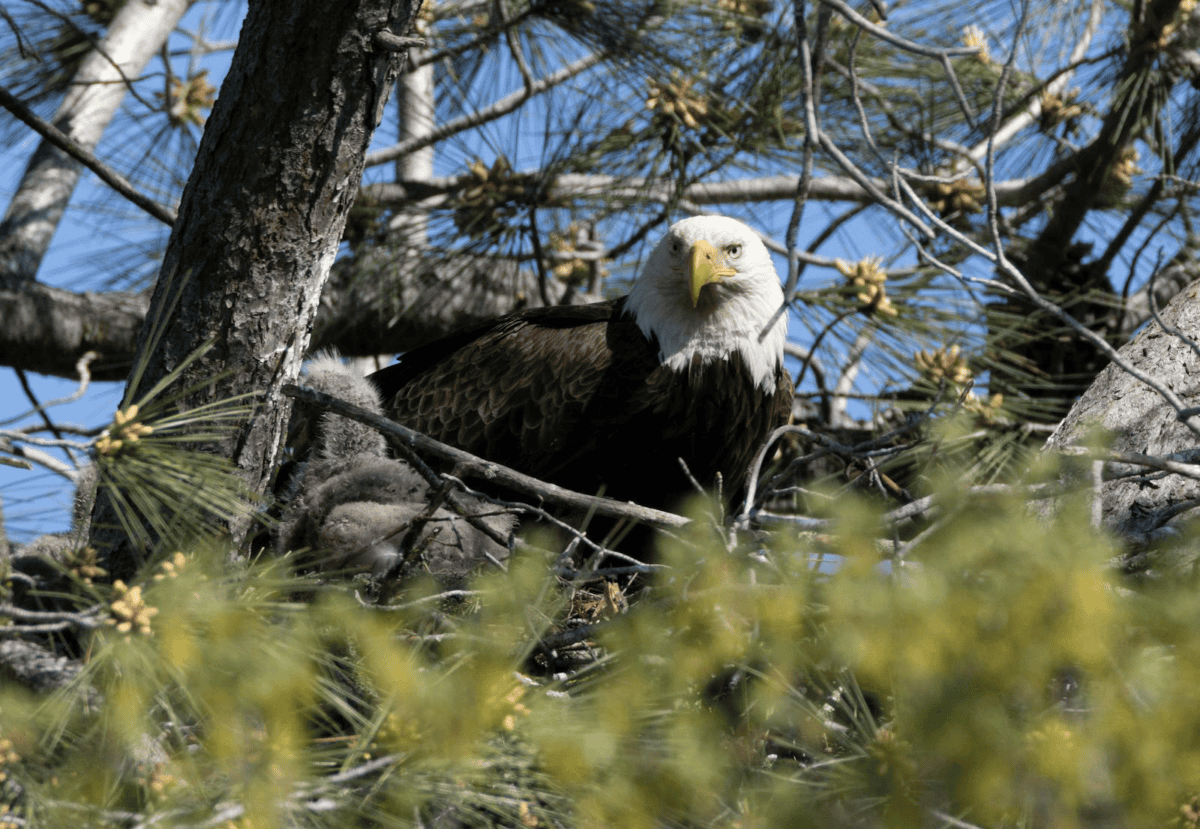
Bald eagles demonstrate remarkable selectivity when choosing nest sites. They typically prefer tall, mature trees with sturdy branches capable of supporting their massive nests. The ideal tree provides a commanding view of the surrounding area, especially overlooking bodies of water where eagles do most of their hunting. Eagles typically select locations 50-125 feet above ground and within one mile of water.
The chosen tree must have an open structure at the top to accommodate their large wingspan (6-7.5 feet) for easy landings and takeoffs. In areas without suitable trees, eagles may nest on cliffs or even on the ground on predator-free islands. Location selection is critical, as the nest site may be used for decades if successful. Eagles are particularly sensitive to human disturbance during nest building, and research shows they prefer areas at least a quarter-mile from human activity. This careful selection process can take weeks as the eagle pair evaluates multiple potential sites.
The Foundation: Starting the Construction

The foundation of a bald eagle nest is crucial to its structural integrity and longevity. Eagles begin by selecting large sticks, typically 1-2 inches in diameter and 2-3 feet long, which they break directly from trees using their powerful beaks and talons. They interlock these sticks to form a sturdy base, carefully positioning them into a circular pattern. This initial platform may take 1-3 weeks to complete. Both male and female eagles participate in this phase, though males typically gather more materials while females do more of the arranging.
Eagles demonstrate remarkable engineering intuition, placing heavier, stronger sticks at the bottom and gradually using lighter materials toward the upper portions. They test the strength of each placement by standing on newly placed sticks and making adjustments as needed. The foundation must be robust enough to support the continually growing nest and withstand powerful winds, as many nests are built in exposed locations. First-time nest builders sometimes experience failures when foundations prove inadequate, but they quickly learn from these mistakes in subsequent attempts.
Materials Collection and Selection

Bald eagles are discriminating in their selection of nest materials, using different types for specific purposes. The outer structure primarily consists of sticks and branches ranging from pencil-thickness to broomstick-size. Eagles collect most materials within a one-mile radius of the nest site, though they may travel farther for specific items. They generally prefer dead wood, which is lighter and easier to break than live branches. For the nest lining, eagles use softer materials, including grasses, moss, algae, cattail fluff, and their own downy feathers.
A particularly distinctive material often found in eagle nests is fresh conifer boughs containing aromatic compounds that may serve as natural insect repellents. Eagles also incorporate unusual items into their nests: marine debris in coastal areas, plastic bags that may provide waterproofing, and even discarded human items like rope, fishing line, and pieces of netting (though these can sometimes pose entanglement dangers). Research has documented eagles making hundreds of material-gathering trips during initial nest construction, with males and females sharing responsibility but often specializing in collecting different types of materials.
The Division of Labor Between Mates

Nest building is a cooperative effort between mated eagles, though the division of labor reveals interesting patterns. Studies tracking tagged eagles show that males typically provide 55-75% of the heavy construction materials, using their slightly smaller size and greater agility to break branches and transport them to the nest. Females, being about 25% larger than males, excel at arranging materials and shaping the nest’s structure with their greater strength.
Both partners communicate continuously during construction with specific vocalizations that coordinate their efforts. The process strengthens pair bonding, with mutual displays and ceremonies frequently occurring at the nest site. Researchers have observed that experienced pairs build more efficiently than newly formed pairs, suggesting that nest-building skills improve with practice and partnership longevity. The synchronization between mates becomes particularly evident during the final stages of nest preparation, when both birds engage in precise, alternating movements to create the nest cup where eggs will eventually rest. This division of responsibilities continues throughout the nesting season, with maintenance and repairs becoming ongoing tasks once the nest is established.
Nest Architecture and Interior Design

The interior architecture of a bald eagle nest demonstrates sophisticated design principles. Eagles create a distinct bowl-shaped depression in the center, approximately 4-5 inches deep and 20-25 inches in diameter, which helps keep eggs and young eaglets from rolling out. This nest cup is meticulously lined with the softest materials—grasses, moss, seaweed, and downy feathers—creating an insulated microenvironment that can be up to 40°F warmer than the surrounding air temperature in cold weather. As the nest expands over years of use, eagles often create distinct layers and zones for different activities.
The outer perimeter typically serves as a feeding platform and lookout area, while the center remains dedicated to incubation and brooding. Eagles continually adjust the interior as conditions change, adding insulating materials during cold weather and removing some during hot periods to improve air circulation. They also maintain drainage channels within the structure to prevent water accumulation during rain. This intentional engineering creates a surprisingly complex interior that serves multiple functions throughout the breeding season and adapts to changing environmental conditions and the growing needs of eaglets.
The Timeline of Construction

The timeline for building an eagle nest varies based on experience, location, and weather conditions. First-time nest builders typically spend 1-3 months constructing a new nest, beginning the process 1-3 months before egg-laying. In the northern United States, this means construction often starts in December or January for eggs that will be laid in March. Experienced pairs refurbishing existing nests may complete preparations in just 1-2 weeks. The construction process follows a predictable sequence: site selection (1-2 weeks), foundation building (1-3 weeks), main structural assembly (2-4 weeks), and interior finishing (1-2 weeks).
Eagles work most intensively in the early morning and late afternoon, with construction sessions typically lasting 2-3 hours. They average 10-15 material-gathering trips daily during peak construction periods. Weather significantly impacts the timeline, with eagles working more rapidly during fair weather and pausing during severe conditions. Interestingly, research shows that pairs in southern regions with longer breeding seasons tend to spend more time on nest construction than northern pairs, possibly because northern eagles face greater time pressure before winter conditions become too harsh for successful breeding.
Annual Additions and Maintenance

One of the most remarkable aspects of bald eagle nests is their continuous growth through annual additions. Each breeding season, eagles add between 1-2 feet of new material to their existing structure. This ongoing expansion explains how nests reach their bathtub-exceeding dimensions over time. Maintenance is a year-round commitment, with eagles regularly replacing damaged sections and reinforcing weak points. During the breeding season, parents continuously bring fresh material, with studies documenting an average of 3-5 new branches added daily even after eggs hatch.
This constant renovation serves multiple purposes: it compensates for decomposition of lower layers, strengthens the structure against weather damage, and maintains nest sanitation. Eagles also perform what researchers call “nest cleaning,” removing debris, food remains, and waste. Interestingly, the bottom layers of long-used nests gradually decompose into a rich, soil-like material that provides thermal insulation and drainage. Annual maintenance peaks just before egg-laying and again after severe weather events. For nests used over decades, this cumulative building can result in structures weighing over 2,000 pounds—creating massive homes that become prominent landscape features visible from considerable distances.
Challenges and Adaptations in Nest Building

Bald eagles face numerous challenges when constructing their massive nests and have evolved impressive adaptations to overcome them. Wind represents perhaps the greatest threat, with strong gusts capable of dislodging even well-established nests. Eagles counter this by creating aerodynamic nest shapes that offer less wind resistance and by using “anchor sticks” that wrap around supporting branches. Predators pose another challenge, particularly for eggs and young eaglets. Eagles address this by building at heights typically inaccessible to ground predators and maintaining clear sightlines around the nest.
Weather extremes require adaptations too—eagles incorporate insulating materials in colder regions and build more ventilated structures in hotter climates. The substantial weight of accumulating nest material can eventually break supporting branches, which eagles mitigate by distributing weight across multiple branch junctions. In urban environments, eagles show remarkable flexibility, using artificial structures like transmission towers when suitable trees are unavailable and incorporating unconventional materials like wire and plastic into their nests. Perhaps most impressively, research documents eagles learning from nest failures, with pairs whose nests collapse typically building stronger, more wind-resistant structures in subsequent attempts, demonstrating both adaptability and learning capacity.
Nest Reuse and Generational Aspects
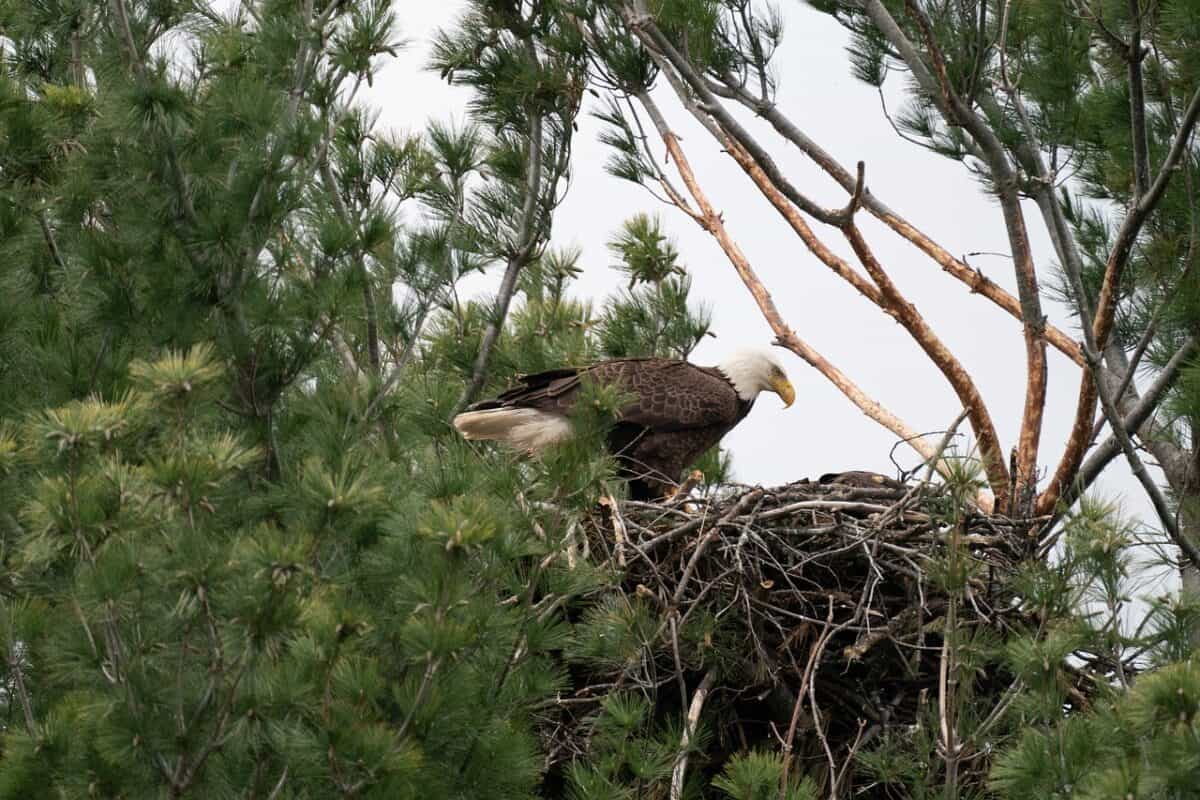
Bald eagles demonstrate remarkable nest fidelity, with established pairs typically returning to the same nest year after year. This reuse has both practical and social significance in eagle ecology. Studies show that approximately 85% of eagle pairs reuse their previous year’s nest if it remains intact. This continuity creates multigenerational structures, with some documented nests being continuously occupied for over 30 years by successive pairs. When original builders die, their nests often become valuable territory markers claimed by new eagles. In some documented cases, offspring return to nest near their parents, creating family clusters of nests within a territory.
The evolutionary advantages of nest reuse are significant: eagles save substantial energy by renovating rather than rebuilding, established nests have proven structural integrity and location benefits, and successful nest sites correlate with higher reproductive success. Interestingly, eagles maintain territorial knowledge of alternative nest sites within their territory, maintaining “spare” nests they can quickly occupy if the primary nest is damaged. This nest reuse creates a physical legacy that spans generations and serves as a visible record of an area’s eagle occupancy history, with the largest nests often representing the cumulative effort of multiple eagle generations.
The Nest’s Role in Reproduction and Family Life
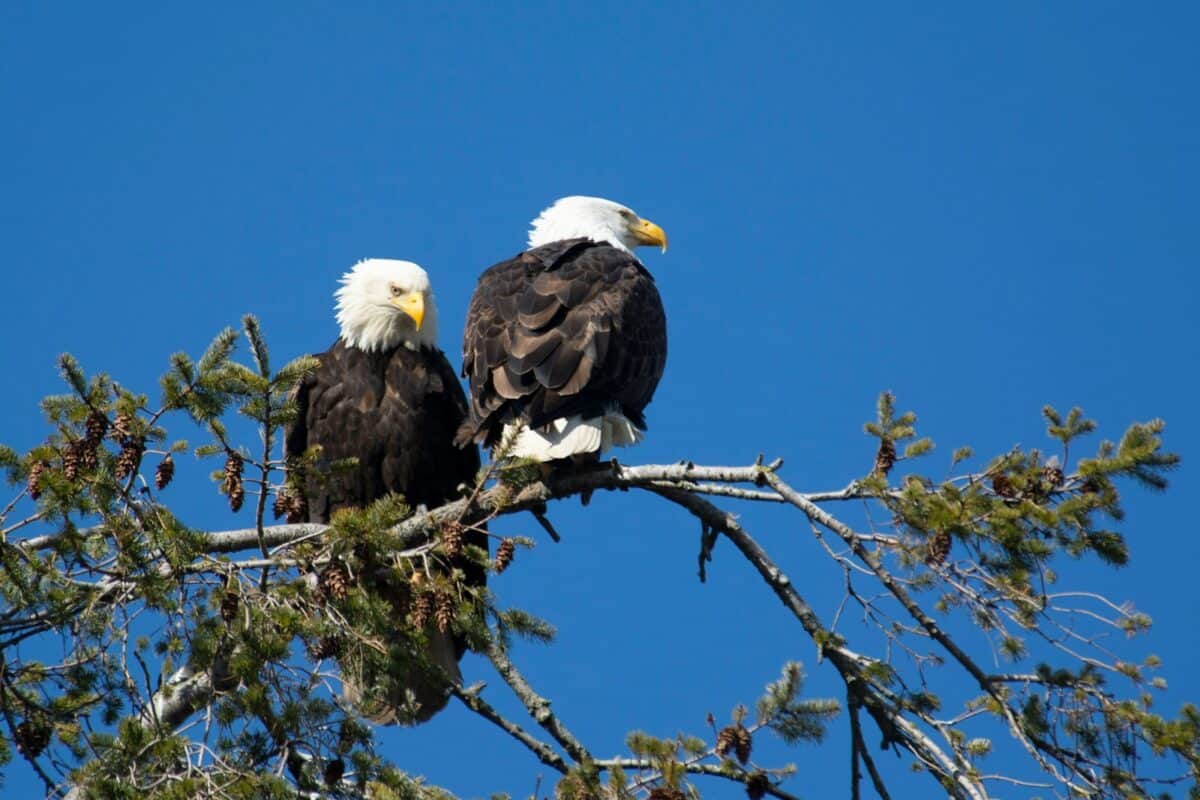
The eagle nest serves functions far beyond mere shelter, playing crucial roles in reproduction and family dynamics. The massive size provides thermal benefits, with the thick insulating layers helping maintain optimal temperatures for egg development (around 99°F). This thermal regulation is critical, as eggs can die within minutes if temperatures fall too low or rise too high. The nest’s spaciousness accommodates the growing family—adult eagles have a 6-7.5 foot wingspan, and they need sufficient space to care for eaglets that grow rapidly from hatchlings to nearly adult size within 12 weeks. The nest serves as a training ground for young eagles, with specific areas where juveniles practice wing-flapping and build flight muscles before fledging.
It functions as a family dining table, with parents bringing an average of 3-5 fish daily that are consumed on the nest platform. Studies using nest cameras have revealed complex social interactions, with siblings establishing hierarchies and parents demonstrating teaching behaviors like food provision techniques. The nest’s prominence in the landscape also serves communication purposes, acting as a visual territorial marker to other eagles and potential competitors. Most importantly, successful nests become the foundation for eagle population recovery, with each productive nest contributing to the species’ remarkable comeback from endangered status.
Scientific Research and Monitoring of Eagle Nests

Eagle nests have become important scientific monitoring sites, providing valuable data on many aspects of raptor ecology. Researchers use a variety of technologies to study these structures non-invasively. Nest cameras, now installed at dozens of sites across North America, provide continuous monitoring without disturbing the eagles, revealing previously unknown behavioral patterns and parenting techniques. Thermal imaging helps scientists understand the nest’s insulation properties and how eagles maintain appropriate temperatures.
Material analysis of fallen nest parts has identified over 100 different plant species and numerous man-made materials incorporated into eagle constructions. Scientists also monitor nest success rates, finding that larger, well-established nests correlate with higher reproductive outcomes—nests over 10 years old have approximately 30% higher success rates than first-year nests. GPS tracking of nesting eagles has revealed hunting patterns during the breeding season, with parents rarely traveling more than 5 miles from the nest when feeding young. Citizen science programs engage volunteers in monitoring thousands of eagle nests annually, creating one of the most comprehensive datasets for any wildlife species. This research not only advances scientific understanding but also informs conservation strategies and protection measures for this iconic species.
Conclusion: Engineering Marvels of the Avian World

Bald eagle nests stand as remarkable testament to the engineering capabilities, persistence, and adaptability of these magnificent birds. Far exceeding the dimensions of household bathtubs, these massive structures represent one of nature’s most impressive building achievements, often weighing more than a ton and supporting multiple generations of eagle families. The intricate construction process—from careful site selection to sophisticated interior design—demonstrates complex decision-making and problem-solving abilities that challenge our understanding of avian intelligence.
As bald eagle populations continue to recover across North America, their oversized nests serve as visible symbols of conservation success, transforming landscapes and reconnecting humans with these charismatic predators. For those fortunate enough to observe an eagle nest, whether in person or through webcams, these extraordinary structures offer a window into the private lives of America’s national bird and a powerful reminder of the remarkable architectural feats that can emerge from the natural world.

From exploring the marine wonders in the Azores and witnessing the vast savannas of Kenya, to delving deep into the rich biodiversity of South Africa and traversing iconic landscapes in Australia and the US like Yellowstone, Chris's experiences are vast.
With a penchant for diving alongside sharks, the ocean holds a special place in his heart.
Through his academic insights, he champions wildlife conservation, striving with 'Animals Around The Globe' to cultivate a profound connection between humans and animals, enhancing our mutual appreciation.
Connect with him at Feedback@animalsaroundtheglobe.com.
- How Bison Are Reshaping the American Prairie - July 10, 2026
- How Ocean Animals Are Affected by Climate Change - July 10, 2026
- 23 Popular Dog Breeds Illinois Vets Secretly Wish You’d Stop Choosing - July 10, 2026