


In one of nature’s most remarkable feats, butterflies embark on epic journeys spanning thousands of miles across continents, navigating with astonishing precision despite their seemingly fragile bodies and tiny brains. The monarch butterfly’s annual migration from Canada to Mexico stands as perhaps the most famous example, but it’s far from the only butterfly species capable of extraordinary navigation. These delicate creatures, weighing less than a paperclip, somehow find their way across vast landscapes, over mountains, through storms, and toward specific destinations—often places they’ve never personally visited before. The navigational abilities of butterflies have puzzled scientists for decades, but recent research has begun to unravel the sophisticated mechanisms these insects employ to orient themselves during their marathon migrations. From celestial cues to Earth’s magnetic field, from internal compasses to genetic programming, butterflies utilize an array of navigational tools that rival the most advanced human technologies. Let’s explore the fascinating science behind how butterflies traverse continents without getting lost.
The Monarch’s Remarkable Migration

The monarch butterfly (Danaus plexippus) conducts one of the most impressive migrations in the insect world, traveling up to 3,000 miles from breeding grounds in the northern United States and Canada to overwintering sites in central Mexico. What makes this journey particularly extraordinary is that no single butterfly completes the entire round trip. The monarchs that fly south in the fall are several generations removed from those that made the northward journey the previous spring. Despite never having been to the overwintering sites before, these butterflies somehow navigate to the exact same mountain forests in Mexico’s Michoacán state where their great-grandparents overwintered the previous year. This multi-generational migration represents an evolutionary marvel, with the navigational instructions somehow encoded in the butterflies’ DNA rather than learned through experience. The monarchs that make the southward journey enter a state of reproductive diapause, living up to eight months compared to the typical two-to-six-week lifespan of summer generations, giving them the longevity needed to complete their spectacular migration.
The Sun Compass Mechanism
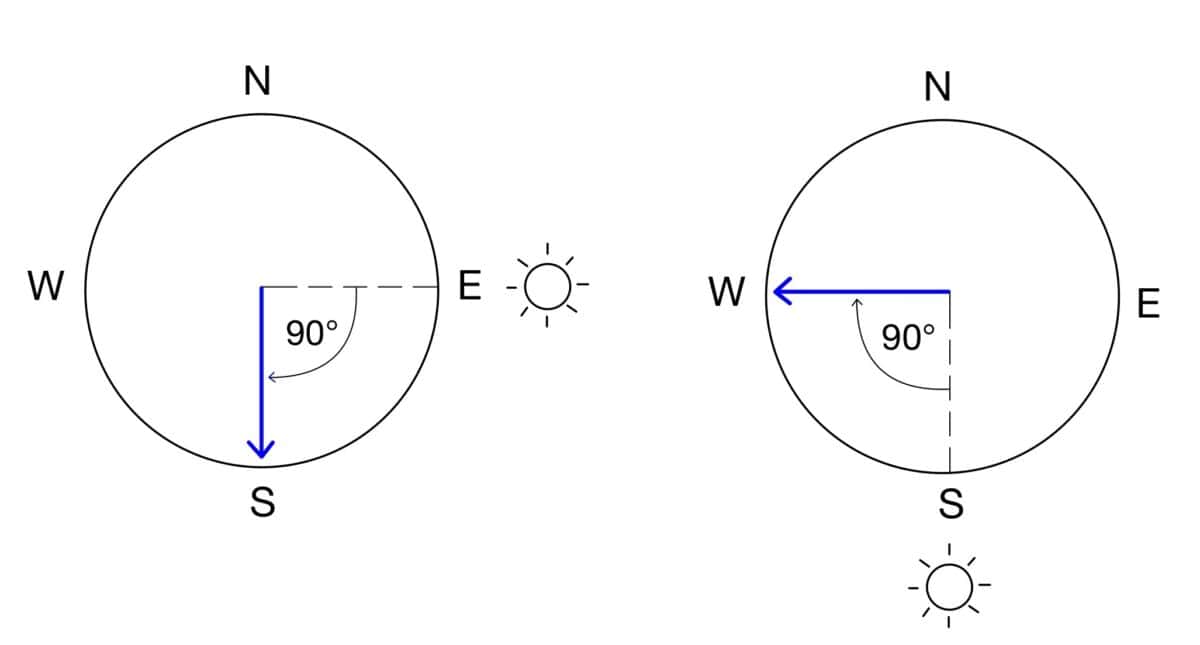
One of the primary tools in the butterfly’s navigational arsenal is the sun compass. Monarchs and other migratory butterflies use the position of the sun as their main directional guide. Unlike humans, who might simply note the sun rises in the east and sets in the west, butterflies have a much more sophisticated understanding of the sun’s movement. They possess specialized neurons that track the sun’s position in the sky throughout the day and compensate for its continuous east-to-west movement. This time-compensated sun compass relies on the butterfly’s circadian clock, located in their antennae. When researchers clock-shifted monarchs by artificially altering their day-night cycle in the laboratory, the butterflies’ orientation changed predictably, demonstrating their reliance on this internal chronometer. The butterflies can even compensate for cloud cover by detecting polarized light patterns invisible to the human eye, allowing them to determine the sun’s position even when it’s not directly visible. This ability to use the sun as a compass point works in conjunction with their innate sense of which direction they should fly—south in the fall and north in the spring.
Magnetic Field Detection

When clouds obscure the sun and polarized light cues become unavailable, butterflies don’t simply stop in their tracks. Research suggests they can fall back on Earth’s magnetic field for guidance. Similar to birds and sea turtles, monarchs and other migratory butterflies appear to possess a magnetic compass sense. Scientists have found that monarchs contain cryptochrome proteins in their antennae and potentially other body parts. These light-sensitive proteins may interact with Earth’s magnetic field, giving the butterfly a sense of direction independent of visual cues. In laboratory experiments, scientists have demonstrated that exposing monarchs to artificial magnetic fields can alter their directional preference, providing strong evidence for this magnetic sensing ability. What’s particularly impressive is that butterflies seem able to detect both the inclination (the angle at which magnetic field lines intersect Earth’s surface) and potentially the polarity (north-south orientation) of the magnetic field. This dual detection system provides butterflies with redundant navigational information, ensuring they can stay on course even under challenging weather conditions when the sun is not visible.
Genetic Programming of Migration Routes

Perhaps the most astonishing aspect of butterfly navigation is that much of their migratory behavior appears to be genetically programmed rather than learned. Monarchs born in late summer have never made the journey to Mexico before, yet they instinctively know to fly south when autumn arrives. Scientists have identified specific genes that appear to control migratory behavior in monarchs. When these genes are activated by environmental triggers like decreasing daylight and cooler temperatures, they initiate physiological changes preparing the butterfly for migration, including fat storage and reproductive diapause. The directional preference of migratory butterflies has been tested in “flight simulators”—funnel-shaped devices where butterflies attempt to fly in their preferred direction while tethered. Remarkably, even lab-raised monarchs that have never experienced the outdoors show the expected directional preferences based on the season, pointing to an innate genetic compass. This genetic programming extends beyond just a general sense of direction—the butterflies appear to have specific waypoints and geographic features encoded that help guide them along their ancestral migration routes, explaining how they find the same overwintering sites year after year despite never having been there before.
Visual Landscape Recognition

As butterflies make their continental journeys, they don’t navigate solely by celestial and magnetic cues. Research indicates they also use visual landmarks and topographical features to orient themselves. Migratory butterflies follow ridgelines, coastlines, and river valleys, which serve as geographic corridors guiding them along traditional migration routes. Scientists have observed monarchs congregating along the Gulf Coast and the southern Appalachian Mountains during fall migration, suggesting these features provide important navigational guidance. Experiments have shown that butterflies can recognize and remember visual patterns and use them for orientation. This ability allows them to create mental maps of their surroundings, potentially helping them identify suitable stopover sites for feeding and resting. Some butterfly species appear to have altitude preferences during migration, maintaining certain heights above ground that provide optimal viewing of landscape features while minimizing energy expenditure. The combination of large-scale topographical guidance with fine-scale visual recognition of feeding and resting sites enables butterflies to navigate efficiently across varied and complex landscapes, finding resources necessary for their journey while maintaining their overall directional heading.
Chemical and Olfactory Navigation

Butterflies possess extraordinarily sensitive chemical detection systems that contribute to their navigational abilities. Their antennae and legs contain chemoreceptors that can detect minute concentrations of airborne molecules, allowing them to sense nectar sources from considerable distances. This olfactory acuity also plays a role in long-distance navigation. Research suggests that monarch butterflies can detect the scent of milkweed—their host plant—from miles away, helping them locate breeding areas during spring migration. In addition to external chemical cues, some butterfly species appear to use pheromone trails left by previous migrants. This chemical breadcrumb trail may help guide successive waves of butterflies along established migration routes. Scientists studying the painted lady butterfly (Vanessa cardui), which migrates between Africa and Europe, have found evidence that these butterflies can detect atmospheric signatures associated with rainfall in distant regions, potentially allowing them to anticipate and move toward areas with emerging vegetation. This chemical navigation system works in concert with other sensory inputs, creating a multi-layered approach to orientation that increases reliability and precision during long-distance travel.
Thermal and Air Current Detection

Butterflies display remarkable sophistication in their ability to detect and utilize air currents and thermal patterns during migration. These insects can sense subtle changes in air temperature and pressure, allowing them to identify and ride thermal updrafts—columns of rising warm air—that enable them to gain altitude with minimal energy expenditure. Once at higher elevations, they can glide for long distances, conserving valuable energy reserves. Researchers tracking monarch migrations have observed that they often pause their journey when facing unfavorable headwinds and resume migration when tailwinds develop, suggesting an ability to assess wind direction and strength. Some butterfly species have been documented migrating at surprisingly high altitudes—over 1,000 feet above ground—where they can catch favorable wind currents that substantially increase their travel speed and efficiency. This strategic use of air currents is particularly important given the butterflies’ limited energy reserves and the enormous distances they must cover. Studies using radar tracking have shown that painted lady butterflies can achieve ground speeds of over 30 miles per hour when riding favorable winds, despite their typical unassisted flight speed being closer to 5-8 miles per hour. This ability to detect and exploit atmospheric conditions represents another sophisticated component of their navigational system.
Time-Compensated Navigation

Butterflies possess an internal chronometer that allows them to adjust their directional orientation throughout the day as the sun moves across the sky. This time-compensated navigation is crucial for maintaining a consistent heading despite the changing position of their primary celestial reference point. The circadian clock that enables this compensation appears to be located primarily in the butterfly’s antennae rather than in the brain as with many other animals. When researchers removed the antennae from monarch butterflies, the insects lost their ability to properly orient themselves relative to the sun’s position. This sophisticated timekeeping mechanism allows butterflies to maintain a southwesterly heading during fall migration despite the sun’s movement from east to west. The butterfly’s internal clock is calibrated through exposure to the day-night cycle and can be disrupted by artificial lighting conditions. Experiments in which monarchs were exposed to artificial day-night cycles shifted by several hours resulted in the butterflies altering their directional orientation by a corresponding amount. This demonstrates that their navigation system continuously integrates time information with celestial positioning to calculate the correct heading. The precision of this time compensation is remarkable, allowing butterflies to maintain their migratory direction despite flying for many hours each day under a continuously moving sun.
Navigation in Different Butterfly Species

While the monarch butterfly’s migration receives the most scientific attention, numerous other butterfly species demonstrate equally impressive navigational abilities. The painted lady butterfly conducts an annual multi-generational migration between sub-Saharan Africa and the Arctic Circle, covering distances of up to 9,000 miles—the longest documented butterfly migration. Unlike monarchs, which follow relatively predictable routes, painted ladies adjust their migration patterns based on rainfall and resource availability, demonstrating remarkable flexibility in their navigation strategy. The red admiral butterfly (Vanessa atalanta) migrates throughout Europe and North America, with some populations showing strong directional preferences during migration while others display more opportunistic movement patterns. Cloudless sulphur butterflies (Phoebis sennae) conduct impressive migrations along the Atlantic coast of North America, using the coastline as a guiding feature. The common buckeye (Junonia coenia) migrates along the eastern United States, with successive generations moving northward in spring and summer before returning south in fall. Each species has evolved navigational strategies suited to its particular ecological needs and migration patterns. Some rely heavily on celestial cues, others on magnetic fields, and still others primarily on landscape features. These varied approaches to navigation highlight the evolutionary adaptability of butterflies and the multiple solutions that have emerged to solve the challenge of long-distance migration.
Challenges to Butterfly Navigation

Despite their remarkable navigational abilities, butterflies face numerous challenges that can disrupt their journeys. Light pollution from urban areas can interfere with their ability to perceive celestial cues, potentially disorienting migrating butterflies that pass through developed regions. Climate change presents another significant threat, as shifting weather patterns may disrupt the environmental cues that trigger migration or alter the timing of plant growth along migration routes. Radio frequency interference and electromagnetic pollution from human technology might potentially interfere with butterflies’ ability to detect Earth’s magnetic field, though research in this area remains preliminary. Habitat fragmentation creates gaps in the landscape that can confuse butterflies reliant on visual landmarks for navigation. Pesticide exposure may damage butterflies’ neurological systems, potentially impairing the sophisticated brain functions required for navigation. Even natural phenomena like solar storms can temporarily disrupt Earth’s magnetic field, potentially affecting butterflies during migration. Monarchs specifically face challenges from declining milkweed populations along migration routes, reducing available rest and refueling stops. These various threats underscore the vulnerability of migratory butterflies despite their navigational prowess. Conservation efforts increasingly focus not just on protecting breeding and overwintering habitats but also on preserving migration corridors and reducing factors that might interfere with navigation.
Energy Management During Migration

Long-distance butterfly migration requires not only precise navigation but also exceptional energy management. Monarchs and other migratory butterflies undergo physiological changes before migration, developing larger wings relative to their body size and accumulating fat reserves that can constitute up to 30% of their body weight. These adaptations enable more efficient flight and provide the energy needed for their marathon journey. During migration, butterflies carefully balance flying and feeding. They typically begin flying shortly after sunrise when temperatures rise enough to activate their flight muscles but before the day becomes too hot. They’ll stop to nectar on flowers throughout the day, replenishing energy reserves depleted during flight. Most migratory butterflies are opportunistic gliders, taking advantage of rising thermal air currents to gain altitude with minimal energy expenditure, then gliding long distances before needing to flap their wings again. Research has shown that monarchs can glide for several miles on a single thermal uplift, conserving precious energy. Migratory butterflies also make strategic use of tail winds, sometimes waiting days for favorable wind conditions before continuing their journey. These energy conservation strategies are critical because butterflies operate on a tight energy budget—the amount of nectar they can consume and convert to fat has strict biological limits. Without these sophisticated energy management techniques, continental-scale butterfly migration would simply be impossible.
Technological Applications Inspired by Butterfly Navigation

The remarkable navigational abilities of butterflies have inspired numerous technological innovations. Engineers studying monarch navigation have developed miniature electronic compasses that mimic the butterfly’s ability to detect magnetic fields with minimal power requirements. These bio-inspired designs could improve navigation systems in small drones and other autonomous vehicles where power consumption is a critical limitation. The butterfly’s ability to integrate multiple navigational cues—celestial, magnetic, visual, and chemical—has influenced the development of redundant navigation systems for aircraft and maritime vessels, improving reliability when primary navigation tools fail. Scientists working on artificial intelligence have studied butterfly decision-making processes to develop more efficient algorithms for path-finding and navigation in complex environments. The butterfly’s energy-efficient migration strategies have inspired aerospace engineers developing long-duration unmanned aerial vehicles, particularly in the use of thermal soaring to extend flight time and range. Researchers exploring nanotechnology have examined the structure of butterfly antennae to develop more sensitive chemical and magnetic field detectors. Military applications include the development of navigation systems resistant to GPS jamming, inspired by butterflies’ ability to navigate without satellite assistance. The butterfly’s capability to maintain orientation despite variable conditions and limited computational resources represents a compelling model for engineers seeking to design navigation systems that are simultaneously sophisticated, efficient, and resilient.
The ability of butterflies to navigate across continents represents one of nature’s most extraordinary achievements in biological engineering. These insects, with brains smaller than a pinhead, perform navigational feats that would challenge the most sophisticated human technologies, integrating celestial cues, magnetic sensing, visual landmarks, chemical signals, and genetic programming into a seamless guidance system. The multi-layered redundancy in their navigation strategies ensures they can maintain their course even when certain environmental cues become unavailable, demonstrating an evolutionary solution to the challenges of long-distance migration that has been refined over millions of years. As we continue to unravel the mechanisms behind butterfly navigation, we not only gain insight into these remarkable creatures but also find inspiration for our own technological innovations. Perhaps most importantly, understanding the complex navigational needs of migratory butterflies highlights the importance of preserving the ecological integrity of their migration corridors, which span multiple countries and ecosystems. The butterfly’s journey across continents stands as a powerful reminder of nature’s ingenuity and the interconnectedness of our global environment.

- How Crickets Chirp Using Their Wings - July 20, 2026
- The Largest Sea Turtle Ever Rescued Off North Carolina - July 20, 2026
- The Ocean’s Escape Artist: Why Octopuses Outsmart Us All - July 20, 2026