


Dolphins are renowned for their intelligence, complex social structures, and sophisticated hunting strategies. What makes these marine mammals particularly fascinating is their ability to transmit knowledge and skills across generations through a process remarkably similar to human teaching. Unlike most animals that rely solely on instinct or basic imitation, dolphins engage in deliberate instruction, sharing innovative hunting techniques that help their pods adapt to changing environments and prey availability. This cultural transmission of knowledge represents one of the most advanced forms of learning in the animal kingdom, highlighting the remarkable cognitive abilities of these ocean-dwelling mammals.
The Cognitive Foundation of Dolphin Teaching
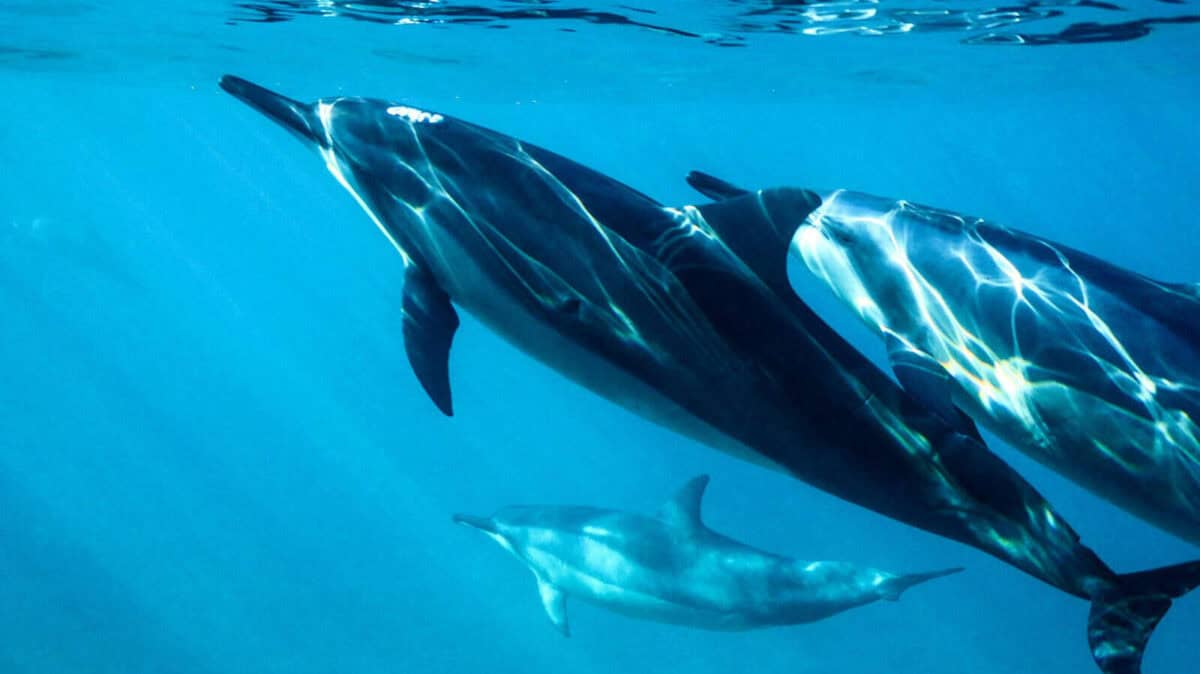
Dolphins possess exceptionally large brains relative to their body size, with a brain-to-body mass ratio second only to humans. This advanced neural architecture supports complex cognitive functions essential for teaching behaviors. Research has shown that dolphins have self-awareness (demonstrated through mirror recognition tests), can understand symbolic language, solve problems creatively, and plan for the future. These cognitive capabilities form the foundation that allows dolphins to not just learn techniques themselves but to deliberately demonstrate them to others in a way that facilitates learning. Unlike simpler forms of social learning where animals merely copy what they observe, dolphin teaching involves intentional demonstration, attention to the learner’s progress, and even correction when necessary—hallmarks of true teaching rarely seen outside human societies.
Cultural Transmission in Dolphin Societies

Dolphin pods operate as sophisticated social networks where knowledge flows through multiple channels. Scientists now recognize that dolphins exhibit genuine cultural transmission—the non-genetic transfer of information between individuals that creates distinct traditions within different populations. A landmark 2018 study published in Current Biology documented how different dolphin communities maintain unique hunting strategies, tool uses, and communication methods that persist across generations. This cultural diversity isn’t explained by genetic differences or environmental factors alone but represents genuine traditions passed down through social learning. Young dolphins spend extended periods—up to several years—learning from their mothers and other pod members before mastering complex hunting techniques, suggesting a formalized educational process rather than casual observation.
Sponging: The Most Famous Learned Hunting Technique

Perhaps the most well-documented example of cultural transmission in dolphins is “sponging,” first observed in Shark Bay, Australia. This remarkable behavior involves dolphins breaking off marine sponges and wearing them over their rostrums (beaks) as protective tools while foraging on the rough seafloor for hidden prey. This technique prevents abrasions while allowing dolphins to flush out fish that hide in the sediment. What makes sponging particularly notable is its clear pattern of transmission: primarily from mother to daughter, creating distinct “sponging lineages” within the larger population. Genetic studies have confirmed that this behavior isn’t inherited but learned, as not all dolphins with the same genetics display the behavior. The technique requires precise demonstration and practice, with mothers slowing down and exaggerating movements when teaching their calves—a clear example of deliberate instruction rather than incidental observation.
Mud-Ring Feeding: Cooperative Learning in Action

In the shallow waters off Florida, bottlenose dolphins have developed an extraordinary cooperative hunting technique known as mud-ring feeding. This complex strategy involves a dolphin swimming in circles near the muddy bottom, deliberately stirring up a ring of sediment. This circular mud wall traps fish inside, and as the panicked fish attempt to escape by jumping over the barrier, they become easy targets for waiting dolphins. What makes this technique remarkable from a teaching perspective is its coordination requirement—dolphins must learn not just the mud-ring creation but precise timing and positioning with other pod members. Researchers have observed experienced dolphins performing slower, more deliberate demonstrations when inexperienced juveniles are present, and gradually allowing younger dolphins to participate in increasingly important roles as their skills develop. This structured progression suggests intentional teaching rather than simple imitation.
Beach Hunting: Risky Techniques Requiring Expert Guidance

One of the most dramatic examples of dolphin teaching involves the dangerous practice of beach hunting, documented most thoroughly among bottlenose dolphins in South Carolina and Georgia. This technique involves dolphins deliberately stranding themselves on muddy banks or beaches, creating waves that force fish onto the shore, before sliding back into deeper water with their catch. The behavior is extremely risky—dolphins could become permanently stranded—and requires precise timing and an understanding of tides. Young dolphins observe this technique dozens of times before attempting it themselves, and when they do, mother dolphins closely supervise, sometimes physically intervening if the juvenile strands too far from the water. This high-stakes learning process demonstrates the sophisticated risk assessment and pedagogical approach dolphins employ when transmitting potentially dangerous but rewarding hunting strategies.
Tail Whacking and Herding Strategies

Dolphins employ various techniques to stun or corral prey, with tail whacking (or tail slapping) being particularly noteworthy for its teaching dynamics. This strategy involves dolphins using powerful tail flukes to hit and stun fish or even strike the seabed to create pressure waves that disorient prey. Researchers studying Indo-Pacific bottlenose dolphins have documented experienced adults performing exaggerated, slowed-down tail slaps when juveniles are present—a classic teaching behavior. Similarly, complex herding strategies where dolphins coordinate to drive fish into tight balls require sophisticated coordination. Pod members take turns occupying different positions in these maneuvers, with juveniles initially given simpler roles before graduating to more complex positions. This structured apprenticeship system allows younger dolphins to gradually master techniques while minimizing hunting efficiency losses for the group—evidence of a sophisticated teaching economy that balances immediate needs with long-term knowledge transfer.
Bubble Net Feeding: From Humpbacks to Dolphins

Though more commonly associated with humpback whales, certain dolphin species have adapted bubble net feeding techniques that require extensive teaching to master. This method involves dolphins (often working together) blowing precise rings of bubbles that trap fish within a cylindrical “net.” The behavior demands accurate bubble production, coordination among multiple hunters, and precise timing for the final feeding lunge. Studies of dusky dolphins off New Zealand have revealed that juveniles go through distinct learning phases when acquiring this technique. They begin by simply observing adults, then practice blowing bubbles without the hunting context, later join cooperative hunts in peripheral roles, and finally participate as full bubble-blowing members. This progressive involvement closely resembles human apprenticeship systems and represents one of the clearest examples of structured teaching in marine mammals.
Tool Use Transmission in Dolphins

Beyond the sponging technique mentioned earlier, dolphins demonstrate other forms of tool use that require specific teaching interventions. In parts of Australia’s Shark Bay, dolphins have been observed using shells to trap and transport fish—a behavior that requires manipulating the shell to scoop up fish, then carrying it to the surface. Similarly, some dolphins use seaweed or marine debris as part of play behaviors that later translate to hunting skills. These tool-using behaviors show clear evidence of teaching: mother dolphins will often retrieve appropriate tools and demonstrate their use with exaggerated motions when calves are present. In some cases, they’ll even “handicap” themselves—intentionally making a task more difficult—to illustrate a technique’s importance. This pedagogical approach mirrors teaching methods used by human parents and educators, suggesting deep cognitive parallels in how knowledge is structured and transmitted.
The Role of Play in Hunting Skill Development
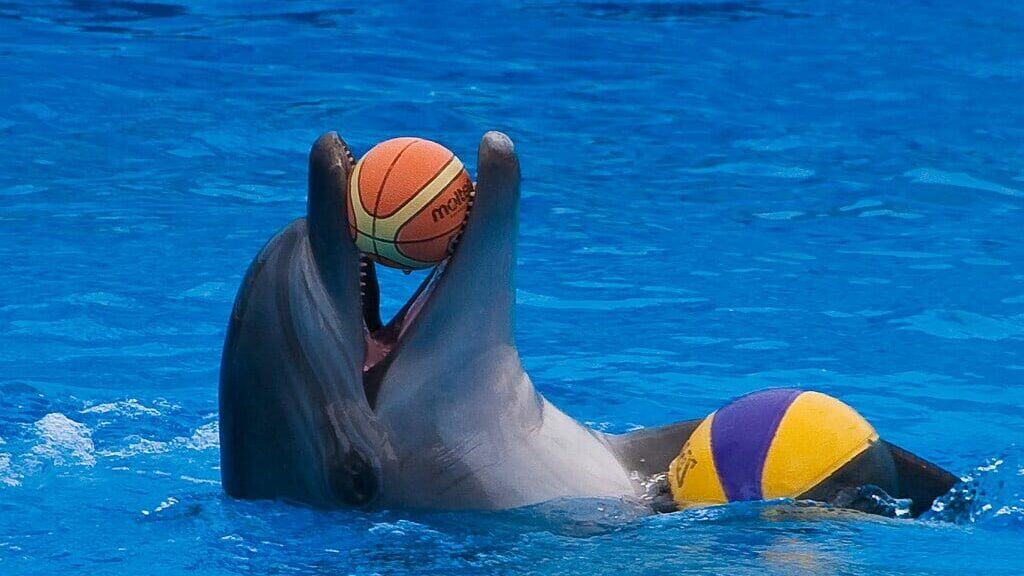
Dolphin calves engage in extensive play behaviors that, while appearing frivolous, actually serve as crucial practice for later hunting skills. Young dolphins spend up to 20% of their time in play activities that mimic hunting movements—chasing each other, practicing quick turns, and manipulating objects. What’s particularly interesting from a teaching perspective is how adult dolphins structure and participate in these play sessions. Researchers have documented adult dolphins introducing progressively more complex play scenarios as calves develop, essentially creating a curriculum of skill-building exercises. Adults may also deliberately “lose” in certain games to encourage calves, or demonstrate modified versions of hunting techniques during play. This play-based learning approach allows young dolphins to develop physical capabilities and cognitive frameworks needed for sophisticated hunting without the pressure of actual food acquisition—a pedagogical approach remarkably similar to human educational theories emphasizing play-based learning.
Vocal Learning and Hunting Calls
Dolphins use sophisticated acoustic communication during hunting, including specific calls that coordinate group activities. These hunting-specific vocalizations must be learned rather than being innate. Research using hydrophones has revealed that mother dolphins produce simplified, slower versions of hunting calls when calves are present—a behavior analogous to human “motherese” or “baby talk” that helps infants learn language. As calves develop, mothers gradually use more complex call patterns, essentially scaffolding the learning process. Some dolphin populations have even developed signature hunting sounds unique to their group—such as the “victory squeal” documented in some bottlenose populations that signals successful prey capture and sharing opportunities. These acoustic traditions represent another dimension of cultural transmission in dolphin societies, where specific hunting-related communications are taught through a structured learning process rather than being instinctual.
Corrective Teaching and Feedback

Perhaps the most compelling evidence of deliberate teaching in dolphins is their use of corrective feedback. Researchers have documented numerous instances where experienced dolphins intervene when juveniles attempt hunting techniques incorrectly. These interventions can take several forms: physical redirection (nudging a calf into correct position), demonstration (repeating the correct technique immediately after an error), and even what appears to be “time-outs” where training sessions end after repeated failures. In one well-documented case from Shark Bay, a mother dolphin was observed repeatedly demonstrating the correct angle for sponge placement after her calf consistently positioned the sponge incorrectly. This corrective teaching represents a sophisticated pedagogical approach that goes far beyond simple observation learning, requiring the teacher to recognize errors, understand their cause, and provide appropriate remediation—cognitive abilities previously thought unique to humans and perhaps some great apes.
Conservation Implications of Dolphin Teaching

Understanding the sophisticated teaching mechanisms dolphins use has profound conservation implications. When dolphin populations decline or habitats are disrupted, it’s not just individual animals that are lost but entire knowledge systems and cultural traditions. Research has shown that dolphin populations with unique hunting specializations may struggle to adapt when their specific ecological niche is disturbed, as the knowledge transmission chain becomes broken. Conservation biologists now recognize that protecting dolphin cultural diversity is as important as preserving genetic diversity. This has led to new approaches in marine conservation that consider preserving intact social groups and their traditions rather than focusing solely on population numbers. For example, marine protected areas are now sometimes designed specifically to encompass the ranges of dolphin populations with unique hunting cultures, ensuring these knowledge systems can continue to be taught to future generations.
The sophisticated teaching behaviors observed in dolphin societies challenge our understanding of animal cognition and blur the lines that have traditionally separated human and non-human learning. Through intentional demonstration, structured practice, corrective feedback, and cultural transmission, dolphins have developed educational systems that ensure vital hunting knowledge persists across generations. These teaching behaviors aren’t merely interesting animal curiosities but profound examples of convergent evolution in cognitive processes—dolphins and humans have independently evolved similar solutions to the challenge of transmitting complex information. As we continue to study these remarkable marine mammals, we gain not only greater appreciation for their intelligence but also valuable insights into the fundamental nature of teaching and learning itself. The dolphin’s classroom beneath the waves reminds us that the desire to share knowledge—to teach and to learn—may be more deeply rooted in biology than we ever imagined.

- Cuddling for Warmth: How Meerkats Stay Cozy - July 18, 2026
- This U.S. Lake Is Mysteriously Disappearing—Here’s What Scientists Say - July 18, 2026
- This Jellyfish Hunts in Packs - July 18, 2026