


In the most extreme environments on our planet, where temperatures plummet to levels that would freeze most living organisms solid, one remarkable creature has evolved extraordinary adaptations that allow it to not just survive, but thrive. The Tardigrade, commonly known as the water bear or moss piglet, possesses nearly supernatural survival abilities that have made it the subject of extensive scientific research. While several organisms have developed impressive cold-resistance strategies, tardigrades stand alone in their ability to withstand temperatures approaching absolute zero. This microscopic marvel has become the gold standard for extreme survival, offering insights into biological preservation that could revolutionize fields from medicine to space exploration. Let’s explore the fascinating adaptations that allow tardigrades to endure the coldest temperatures on Earth, and how these mechanisms might benefit humanity in the future.
The Remarkable Tardigrade: Nature’s Ultimate Survivor
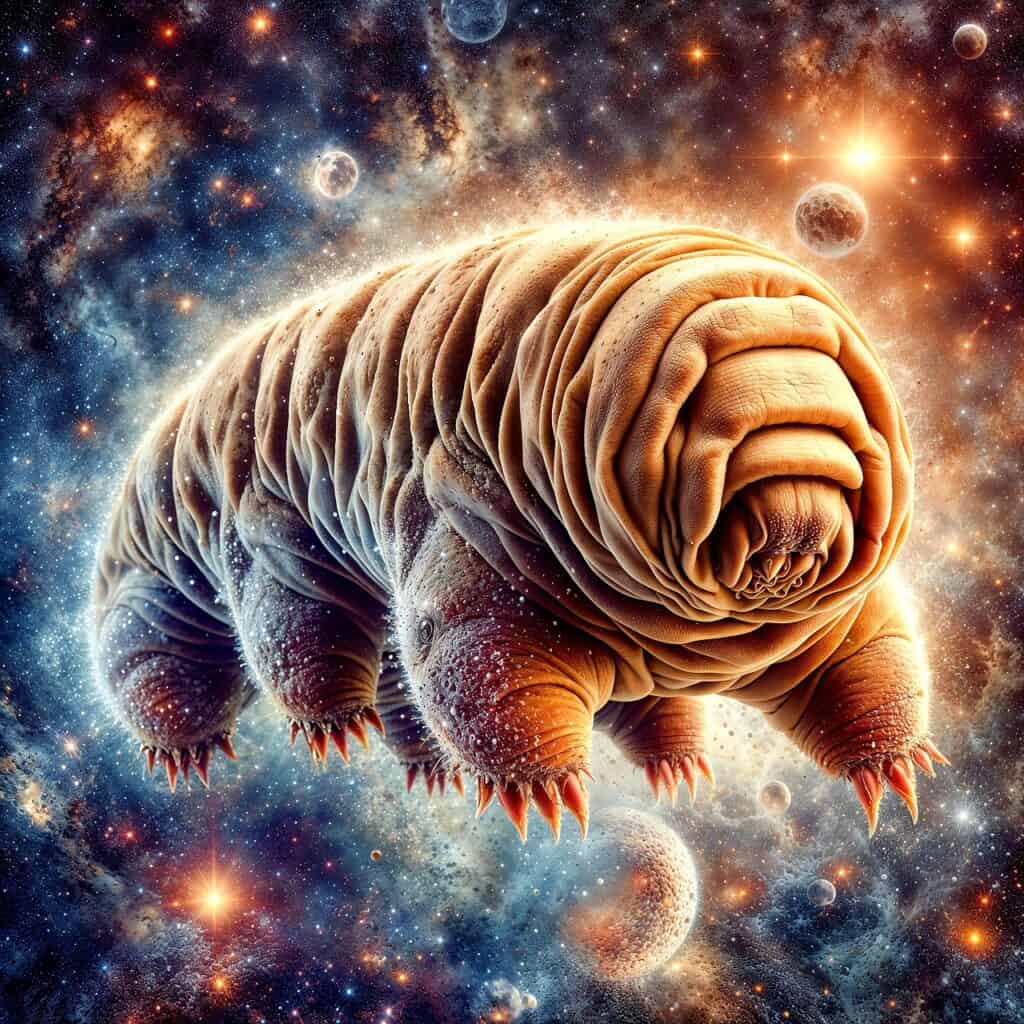
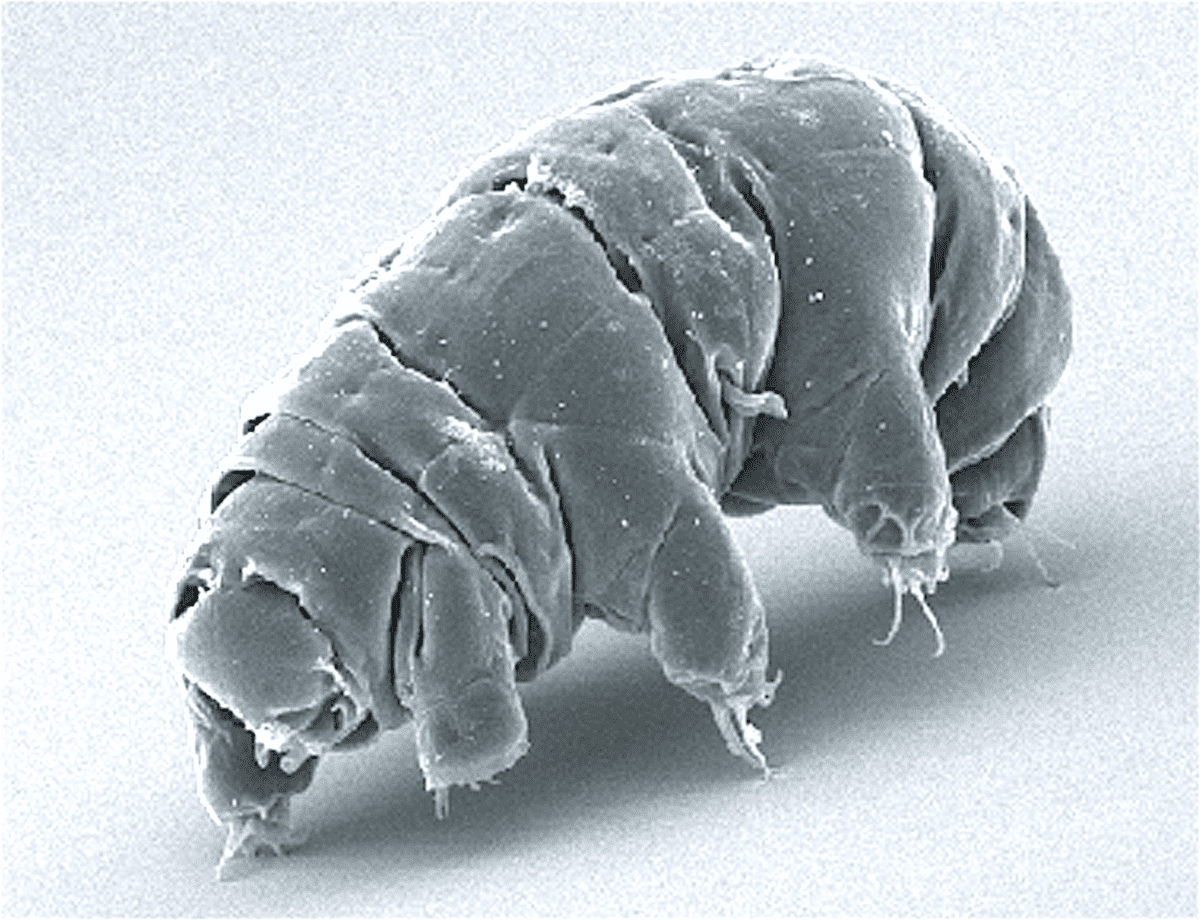
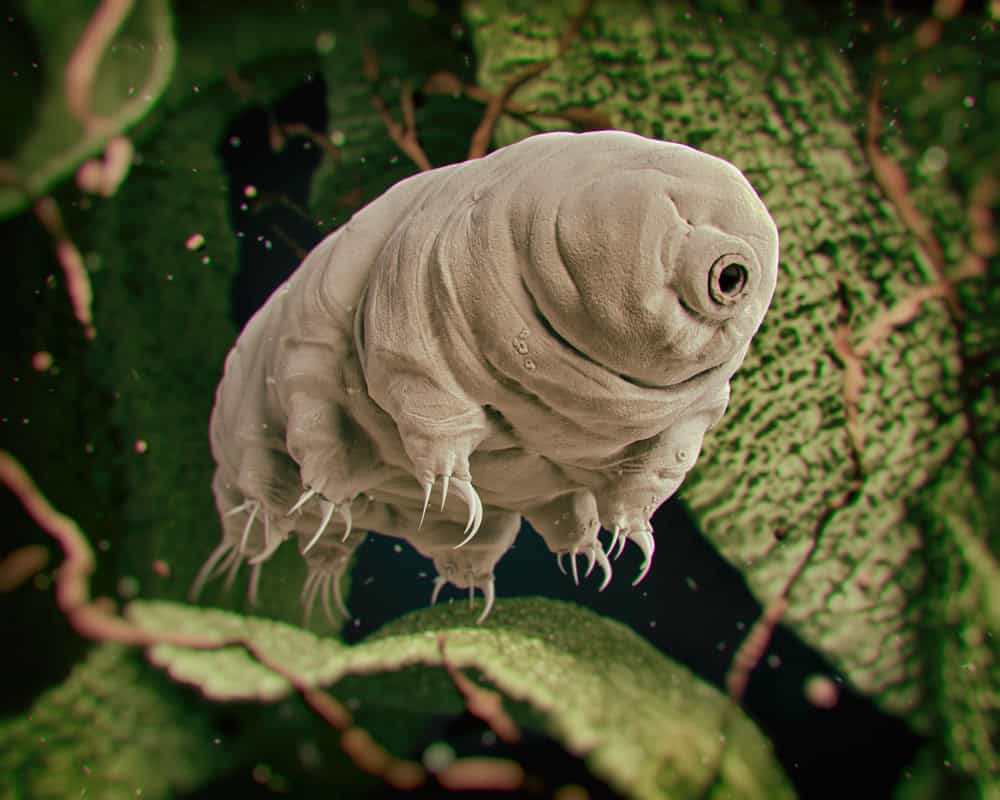
Tardigrades are microscopic invertebrates measuring between 0.1 and 1.5 millimeters in length. First discovered in 1773 by German zoologist Johann August Ephraim Goeze, these eight-legged creatures have been found in virtually every habitat on Earth—from the deepest ocean trenches to the highest mountain peaks. Their rotund bodies and distinctive gait earned them the nickname “water bears,” though they bear little resemblance to their namesake beyond their lumbering movement.
What makes tardigrades truly extraordinary is their unparalleled resilience to environmental extremes. They can survive radiation levels thousands of times higher than what would kill a human, withstand the vacuum of space, live without water for decades, and—most remarkably—endure temperatures as low as -458°F (-272°C), just a degree above absolute zero, the theoretical point where all molecular motion stops.
The Cryptobiosis Phenomenon: Suspending Life

The secret to the tardigrade’s cold-weather survival lies in its ability to enter a state called cryptobiosis—literally “hidden life.” When faced with extreme conditions, tardigrades undergo a remarkable transformation, reducing their metabolic activity to less than 0.01% of normal and entering a deathlike state. During cryptobiosis, tardigrades expel almost all water from their bodies and curl into a dehydrated barrel-shaped form called a “tun.”
In this state, they essentially pause life processes, preventing the formation of ice crystals that would otherwise rupture cell membranes. What makes this even more impressive is that tardigrades can remain in this suspended animation for decades, then return to normal activity within hours when conditions improve. One study found that specimens that had been in cryptobiosis for over 30 years were successfully revived and able to reproduce.
Trehalose: The Natural Antifreeze

One crucial component of the tardigrade’s cold-survival toolkit is trehalose, a natural sugar that functions as a biological antifreeze. When entering cryptobiosis, some tardigrade species produce large quantities of trehalose, which replaces water in their cells. This remarkable substance prevents the formation of ice crystals by creating a glass-like state within the organism’s cells—a process called vitrification.
Rather than freezing, the cellular contents solidify into an amorphous state that preserves cellular structures and prevents mechanical damage. The trehalose solution essentially becomes a protective gel around proteins and cell membranes, maintaining their structural integrity even at temperatures approaching absolute zero. Interestingly, while trehalose plays a significant role in some tardigrade species, recent research has revealed that certain species use different mechanisms entirely, suggesting multiple evolutionary pathways to extreme cold tolerance.
Intrinsically Disordered Proteins: Molecular Shields
A groundbreaking discovery in 2017 revealed another key to the tardigrade’s cold resistance: special proteins unique to these creatures called Tardigrade-Specific Intrinsically Disordered Proteins (TDPs). Unlike conventional proteins with fixed structures, TDPs lack a defined three-dimensional shape when hydrated, allowing them to be incredibly flexible. When a tardigrade begins to dehydrate as temperatures drop, these disordered proteins transform, forming a protective matrix around cellular components and DNA.
This biological shield prevents the destructive effects of freezing, desiccation, and radiation. Research published in the journal Molecular Cell demonstrated that when genes for these proteins were introduced into other organisms like bacteria and yeast, they too gained significant protection against freezing. This discovery has profound implications for biotechnology and cryopreservation, potentially allowing human cells, tissues, and organs to be stored at extremely low temperatures without damage.
DNA Repair Mechanisms: Fixing Freeze Damage

Even with their impressive preventative measures, tardigrades still experience some cellular damage during extreme cold exposure. What sets them apart is their extraordinary ability to repair this damage once conditions improve. Tardigrades possess multiple efficient DNA repair mechanisms that can quickly fix breaks in their genetic material caused by freezing. Research published in PLOS ONE revealed that tardigrades have evolved additional copies of genes responsible for DNA repair, giving them enhanced repair capabilities compared to other organisms.
This redundancy in repair mechanisms ensures that even if some systems are compromised by the extreme cold, others can compensate. Scientists have observed that within hours of rehydration after cryptobiosis, tardigrades have repaired virtually all cellular damage, allowing them to resume normal biological functions with remarkable speed. This rapid recovery system is one of the key reasons tardigrades can survive repeated freeze-thaw cycles that would be fatal to almost any other organism.
Cell Membrane Adaptations: Flexibility in the Freezing Cold

The cell membrane represents one of the most vulnerable components of an organism exposed to freezing temperatures. As temperatures drop, conventional cell membranes become rigid and brittle, eventually rupturing as ice crystals form. Tardigrades have evolved specialized cell membranes with unique phospholipid compositions that maintain flexibility even at extremely low temperatures. These membranes contain higher proportions of unsaturated fatty acids, which have lower freezing points than saturated fatty acids.
Additionally, tardigrade cell membranes incorporate specialized proteins that act as molecular “anchors,” maintaining structural integrity during freezing and thawing cycles. These adaptations prevent the membrane leakage that typically occurs when cells are exposed to extreme cold, preserving the critical barrier between the cell’s internal environment and the outside world. When combined with their other protective mechanisms, these specialized membranes form part of a comprehensive cold-defense system unmatched in the animal kingdom.
Metabolic Shutdown: Pausing Life Processes

When faced with extreme cold, tardigrades enter a state of ametabolism—the complete cessation of detectable metabolic processes. This shutdown is far more profound than the hibernation or torpor observed in larger animals. In this state, they show no measurable signs of life: no respiration, no cell division, no neural activity. Research using sensitive calorimetry has detected energy expenditure less than one-thousandth of that used during normal activity.
This metabolic shutdown is critical for cold survival because metabolic processes require water as a medium, and at ultra-low temperatures, any remaining water would form destructive ice crystals. By completely halting these processes, tardigrades eliminate the need for liquid water in their cells. What’s particularly fascinating is how quickly they can enter and exit this state—some species can shut down metabolism within minutes of environmental cues indicating freezing conditions, and revival can begin almost immediately when temperatures rise, with full metabolic function returning within hours.
Heat Shock Proteins: Stress Protectors

Heat shock proteins (HSPs) might seem counterintuitive for cold survival, but these molecular chaperones play a crucial role in tardigrade cold tolerance. Despite their name, HSPs respond to various stresses including extreme cold. When a tardigrade encounters freezing temperatures, it produces elevated levels of specific HSPs that help prevent protein denaturation and aggregation. These proteins bind to other cellular proteins, stabilizing their structure and preventing them from unfolding or misfolding due to cold stress.
Research published in the Journal of Experimental Biology showed that tardigrades express unique variants of HSPs that function efficiently even at temperatures where most proteins would become inactive. One particular HSP, HSP70, shows remarkably high expression in tardigrades during cold exposure. The tardigrade genome contains multiple copies of HSP genes, providing redundancy that ensures these critical protective proteins are available even under extreme conditions. This molecular protection system represents another layer in the tardigrade’s comprehensive defense against cold damage.
Anhydrobiosis: Life Without Water

Perhaps the most crucial adaptation for surviving extreme cold is the tardigrade’s ability to enter anhydrobiosis—a state of almost complete dehydration where their water content drops to less than 3% of normal. This profound dehydration is critical because water, when frozen, expands and forms crystals that puncture cell membranes and destroy organelles. By removing water from their bodies, tardigrades eliminate the primary threat posed by freezing temperatures.
During anhydrobiosis, their bodies shrink dramatically as they contract into the tun state, with their legs tucked inward and their body size reducing by up to 50%. Remarkably, they can remain in this desiccated state for decades, with some research suggesting potential survival for over a century. When reintroduced to water, they rehydrate within minutes to hours, unfurling their bodies and resuming normal activity with minimal cellular damage. This water-independent state allows tardigrades to endure not just extreme cold but also the vacuum of space, as demonstrated in several space exposure experiments conducted on the International Space Station.
Evolutionary Advantages: Why Develop Extreme Cold Tolerance?

The remarkable cold resistance of tardigrades raises an evolutionary question: why develop such extreme adaptations when many environments never reach these temperature extremes? Researchers believe the answer lies in the tardigrade’s microhabitat preferences and evolutionary history. Tardigrades primarily inhabit thin films of water in mosses, lichens, and soil—environments subject to rapid and extreme temperature fluctuations. A sunny day can quickly turn to freezing night in these microhabitats, creating strong selective pressure for cold tolerance. Fossil evidence suggests tardigrades have existed for over 500 million years, surviving multiple mass extinction events including severe ice ages.
Their extreme cold tolerance likely evolved gradually, with each incremental improvement conferring survival advantages. Interestingly, different tardigrade species show varying degrees of cold resistance, with those from polar regions demonstrating the most extreme tolerance. This variation suggests ongoing evolutionary adaptation rather than a single ancient development. The extreme nature of their cold tolerance likely represents evolutionary “overengineering”—adaptations that evolved to ensure survival in variable conditions but provide capability far beyond what’s typically needed.
Applications in Cryopreservation: Learning from Nature’s Expert
The tardigrade’s extraordinary cold tolerance has not escaped the attention of scientists working in cryopreservation—the preservation of biological material at extremely low temperatures. Current cryopreservation techniques for human cells, tissues, and organs rely on cryoprotectants that are often toxic at higher concentrations and cannot completely prevent ice crystal formation. Researchers are now studying tardigrade-specific proteins and mechanisms to develop improved preservation methods. In 2019, researchers successfully used tardigrade intrinsically disordered proteins to protect human cells from freeze damage, showing significantly improved survival rates compared to conventional cryoprotectants.
Pharmaceutical companies are investigating synthetic versions of tardigrade protective compounds for use in medication storage and transport without refrigeration. Perhaps most exciting is the potential application in organ transplantation—current methods limit viable organ preservation to mere hours, but tardigrade-inspired technologies could potentially extend this to days or weeks, revolutionizing transplant medicine. As our understanding of tardigrade cold tolerance mechanisms deepens, we may eventually develop methods to induce human cells to enter tardigrade-like protective states, with profound implications for medicine, space travel, and long-term biological storage.
Conclusion: Lessons from Nature’s Cold Specialist

The tardigrade’s ability to survive the coldest temperatures on Earth represents one of the most extraordinary adaptations in the natural world. Through a combination of specialized proteins, metabolic shutdown, cellular modifications, and dramatic dehydration, these microscopic creatures can endure conditions that would destroy any other known animal. Their remarkable adaptability offers profound insights for human applications, from medicine to space exploration, potentially allowing us to preserve biological materials at temperatures previously thought incompatible with life.
As climate change creates more unpredictable weather patterns and as humanity looks toward extended space missions, the lessons learned from tardigrades become increasingly valuable. Perhaps the most humbling aspect of the tardigrade’s cold survival is the reminder that sometimes the most extraordinary capabilities in nature exist not in the largest or most complex organisms, but in the small, overlooked creatures that have quietly perfected the art of survival over millions of years of evolution.

From exploring the marine wonders in the Azores and witnessing the vast savannas of Kenya, to delving deep into the rich biodiversity of South Africa and traversing iconic landscapes in Australia and the US like Yellowstone, Chris's experiences are vast.
With a penchant for diving alongside sharks, the ocean holds a special place in his heart.
Through his academic insights, he champions wildlife conservation, striving with 'Animals Around The Globe' to cultivate a profound connection between humans and animals, enhancing our mutual appreciation.
Connect with him at Feedback@animalsaroundtheglobe.com.
- The Grizzly That Terrorized Anchorage: Alaska’s Bear 141 Story - July 28, 2026
- 13 Popular Dog Breeds Vets Secretly Wish You’d Stop Choosing - July 28, 2026
- The Species That Predicted Earthquakes Before Technology Did - July 28, 2026