
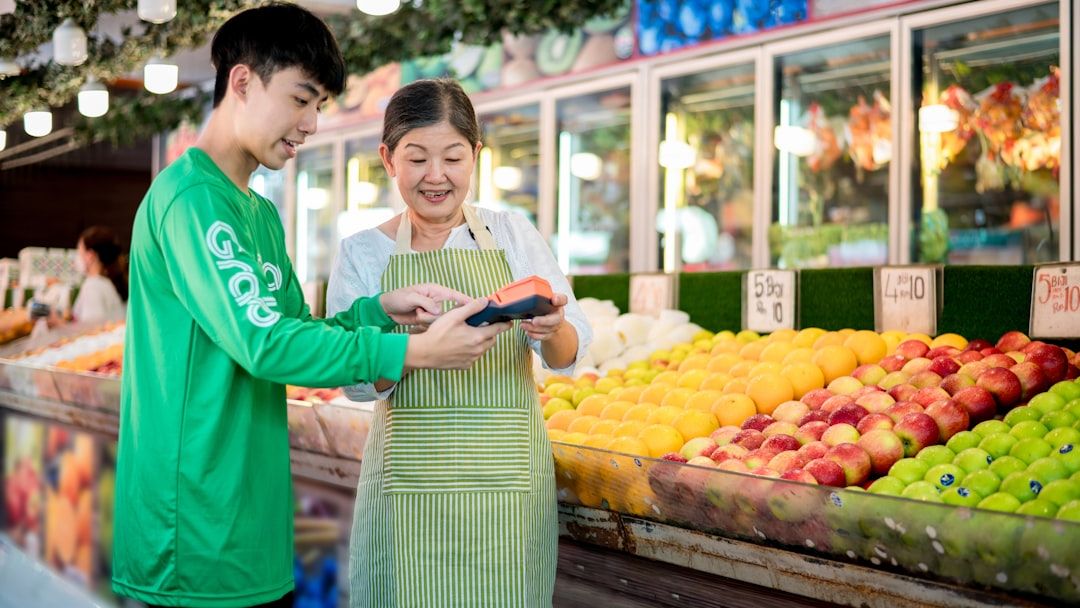
There’s a particular kind of person who, given a free afternoon in an unfamiliar city, will instinctively wander toward the noise. Not the noise of traffic or construction, but the layered, living sound of a street market. The vendors, the haggling, the sizzle of something cooking nearby, and the low hum of dozens of conversations happening at once.
Most people chalk this up to a love of “the atmosphere.” That’s fair enough, but the psychology underneath is considerably more interesting. Your pull toward crowded open-air markets tells a story about how your brain processes the world, how you relate to other people, and what you’re actually searching for when you step into all that beautiful, organized chaos.
#1. You Are Wired for Sensory Richness
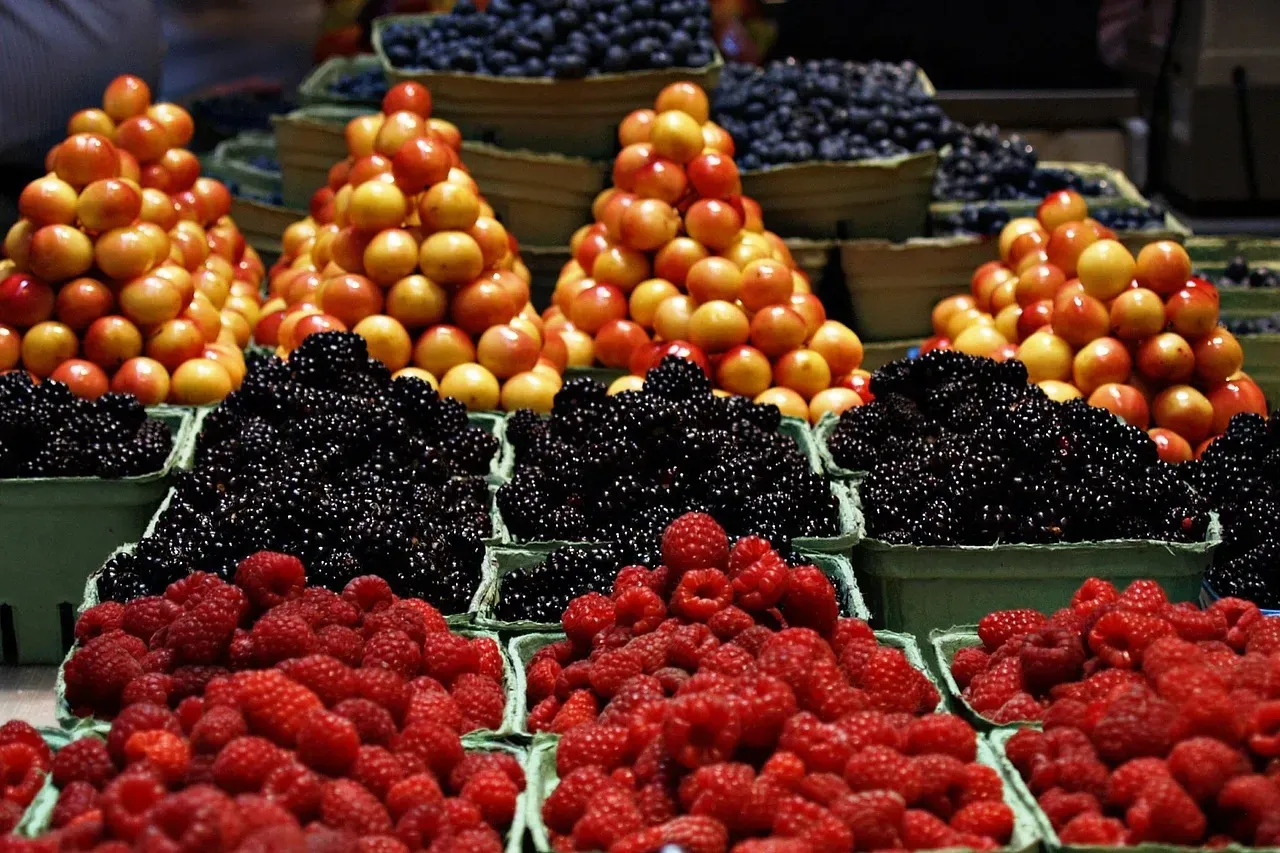
The majority of life’s most enjoyable experiences are inherently multisensory. A market is a multisensory environment operating at full capacity. The person who moves through it is not merely shopping. They are cognitively reactivating. If you’re drawn to this kind of environment regularly, it’s a strong signal that your nervous system genuinely thrives on layered input rather than being depleted by it.
This isn’t just a preference. We are designed to feel a level of heightened physical arousal when we are in a crowd. Whether we want to or not, our sensory system is on alert when we are in a big group, and that actually feels good. For people who gravitate toward market environments, that heightened state feels productive and enlivening rather than threatening. Your nervous system isn’t overwhelmed by the input. It’s fed by it.
Scent alone can trigger memories and emotions far beyond what visuals alone can replicate. Smell directly activates the brain’s limbic system, the part responsible for emotions and memories, giving it a lasting effect. This is partly why markets can produce an almost euphoric response in certain people. The smells, sounds, and textures aren’t just pleasant. They’re neurologically activating in ways that feel oddly like coming home.
#2. You Score High on Openness to Experience
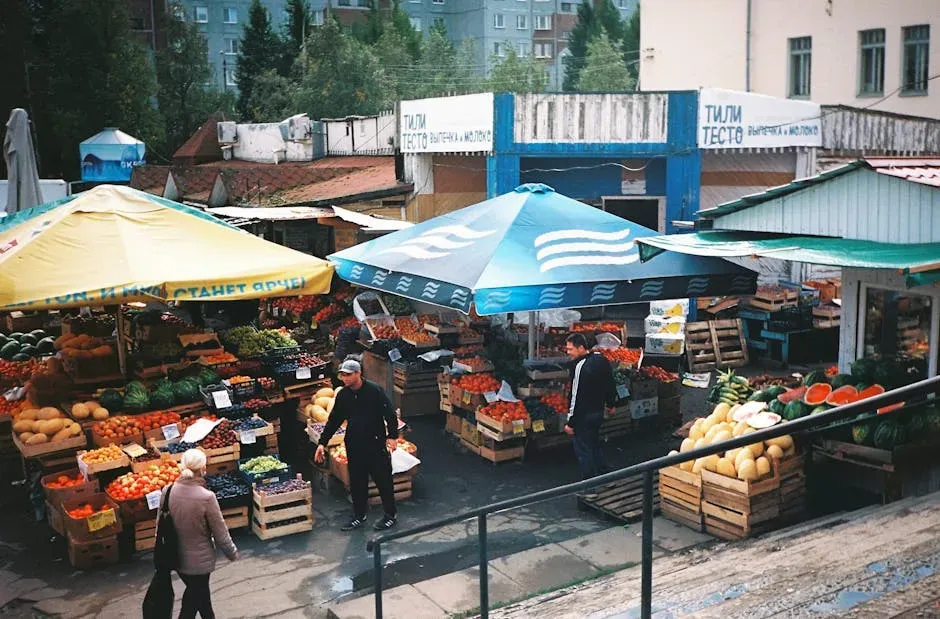
Openness to experience is a basic personality trait denoting receptivity to new ideas and new experiences. It is one of the five core personality dimensions that drive behavior, known as the five-factor model of personality, or the Big 5. People with high levels of openness are more likely to seek out a variety of experiences, be comfortable with the unfamiliar, and pay attention to their inner feelings more than those who are less open to novelty. They tend to exhibit high levels of curiosity and often enjoy being surprised.
Street markets are practically built for this personality profile. Every stall is a micro-discovery. People high in openness to experience tend to show a rich inner world, a hunger for novelty, and a deep appreciation for beauty, complexity, and abstract thought. In daily life, their curiosity and imagination often show up in how they think, what they enjoy, and how they respond to the world around them. They are typically drawn to new ideas, artistic expression, and unconventional perspectives.
Openness to experience also has a moderate positive correlation with sensation-seeking, particularly the experience-seeking facet. In practical terms, this means that someone who can spend two hours wandering a market, touching fabrics, tasting unfamiliar foods, and striking up conversations with vendors, is revealing something genuine about their cognitive style. They’re not being indulgent. They’re operating exactly as their personality is designed to operate.
#3. You Have a Deep, Sometimes Unconscious Need for Human Connection

Being in a crowd provides a realm of psychological benefits. Humans are social animals and we gain social support and comfort from others. For people who crave market environments specifically, this isn’t about being the loudest or most sociable person in the room. It’s about proximity to human life in its most ordinary and unfiltered form. Markets offer that in abundance.
Research has explored how even brief interactions with acquaintances, known as weak ties, influence our emotional well-being. People who exchanged a few words or smiles with classmates or acquaintances reported feeling happier and more connected on those days, even though the interactions were fleeting. This challenges a long-held assumption: that only deep, enduring relationships drive our sense of belonging. In reality, those small, spontaneous connections with people we barely know can brighten our mood, ease loneliness, and remind us that we’re part of a shared world.
Beyond individual interactions, urban public spaces play a broader role in building social cohesion. A systematic review on public space and sense of community found that designing spaces which facilitate social interaction contributes directly to residents’ psychological well-being and their feeling of being part of a larger community. This connection between place and belonging is what researchers call sense of community, a feeling of membership, mutual influence, and shared emotional connection. When you feel pulled to a busy market, you might simply be answering that call.
#4. You Are Reclaiming Something That Digital Life Has Quietly Taken Away
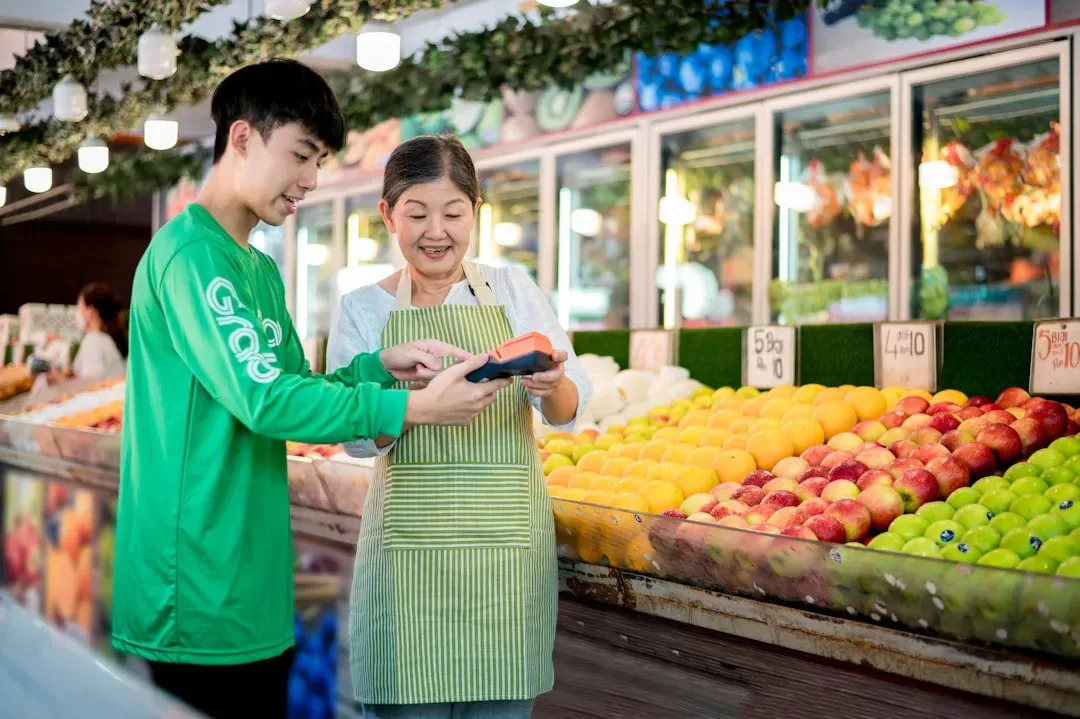
People are increasingly purchasing and consuming online where, traditionally, the sensory interaction has mostly been limited to visual, and to a lesser extent, auditory inputs. Touch is the most intimate sense. It requires proximity. It cannot be compressed into a file. It cannot be transmitted. Digital life, for all its brilliance, is profoundly, chronically touch-starved. People who find themselves magnetically drawn to market environments are, in a sense, self-prescribing the remedy.
Psychology’s most compelling recent framework for understanding market obsession is grounded cognition, the idea that thinking itself is rooted in sensory experience. There is wide consensus that we cannot understand human cognition without taking into account that humans interact with the world through their senses and do their thinking within a body. This is why a morning at a market can feel clarifying in a way that no amount of screen time ever does. The senses are providing the kind of rich, embodied input that the grounded mind was built to process. They are thinking with their whole body again. After weeks or months of thinking from inside a screen, this feels, neurologically, like oxygen.
The craving isn’t nostalgia and it isn’t romanticism about a simpler era. It’s a physiological correction. Your body is pulling you toward the kind of environment your nervous system was shaped to inhabit.
#5. You Possess a Natural Tolerance for Ambiguity and Thrive in the Unscripted
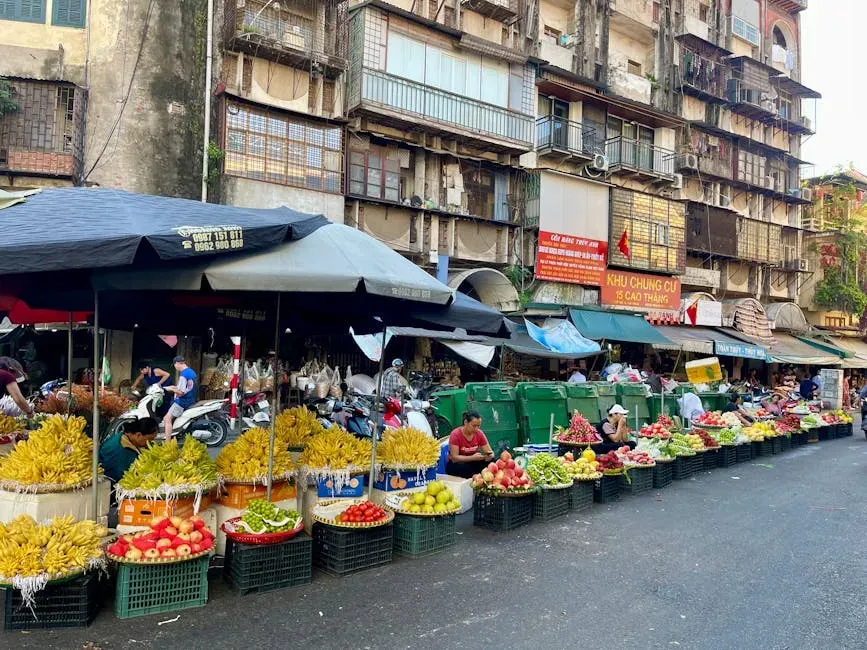
If your travel photos are filled with street art, markets, and clashing textures, that’s openness. Comfort with complexity, ambiguity, and ideas that might contradict each other. Cities compress difference into a few square blocks. Street markets take that compression even further. Within a single row of stalls, you might encounter three languages, four food cultures, and a dozen conflicting aesthetics. People who seek this out are rarely rattled by it.
Something makes us identify with a crowd, and something about being in it makes us stay there. When we identify with the group and feel part of a shared experience, the psychological benefits of being in a crowd are enormous. A huge number of studies shows improved mood, reduced loneliness, greater self-esteem and feelings of belonging when we are in a crowd.
Early research on consumer variety-seeking behavior proposed that individuals seek variety to satisfy their need for internal stimuli. People dislike monotony and crave fresh experiences as external stimulation. The market-lover doesn’t want everything organized, predictable, and sanitized. They want the vendor who decides to rearrange the whole stall at noon, the seasonal item that wasn’t there last week, the unexpected conversation that changes their afternoon. They don’t just tolerate the uncertainty. They’re privately counting on it.
What It All Adds Up To
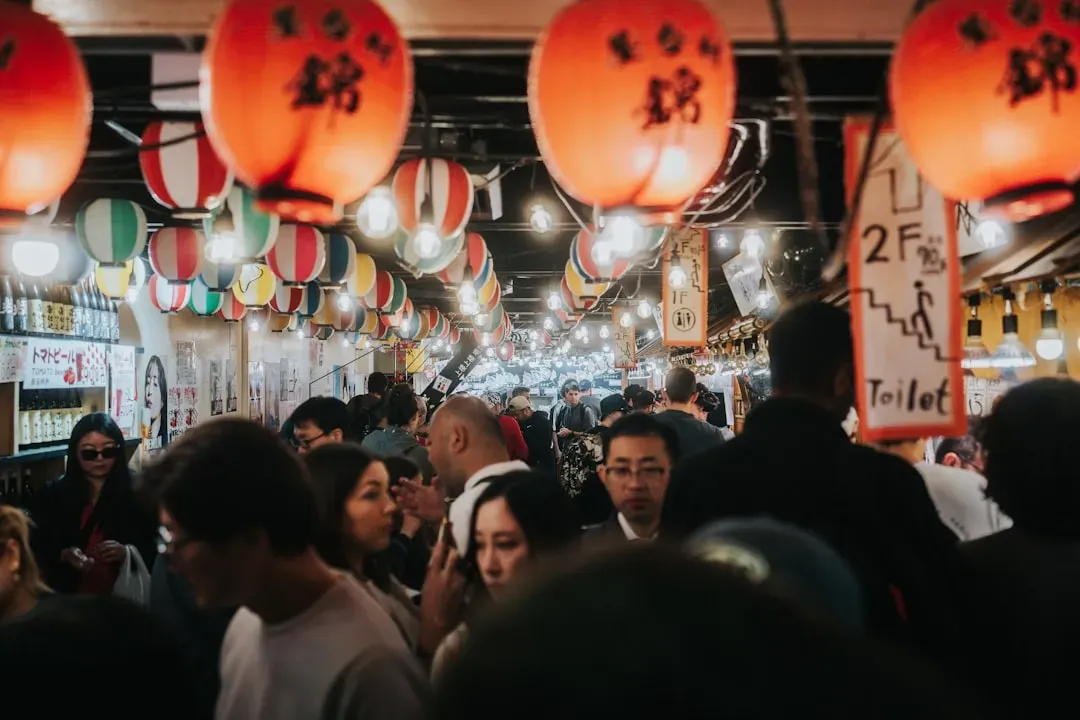
There’s a temptation to write off the love of a crowded street market as a quirky lifestyle preference, something to mention casually when asked about hobbies. The psychology behind it is more substantive than that. Being geographically separated and often not able to see the other person reduces the emotional intensity of the interaction, limits the opportunities for coordinated movement, and diminishes the opiate and oxytocin release of bonding experiences. In other words, the real, embodied, imperfect experience of a physical market does something for us that no digital substitute can replicate.
If markets consistently draw you in, you are almost certainly someone with strong sensory curiosity, a high tolerance for complexity, and a genuine appetite for human contact in its most spontaneous form. Such community gathering places are places where people want to be, and are physically set up to encourage conversation and interaction. They provide reasons to go there and reasons to stay, feel safe and comfortable, and are accessible and welcoming to everyone. They allow not only for interaction, but for entertainment, cross-cultural learning and the establishment of inter-group harmony.
People who love these spaces tend to be psychologically richer for it. The crowds, the smells, the noise, and the beautiful unpredictability are not things they endure. They are the whole point. In a world that increasingly offers us streamlined, optimized, algorithmically curated versions of everything, some people still instinctively turn toward the mess. That says something worth paying attention to.
