

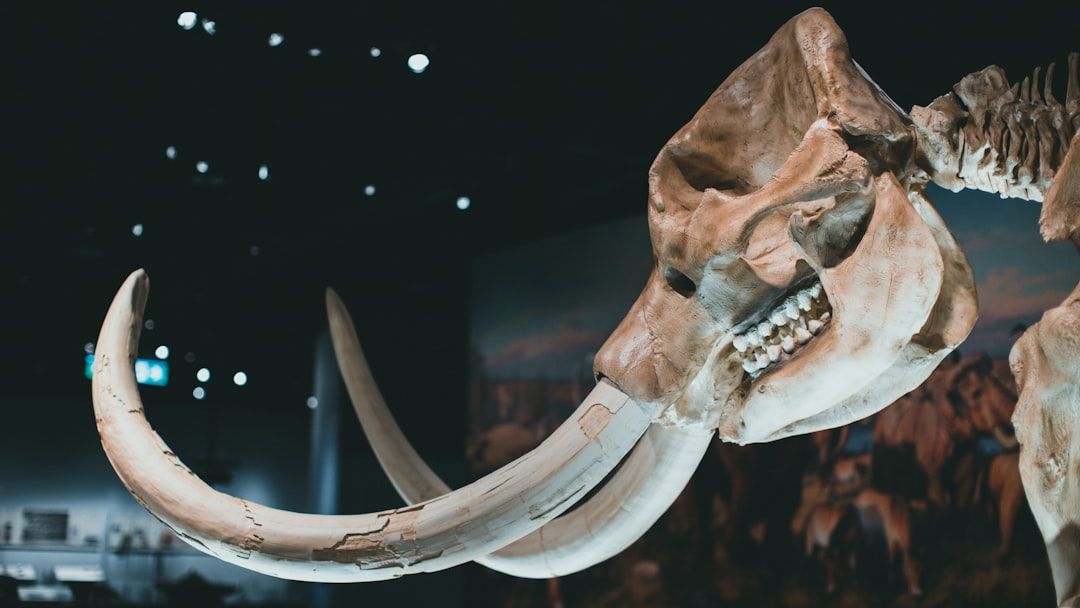
Earth’s megafauna underwent massive die-offs between 50,000 and 10,000 years ago, events that triggered profound shifts in predator-prey dynamics. Researchers at Michigan State University have now quantified how those losses endure in contemporary mammal food webs, revealing stark continental differences.[1][2] The study, published last week in Proceedings of the National Academy of Sciences, underscores why ecosystems in the Americas look so different from those in Africa and Asia today.[1]
Unprecedented Losses Reshaped the Base of Food Chains
The Pleistocene extinctions wiped out many of the planet’s largest land mammals, from woolly mammoths with tusks exceeding 12 feet to elephant-sized ground sloths. In South America alone, giant deer species once roamed widely, providing abundant forage for predators like saber-toothed cats and dire wolves. Australia lost creatures such as the car-sized, 3-ton wombat known as diprotodon, though the new analysis focused on the Americas, Africa, and Asia.[1]
The Americas bore the brunt of these disappearances. More than three-quarters of all mammals weighing over 100 pounds vanished there during that 40,000-year span. Africa and Asia also saw declines, but to a lesser degree, leaving their surviving species to fill larger ecological roles.
Mapping Predator-Prey Links Across Continents
To assess lingering effects, the MSU team examined predator-prey interactions at 389 sites spanning tropical and subtropical zones in the three continents. They drew on data covering more than 440 mammal species, including bears, wolves, elephants, and lions. Metrics focused on prey size, predator diet breadth, and trait overlap among predators.[1][2]
Current food webs in the Americas feature fewer and smaller prey species compared to Africa and Asia. Predators there target prey with a narrower spectrum of traits, and their diets show less overlap with one another. These patterns held even after accounting for present-day variables like climate and seasonality, pointing squarely to historical extinctions as the driver.[1]
Senior author Lydia Beaudrot, an assistant professor of integrative biology at MSU, noted the cascading nature of such losses: “When predators disappear, their prey can multiply unchecked, causing a series of cascading effects.”[1]
Key Continental Comparisons
- Americas: Fewer/smaller prey; specialized predator diets.
- Africa/Asia: More diverse prey base; broader predator flexibility.
- Common Thread: All regions retain basic trophic structure, but species composition varies sharply.
Americas Hit Hardest: A Tale of Missing Giants
The disproportionate impact in the Americas stems from the sheer scale of megafauna loss. South America’s megadeer, for instance, once numbered several species that tipped the scales at around 440 pounds each. Their extinction thinned the herbivore layer, starving out top predators and forcing survivors into narrower niches.[2]
First author Chia Hsieh, a Presidential Postdoctoral Fellow in MSU’s Ecology, Evolution, and Behavior program, highlighted a critical gap: “A lot of the lower part of the food web was lost.”[1] This imbalance persists, with American predators less generalist than their Old World counterparts. The study ruled out modern environmental factors, confirming that extinction severity alone explains the divergence.
Insights for Facing Modern Extinction Risks
These findings arrive amid warnings of a sixth mass extinction, where nearly half of mammals over 20 pounds rank as vulnerable, endangered, or critically endangered according to the International Union for the Conservation of Nature. Historical precedents suggest current losses could lock in food web alterations for millennia.[1]
Hsieh emphasized the forward gaze: “By studying the past, we can also try to understand what to expect in the future.”[1] The MSU team now aims to test whether past extinctions heighten vulnerability in certain ecosystems. For conservationists, the message is clear: preventing further megafauna declines may preserve options for resilient food webs.
Such long-term views challenge short-term policy debates, reminding us that ecosystem recovery operates on geological timescales.

- Urban Coyotes Show Remarkable Adaptability, Learning to Thrive in City Environments - July 22, 2026
- Beavers Are Nature’s Engineers, Creating Vital Habitats for Other Wildlife Species - July 21, 2026
- The Recovery of the California Condor Offers Hope for Other Critically Endangered Birds - July 21, 2026