

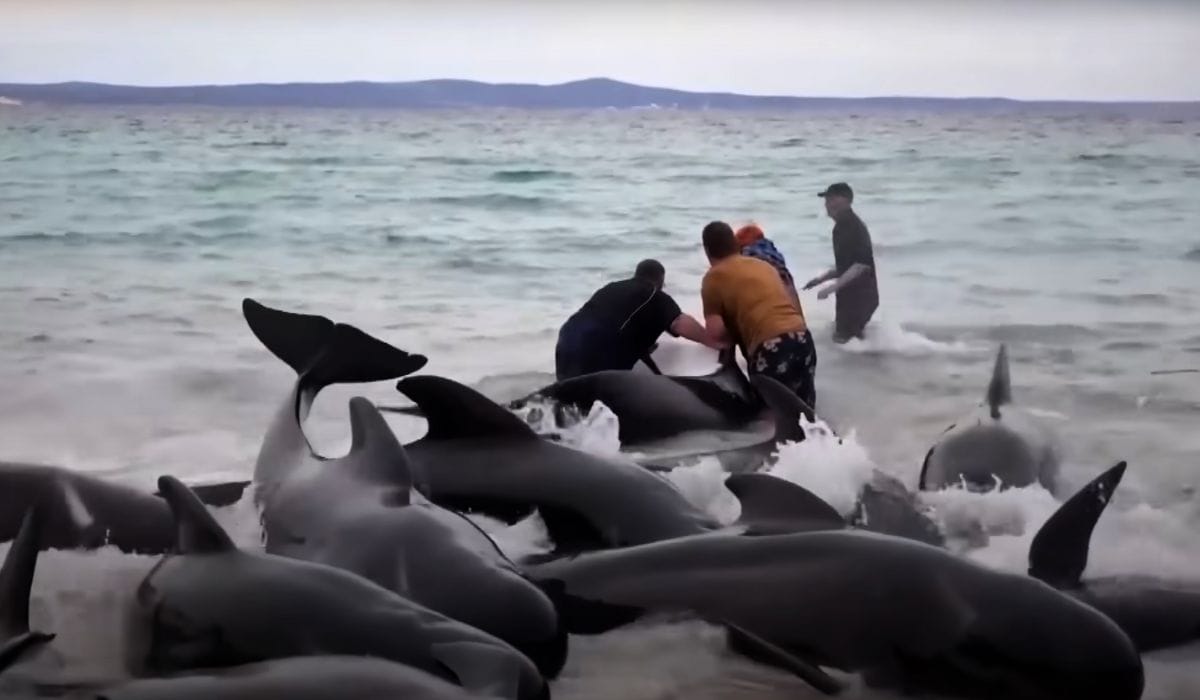
Unfortunately, this is a tragic story of how 100 whales died after being stranded on an Australian beach. While this is a sad story, what we should take from it is the amazing acts of the 250 selfless volunteers who showed up to help these huge animals in need.
Tragic Stranding Event
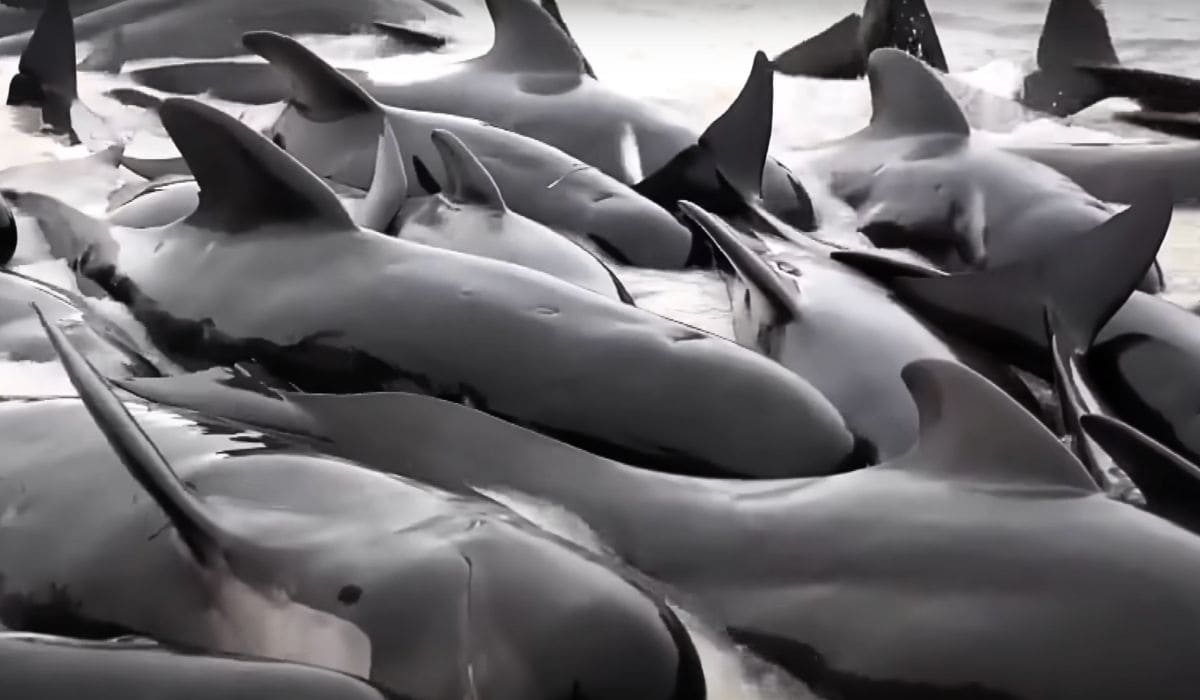
In a heartrending incident on Tasmania’s west coast, nearly 100 pilot whales died after being stranded. Despite the valiant efforts of around 250 volunteers, the majority of these marine giants could not be saved.
The Rescue Effort
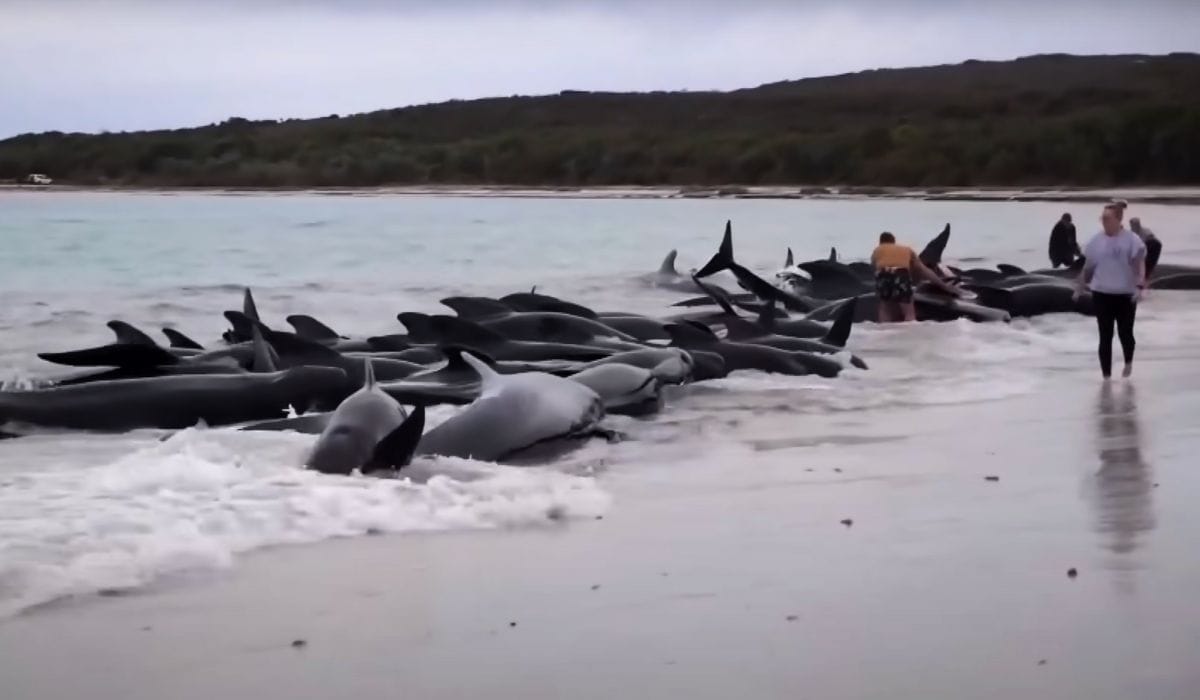
Rescue teams worked tirelessly, trying to keep the stranded whales hydrated and upright to improve their chances of survival. Techniques included using cloths soaked in water and physically adjusting the whales’ positions to help with breathing.
Challenges Faced

The rescue operation faced numerous challenges, including adverse weather conditions and the sheer size of the pilot whales. These factors significantly complicated the efforts to save the stranded whales.
A Tragic Ending

Despite the many volunteers and wildlife officials working tirelessly, 52 stranded whales passed away on the beach. Another 42 sadly had to be euthanized when attempts of leading them to deeper waters had failed.
Understanding Whale Strandings
When whales beach themselves, they can survive for a short time due to their thick blubber, which insulates them from extreme temperatures. However, without the buoyancy of water, their own body weight can crush their internal organs.
The Race Against Time

Stranded whales need immediate assistance to return to the water. Rescue efforts must be swift, as these mammals have a limited window before dehydration and physical deterioration set in.
The Causes of Strandings

Whale strandings can be caused by various factors including navigational errors, sickness, oceanographic or weather events, and even disturbances from underwater noise.
Group Stranding Phenomenon

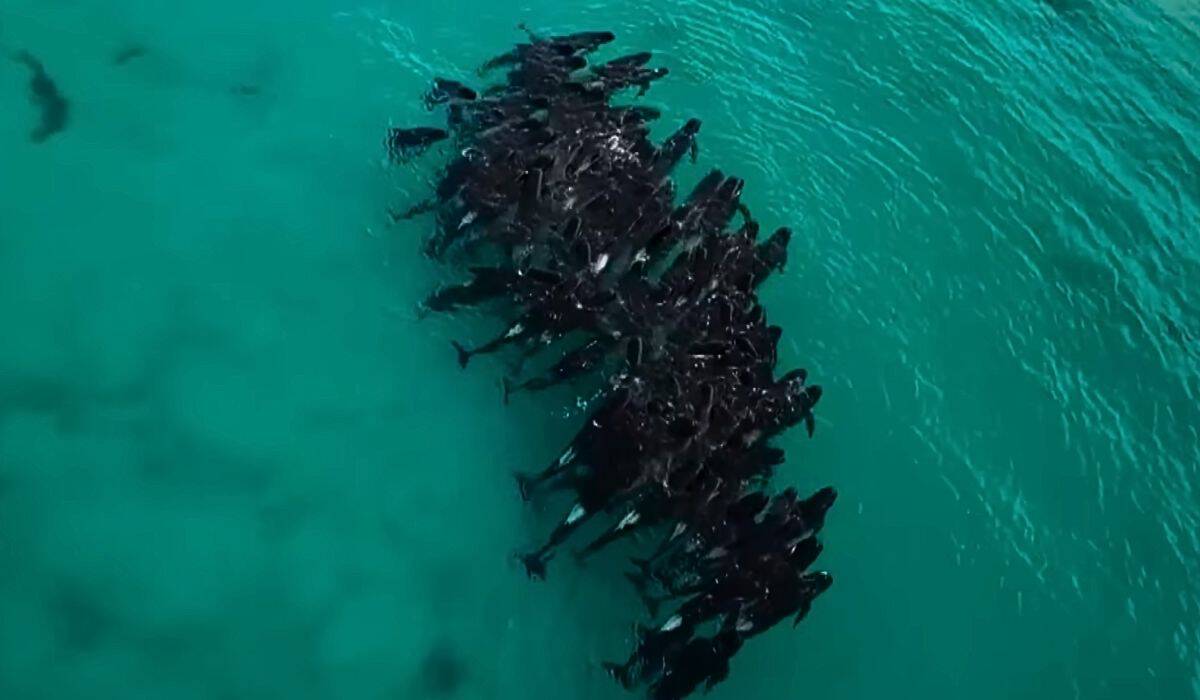
Some whale species, like pilot whales, are known for mass strandings, a behavior that is not fully understood but is thought to be linked to their highly social nature and group dynamics.
Challenges in Whale Rescue

Rescuing a stranded whale is a massive effort, often requiring coordination between multiple agencies and volunteers to either refloat the animal or, in some cases, euthanize it to prevent suffering.
Whale Social Structures

Whales are highly social creatures, with species like orcas and sperm whales exhibiting complex social behaviors and deep family bonds that can last a lifetime.
Giants of the Deep

The blue whale, the largest animal on the planet, can reach lengths of up to 100 feet and weigh as much as 200 tons—about the weight of 33 elephants.
Whale Song Mysteries

Whales are famous for their vocalizations, which they use for communication and navigation across the vast oceans. These songs can be incredibly complex and are as unique as human fingerprints among individuals.
The Breathing Giants

Unlike fish, whales are mammals and must breathe air. They can hold their breath for impressive lengths of time—sperm whales can submerge for up to 90 minutes.
Deep Dive Champions

Cetaceans hold records for some of the deepest dives known to science. The Cuvier’s beaked whale can dive more than 9,800 feet below the ocean’s surface, remaining submerged for over two hours.
The Threat of Plastic
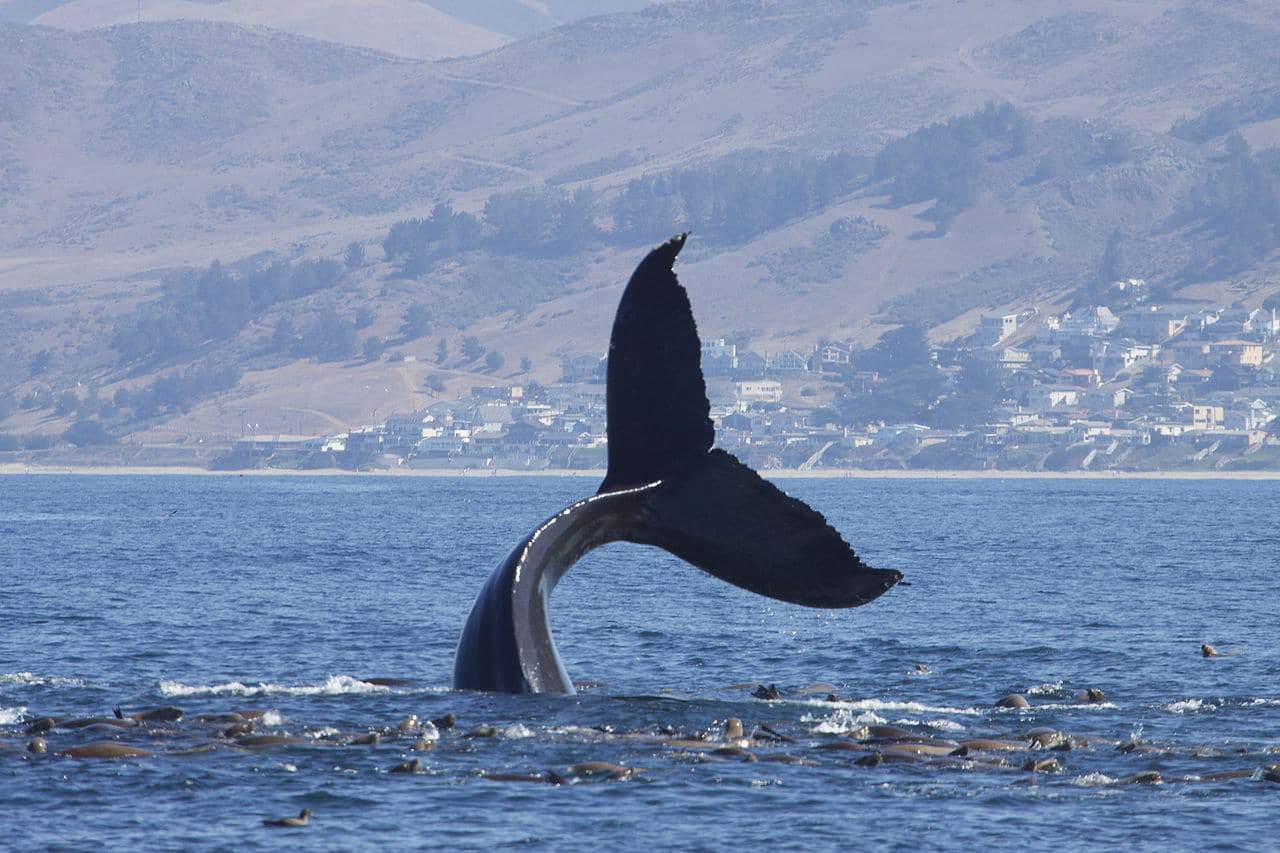
Whales are increasingly vulnerable to pollution, particularly plastic debris, which they can ingest mistakenly while feeding. This poses serious risks to their digestive systems and overall health.
Conservation Efforts

Conservation initiatives worldwide aim to protect whales from threats such as commercial whaling, habitat loss, and climate change, highlighting t
Whales’ Mysterious Migration

Whales travel great distances during their seasonal migration, with some species covering up to 12,000 miles round trip. This is one of the longest migration distances of any mammal on Earth.
Giants with Big Hearts

The heart of a blue whale is as large as a small car, and during the main feeding season, it beats only five to six times per minute.
Ancient Mariners
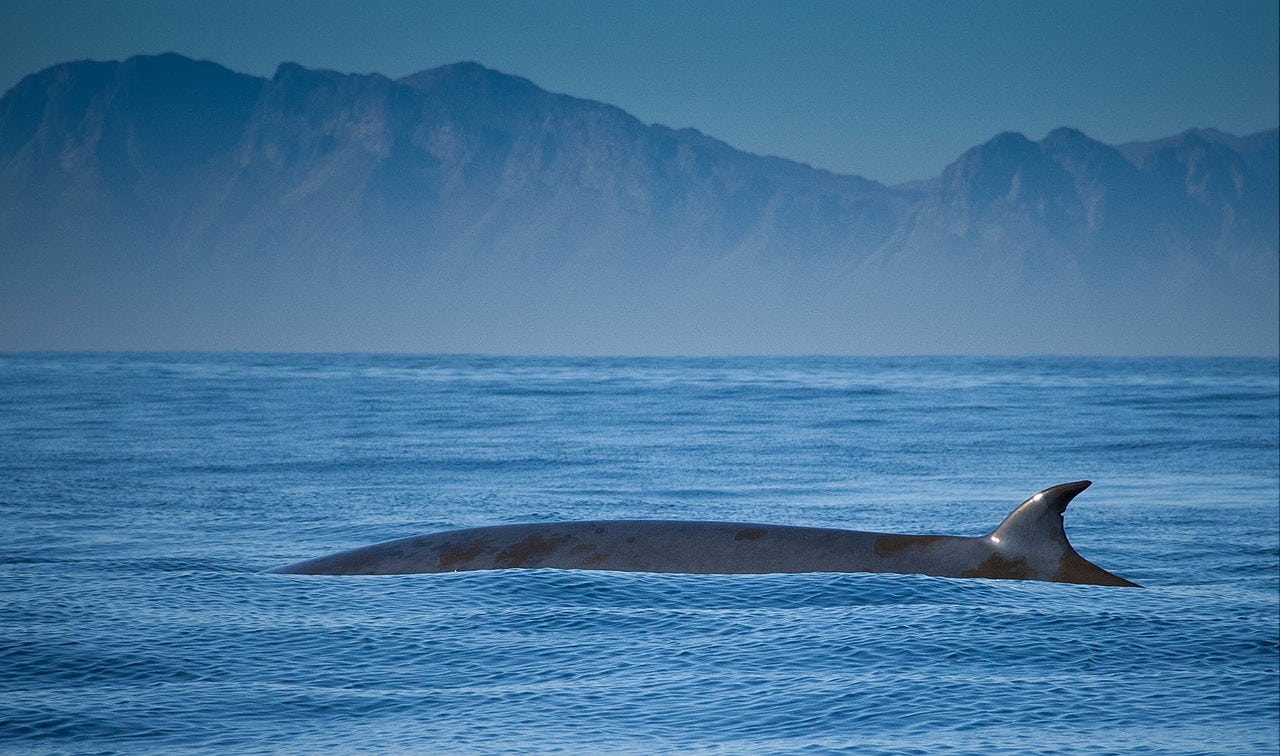
Whales have been roaming the oceans for approximately 50 million years. Over time, they have evolved from land-dwelling creatures to the fully aquatic beings we see today.
The Breathing Process
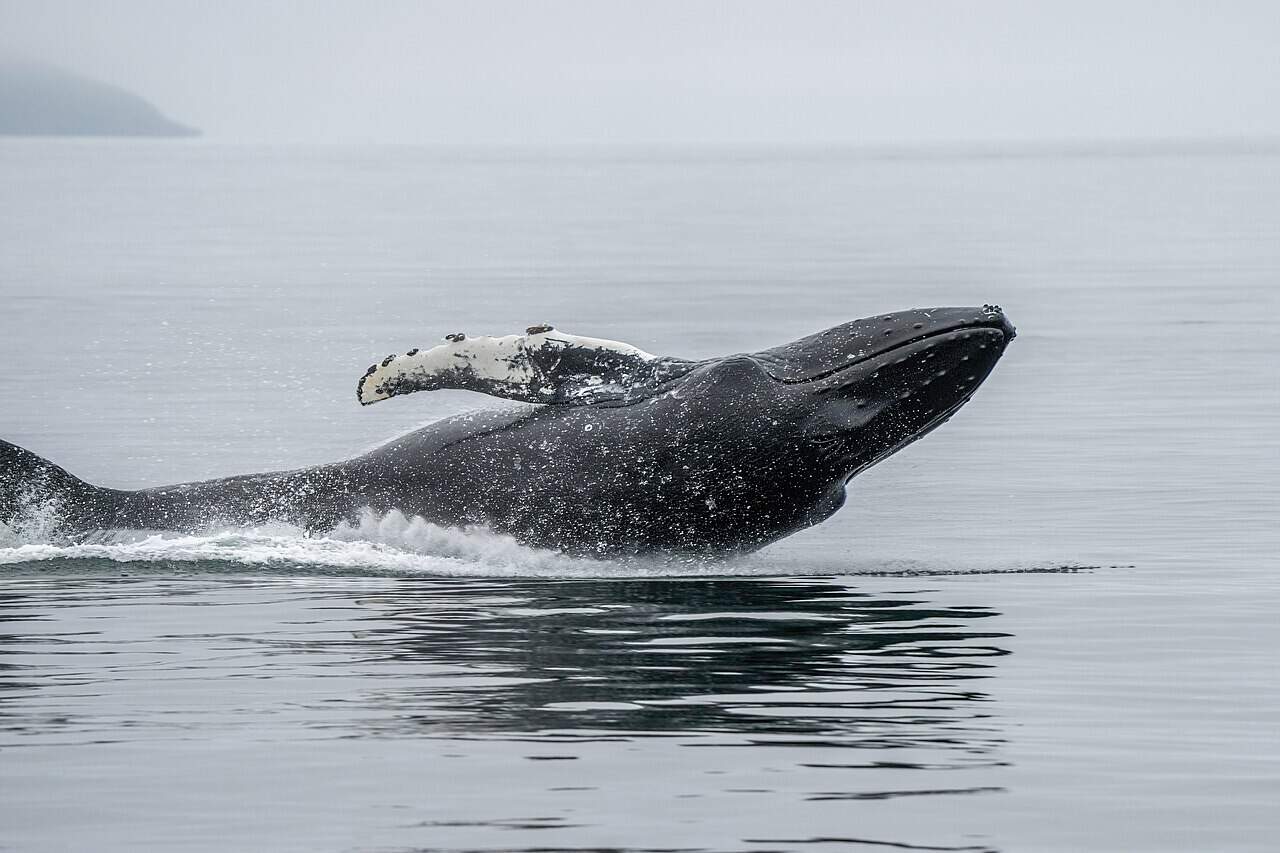
Unlike humans, whales must think to breathe; this means they never fully go to sleep. Instead, one part of their brain remains active to remember to breathe.
Whale Calves
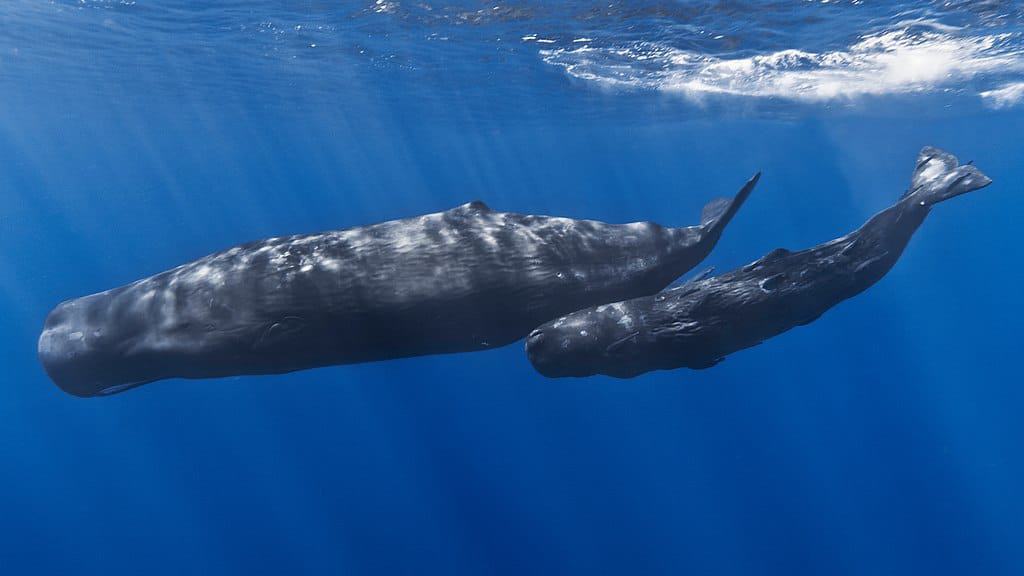
A newborn blue whale calf can weigh as much as a hippopotamus and gains about 200 pounds per day in its first year of life through its mother’s rich milk.
How Long Do Whales Live?
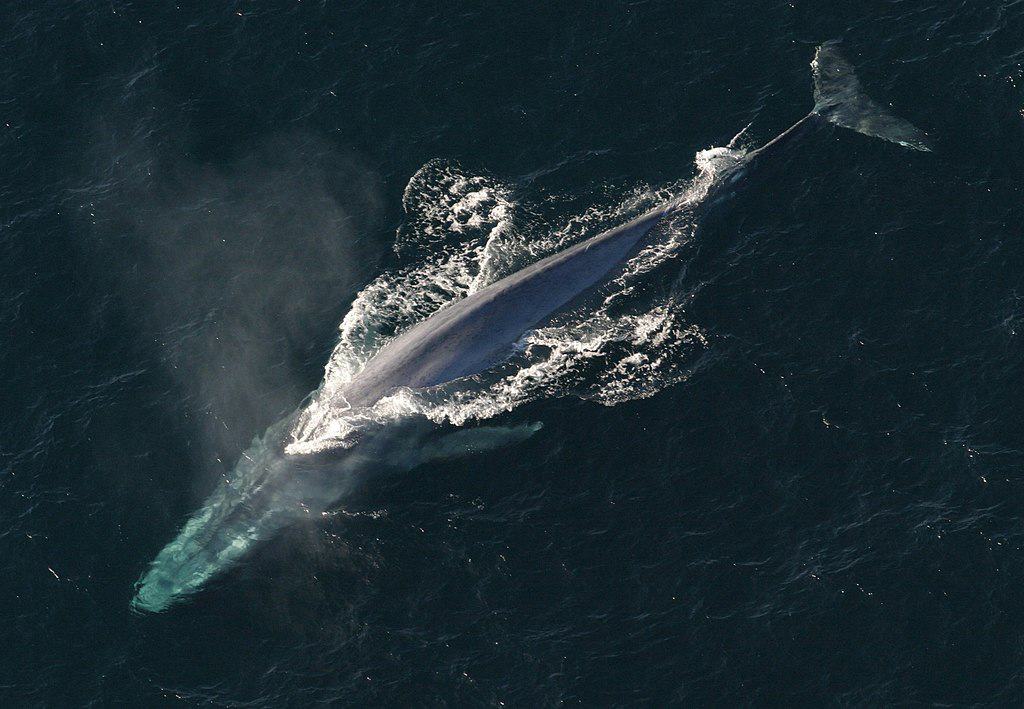
The lifespan of whales varies significantly among species. Bowhead whales can live over 200 years, making them some of the longest-lived mammals.
100 Whales Die After Being Stranded: Conclusion
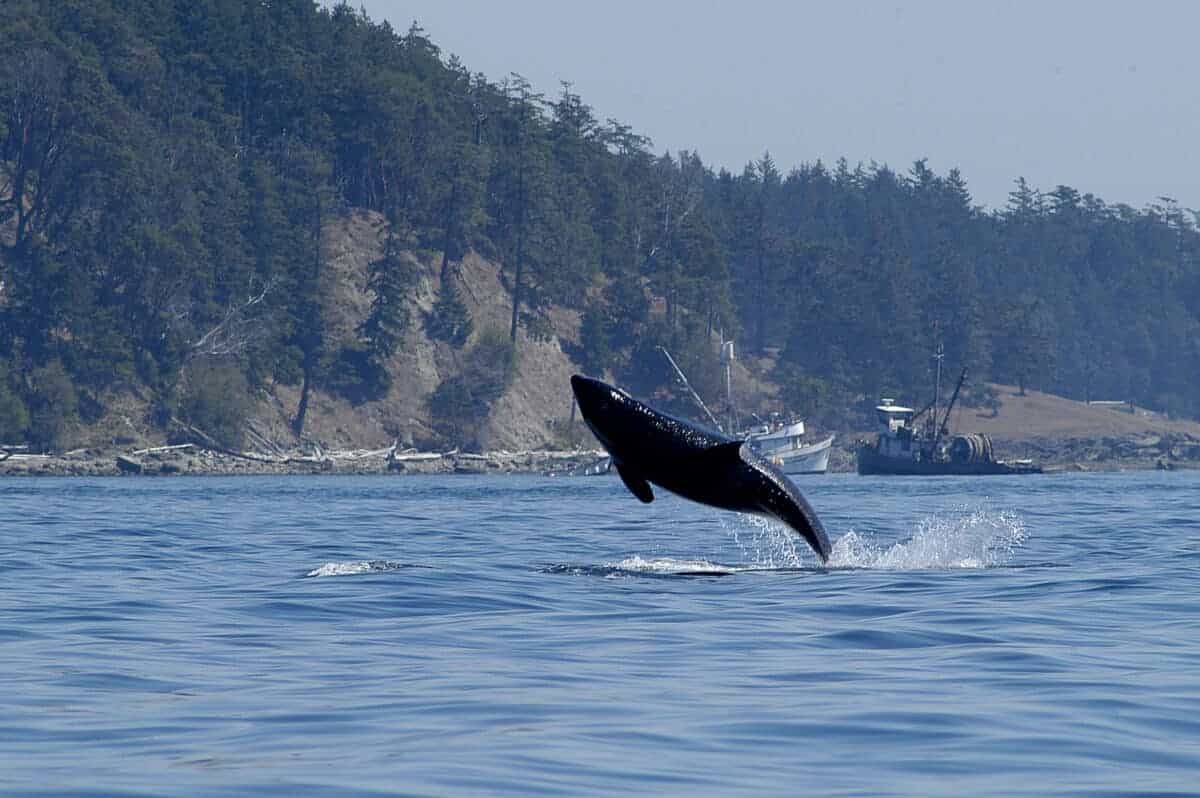
This tragic event serves as a reminder of the challenges whales face and the importance of continued efforts to understand and protect these magnificent creatures of the deep. They may be massive in size, but sometimes they still need the help of us tiny humans.
Thank you for reading this article about the 100 whales that tragically died after being stranded. To learn more about these humongous marine mammals, take a look here:
- Unprecedented Gathering Hundreds Of Humpback Whales Filmed In Southern Waters
- Whale Watchers Encounter 100-Ft-Long Blue Whale
- Enormous 79-Foot Blue Whale Washes Ashore In California

For any feedback please message to Feedback@animalsaroundtheglobe.com