

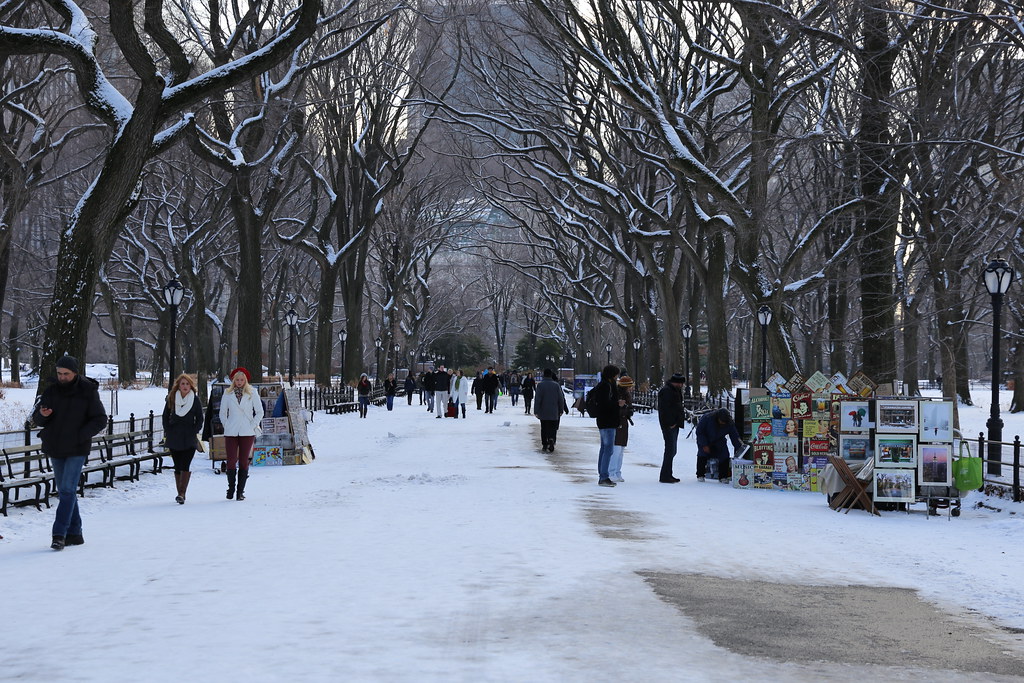
Mountains of Salt Anchor City Preparedness (Image Credits: Flickr)
New York City – Officials managed the steady influx of rock salt shipments at regional ports to maintain ample supplies for treating icy streets during a demanding winter season.[1][2]
Mountains of Salt Anchor City Preparedness
The quantities involved dwarf everyday comprehension. The New York area received about 900,000 metric tons of road salt each year, primarily via ocean-going vessels.[1] New York City began the season with roughly 317,000 metric tons in storage across its facilities.[1]
These stockpiles formed the backbone of the Department of Sanitation’s operations. Crews deployed over 700 salt spreaders at the onset of storms. The salt, often stored in distinctive red sheds scattered throughout the five boroughs, ensured quick access for plows and spreaders.
Ships Deliver from Distant Mines
Vessels docked at the Port of New York and New Jersey unloaded cargo mined far from the urban core. Providers such as Morton and Cargill transported the mineral from underground deposits, sometimes via Gulf Coast terminals before the transatlantic or coastal voyage.[2] Front-end loaders then transferred the coarse grains to trucks for distribution to city depots.
Early February brought additional reinforcements, with five ships scheduled to deliver 265,000 tons more.[2] This logistical ballet kept reserves flowing despite high demand from recent weather events. Workers at the ports coordinated around the clock to meet deadlines.
Seasonal Usage Tracks Storm Intensity
The city consumed 99,000 metric tons in recent weeks alone, reflecting the ferocity of back-to-back storms.[1] That left substantial reserves, equivalent to hundreds of millions of pounds piled high in strategic locations. Sanitation teams adjusted application rates based on snowfall totals and temperatures.
| Stockpile Metric | Tons (Metric) |
|---|---|
| Starting Inventory | 317,000 |
| Recent Usage | 99,000 |
| Approximate Remaining | 218,000 |
Replenishments offset the drawdown effectively. Officials monitored levels closely to avoid disruptions.
Regional Contrasts Highlight Supply Dynamics
While the city maintained robust stocks, some nearby towns in the tri-state area faced tighter supplies after prolonged storms.[3] Places like Piscataway, N.J., resorted to alternative de-icers and emergency pickups. New York City avoided such pinch points through proactive contracting and port access.
- Annual regional imports: 900,000 metric tons via three main providers.
- City storage: Around 40 dedicated sheds citywide.
- Deployment: 700+ spreaders ready per alert.
- Upcoming: 265,000 tons from five ships in early February.
- Alternatives monitored: Brine and calcium chloride in low-stock areas.
The coordinated effort underscored the scale required for urban winter management.
- New York City’s initial 317,000-ton stockpile sustained heavy early-season use.
- Shiploads ensure continuity, with ports handling vast volumes efficiently.
- Strategic reserves protect against the unpredictability of Northeast winters.
As more storms loomed on the horizon, these salt mountains stood ready to keep the city mobile. The process revealed the unsung infrastructure battle waged each winter. What steps does your area take for snow preparedness? Share in the comments.

- Urban Coyotes Show Remarkable Adaptability, Learning to Thrive in City Environments - July 22, 2026
- Beavers Are Nature’s Engineers, Creating Vital Habitats for Other Wildlife Species - July 21, 2026
- The Recovery of the California Condor Offers Hope for Other Critically Endangered Birds - July 21, 2026