

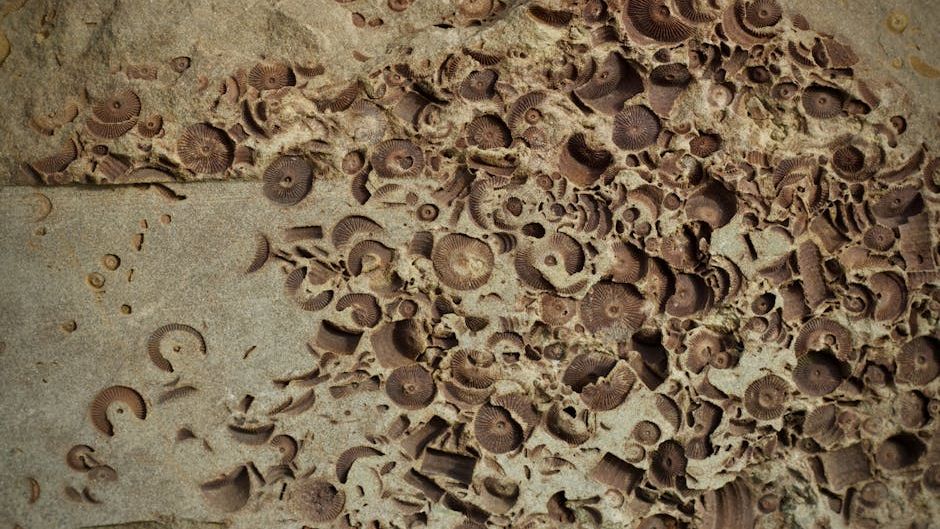
Somewhere beneath the rocky terrain of Yunnan Province in China, the story of life on Earth was waiting to be told. Not just any chapter of it either, but one of the earliest and most pivotal ones imaginable. A spectacular fossil site has emerged as a window into a world that existed over half a billion years ago, and what scientists are finding there is, honestly, nothing short of breathtaking.
The discovery is shaking up long-held assumptions about when and how complex animal life first appeared on our planet. The creatures preserved in these rocks are so well-detailed, so unexpectedly diverse, that researchers are still processing what it all means. Let’s dive in.
A Find Half a Billion Years in the Making
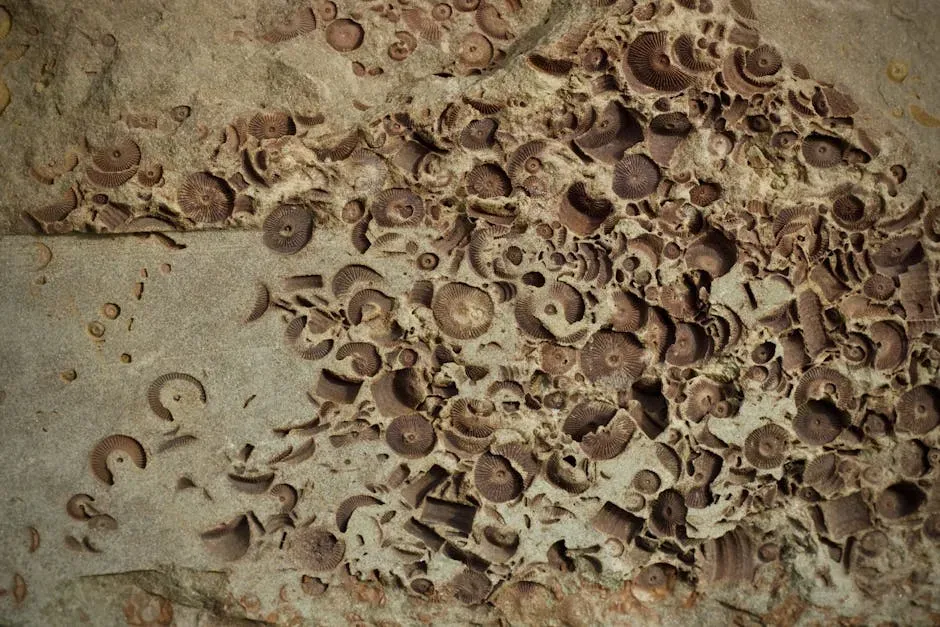
Here’s the thing about fossil discoveries – most of them give you fragments. A tooth here, a shell there. This site is radically different. Located in Yunnan Province, China, the fossil treasure trove dates back to the early Cambrian period, roughly 520 million years ago, and it belongs to a category of exceptionally preserved fossil deposits scientists call Lagerstätten.
What makes this particular site so remarkable is the sheer density and quality of preservation. Soft tissues, internal organs, even nervous system structures have been captured in stone with startling clarity. Think of it like finding an ancient photograph in a world where you only expected blurry shadows.
The site, reported in April 2026, is already being compared to some of the most celebrated fossil beds in paleontological history. Researchers believe it could rival or even surpass the famous Chengjiang fossil beds, which are also located in Yunnan and have long been a cornerstone of Cambrian biology research.
What Lives Were Frozen in Time
The organisms discovered at this site represent an astonishing cross-section of early animal life. Arthropods, worms, sponges, and creatures that defy easy classification have all been pulled from the rock. Some specimens show bilateral symmetry, the body plan that would eventually lead to vertebrates and, millions of years down the line, to us.
Honestly, looking at reconstructions of these animals is a slightly surreal experience. They are alien and familiar at the same time. Several of the species discovered appear to be entirely new to science, meaning they have never been documented before anywhere in the fossil record.
What’s particularly exciting for researchers is the ecological snapshot the site provides. You’re not just seeing individual creatures here. You’re seeing an entire community, predators, prey, filter feeders, all frozen in ecological context. That kind of preserved biological relationship is extraordinarily rare.
The Cambrian Explosion Explained
To understand why this site matters so much, you need to understand what the Cambrian explosion actually was. Roughly 538 to 520 million years ago, the fossil record shows a dramatic and relatively sudden diversification of animal life on Earth. Before this period, life was mostly microbial or composed of simple, soft-bodied organisms. Then, almost seemingly overnight in geological terms, complex animals with eyes, limbs, and digestive systems appeared.
Scientists have debated for over a century what triggered this explosion of complexity. Was it environmental changes? A rise in oxygen levels? Ecological feedback loops? The answer is probably a messy combination of all of the above.
What sites like this new Yunnan discovery do is fill in the details of that story with astonishing precision. Every new species identified, every preserved body plan studied, adds another data point to our understanding of how evolution actually unfolded during one of life’s most dramatic chapters. It’s like trying to reconstruct a symphony from a few bars of music and then suddenly finding the full score.
Exceptional Preservation: How Did This Happen
Soft tissue preservation in fossils is extraordinarily rare. Under normal circumstances, the fleshy parts of an organism decay long before mineralization can capture them. So how did these creatures end up immortalized in such fine detail?
The leading explanation involves a rapid burial event, likely a sudden influx of sediment that entombed organisms quickly, cutting off oxygen and halting the decay process almost immediately. Some researchers point to specific mineral conditions in the surrounding rock that may have accelerated fossilization of soft tissues. It’s a precise combination of circumstances that almost never aligns so perfectly.
The result is what paleontologists sometimes call a “snapshot” of ancient life. You’re not seeing evolution’s highlights reel. You’re seeing an ordinary Tuesday, half a billion years ago, preserved forever. That’s arguably more scientifically valuable than any single dramatic specimen because it reflects the mundane reality of an ancient ecosystem.
Tools and Technology Unlocking Ancient Secrets
Modern paleontology looks nothing like the image of someone brushing dust off bones in the desert. Today, researchers working with this site are deploying high-resolution CT scanning, synchrotron imaging, and advanced geochemical analysis techniques to extract information from specimens without physically destroying them.
These technologies allow scientists to peer inside fossils that might be too fragile to dissect, revealing internal anatomy that would otherwise remain invisible. In some cases, researchers have been able to identify structures that correspond to early nervous systems or digestive tracts, information that directly informs our understanding of animal evolution.
It’s worth pausing to appreciate just how remarkable this is. A creature that lived over 500 million years ago, in a shallow sea that no longer exists, on a continent that looked nothing like it does today, is now being analyzed in a laboratory using technology that would be incomprehensible to any human who lived even 100 years ago. Science, when you step back and look at it, is genuinely wild.
What This Means for Our Understanding of Animal Evolution
The implications of this discovery extend well beyond paleontology textbooks. Every new Cambrian fossil site that achieves this level of preservation gives biologists crucial data about the deep evolutionary roots of animal body plans. Many of the structures we take for granted today, eyes, limbs, segmented bodies, first appeared during this extraordinary period.
This new site appears to preserve creatures that represent some of the earliest known examples of complex nervous systems. If confirmed through further analysis, that would be a genuinely major finding. It would push back the documented origins of neurological complexity and force a reexamination of how quickly that complexity evolved.
There’s also something deeply philosophical about all of this. The Cambrian explosion wasn’t just a biological event. It was the moment when life, for the first time, became something we’d recognize as fundamentally animal. Finding a site that lets us watch that transformation in real time, in such fine detail, feels less like science and more like time travel.
What Comes Next for the Site and Its Research
Research on this fossil site is still in its early stages. As of April 2026, scientists have described only a portion of the specimens recovered, and excavation is ongoing. The expectation among the scientific community is that many more undescribed species will emerge as work continues.
The site is expected to anchor multiple research programs over the coming years, with international teams likely collaborating to analyze different aspects of the assemblage. Given the geopolitical complexity of international scientific collaboration, that cooperation itself will be something worth watching.
Perhaps the most exciting prospect is what we don’t yet know. Right now, researchers are sitting on a treasure trove of data they haven’t fully processed. There may be species in those rocks that will entirely rewrite specific branches of the animal family tree. There may be ecological relationships that challenge existing models of Cambrian food webs. The answers are literally there, waiting in the stone.
Conclusion: A Window We Never Expected to Find
It’s rare in science to encounter a discovery that feels genuinely transformative from the moment it’s announced. Most progress is incremental, cautious, and hard-won. This Yunnan fossil site feels different. The breadth of preservation, the ecological detail, and the timing of its discovery, at a moment when imaging and analytical technologies are more powerful than ever before, creates a confluence of opportunity that scientists may not see again for generations.
I think what makes this so emotionally resonant, even for people who don’t follow paleontology closely, is the simple strangeness of it. These were real animals. They lived, they fed, they died, and then the Earth swallowed them whole. Half a billion years later, we found them again.
What would you say to a creature that lived 520 million years ago, if you could? Maybe more importantly, what do you think it would tell us about ourselves? Leave your thoughts in the comments below.

- Urban Coyotes Show Remarkable Adaptability, Learning to Thrive in City Environments - July 22, 2026
- Beavers Are Nature’s Engineers, Creating Vital Habitats for Other Wildlife Species - July 21, 2026
- The Recovery of the California Condor Offers Hope for Other Critically Endangered Birds - July 21, 2026