

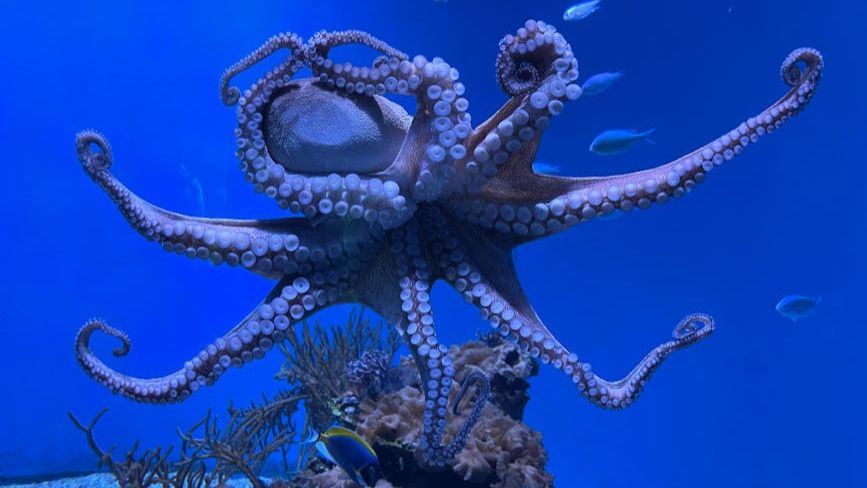
There’s something deeply strange about octopuses. Not just their alien-like appearance or their ink-squirting escapes, but something far more fundamental about how they experience the world around them. Scientists have been peeling back the layers on cephalopod biology for decades, and every time they do, the findings leave researchers genuinely stunned.
A new wave of research is now shedding light on one of the most fascinating sensory systems ever discovered in the animal kingdom. Octopus suckers, it turns out, may be doing something that sounds like science fiction. Let’s dive in.
The Discovery That’s Rewriting Cephalopod Biology
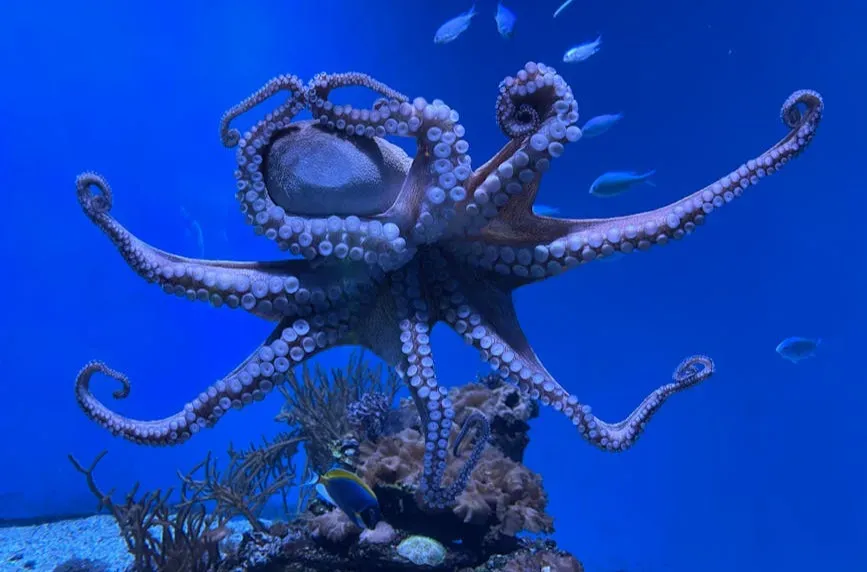
Imagine being able to taste everything you touch, simultaneously, with hundreds of tiny sensors across your entire body. That’s not far from what octopuses appear to experience every single time they reach out and grab something. Researchers studying octopus sucker anatomy have found that these creatures possess specialized chemoreceptors – essentially chemical-sensing cells – embedded directly within their suckers.
This discovery, building on foundational work published in recent years and gaining significant traction in early 2026, suggests that octopuses don’t simply feel objects the way we do. They chemically sample their environment through direct contact. It’s a form of sensing that has no clean analogy in human experience, which honestly makes it even more incredible to think about.
What “Tasting by Touch” Actually Means
Here’s the thing – when scientists say octopuses can “taste” through their suckers, they don’t mean it loosely. The suckers contain receptor proteins that respond to chemical compounds found in prey, predators, and surrounding materials. Each sucker functions almost like a miniature taste bud crossed with a fingertip.
Think of it this way: if you picked up a strawberry and your fingertips immediately told your brain it was sweet and ripe, that would be a rough approximation of what an octopus experiences. Except an octopus has hundreds of suckers doing this at once, across eight arms, all sending signals simultaneously. The sheer volume of sensory data is almost incomprehensible by human standards.
The Chemoreceptor Proteins at the Heart of It All
The real breakthrough came from examining the molecular biology of octopus suckers at a granular level. Scientists identified a class of receptor proteins that are structurally distinct from those found in vertebrates, meaning this sensory system evolved completely independently. That’s a remarkable example of what biologists call convergent evolution – nature solving a similar problem through an entirely different path.
These proteins appear to be highly sensitive to hydrophobic molecules, which are compounds that don’t dissolve easily in water. This is particularly useful for detecting prey hidden in crevices or buried under sediment, where visual cues are limited or useless. In murky underwater environments, being able to chemically “taste” a hidden crab before you even see it is a serious survival advantage.
How the Octopus Brain Processes This Sensory Flood
One of the most mind-bending aspects of this whole story is the neurological side. Octopuses have a decentralized nervous system, meaning a significant portion of their neurons are located not in the central brain but in the arms themselves. This means each arm can process sensory information semi-independently, which is genuinely unlike almost any other animal on Earth.
When you factor in the chemoreceptor input from all those suckers, the processing load becomes staggering. Honestly, it raises a fascinating and somewhat uncomfortable question: how much of what an octopus “experiences” is consciously perceived, and how much happens at a more automated, distributed level? It’s hard to say for sure, but researchers believe the integration of touch and chemical sensing is more sophisticated than anything we’ve previously attributed to invertebrates.
Why This Matters Beyond Pure Curiosity
Let’s be real – this isn’t just a cool animal fact to share at dinner parties. The implications for neuroscience, robotics, and materials science are significant. Understanding how octopus suckers integrate mechanical touch with chemical detection could inspire entirely new generations of soft robotic grippers, capable of identifying objects not just by shape and texture but by chemical composition.
Medical applications are also on the table. Biosensors that mimic octopus chemoreceptors could potentially detect trace compounds in environments where traditional sensors struggle. Researchers working in fields from cancer diagnostics to environmental monitoring have already taken notice of this line of biological inquiry, and funding interest has grown noticeably heading into 2026.
The Evolutionary Story Behind This Remarkable Ability
Octopuses and their cephalopod relatives diverged from a common ancestor with other mollusks hundreds of millions of years ago. Over that enormous span of time, they developed cognitive and sensory tools that put them in a category of their own among invertebrates. The sucker chemoreceptor system is likely not a recent evolutionary addition – it’s probably ancient and deeply embedded in their biological success as a group.
What makes the octopus story particularly compelling is how isolated their intelligence and sensory complexity is on the evolutionary tree. They’re not closely related to vertebrates, yet they developed sophisticated nervous systems, complex behaviors, and now apparently multisensory integration that rivals far “higher” animals. Nature, it seems, finds ways to build brilliance in the most unexpected places.
What Researchers Still Don’t Know
For all the excitement, there’s still a lot of open territory here. Scientists don’t yet fully understand how the brain prioritizes chemical versus tactile information when the two signals conflict or overlap. The precise range of compounds detectable by different octopus species also remains an active area of investigation, and there may be significant variation between species adapted to different ocean environments.
There’s also the deeper question of subjective experience. Does an octopus “sense” richness in the same way we might feel warmth from the sun? That’s a question that drifts into philosophy as much as biology, and it may never have a clean answer. Still, every new finding about octopus sensory biology pushes the conversation further, and that, I think, is what makes this field so genuinely exciting to follow.
Conclusion: Nature’s Reminder That We’ve Only Scratched the Surface
The discovery that octopus suckers function as hybrid touch-taste organs isn’t just a fascinating footnote in marine biology. It’s a reminder that the natural world is still full of mechanisms we haven’t imagined yet, hidden in creatures we thought we understood. Octopuses have been crawling across ocean floors for millions of years, quietly experiencing a version of reality that we’re only now beginning to decode.
For a species as self-assured as humans tend to be about our understanding of life on Earth, the octopus is a humbling case study. There are billions of animals out there sensing, experiencing, and navigating the world in ways our own biology can’t directly relate to. What other sensory secrets are still out there, waiting to be found? That’s the question worth sitting with.

- Urban Coyotes Show Remarkable Adaptability, Learning to Thrive in City Environments - July 22, 2026
- Beavers Are Nature’s Engineers, Creating Vital Habitats for Other Wildlife Species - July 21, 2026
- The Recovery of the California Condor Offers Hope for Other Critically Endangered Birds - July 21, 2026