
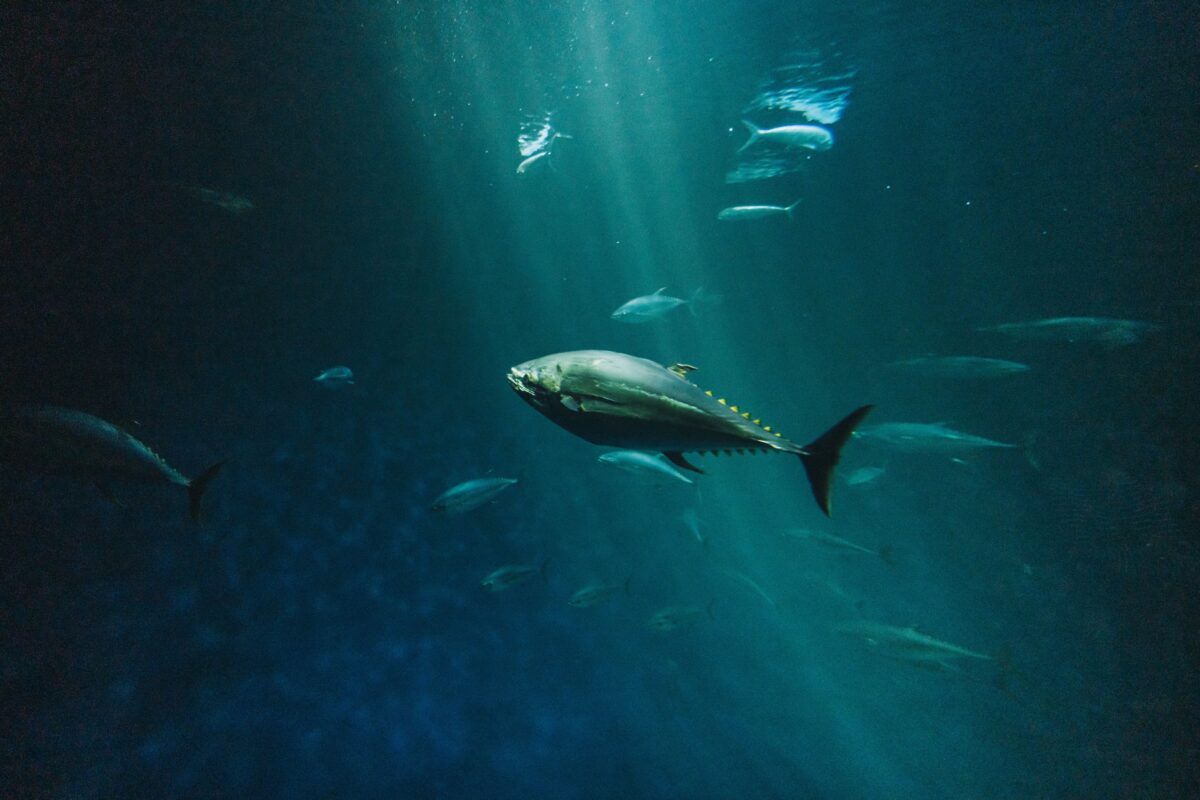
Drop an ordinary empty plastic bottle into the Pacific and let it sink for a few hours. If it reached the bottom of the Mariana Trench, it would come back crushed to a fraction of its size. Yet down there, in total darkness and near freezing water, small animals are going about their business as if nothing were wrong.
That contrast is what makes the deepest place on Earth so fascinating. The headline claim is true in one important sense: nothing unprotected survives the trip. Still, the story is more interesting than “nothing lives there,” and the details say a lot about how stubborn life can be.
Where the Bottom of the World Actually Is
🔥 Would you like to save this?
We'll email this post to you, so you can come back to it later!
The deepest known spot in the ocean is called Challenger Deep. It sits at the southern end of the Mariana Trench in the western Pacific, not far from Guam. Depending on the survey and the instrument, its depth is usually given as roughly eleven kilometers, or about seven miles.
Different expeditions have produced slightly different numbers. That’s normal, because sound travels through water at varying speeds depending on temperature and salinity, and sonar corrections are tricky at that scale. A few meters of disagreement is simply the price of measuring something that deep.
For perspective, Mount Everest would fit inside the trench with well over a mile of water still above its summit. The trench is not a pit in the middle of nowhere, either. It’s a curved scar where one tectonic plate dives beneath another, which is why the floor drops so sharply.
Scientists call the region below about six thousand meters the hadal zone, named after Hades. It’s made up of a chain of isolated trenches, almost like underwater islands of habitat, and each one may host its own distinct community.
How Much Pressure Are We Talking About?
🔥 Would you like to save this?
We'll email this post to you, so you can come back to it later!
At the surface, you live under one atmosphere of pressure, which you never notice. Descend about ten meters in water and you add another atmosphere. By the floor of Challenger Deep, the pressure is more than one thousand times what we feel at sea level.
In everyday terms, that’s roughly eight tons pressing on every square inch of surface, a figure often compared to balancing a stack of heavy vehicles on your fingertip. The exact comparison varies, but the scale is the point. Air filled spaces collapse, and anything with trapped gas gets crushed or deformed.
Here’s a quick summary of what that does to things:
- Gas filled structures, like lungs, swim bladders, and hollow plastic, compress or implode.
- Proteins and cell membranes can lose their shape and stop working normally.
- Ordinary steel hulls can fail unless designed with extreme margins.
- Even thick glass or foam can behave in surprising ways under load.
A human diver wearing the best available gear couldn’t come anywhere close. Deep diving records for people, even with specialized gas mixtures and pressure suits, remain a small fraction of this depth.
Who Has Actually Been Down There
🔥 Would you like to save this?
We'll email this post to you, so you can come back to it later!
Here’s where the headline needs some nuance. No unprotected person or object survives the pressure, but protected vehicles have made the trip and recorded what they saw. In 1960, Jacques Piccard and Don Walsh descended in the bathyscaphe Trieste and reached the bottom, though silt clouded their view.
Decades later, in 2012, filmmaker James Cameron made a solo dive in the Deepsea Challenger. Then in 2019, explorer Victor Vescovo reached the floor several times in the submersible Limiting Factor, a titanium hulled craft built for repeat dives. Chinese crewed submersibles have since reached comparable hadal depths too.
Robotic landers and uncrewed vehicles have gathered even more data. Some are dropped from ships and fall freely to the bottom with cameras and bait, then release weights and float back up. Others, like the vehicle Nereus, were designed to be remotely operated at these depths.
So the more accurate framing is that visits are brief, expensive, and rare. A few hours of observation is not the same as living there permanently, and that’s why so much about the trench remains unknown. Scientists are still piecing together a picture from snapshots.
What Actually Lives in the Trench
🔥 Would you like to save this?
We'll email this post to you, so you can come back to it later!
The residents are small, strange, and surprisingly varied. Among the best known are amphipods, shrimp like crustaceans that scavenge on whatever drifts down from above. Hadal amphipods have been filmed and collected in large numbers, and some have been found with remarkably tough digestive enzymes.
Single celled organisms also thrive. Xenophyophores, giant amoeba like creatures that build shells around themselves, have been seen on the trench floor. Sea cucumbers, worms, and various microbes round out the community.
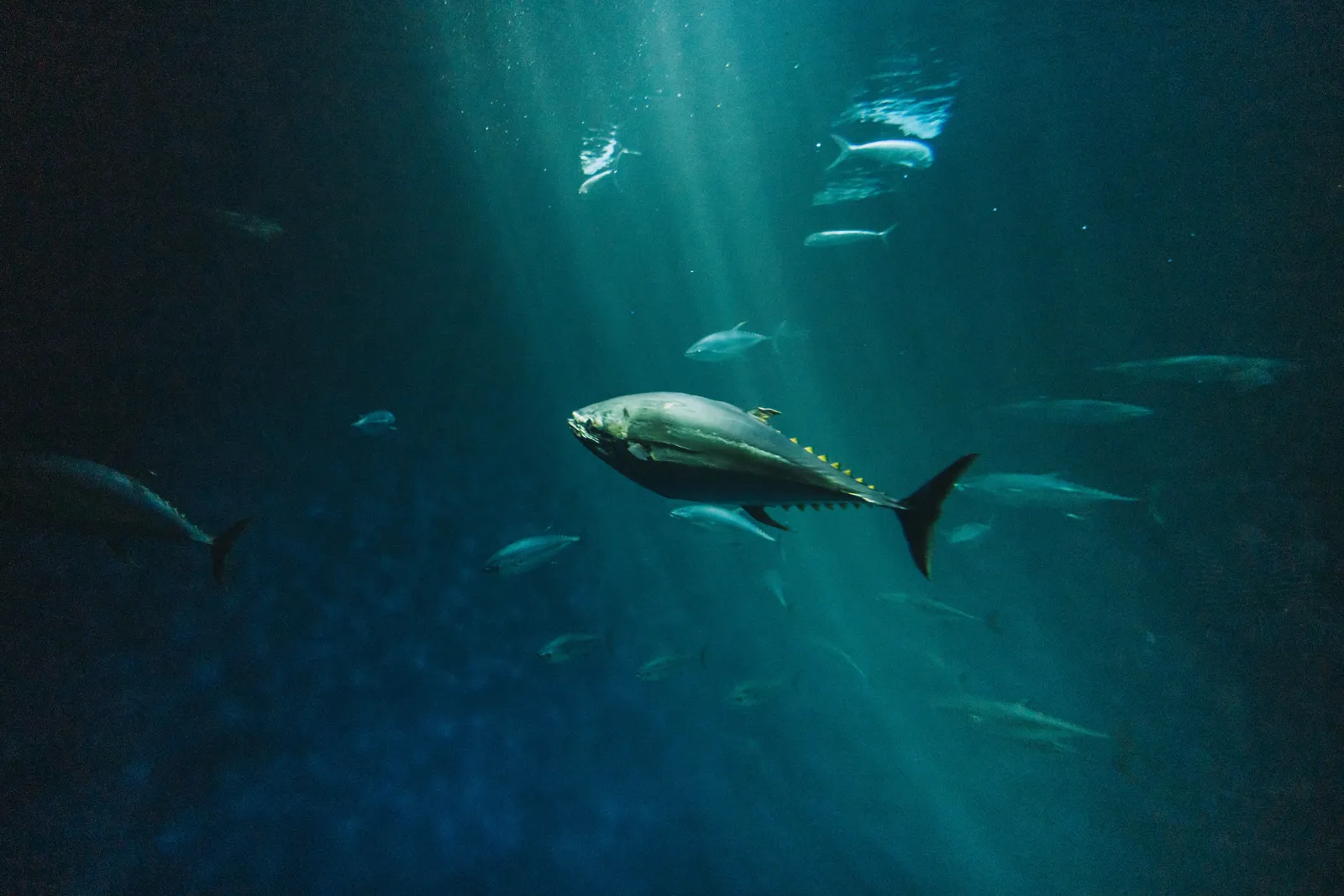
Fish are a different story. The deepest fish ever filmed was a snailfish seen at around eight thousand meters in the Pacific off Japan. Snailfish in the Mariana Trench itself have been caught at roughly eight thousand meters as well, but nothing has yet been recorded swimming at the very bottom of Challenger Deep.
That detail matters, because it points to a likely limit. Researchers have suggested that fish may not be able to go much deeper than about eight thousand and five hundred meters, due to chemistry inside their cells. Invertebrates seem to face no such ceiling, at least not one we’ve found.
The Biology Tricks That Make It Possible
🔥 Would you like to save this?
We'll email this post to you, so you can come back to it later!
Animals down there don’t resist pressure so much as work with it. Their bodies are mostly water and tissue with no big air pockets, so there’s nothing to crush. Water barely compresses, which helps a great deal.
The deeper puzzle is chemistry. Pressure squeezes proteins and membranes into awkward shapes. Deep sea animals counter this with small stabilizing molecules called piezolytes, and one of them, TMAO, appears in higher amounts in fish the deeper they live.
Here are the main adaptations researchers point to:
- Membranes with a fat composition that stays flexible under squeeze and cold.
- Stabilizing molecules that protect proteins from pressure distortion.
- Soft, flexible, often translucent bodies with little hard skeleton.
- Slow metabolisms that stretch scarce food a long way.
The same TMAO that helps stabilize proteins is also what gives some seafood its smell, which is a funny everyday link to a very extreme habitat. There’s an upper limit to how much of it a cell can hold, and that’s one proposed reason fish stop appearing at the deepest depths.
Food, Darkness, and an Unexpectedly Busy Trench
🔥 Would you like to save this?
We'll email this post to you, so you can come back to it later!
No sunlight reaches the trench, so plants and algae can’t grow there. Most food arrives as marine snow, a steady drizzle of dead plankton, fecal pellets, and the occasional large carcass sinking from above. Trench shapes act like funnels, so organic material tends to collect in them, which may be why hadal life is more active than people once expected.
Earthquakes help too. Slumping sediment on the trench walls can carry fresh material downward, creating pulses of food. Researchers have also described communities in some hadal trenches that rely on chemical energy from seeping fluids rather than sunlight, a process called chemosynthesis, though the work is still developing.
Sadly, the bottom isn’t pristine. Scientists have found plastic debris on the trench floor, and microplastics have turned up in the guts of hadal amphipods. Persistent chemical pollutants have been detected in these animals as well, and in some cases at high levels.
That’s a sobering reminder that the deepest place on Earth is still connected to the surface. What we throw away upstream can end up at the very end of the line.
Why It Matters That We Know So Little
🔥 Would you like to save this?
We'll email this post to you, so you can come back to it later!
It’s often said we know more about the surface of the Moon than about the deep ocean floor. That’s a bit of a slogan, but it holds a kernel of truth. Only a small portion of the seafloor has been mapped in high resolution, and the hadal zone is among the least explored parts of it.
The science isn’t only about curiosity. Studying pressure tolerant enzymes may help in biotechnology and medicine, and trenches are also important to the carbon cycle and to our understanding of earthquakes. They’ve even been discussed in debates about waste disposal, which is a risky idea given how little we understand.
Exploring them is also hard. Equipment has to survive crushing force, corrosive water, and long, expensive trips back to the surface. Each successful dive adds a few more data points to a very large blank map.
Final Thoughts: The Trench Isn’t Empty, and We Shouldn’t Treat It Like It Is
🔥 Would you like to save this?
We'll email this post to you, so you can come back to it later!
My view is that the headline’s drama undersells the real story. Yes, nothing unprotected makes it down there, but the more remarkable fact is that animals have made that place a home for countless generations. The ocean’s deepest point is not a dead zone. It’s a living, working ecosystem that happens to be very hard to visit.
I also think the plastic findings should bother us more than they do. If a bag can reach the bottom of Challenger Deep before most of us have ever seen it, then nowhere is truly remote anymore. Exploration is exciting, but protection should keep pace with it.
The sensible path forward is simple enough: keep sending careful, well designed missions, share the data openly, and resist the urge to treat the deep as a dumping ground. We’ve barely begun reading the first chapter of this place. It would be a shame to damage it before we finish the book.

- 23 Warm Corners an Elderly Cat Keeps Returning To All Winter - October 29, 2026
- 16 Behaviours Showing a Cat Considers a House Permanent Now - October 29, 2026
- 15 Wildlife Programmes a Lifetime Pass Holder Over 62 Can Join Free - October 29, 2026