

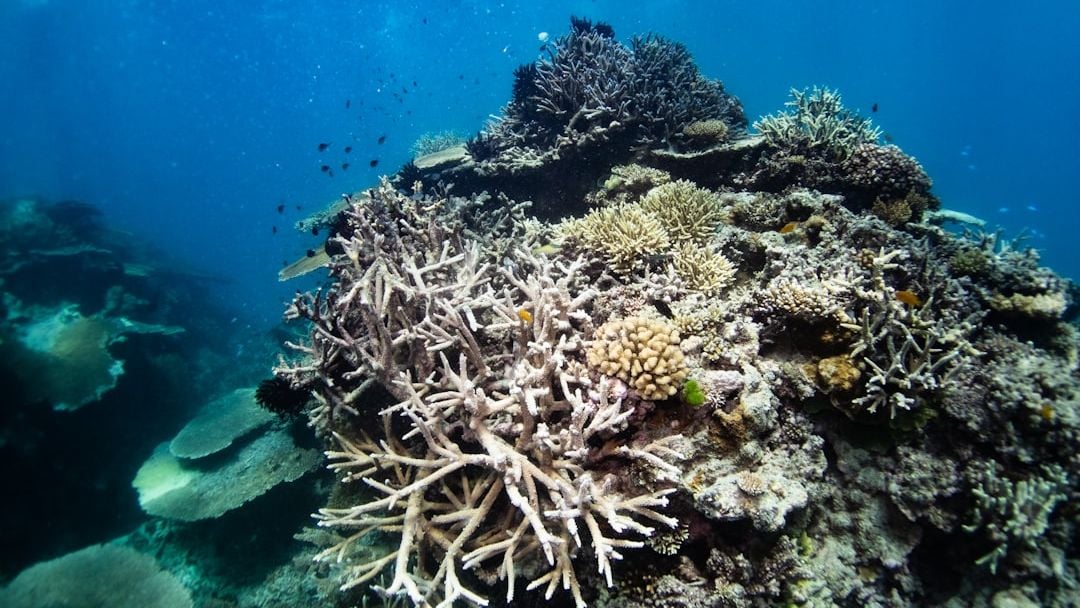
Rising seawater heat may collapse coral oxygen flow before bleaching appears – Image for illustrative purposes only (Image credits: Unsplash)
Tropical coral reefs rank among the ocean’s most diverse habitats, hosting countless species that depend on the structural foundation built by reef-forming corals. These corals consist of thousands of small animals that secrete calcium carbonate to create the complex skeletons supporting entire ecosystems. Rising seawater temperatures, driven by global warming, now threaten this balance in ways that may appear well before the familiar signs of bleaching.
Corals as Ecosystem Architects
Reef-building corals function as the primary engineers of their environment. Each colony grows through the combined efforts of countless polyps that extract calcium from seawater and deposit it as hard skeletons. Over time these structures form the intricate three-dimensional habitats that shelter fish, invertebrates, and algae. Without this living framework, the high biodiversity that defines tropical reefs would collapse. The process requires stable conditions. Corals thrive within a narrow temperature range and rely on symbiotic algae for much of their energy. Any sustained deviation from those conditions stresses the partnership and the coral host alike. Scientists have long recognized that even modest, prolonged warming can push corals beyond their tolerance limits.
Early Signs of Thermal Stress
Recent research points to changes in oxygen movement within coral tissues as one of the first measurable responses to heat. When seawater warms, the rate at which oxygen diffuses through the coral’s living layers can slow or become uneven. This disruption may occur while the coral still retains its normal color, meaning visible bleaching has not yet started. The finding adds a new layer to existing knowledge about coral physiology. Bleaching, the loss of symbiotic algae, has served as the standard early-warning signal. If oxygen flow declines first, monitoring programs may need to incorporate additional measurements to detect stress sooner. Such adjustments could improve the timing of protective actions.
What Remains Uncertain
The precise thresholds at which oxygen delivery falters vary among coral species and reef locations. Some colonies appear more resilient, while others show rapid changes under identical conditions. Researchers continue to examine how factors such as water flow, nutrient levels, and prior heat exposure influence these responses. It is also unclear how quickly corals can recover once temperatures ease. Short-term reductions in oxygen supply might be reversible, yet repeated episodes could produce lasting damage to the colony’s metabolic systems. Long-term field studies are needed to clarify these recovery patterns.
Implications for Reef Protection
Improved understanding of early oxygen stress could guide more targeted conservation strategies. Managers might prioritize reefs showing subtle physiological changes for shading, water-quality improvements, or assisted recovery techniques. These steps could buy time while broader efforts to limit global temperature rise continue. The same knowledge may help refine predictive models used by scientists and policymakers. Incorporating oxygen-flow data alongside temperature and bleaching records could produce more accurate forecasts of reef health under different climate scenarios. Such forecasts remain essential for allocating limited resources effectively.

- What Christmas Reindeer Are You According to Your Zodiac Sign - July 31, 2026
- Tropical Storm Gabrielle Now Eyeing Bermuda as a Hurricane - July 31, 2026
- Watch Two Hikers Fight Off Brown Bear Near Seward’s Exit Glacier - July 31, 2026