

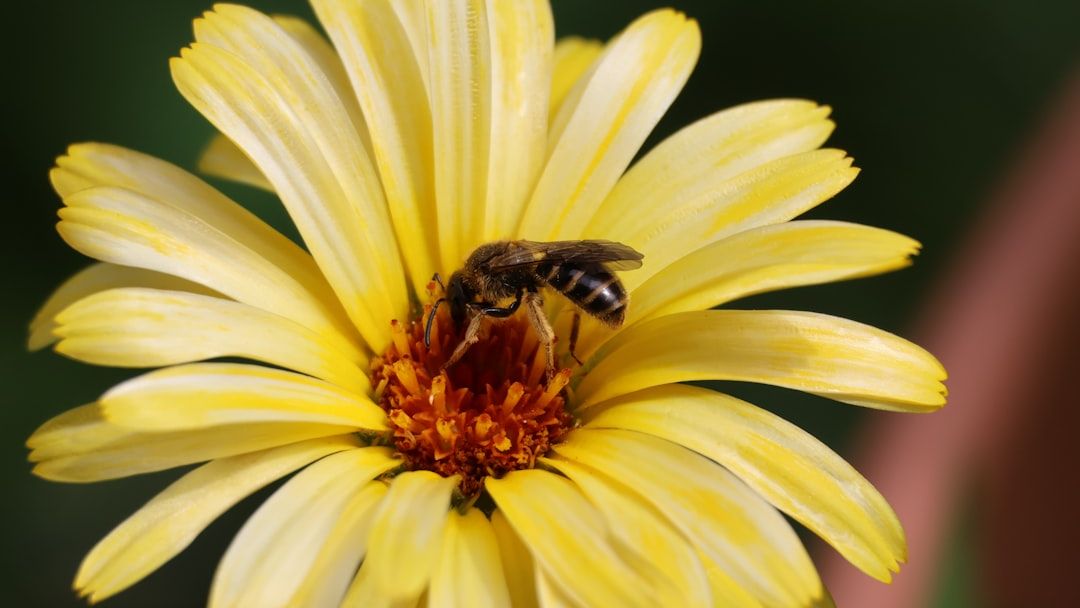
Insects in the city: Flowers alone may not be enough to sustain them – Image for illustrative purposes only (Image credits: Unsplash)
Researchers at the Federal Research Institute for Forest, Snow and Landscape set out to understand what draws solitary bees, bumblebees and hoverflies to city gardens and how effectively these insects carry out pollination in built-up areas. Their work shows that pollinators can move across an entire urban landscape and service plants wherever they grow. At the same time the study makes clear that flowers by themselves do not provide everything the insects require.
Reaching Every Corner of the City
The investigation tracked how far these insects travel while foraging. Results demonstrated that solitary bees, bumblebees and hoverflies regularly cross streets, parks and residential blocks to reach flowering plants. This city-wide movement means pollination services are not limited to a few garden patches but extend throughout the urban area.
Because the insects cover such distances, even isolated plants can receive visits. The pattern holds for different species and different parts of the city, suggesting that urban environments do not create the barriers once feared.
Why Flowers Alone Fall Short
Although pollination occurs across the city, the study found that insect numbers and activity remain tied to the availability of suitable habitat. Flowers supply nectar and pollen, yet they do not replace the nesting sites, shelter and year-round resources that green spaces provide. Without these additional elements, populations stay smaller than they could be.
The researchers noted that many city gardens focus heavily on blooms while offering little else. This narrow approach leaves gaps that limit how many insects can survive and reproduce in the long term.
Expanding Insect-Friendly Areas
The findings point to a practical step: increasing the amount and quality of green space designed with insects in mind. Such spaces can combine flowering plants with bare soil for nesting, varied vegetation heights and reduced pesticide use. When these features appear together, the same pollinators that already move through the city gain the support they need to thrive.
City planners and residents can apply this insight by adding strips of meadow, leaving some ground undisturbed and connecting existing gardens with corridors of vegetation. These changes build on the natural movement the insects already show rather than starting from scratch.
What the Results Mean for Future Cities
The study, published in the Journal of Applied Ecology, offers a measured view of urban ecology. Pollination works at scale, yet sustained insect populations depend on deliberate habitat improvements. Cities that act on this balance stand to maintain healthier plant communities and stronger pollination networks over time.

As a little kid, I fell in love with nature, wildlife, and animals. Living in the USA, South Africa, Italy, China and Germany gave me the opportunity to discover the world's Wildlife. My favorite animals are Mountain Gorillas, Siberian Tigers, and Great White Sharks.
I'm a certified PADI Open Water Diver, went to Everest Base Camp and Trekked Gorillas in Uganda. I hold a Master of Science in Economics and Finance.
Please send any feedback to feedback@animalsaroundtheglobe.com
- 10 Things Fish Use Their Fins For And 3 They Can Not Do - July 31, 2026
- 10 Animals That Survived Mass Extinction Events - July 31, 2026
- 10 Facts About the New Guinea Singing Dog - July 31, 2026