

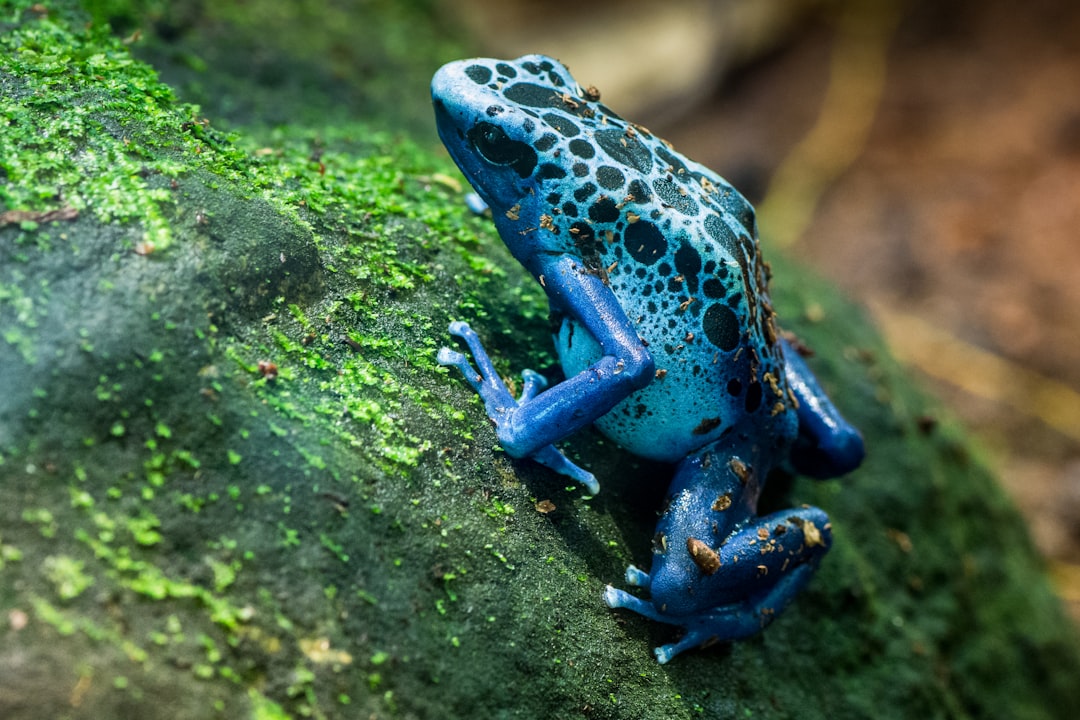
Neotropical poison frogs have long captivated scientists with their brilliant colors and potent skin toxins, which deter predators effectively. Recent studies reveal that these chemical defenses did not emerge suddenly but developed incrementally over millions of years. Researchers have identified intermediate stages in related species, showing how dietary habits and physiological changes combined to create a sophisticated weapons system.[1][2]
Low-Level Toxins in Unexpected Places
A striking discovery emerged when scientists examined inconspicuously colored frogs closely related to well-known poison species. These “undefended” frogs contained measurable amounts of alkaloids, though at levels far below their aposematic relatives. This finding challenged assumptions that only brightly colored dendrobatids possessed chemical defenses.
Analyses of skin extracts from over 100 frogs across 32 species confirmed the presence of alkaloids in clades like Aromobatinae and Hyloxalinae. For instance, species such as Allobates insperatus and Hyloxalus awa showed low toxin profiles, with median integrated areas around 14 on a logarithmic scale. In contrast, defended species like Oophaga sylvatica reached medians near 24, representing thousands of times more toxin.[1]
These low levels pointed to passive accumulation, where frogs retain dietary toxins temporarily without specialized mechanisms. Such intermediates suggested a stepwise path from mere exposure to full-blown defense.
Mapping the Four Key Evolutionary Phases
The passive-accumulation hypothesis outlines a clear sequence for how poison frogs upgraded their defenses. First, ancestors consistently encountered toxic alkaloids through their diet of ants and mites. Second, basic resistance to these compounds either pre-existed or evolved quickly, preventing self-harm.
Third came passive accumulation: a reduced elimination rate allowed temporary buildup in tissues. Finally, sequestration arrived, with novel transport and storage proteins enabling high-level retention in the skin. This final stage produced the potent defenses seen today.[1]
- Phase 1: Dietary exposure to alkaloids from arthropods.
- Phase 2: Toxin resistance via target-site modifications or metabolism.
- Phase 3: Slower elimination leading to passive accumulation.
- Phase 4: Specialized sequestration for long-term storage.
Each step built on the last, with resistance and accumulation reinforcing each other in a feedback loop.
Comparative Data Reveals the Gradient
Surveys across Dendrobatidae highlighted a clear gradient in toxin profiles. Defended clades like Ameerega and Epipedobates boasted dozens of alkaloid types per frog, often exceeding 100. Undefended relatives managed just 1.5 to 5 types on average.
Dietary studies reinforced the pattern: both groups consumed alkaloid-rich prey, yet only defended species amassed high concentrations. This disparity underscored physiological differences rather than feeding habits alone.[1]
| Category | Median Toxin Area (log) | Median Alkaloid Types |
|---|---|---|
| Undefended (e.g., Allobates) | 14-15 | 1.5-5 |
| Defended (e.g., Oophaga) | 23-24 | 66-175 |
Non-dendrobatid frogs showed even lower or absent levels, positioning passive accumulation as a family-specific innovation.
Broader Insights into Complex Traits
This model extends beyond frogs, offering a framework for other animals that sequester toxins, like sea slugs or butterflies. It emphasizes pharmacokinetics – absorption, distribution, metabolism, and excretion – as drivers of defense evolution. Changes in these processes likely faced weak initial selection, allowing gradual refinement.
Convergent evolution occurred at least three times within Dendrobatidae, with sodium channel mutations providing resistance in multiple lineages. Binding proteins like alkaloid-binding globulins appeared in defended species, absent in others.[2]
Experimental work continues to test these steps, providing evidence for incremental gains in sequestration ability.
Key Takeaways
- Poison frogs’ defenses evolved via passive accumulation as a crucial intermediate.
- Diet alone insufficient; physiological tweaks enabled toxin buildup.
- Gradient in toxin levels across relatives supports stepwise progression.
The stepwise assembly of poison frogs’ chemical arsenal demonstrates nature’s ingenuity in crafting complex traits from simple beginnings. This research not only illuminates frog biology but also informs evolutionary theory on adaptive innovations. What evolutionary puzzles intrigue you most? Share in the comments.

- Urban Coyotes Show Remarkable Adaptability, Learning to Thrive in City Environments - July 22, 2026
- Beavers Are Nature’s Engineers, Creating Vital Habitats for Other Wildlife Species - July 21, 2026
- The Recovery of the California Condor Offers Hope for Other Critically Endangered Birds - July 21, 2026