


The tallgrass prairie, once spanning over 170 million acres across North America, now exists in mere fragments—less than 4% of its original expanse. This vanishing ecosystem is home to two iconic species that have shaped the landscape for millennia: prairie dogs and bison. These animals, though vastly different in size and stature, have formed an intricate ecological partnership that maintains the health and biodiversity of the prairie. Prairie dogs, with their elaborate underground cities, and bison, with their thundering herds and massive grazing impact, represent the interconnectedness of prairie life. Their relationship exemplifies how species can influence one another and their environment in ways that science is still discovering. From the small but mighty prairie dog to the majestic American bison, these keystone species tell the story of the Great Plains—a story of resilience, adaptation, and the delicate balance of nature.
The Vanishing Tallgrass Prairie Ecosystem

The tallgrass prairie ecosystem once dominated the heart of North America, stretching from Texas to Manitoba and from Indiana to the foothills of the Rocky Mountains. This vast sea of grass, with species that could reach heights of 8-10 feet, represented one of the most diverse and productive ecosystems on the continent. Native grasses like big bluestem, indiangrass, and switchgrass created a complex habitat that supported thousands of plant and animal species in a delicate ecological balance.
Today, this ecosystem faces the distinction of being the most endangered in North America. Agricultural conversion has claimed over 96% of the original tallgrass prairie, with remaining fragments primarily in areas too rocky or steep for farming. Places like the Flint Hills of Kansas and Oklahoma, the Konza Prairie Biological Station, and the Tallgrass Prairie National Preserve represent the last substantial stands of this once-dominant landscape. These remnants serve as living laboratories for understanding prairie ecology and the critical roles that keystone species like prairie dogs and bison play in maintaining prairie health.
Prairie Dogs: Engineers of the Plains

Prairie dogs (genus Cynomys) are far more than the cute, squirrel-like rodents that capture visitors’ attention with their distinctive barking calls and sentinel postures. These colonial mammals are genuine ecosystem engineers whose activities fundamentally alter and maintain the prairie landscape. The five species—black-tailed, white-tailed, Gunnison’s, Utah, and Mexican prairie dogs—create elaborate underground towns that can span hundreds of acres and house thousands of individuals in a complex social structure.
Their burrow systems are architectural marvels, featuring designated chambers for sleeping, nursing young, storing food, and even waste disposal. These underground networks include multiple entrances, escape tunnels, and raised crater-like mounds that serve as lookout points and prevent flooding. By moving up to 18 tons of soil per acre to the surface, prairie dogs aerate the soil, increase water infiltration, and alter soil chemistry in ways that support diverse plant communities. Their engineering activities create habitat heterogeneity that benefits numerous other species, from burrowing owls that take over abandoned tunnels to insects that thrive in the varied vegetation patterns.
Bison: The Living Symbol of North America

The American bison (Bison bison), often colloquially called buffalo, stands as the largest land mammal in North America and perhaps its most iconic wildlife symbol. These massive grazers once numbered an estimated 30-60 million across the continent, with their great herds shaping the prairie landscape through their movements and feeding patterns. Adult males can weigh up to 2,000 pounds, while females typically reach 1,000 pounds, with both sexes featuring the distinctive shoulder hump and heavily built forequarters that give them their unmistakable silhouette.
Despite their size, bison display remarkable agility, capable of speeds up to 35 miles per hour and able to jump fences six feet high. Their evolutionary adaptations to prairie life include a massive head used as a snowplow in winter to access buried vegetation, thick fur that provides insulation in extreme temperatures, and specialized digestive systems that can process the nutrient-poor grasses other grazers cannot utilize efficiently. After being hunted to near extinction in the late 19th century—with fewer than 1,000 individuals remaining by 1889—conservation efforts have helped bison populations recover to approximately 500,000 today, though only about 15,000 are considered wild, free-ranging animals unaffected by cattle gene introgression.
The Prairie Dog Social System

Prairie dog social structure represents one of the most complex systems observed in rodents, organized around the “coterie”—a family unit typically consisting of one adult male, several related females, and their offspring. These coteries form the building blocks of larger “wards,” which in turn make up the “towns” that can span hundreds or even thousands of acres. This hierarchical organization facilitates sophisticated social interactions, including a remarkable communication system that some researchers consider one of the most advanced among non-human animals.
Their vocalizations, often compared to barking dogs (hence their name), include specific alarm calls that can communicate detailed information about approaching predators, including species, size, color, and speed of approach. Prairie dogs also engage in greeting ceremonies involving “kisses” (actually a form of teeth identification), communal grooming, and play behaviors that strengthen social bonds. Cooperative defense against predators and shared burrow maintenance exemplify their social cohesion, while territorial disputes between neighboring coteries maintain population distribution. This complex social arrangement has evolved as an adaptive strategy that enhances survival in the exposed grassland environment where cooperation provides significant advantages against predation and environmental challenges.
Bison Behavior and Social Structure

Bison organize themselves into fluid social groups that shift seasonally based on resource availability and reproductive cycles. During most of the year, cows, calves, and young bulls form mixed herds that can number from dozens to several hundred individuals. Adult bulls typically live solitarily or in small bachelor groups, joining the mixed herds only during the summer breeding season—known as the rut—when they compete intensely for mating opportunities. This competition involves impressive displays of dominance, including wallowing in dust, bellowing vocalizations that can be heard for miles, and occasionally violent head-to-head combat.
The social hierarchy within bison herds is maintained through subtle communications and established dominance relationships rather than constant physical confrontation. Experienced matriarch cows often lead the herds’ migrations and determine feeding areas, showcasing the species’ female-centered social organization outside breeding season. Calves are typically born in spring after a nine-month gestation period, sporting a distinctive reddish-orange coat that darkens to the adult brown by their first autumn. These calves can stand within minutes of birth and run with the herd within hours—a necessary adaptation for a species evolved in open grasslands where mobility provides primary protection from predators. The intricate social behaviors of bison represent adaptations to prairie life that have evolved over thousands of years.
The Ecological Partnership Between Species

The relationship between prairie dogs and bison represents a fascinating example of coevolution and mutualism in the prairie ecosystem. As bison graze, they preferentially consume taller grasses, creating conditions that favor the shorter, more nutritious vegetation that prairie dogs prefer. This selective grazing prevents the prairie from becoming dominated by a few tall species and maintains plant diversity. The bison’s heavy hooves also disturb the soil surface, creating microsites for seed germination and plant establishment that benefit the entire ecosystem.
Prairie dogs complement this relationship by continuously clipping vegetation around their colonies, maintaining a short-grass environment that allows them to spot approaching predators. This intensive management creates a distinctive vegetative pattern called “prairie dog lawns,” characterized by higher proportions of forbs (flowering plants) and nutritious young grass shoots. These areas attract bison, who benefit from the high-quality forage. The prairie dogs’ burrow systems also increase water infiltration and soil aeration, while their waste adds nutrients that enhance plant growth. Research has demonstrated that areas supporting both species typically show higher plant diversity and productivity than areas with either species alone, highlighting the synergistic effects of their ecological partnership.
Keystone Species of the Prairie

Both prairie dogs and bison qualify as keystone species—organisms that have disproportionately large effects on their environment relative to their abundance. Prairie dogs earn this designation through their engineering activities, which create habitat for numerous other species. Over 200 vertebrate species have associations with prairie dog towns, with many depending directly on the burrows for shelter or the vegetation patterns for feeding. Species like the endangered black-footed ferret are obligate predators of prairie dogs, meaning their survival is entirely dependent on healthy prairie dog populations.
Bison similarly function as ecological keystones through their grazing patterns, which prevent any single plant species from dominating the landscape. Their wallowing behavior creates depressions that collect water and form microhabitats for specialized plants and amphibians. When bison die, their massive carcasses provide concentrated nutrients that influence vegetation patterns for years. The seasonal migration patterns of historic bison herds redistributed nutrients across vast areas, connecting distant parts of the prairie ecosystem. Conservation biologists recognize that restoring these keystone species is essential for prairie ecosystem recovery, as their ecological functions cannot be fully replaced by other animals. The interdependence between these species and many others illustrates the complex web of relationships that defined the original tallgrass prairie.
Threats and Conservation Challenges

Despite their ecological importance, both prairie dogs and bison face significant conservation challenges. Prairie dogs have experienced population declines of over 95% from historical levels due to habitat loss, systematic eradication programs, and sylvatic plague—an introduced disease that can cause catastrophic colony die-offs. Many ranchers and farmers still consider them agricultural pests, leading to continued poisoning and shooting on private lands. This perspective persists despite research showing that moderate prairie dog activity can actually increase forage quality for livestock in many situations.
Bison face different but equally challenging threats. Pure bison populations are extremely rare, with most modern herds showing some level of cattle gene introgression from historical crossbreeding attempts. The species is typically managed in enclosed preserves rather than allowed to fulfill their natural migratory patterns. Social and political conflicts arise when bison attempt to move beyond the boundaries of protected areas, particularly due to concerns about disease transmission to domestic cattle. Brucellosis, though rarely actually transmitted from bison to cattle in natural settings, remains a contentious issue in bison management. Conservation efforts for both species must navigate complex social, political, and economic landscapes while addressing genuine ecological needs and biological threats.
Prairie Dog Communication and Intelligence
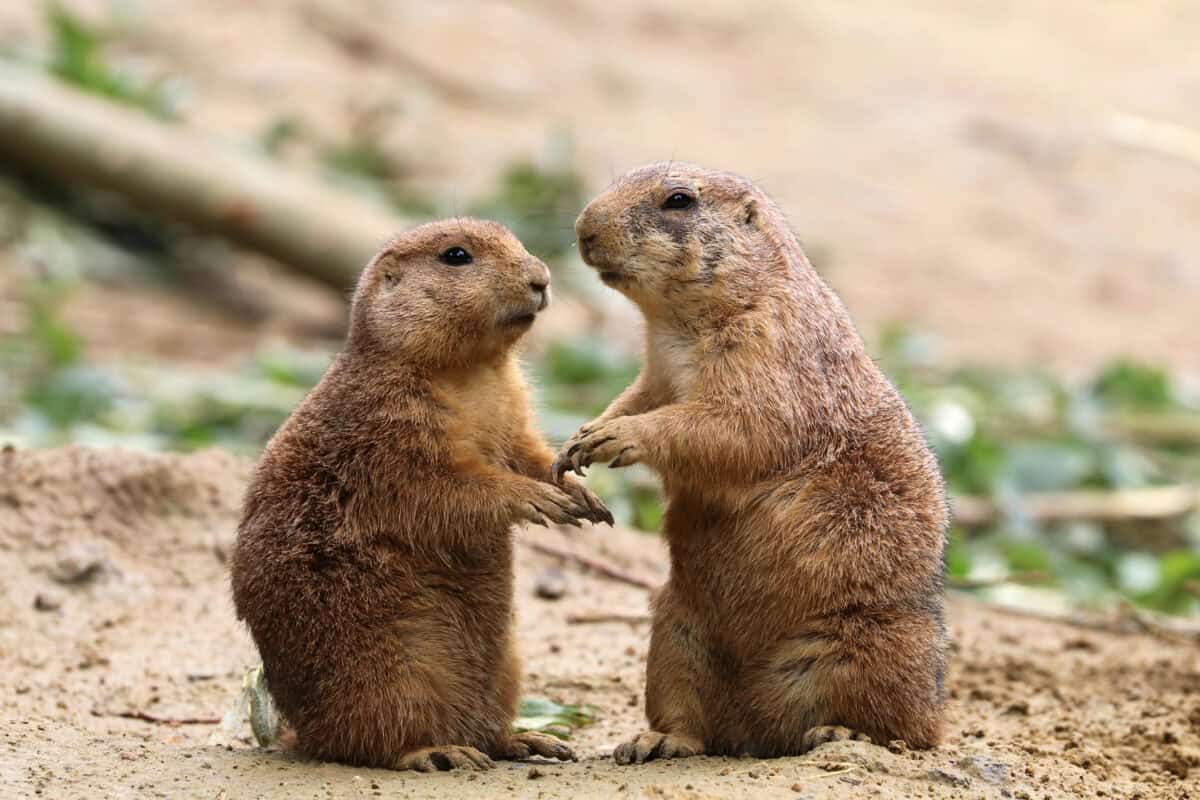
Prairie dog communication represents one of the most sophisticated systems studied in non-human animals. Researcher Dr. Con Slobodchikoff’s groundbreaking work has revealed that prairie dog alarm calls contain specific information about predator types, with distinct vocalizations for humans, coyotes, domestic dogs, and hawks. Further research demonstrated that these calls can even communicate information about the size, shape, and color of approaching threats. When presented with humans wearing different colored shirts, prairie dogs produced measurably different calls that other colony members could interpret, suggesting a level of referential communication once thought unique to primates.
Their intelligence extends beyond vocal communication. Prairie dogs demonstrate spatial memory that allows them to navigate extensive burrow systems and remember the locations of neighboring coteries. They engage in teaching behaviors, with adults showing juveniles escape routes and safe locations. Their social recognition abilities are equally impressive, with individuals able to identify dozens of colony members and distinguish between neighbors and strangers. These cognitive abilities challenge traditional views about rodent intelligence and suggest that prairie dogs possess forms of consciousness and social awareness previously underappreciated in scientific literature. Their complex communication system appears to have evolved as an adaptation to their exposed habitat, where providing specific information about threats significantly enhances survival chances.
The Ecological Impact of Bison Grazing

Bison grazing patterns produce ecological effects that cascade throughout the prairie ecosystem. Unlike cattle, which tend to graze uniformly and prefer to remain near water sources, bison move continuously while feeding, creating a mosaic of vegetation at different growth stages across the landscape. This patchy grazing increases plant species diversity by preventing competitive exclusion, where dominant grasses would otherwise crowd out other species. Studies in tallgrass prairie preserves have documented up to 40% more plant species in areas with bison grazing compared to ungrazed exclosures.
The physical impact of bison extends beyond just eating plants. Their wallowing behavior—rolling in dirt depressions to dislodge parasites and shed winter coats—creates small wetland habitats that support specialized plant communities and provide breeding grounds for amphibians. Bison dung functions as a nutrient redistribution system, with each animal producing up to 50 pounds daily that fertilizes the soil and supports diverse insect communities, particularly dung beetles. Their winter foraging, when they use their massive heads to sweep away snow and access dormant vegetation, creates areas of soil disturbance that become germination sites for annual plants in spring. These varied impacts make bison irreplaceable ecological actors whose presence fundamentally shapes the structure and function of healthy prairie ecosystems.
Restoration Efforts and Success Stories

Conservation organizations, government agencies, and private landowners have implemented various strategies to restore prairie dog and bison populations to portions of their historic range. The American Prairie Reserve in Montana represents one of the most ambitious efforts, working to create a 3.5-million-acre reserve supporting free-roaming bison herds and extensive prairie dog towns. Their approach involves purchasing private ranches, removing interior fencing, reintroducing native wildlife, and implementing management practices that mimic natural processes. In South Dakota, the reintroduction of black-footed ferrets to the Conata Basin demonstrated how recovering prairie dog populations can support the return of dependent species.
For bison, notable success stories include the growth of the Yellowstone National Park herd to approximately 5,000 animals—the largest population of genetically pure, free-ranging bison in North America. The Inter-Tribal Buffalo Council, representing over 50 Native American tribes, has been instrumental in returning bison to tribal lands, recognizing their cultural significance alongside their ecological role. Smaller preserves like the Tallgrass Prairie Preserve in Oklahoma have demonstrated that even moderately-sized protected areas (39,000 acres) can support functioning bison herds that create measurable ecological benefits. These varied approaches show that recovery is possible when science-based management practices are combined with sufficient protected habitat and public support. While full restoration to pre-European conditions is impossible, these efforts have demonstrated that significant ecological recovery can be achieved even in today’s fragmented landscape.
The story of prairie dogs and bison illuminates the intricate connections that define healthy ecosystems and offers important lessons for conservation in the 21st century. These species, having coevolved over millennia, cannot be considered in isolation—their futures are inextricably linked to each other and to the prairie landscape they helped create. Modern conservation efforts increasingly recognize that protecting individual species without restoring ecological processes and relationships often proves ineffective. The most successful prairie restoration projects are those that reestablish not just the species themselves, but the interactions between them.
As climate change creates new challenges for prairie ecosystems, the adaptive capabilities of keystone species like prairie dogs and bison may prove crucial for ecological resilience. Their natural behaviors—creating soil disturbance, cycling nutrients, maintaining plant diversity—represent ecosystem services that become even more valuable in the face of environmental change. For those working to protect what remains of the tallgrass prairie and restore degraded areas, understanding these complex relationships offers a blueprint for effective action. The prairie dog and the bison, though drastically different in size and public perception, together tell us that the future of the prairie depends not just on preserving its parts, but on restoring its connections.

- The Role of Bears in Keeping Forests Healthy - July 10, 2026
- How Tiger Cubs Learn to Hunt From Their Mothers - July 10, 2026
- Wildlife That Thrives in the Carolinas Year-Round - July 10, 2026