
Worried about unexpected vet bills?
Pet insurance can cover thousands in unexpected vet costs. Get a free quote from Lemonade in under 2 minutes.
Get My Free Quote →Sponsored · Opens Lemonade.com
In the vast depths of the ocean, there exists a group of animals with abilities that seem straight out of science fiction. These remarkable creatures can change their shape, color, and texture in the blink of an eye, creating perfect disguises that leave predators confused and scientists amazed. Cephalopods—particularly octopuses, squids, and cuttlefish—are nature’s ultimate shapeshifters, possessing biological adaptations that far surpass our technological attempts at camouflage and disguise. This article explores the fascinating world of these marine masters of transformation, delving into the science behind their shape-changing abilities, the evolutionary advantages these adaptations provide, and what these incredible animals can teach us about adaptation, intelligence, and survival.
The Masters of Metamorphosis: Introduction to Cephalopods
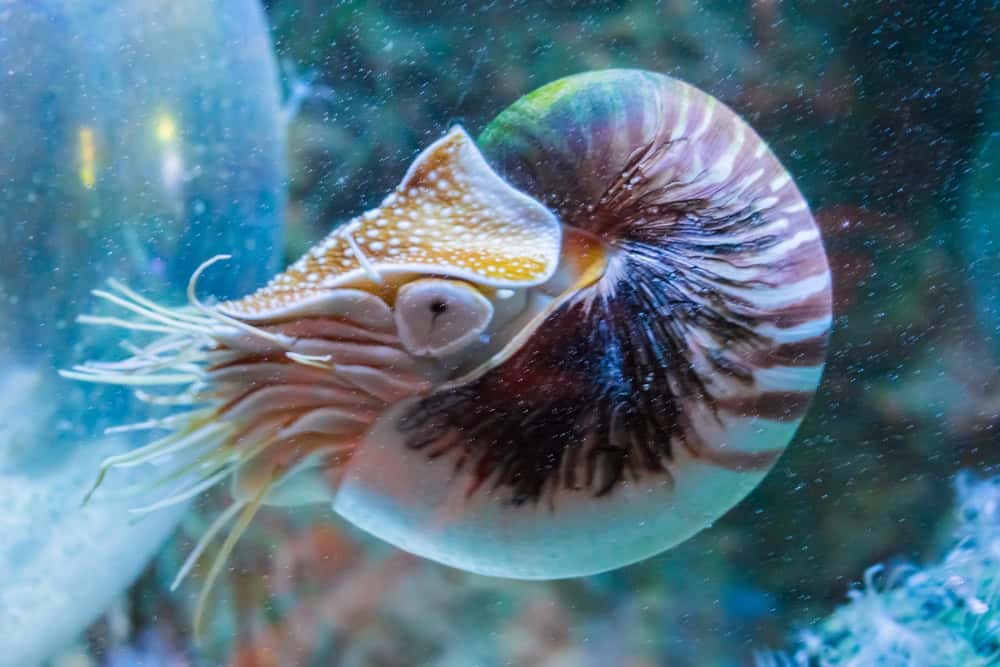
Cephalopods belong to the mollusc family, a diverse group that includes snails, clams, and oysters. Unlike their hard-shelled relatives, cephalopods evolved away from protective shells and instead developed remarkable adaptive abilities. The name “cephalopod” derives from Greek, meaning “head-foot,” as these animals feature prominent heads directly connected to their arms or tentacles. With approximately 800 living species identified, cephalopods occupy marine habitats worldwide, from shallow tide pools to the ocean’s darkest depths. Their evolutionary journey began over 500 million years ago, resulting in some of the most neurologically advanced invertebrates on Earth. What truly sets them apart is their unparalleled ability to rapidly transform their bodies—changing shape, color, texture, and even behavior—to adapt to virtually any situation they encounter in their underwater realm.
The Science Behind Shape-Shifting
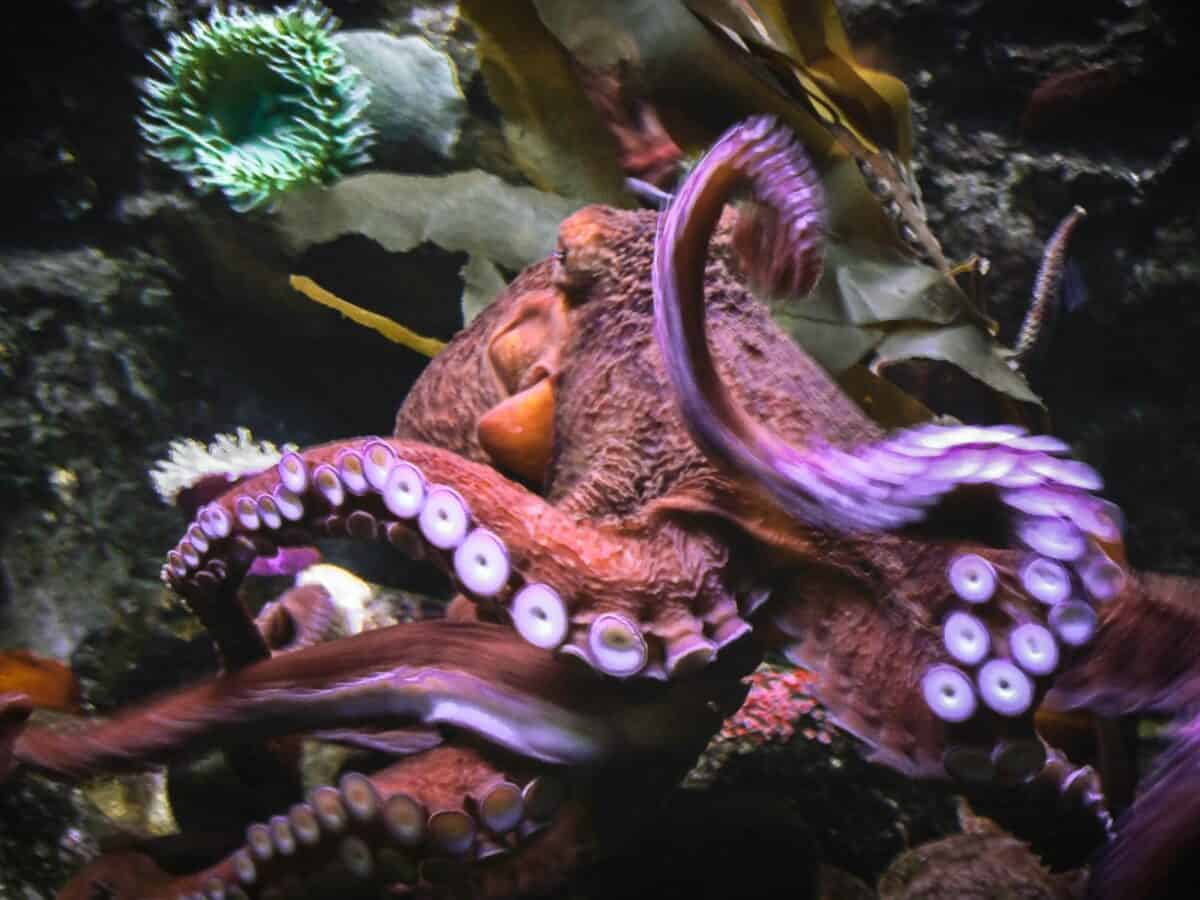
The shape-shifting capabilities of cephalopods stem from their unique muscular structure. Unlike vertebrates, which have rigid skeletons that limit flexibility, octopuses possess a hydrostatic skeleton—essentially a fluid-filled chamber surrounded by muscles. This design allows them to contract and expand specific muscle groups with incredible precision. An octopus can squeeze through openings barely the size of its eye because its only rigid body part is its beak. Research from the University of Chicago has demonstrated that octopuses have fine neural control over thousands of individual muscle cells, allowing them to create complex shapes with their arms and body. Their neural system is distributed throughout their body, with approximately two-thirds of their neurons located in their arms rather than their central brain. This distributed intelligence lets each arm operate semi-independently while coordinating with the whole body, enabling the animal to rapidly transform from a flat, camouflaged patch on the ocean floor into a streamlined torpedo shape for quick escape, or contort into shapes mimicking other marine creatures.
Chromatophores: Nature’s Living Pixels

Perhaps the most visually stunning aspect of cephalopod transformation is their ability to change color and pattern almost instantaneously. This remarkable feat is accomplished through specialized cells called chromatophores—essentially tiny, pigment-filled sacs that can expand or contract on command. A single cuttlefish may possess up to 10 million chromatophores, each containing red, yellow, or brown pigment. When the muscles surrounding a chromatophore contract, the pigment sac expands, displaying the color; when they relax, the pigment concentrates into a nearly invisible dot. Beneath the chromatophores lie iridophores and leucophores—structural cells that reflect and scatter light, producing iridescent blues, greens, silvers, and whites. Together, these cells function as a living display system far more advanced than any human-made screen, allowing the animal to produce dynamic patterns, gradients, and even moving bands of color. What’s particularly remarkable is the speed of these changes—a cuttlefish can transform its entire appearance in less than one second, switching between elaborate patterns with dazzling fluidity.
Papillae: Creating 3D Textures On Demand

Beyond color changes, many cephalopods can transform the texture of their skin to match their surroundings. This is achieved through specialized muscular structures called papillae, which can be raised or flattened to create various textures on the animal’s surface. When fully deployed, these papillae can transform a smooth-skinned octopus into a rugged, bumpy creature that perfectly mimics coral, rocks, or seaweed. A 2017 study published in Nature Communications revealed that cuttlefish papillae contain specialized muscles arranged in three-dimensional networks, allowing unprecedented control over skin texture. Researchers at the Marine Biological Laboratory in Woods Hole, Massachusetts, have documented cuttlefish replicating the exact texture of their surroundings within seconds of settling on a new surface. This texture-changing ability complements their color transformations, creating complete visual camouflage that accounts for both the color and physical structure of their environment—a capability far beyond what any other animal can achieve and one that human technology still struggles to replicate.
Masters of Mimicry: Shape-Changing as Deception
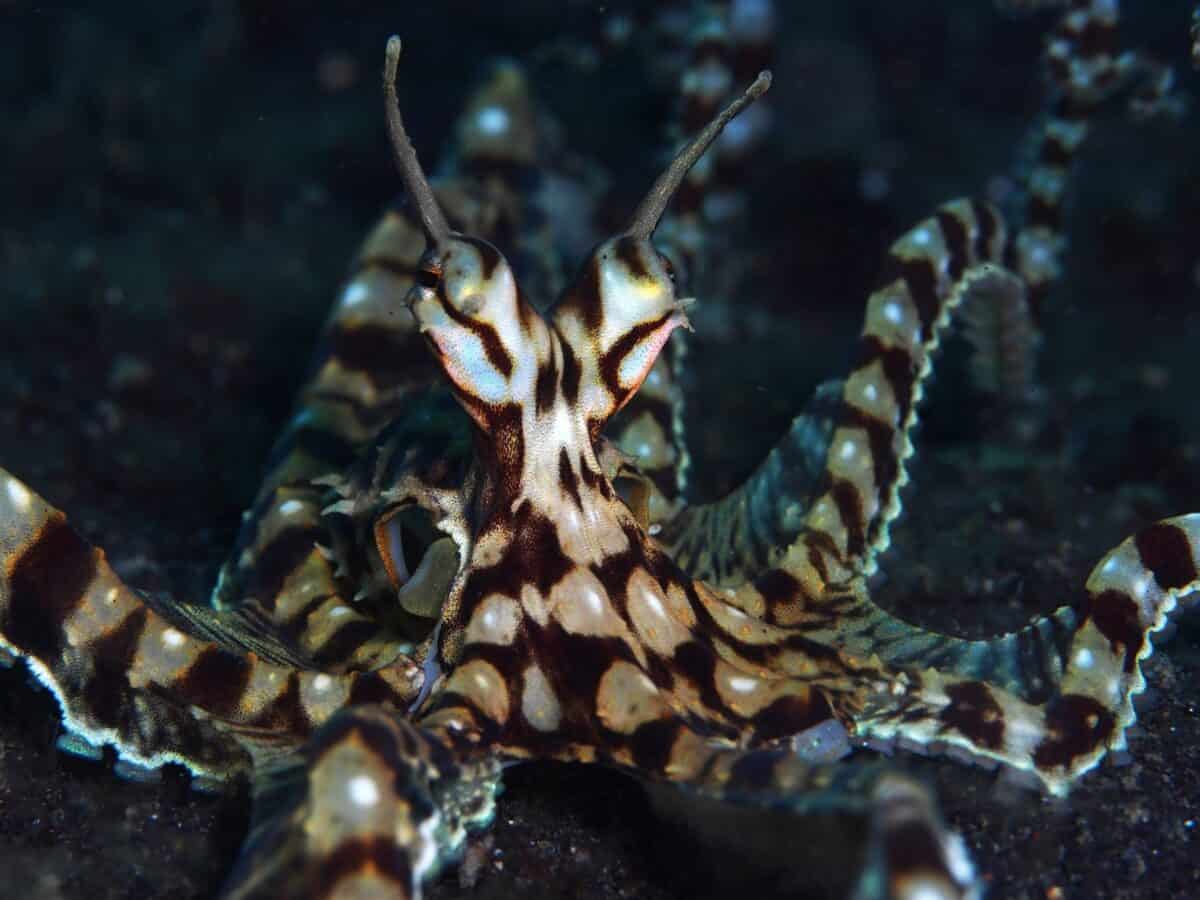
Some cephalopods take their shape-shifting abilities beyond simple camouflage, engaging in sophisticated mimicry of other marine creatures. The mimic octopus (Thaumoctopus mimicus), discovered in 1998 near Indonesia, represents the pinnacle of this behavior. This remarkable species can impersonate at least 15 different marine animals, including sea snakes, lionfish, flatfish, and mantis shrimp. By changing its color, texture, and body shape while positioning its arms strategically, the mimic octopus creates convincing replicas of dangerous or inedible creatures, deterring potential predators. For example, when threatened by damselfish, it may adopt the banded black and white pattern of a sea snake—a known predator of damselfish. The Indonesian coconut octopus (Amphioctopus marginatus) demonstrates another form of deceptive behavior, using coconut shells or discarded containers as portable shelters and moving while hidden inside them. When traveling between safe locations, these octopuses will gather their eight arms to create a shape that resembles a rolling coconut or walk bipedally across the ocean floor while disguised as floating vegetation—behaviors that combine tool use with shape manipulation for survival.
The Evolutionary Advantages of Shape-Shifting

The remarkable shape-changing abilities of cephalopods represent an evolutionary response to a fundamental challenge: survival without a protective shell. While their molluscan relatives evolved hard external armor, cephalopods took a different path, developing soft, flexible bodies that prioritized speed, agility, and camouflage over armor. This evolutionary trade-off proved successful, allowing them to become active predators while avoiding becoming prey themselves. Their transformative capabilities serve multiple survival functions: camouflage protects them from predators, mimicry deters attacks by creating confusion, and rapid shape changes facilitate hunting and escape. These adaptations have particular value for creatures with soft, vulnerable bodies that would otherwise be easy targets in open water. Evolutionary biologists point to the constant arms race between cephalopods and their visual predators (particularly fish and marine mammals) as driving the development of increasingly sophisticated disguise mechanisms. With predators evolving better visual detection systems, cephalopods responded with more complex camouflage, creating an evolutionary feedback loop that has produced the extraordinary capabilities we observe today—a perfect example of how predator-prey relationships drive adaptive innovation in nature.
The Neurological Basis for Shape-Changing

The neural architecture that enables cephalopod shape-shifting is as impressive as the ability itself. Cephalopods possess the most complex nervous systems among invertebrates, with the common octopus having approximately 500 million neurons—comparable to a dog or small primate. The distribution of these neurons is unique, with the majority located in the arms rather than a centralized brain. This decentralized system allows each arm to process sensory information and control complex movements semi-independently. Recent research using high-resolution MRI scanning has revealed specialized brain regions dedicated to camouflage control, with direct neural connections to chromatophores and muscle groups. What’s particularly fascinating is that cephalopods perform their remarkable transformations despite being colorblind—they perceive texture and light intensity rather than color, yet can perfectly match colored backgrounds. Scientists theorize they may use specialized organs that detect the polarization of light to differentiate between colors indirectly. The neural processing required to analyze surroundings, select appropriate patterns, and coordinate thousands of chromatophores and muscles simultaneously represents one of the most sophisticated visual-motor integration systems in the animal kingdom, all managed by a brain evolved along an entirely different pathway than vertebrate brains.
Cuttlefish: The Shape-Shifting Champions

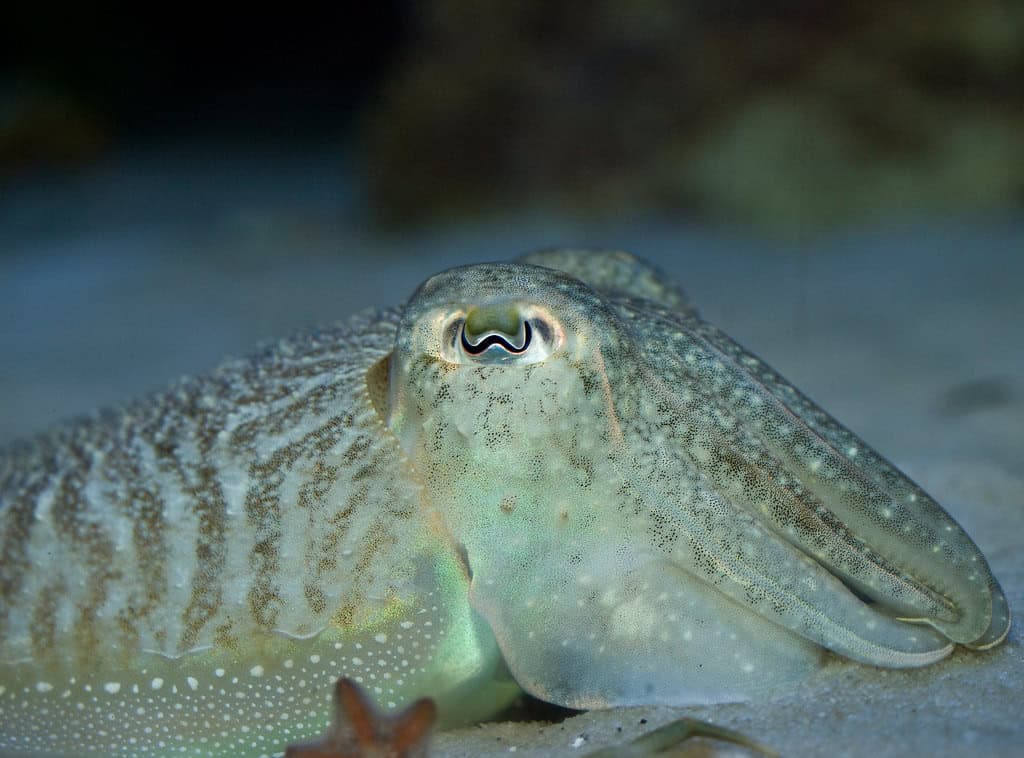
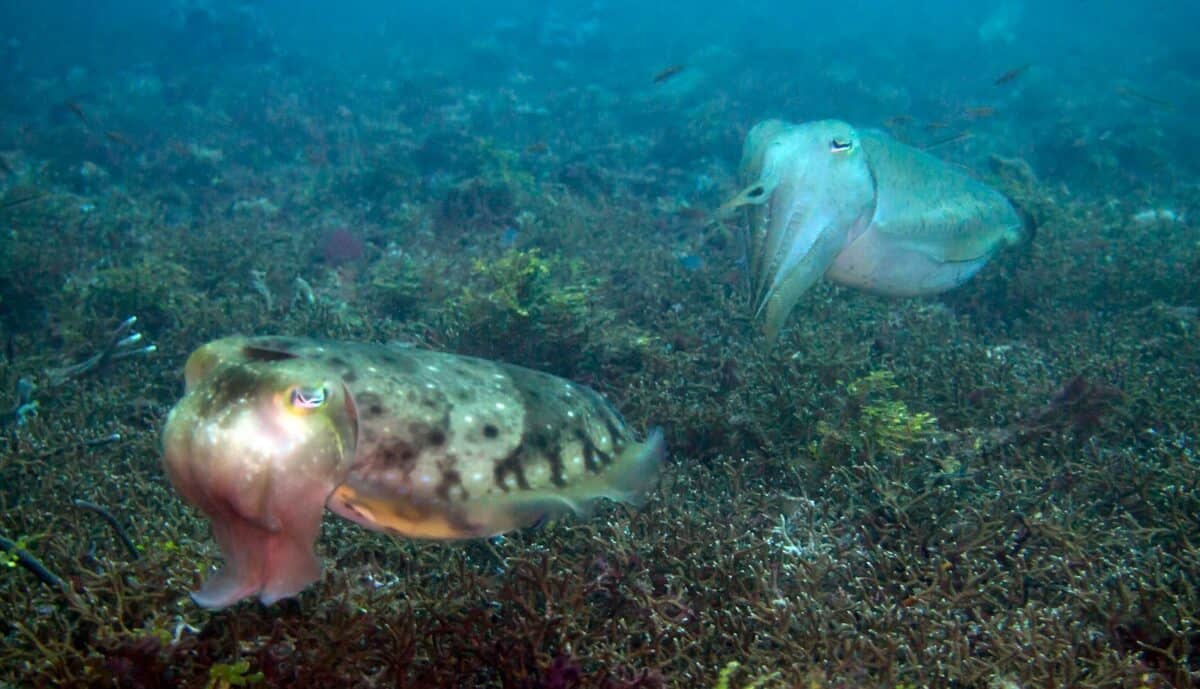
While all cephalopods possess impressive adaptive abilities, the cuttlefish (particularly the common cuttlefish, Sepia officinalis) stands as perhaps the most sophisticated shape-changer of the group. These remarkable animals can produce over 30 distinct body patterns, changing them completely in as little as 700 milliseconds. Cuttlefish possess an average of 200 chromatophores per square millimeter of skin, giving them extraordinarily fine control over their appearance. Their displays go beyond simple camouflage to include elaborate patterns used in mating rituals and communication. Male cuttlefish can display different patterns on each side of their body—showing a placid pattern to a female on one side while simultaneously displaying threatening patterns to rival males on the other. This “dual personality” display demonstrates remarkable neural control. Perhaps most impressive is the cuttlefish’s ability to create moving patterns across their skin, such as bands of color that ripple from front to back, creating a hypnotic effect that can mesmerize prey before striking. They can also produce “passing cloud” displays—bands of dark coloration that move across the body, creating the illusion of a shadow passing over the animal. These dynamic displays represent the most sophisticated visual signals produced by any animal and demonstrate how shape-changing has evolved beyond mere camouflage into complex communication.
Shape-Shifting in Giant and Colossal Squids
The deep-sea dwelling giant and colossal squids (Architeuthis dux and Mesonychoteuthis hamiltoni, respectively) represent the largest invertebrates on Earth, with the colossal squid reaching estimated lengths of up to 14 meters. Despite their enormous size, these mysterious creatures retain impressive shape-changing abilities adapted for life in the deep ocean. Unlike their shallow-water relatives that use color changes primarily for camouflage, these deep-sea giants utilize bioluminescence and dynamic body transformations for hunting and communication in an environment of near-perpetual darkness. Their specialized muscular system allows them to rapidly inflate and deflate different body regions, dramatically altering their silhouette. This ability serves multiple functions: they can appear larger when threatened, streamline their body for rapid propulsion when hunting, or create undulating movements that disorient prey. Their massive eyes—the largest in the animal kingdom at up to 30 centimeters in diameter—work in conjunction with light-producing photophores to detect and respond to prey and predators. While direct observation of these elusive creatures remains limited, tissue analysis reveals specialized muscle structures similar to those enabling shape-changing in smaller cephalopods, suggesting that even the ocean’s giants have retained this evolutionary advantage despite their tremendous size.
Human Applications and Biomimicry

The extraordinary shape-changing abilities of cephalopods have not gone unnoticed by scientists and engineers seeking to develop new technologies. Military researchers are particularly interested in cephalopod camouflage mechanisms, working to develop “adaptive fabrics” that could change color and texture for next-generation camouflage. The Defense Advanced Research Projects Agency (DARPA) has invested millions in developing materials inspired by cephalopod skin. Beyond military applications, medical researchers are studying cephalopod muscle structure for insights into creating soft, flexible robots for minimally invasive surgery. These “soft robots” could navigate through the human body with octopus-like flexibility, reaching areas traditional rigid instruments cannot access. The distributed intelligence system of cephalopods has also influenced artificial intelligence design, with new computing architectures exploring decentralized processing similar to an octopus’s neural network. Materials scientists are developing “smart materials” based on cephalopod skin that can change properties in response to environmental stimuli, with potential applications ranging from architecture to consumer electronics. These biomimetic approaches demonstrate how understanding nature’s solutions to complex problems can inspire innovative human technologies, with cephalopods providing a particularly rich source of inspiration for adaptive, responsive systems.
Conservation Concerns for Shape-Shifting Species

Despite their remarkable adaptations, cephalopods face growing threats from human activities. Ocean acidification caused by rising carbon dioxide levels threatens to disrupt the delicate neurological processes that enable their sophisticated transformations. Research published in the Proceedings of the National Academy of Sciences indicates that increased ocean acidity may interfere with neural transmissions controlling chromatophores. Habitat destruction, particularly of coral reefs where many specialized cephalopods live, eliminates both their hunting grounds and the complex backgrounds they rely on for effective camouflage. Commercial fishing represents another significant threat, with an estimated 4.9 million tons of cephalopods harvested annually—a figure that has tripled since the 1980s as fish stocks have declined. While cephalopods generally have short lifespans and rapid reproduction rates, providing some resilience to fishing pressure, localized overfishing has already led to population collapses in several regions. Climate change brings additional challenges, including changing ocean temperatures that affect metabolism and reproduction, and shifting prey distributions that disrupt traditional feeding patterns. Conservation efforts specifically targeting cephalopods remain limited, highlighting the need for greater awareness of these remarkable animals and the ecological roles they play in marine ecosystems worldwide.
The Future of Shape-Shifting Research

Research into cephalopod shape-changing abilities continues to advance, with new technologies offering unprecedented insights into these remarkable adaptations. Recent developments in underwater high-definition imaging allow scientists to document rapid transformations in unprecedented detail. Genetic sequencing projects have identified genes associated with chromatophore development and control, opening possibilities for deeper understanding of how these systems evolved and function. Perhaps most exciting is the field of comparative neurobiology, where researchers are mapping the neural pathways that control shape-changing behaviors, providing insights into how different types of intelligence have evolved on Earth. Several research institutions, including the Marine Biological Laboratory and the Okinawa Institute of Science and Technology, have established dedicated cephalopod research programs that combine robotics, genetics, and neuroscience to understand these animals’ unique capabilities. As we develop more sophisticated tools for studying marine life in natural settings, our understanding of cephalopod abilities is likely to expand further. Future research directions include investigating potential communication through skin pattern changes, exploring the relationship between shape-changing abilities and problem-solving intelligence, and examining how these adaptations might evolve in response to changing ocean conditions in the coming decades.
Conclusion: Lessons from Nature’s Shapeshifters

The remarkable shape-changing abilities of cephalopods represent one of nature’s most extraordinary evolutionary innovations. These marine masters of disguise remind us that biological solutions often surpass our technological ones in elegance and efficiency. They demonstrate alternative evolutionary pathways to intelligence, with problem-solving abilities emerging in invertebrates along completely different neural architectures than those found in mammals. As we face growing environmental challenges requiring adaptive solutions, cephalopods offer valuable lessons in flexibility, efficiency, and responsive adaptation. Their ability to thrive without rigid structures or protective armor reminds us that sometimes the most successful strategy is not to build stronger walls but to develop greater adaptability. In a rapidly changing world, perhaps we have much to learn from the ultimate shape-shifters, who have survived and thrived for hundreds of millions of years by embracing change rather than resisting it.
Worried about unexpected vet bills?
Pet insurance can cover thousands in unexpected vet costs. Get a free quote from Lemonade in under 2 minutes.
Get My Free Quote →Sponsored · Opens Lemonade.com

- 15 Common Snake Species Found in the US - June 5, 2026
- Ancient DNA Found in Cave Dirt May Rewrite Animal History - June 5, 2026
- What Steve Irwin Taught Us About Crocodiles - June 5, 2026