

The Science of Emotional Contagion Between Humans and Dogs

Dogs don’t just observe your emotions. They can actually “catch” them too. Researchers call this emotional contagion, a basic form of empathy where one individual mirrors another’s emotional state. This isn’t a metaphor. It’s a measurable, documented phenomenon.
This interspecies emotional contagion has a psychological, a physiological, and a behavioral basis. In recent years, multiple studies have shown that the transmission of emotions depends on the release of certain hormones such as oxytocin, body odor changes in humans, the firing of key neurons, and other physiological factors.
Dogs have acquired human-like communication skills and, likely as a result of the domestication process, the ability to read human emotions, making it entirely feasible that emotional contagion flows between human and dog. What’s striking is how seamlessly this process happens, without intention from either side.
Thousands of Years of Emotional Attunement

The dog is the oldest domesticated species. Dogs have coexisted with humans for more than 30,000 years and are woven into human society as partners bonding with humans. Through the domestication process, they have acquired the ability to read human emotions.
Thousands of years living as our companions have fine-tuned brain pathways in dogs for reading human social signals. While a dog’s brain may be smaller than a wolf’s, it may be uniquely optimised to love and understand humans. That evolutionary pressure created something remarkable: an animal whose survival was tied, in part, to understanding us.
Being a species that we’ve lived and co-evolved with for thousands of years, it makes sense that dogs would learn to read our emotions because it might be helpful to them to know if there’s something threatening in the environment or some stressor they need to be aware of. The attunement isn’t a trick. It’s survival engineering.
Dogs Can Smell Your Emotional State Before You’ve Shown It

Previous research suggests that dogs can detect when humans are experiencing stress. A rigorous study tested whether baseline and stress odours were distinguishable to dogs, using a double-blind, two-phase, three-alternative forced-choice procedure, collecting combined breath and sweat samples from participants at baseline and after a stress-inducing task.
Results indicate that the physiological processes associated with an acute psychological stress response produce changes in the volatile organic compounds emanating from breath and sweat that are detectable to dogs. These results add to understanding of human-dog relationships and could have applications to emotional support and PTSD service dogs.
Human emotional states, including stress, can alter the body’s chemical emissions through sweat, breath, or urine, releasing volatile organic compounds. Studies indicate that VOC profiles change significantly between stressed and relaxed states. These physiological changes, such as increased cortisol levels during stress, lead to a distinct “scent profile” that dogs may be able to detect. Your dog may know you’re struggling before a single word has been spoken, or even thought.
Cortisol, Chemistry, and the Invisible Signal

Dogs can detect stress, often before we even realize we’re showing it. When humans experience stress or fear, the body releases hormones such as cortisol and adrenaline, causing subtle changes in scent. A dog’s sense of smell is powerful enough to detect these chemical shifts.
It’s well-established that dogs can be trained to detect changes in levels of cortisol, a hormone that floods the body in times of stress, as service dogs do for people with certain health conditions. Researchers have since wondered how sniffing stress-related changes in cortisol might impact dogs’ emotional state.
Dogs also have an auxiliary organ called the vomeronasal organ, or Jacobson’s organ, located within their nasal cavity. This specialized organ detects non-volatile chemical compounds like pheromones, with nerves connecting directly to brain areas involved in social and reproductive behaviors. In other words, a dog processes your emotional chemistry through a dedicated biological system that humans simply don’t have.
How Dogs Read Faces, Voices, and Body Language

Dogs are observant animals, and they tend to know much more about their owners than we think. They can read body language cues, distinguish various tones of voice, and even read facial expressions and connect them to the appropriate emotion.
Dogs are skilled face readers. When shown images of human faces, dogs exhibit increased brain activity. One study found that seeing a familiar human face activates a dog’s reward centres and emotional centres, meaning your dog’s brain is processing your expressions, perhaps not in words but in feelings.
A low, monotone voice often signals sadness or despair to a dog. Changes in routine, such as disruptions to daily walks or neglected playtime, can be readily observed and registered by your dog. The sum of these subtle shifts, voice, posture, pace, routine, creates a picture your dog assembles long before you do.
Synchronized Heartbeats: A Physical Bond With Emotional Consequences

A 2019 study found that some dog-human pairs had synchronised cardiac patterns during stressful times, with their heartbeats mirroring each other. That’s not a poetic observation. It’s a measurable physiological event.
Researchers assessed the emotional reactions of dogs and humans by heart rate variability, which reflects emotion, under psychological stress conditions in owners. The correlation coefficients of heart rate intervals between dogs and owners were positively correlated with the duration of dog ownership.
These results suggest that emotional contagion from owner to dog can occur especially in female dogs, and that the time sharing the same environment is the key factor in inducing the efficacy of emotional contagion. The longer you’ve lived together, the more tightly those emotional systems become intertwined.
When Your Dog Starts Mirroring Depression Symptoms

Dogs are highly sensitive to their owners’ emotions, and an owner’s depression can affect a dog’s mood and behavior. Stress, sadness, or emotional withdrawal may lead a dog to mirror those feelings and become withdrawn. This is the moment many owners notice something is off, but attribute it to the dog.
Some dogs may become withdrawn and less playful, directly mirroring their owner’s depression. Others may become more energetic and playful, attempting to cheer up their owner. The response varies. What doesn’t vary is the sensitivity that triggers it.
One study found that dogs show the same stress levels as their owners. As a result, some dogs may become depressed if their owner shows signs of depression. When your dog stops greeting you at the door with the same enthusiasm, it’s worth pausing and asking which one of you changed first.
Canine Depression Symptoms That Should Prompt Owner Self-Reflection

Research from veterinary behaviorists reveals that canine depression manifests in ways similar to human depression. Unlike humans, dogs can’t verbalize their feelings, making it crucial for pet owners to recognize behavioral changes that might signal emotional distress. Depressed dogs typically become withdrawn and inactive, with noticeable changes in their eating and sleeping patterns.
Dogs with depression show decreased enthusiasm for walks, playtime, or socializing. They don’t stop showing excitement entirely; they are just less excited than usual. Disrupted sleep patterns and unusual restlessness may also appear, alongside low energy, withdrawal, and unusual inactivity.
A dog owner’s depression can negatively impact the dog’s well-being. If an owner is consistently withdrawn and unresponsive, the dog may experience stress, anxiety, or even depression. Viewed this way, a dog’s behavioral shift isn’t a problem to fix in isolation. It may be a message.
The Bond Length Factor: Why Long-Term Dogs Are Better Mirrors

Research shows that the extent to which people and their pups catch each other’s emotions depends on the duration of their relationship. That’s an especially noteworthy phenomenon, as people and their canine companions continue to spend more time together.
A 2019 study found that some dog-human pairs had synchronised cardiac patterns during stressful times, with their heartbeats mirroring each other. This emotional contagion doesn’t require complex reasoning. It’s more of an automatic empathy arising from close bonding.
A dog’s past experience with humans may play a role in how well they synchronize their emotions with humans. The implication is significant. A dog that has grown up with you, shared your routines, witnessed your moods, isn’t just a pet at that point. It’s a living, breathing emotional barometer.
What Dogs Do When They Sense Your Distress
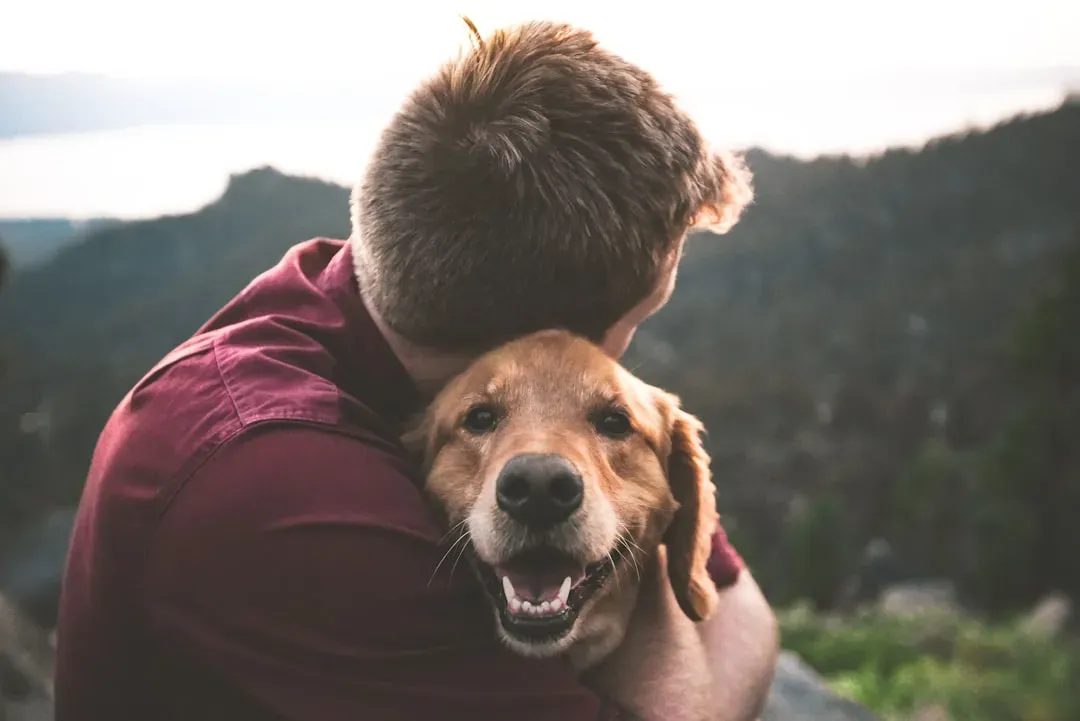
Having a dog can be therapeutic to someone suffering from depression. Dogs often react to a sad person with extra cuddles and affection, which can be very therapeutic for someone dealing with major depressive disorder.
Signs that a dog is trying to comfort their owner include increased physical closeness, gentle nudging, licking, and a calm, attentive demeanor. They may also bring their favorite toy or simply sit quietly by your side. These aren’t coincidences. These are responses.
A study published in the journal Learning and Behavior in 2018 suggests that many dogs want to comfort their humans. Unfortunately, the dogs that don’t outwardly show concern are often so affected by their owners’ distress that they become unable to offer help. That final point is worth sitting with. Some dogs go quiet not because they don’t care, but because the emotional weight has already landed on them too.
Conclusion: Your Dog May Know You Better Than You Know Yourself

The science here isn’t fully complete, and it’s worth being honest about that. Researchers have made significant progress documenting emotional contagion and canine stress detection, but the direct line between a dog mirroring early, unrecognized depression in its owner is still being drawn. The evidence is compelling, not conclusive.
Still, what the research makes undeniably clear is this: dogs are not passive companions. They are physiologically, neurologically, and behaviorally tuned to pick up on human emotional states, sometimes through scent alone, sometimes through the tiniest shifts in voice and routine. That sensitivity runs deep, deeper than most of us assume.
If your dog seems different lately, flatter, less engaged, quieter than usual, and nothing obvious has changed in their environment, the most honest question you can ask yourself isn’t “what’s wrong with my dog?” It’s “how have I actually been?” Dogs don’t have the language to tell us when we’re slipping. They have something more immediate than language. They show us.
In a world where mental health often goes unacknowledged until it becomes undeniable, there’s something quietly profound about the idea that the animal curled at your feet might already know what you’re not yet ready to admit. Pay attention to your dog. It may be one of the most useful things you do for yourself.

- 6 Exotic Bird Species You Can Spot in U.S. National Parks - July 19, 2026
- 11 Iconic American Birds Facing New Challenges and How You Can Help - July 19, 2026
- 10 Friendliest Animals in the World - July 19, 2026