
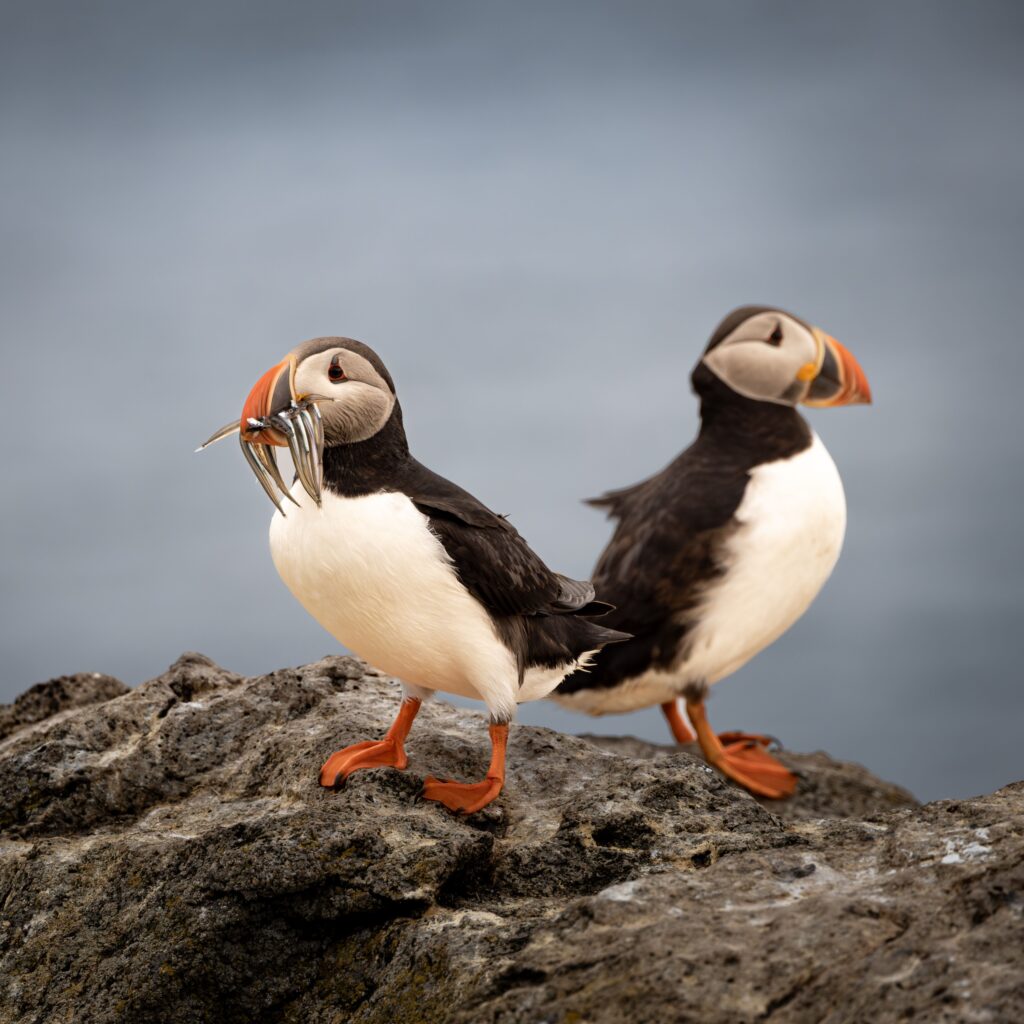
Puffins, often dubbed the “clowns of the sea,” captivate with their vibrant beaks and endearing waddle. Yet, beyond their charming appearance lies a world of fascinating traits that solidify their status as true masters of the Atlantic. Let’s dive into ten remarkable facts about these seabirds that might just surprise you.
1. Puffins’ Beaks Transform with the Seasons
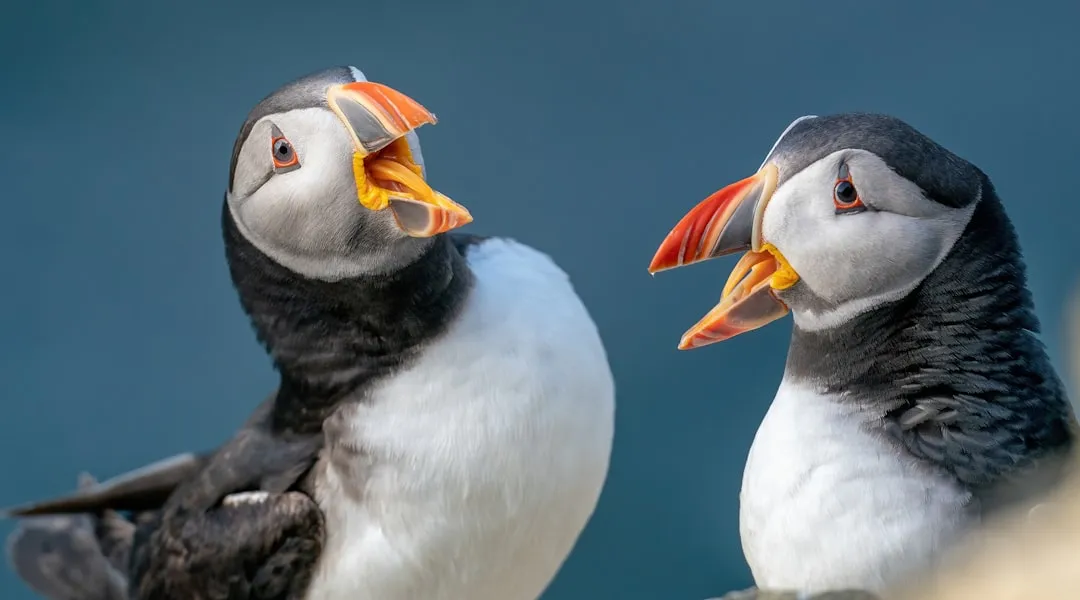
During the breeding season, puffins sport large, vividly colored beaks that are hard to miss. However, as winter approaches, they shed the outer layers of their beaks, revealing a smaller, duller version. This transformation is not just for show; the bright hues play a crucial role in attracting mates during the breeding months.
2. Masters of the Skies and Seas
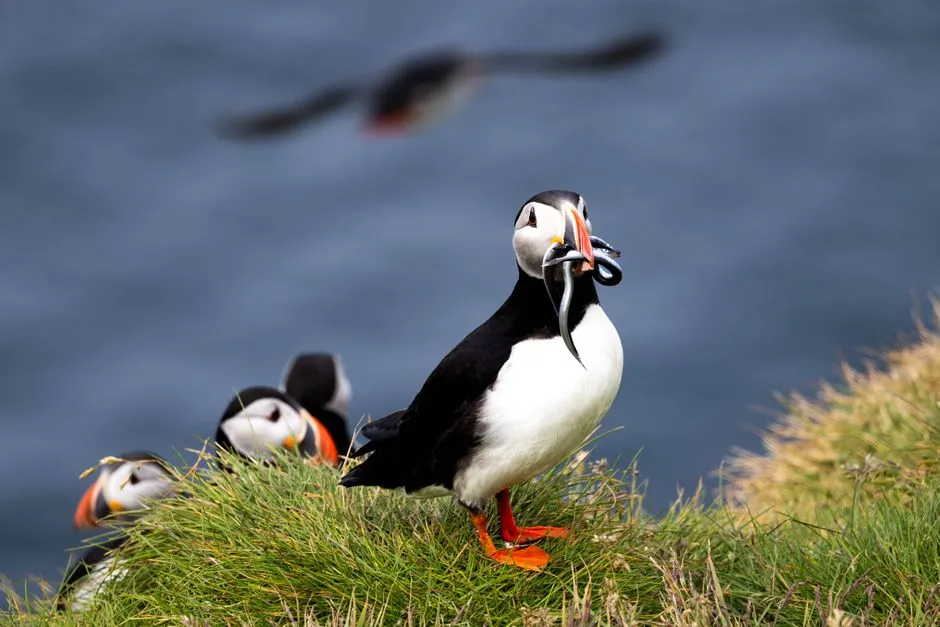
Despite their stout bodies, puffins are agile flyers, flapping their wings up to 400 times per minute to reach speeds of 55 mph. Their prowess isn’t limited to the air; underwater, they use their wings to “fly” through the sea, diving to depths of 200 feet in pursuit of fish. This dual mastery allows them to thrive in their oceanic habitats.
3. Puffins Are Loyal Partners
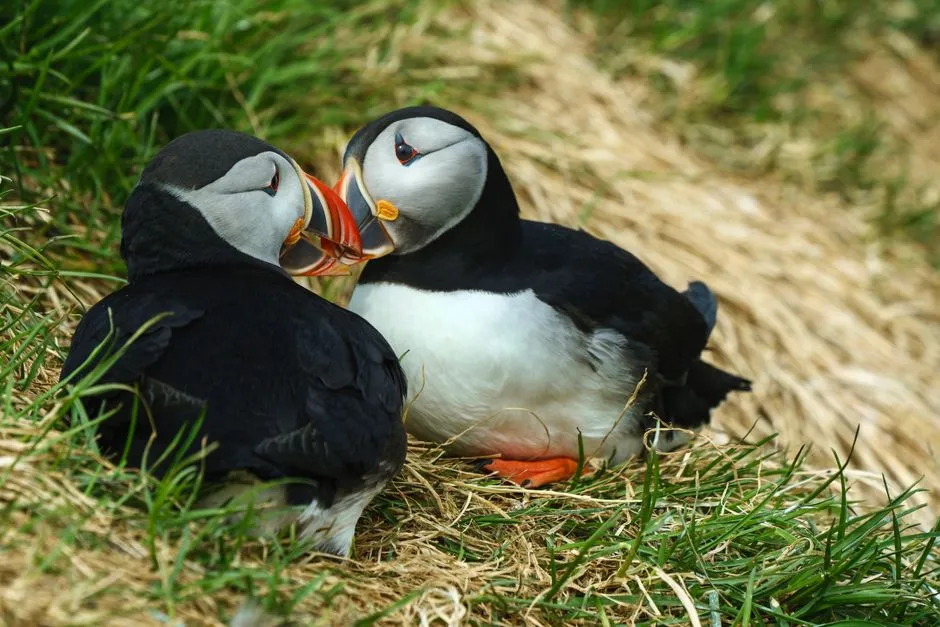
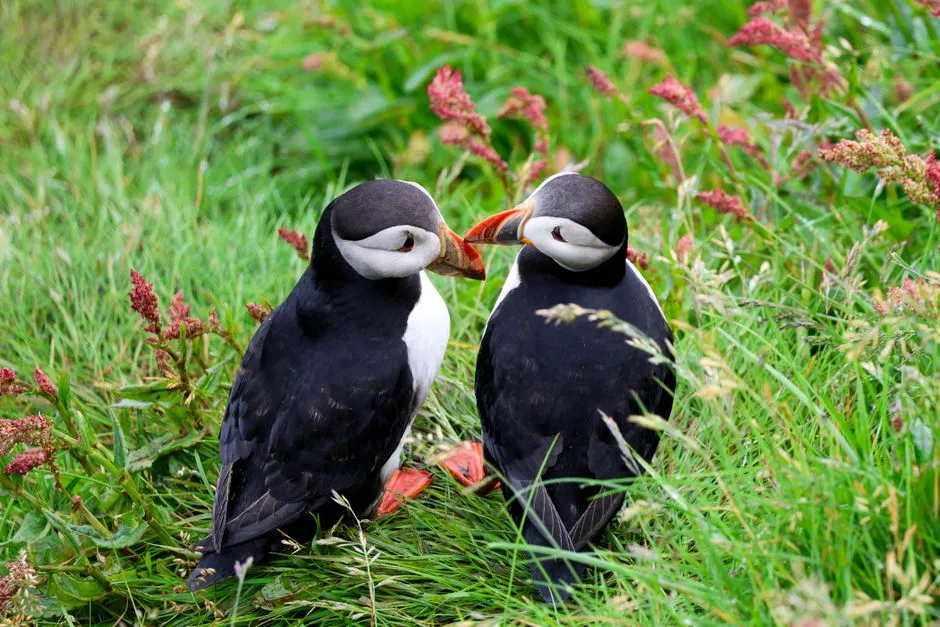
Puffins are known for their monogamous nature, often returning to the same mate and burrow year after year. This enduring bond is reinforced through behaviors like “billing,” where pairs rub their beaks together, strengthening their connection. Such loyalty ensures the successful rearing of their single annual chick, known as a puffling.
4. Exceptional Fish Carriers
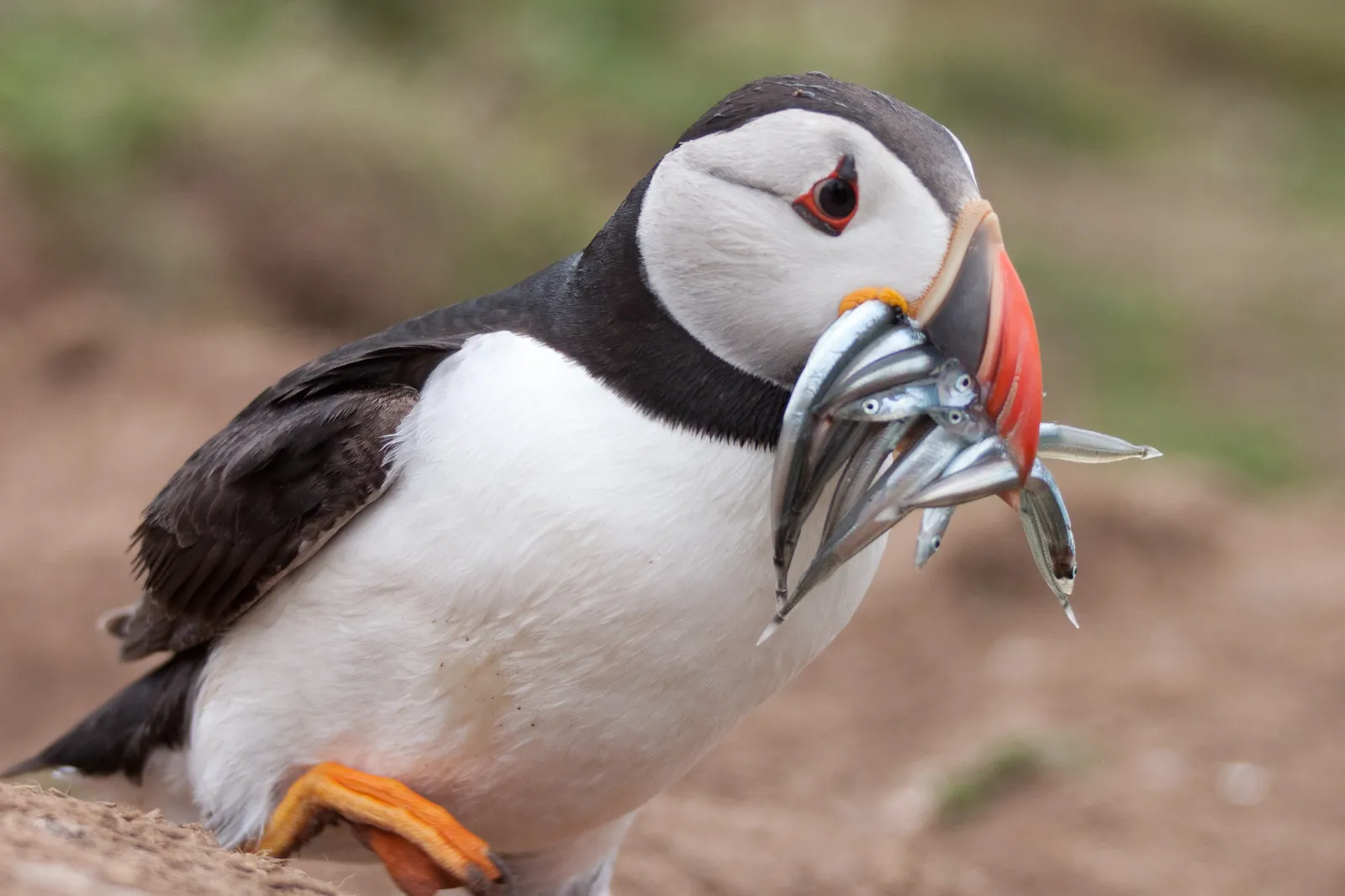
Thanks to a unique hinging mechanism in their beaks, puffins can hold multiple fish crosswise, allowing them to carry several at once. This adaptation enables them to make fewer trips when feeding their young, conserving energy and increasing efficiency during the demanding breeding season.
5. Puffins Are Long-Lived Birds
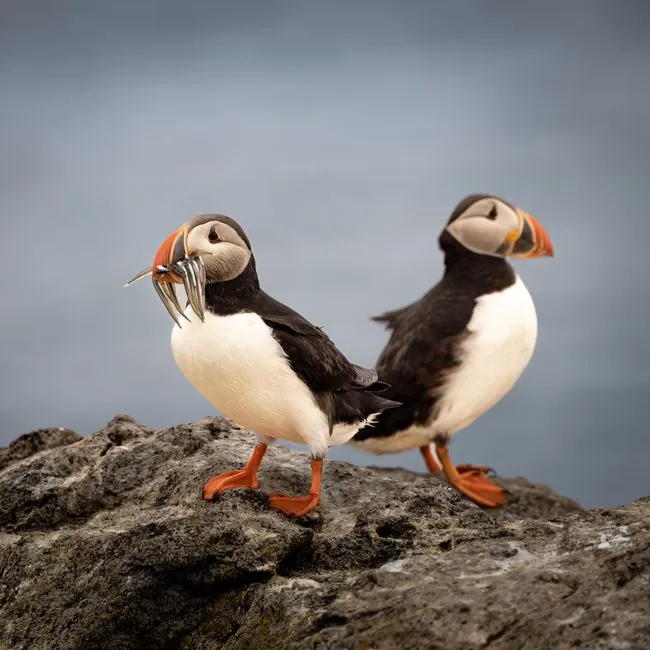
Puffins boast impressive lifespans for birds, often living over 20 years. Some individuals have been recorded at over 30 years old. This longevity allows them to return to the same breeding sites and partners for many seasons, contributing to the stability of their colonies.
6. Pufflings Grow Up Fast
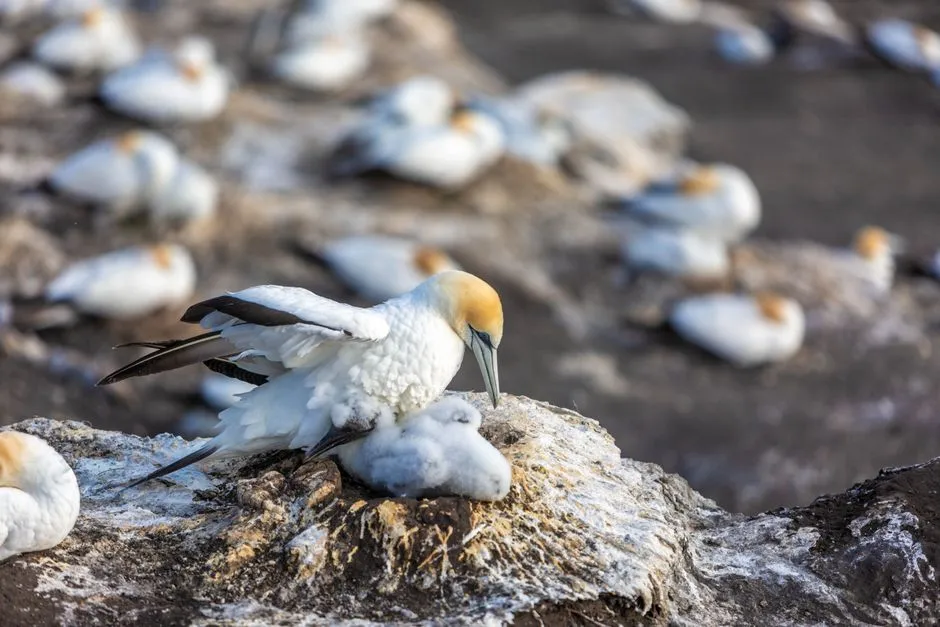
After hatching, pufflings remain in their burrows for about 40 days, during which both parents tirelessly feed them. Once ready, the young birds make their way to the sea under the cover of darkness, embarking on their independent oceanic journey. They won’t return to land until they’re ready to breed, several years later.
7. Puffins Are Skilled Diggers
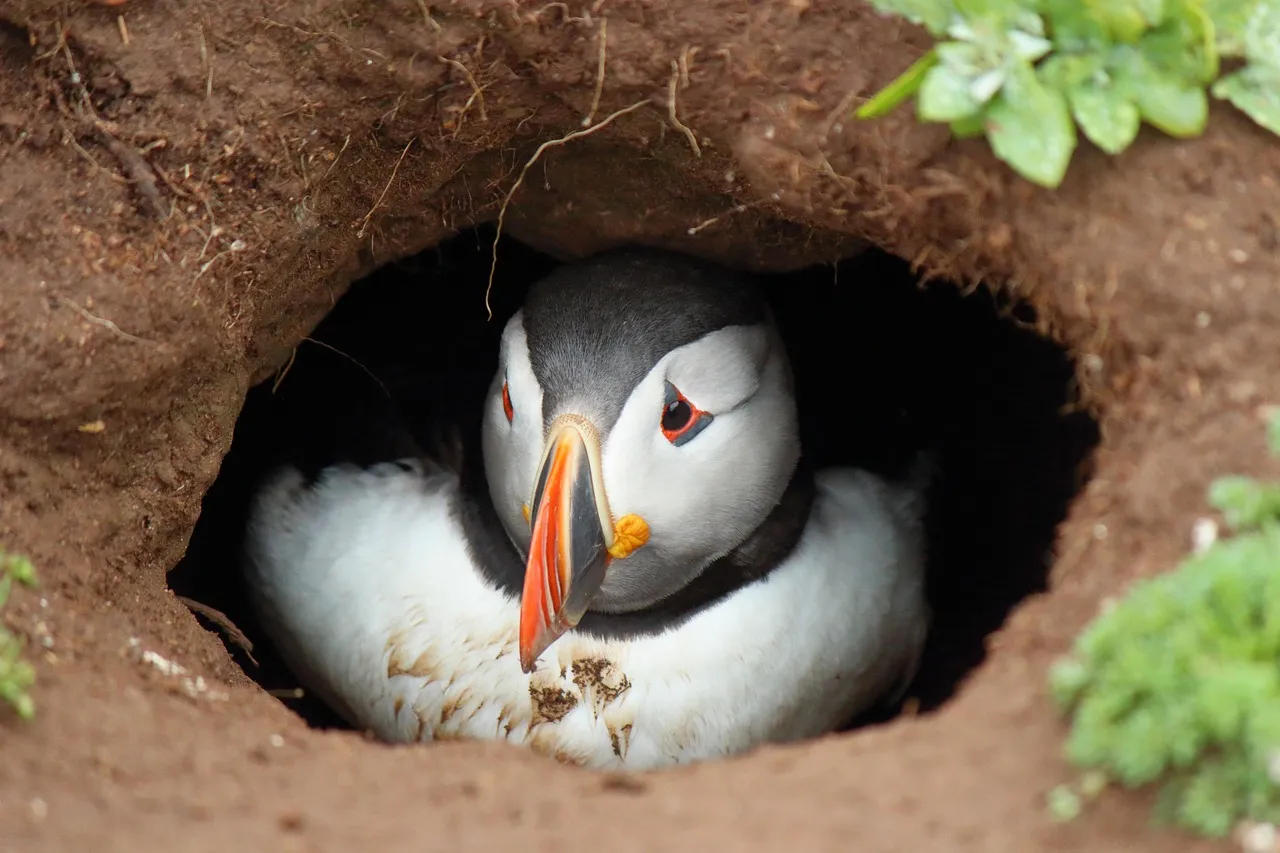
Puffins prefer to nest in burrows, which they dig using their beaks and feet. These burrows can be up to 3 feet deep and provide a safe haven for their eggs and chicks, protecting them from predators and harsh weather conditions. In areas where the soil is too rocky, puffins may nest in crevices or use abandoned burrows of other animals.
8. Puffins’ Eyesight Is Remarkable
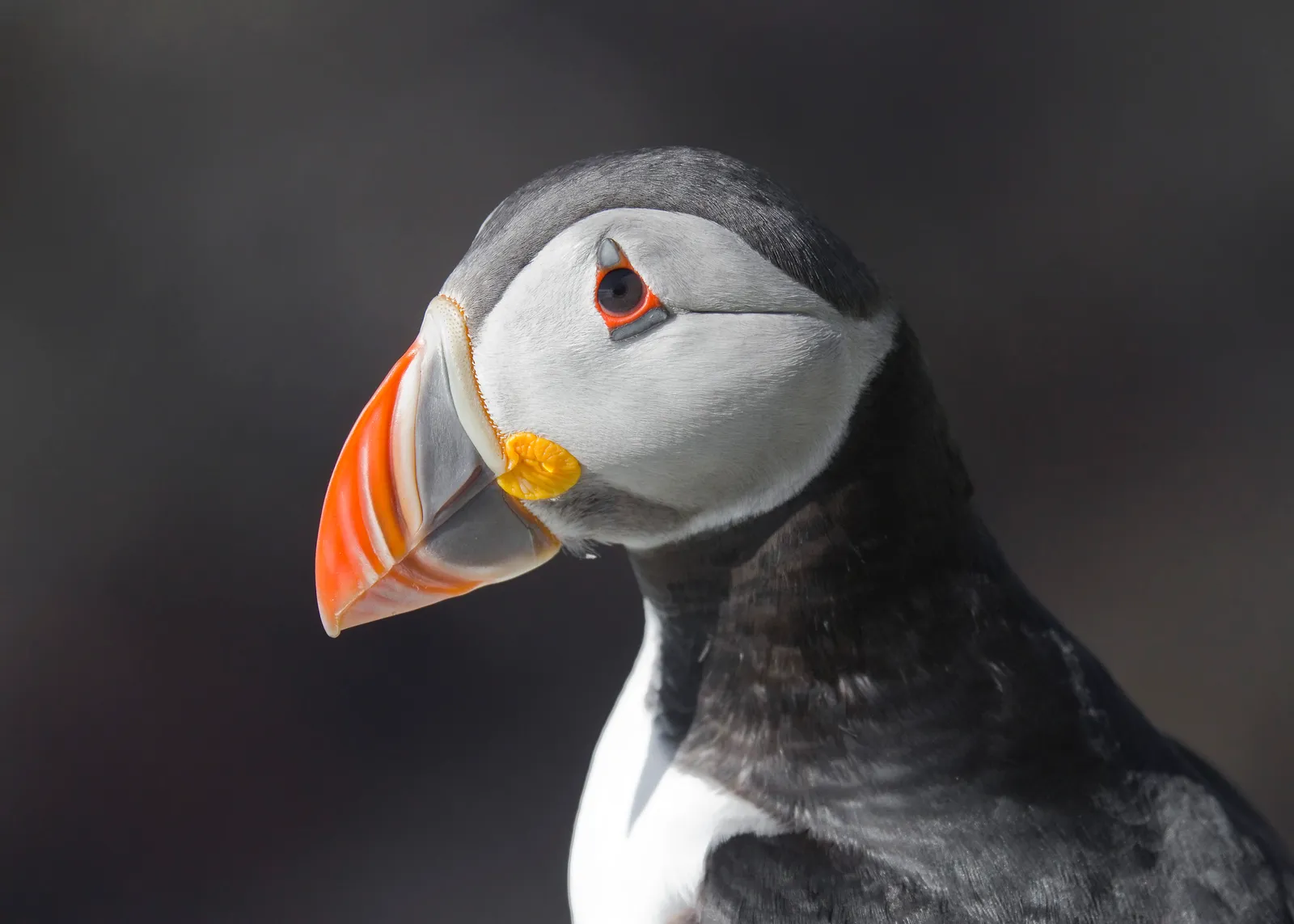
Puffins have excellent vision, which is crucial for spotting fish underwater. Their eyes are adapted to see clearly both in the air and beneath the waves, allowing them to accurately judge distances and catch swift-moving prey. This keen eyesight is a vital tool in their survival arsenal.
9. Puffins Are Social Birds
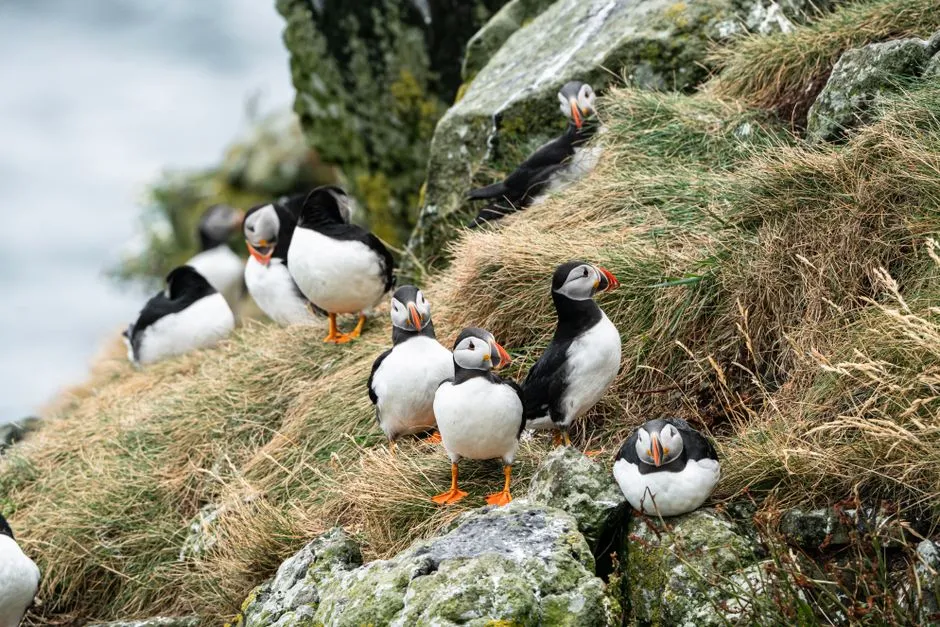
During the breeding season, puffins form large colonies on coastal cliffs and islands. These bustling communities can number in the thousands, creating a lively and noisy environment. Outside of breeding season, however, puffins are solitary, spending months alone at sea.
10. Puffins Face Conservation Challenges
Despite their resilience, puffins are facing threats from climate change, overfishing, and habitat disturbance. These factors have led to declines in some puffin populations, prompting conservation efforts to protect these charismatic birds and their habitats. Ensuring the health of marine ecosystems is crucial for the survival of puffins and countless other species.
Puffins are more than just their charming looks; they are resilient, skilled, and complex creatures that have mastered the challenges of life in the Atlantic. Their unique adaptations and behaviors make them a true marvel of the avian world. Next time you see a puffin, remember there’s much more to these birds than meets the eye.
