


A Houston-area neighborhood was stunned by an incredibly rare visitor: an albino raccoon, boldly scavenging during the day. With snowy-white fur and glowing red eyes, the animal looked more like something out of folklore than a suburban backyard. Wildlife watchers were quick to call it a “once-in-a-lifetime” sighting—and for good reason.
A Ghostly Stroll Through Broad Daylight
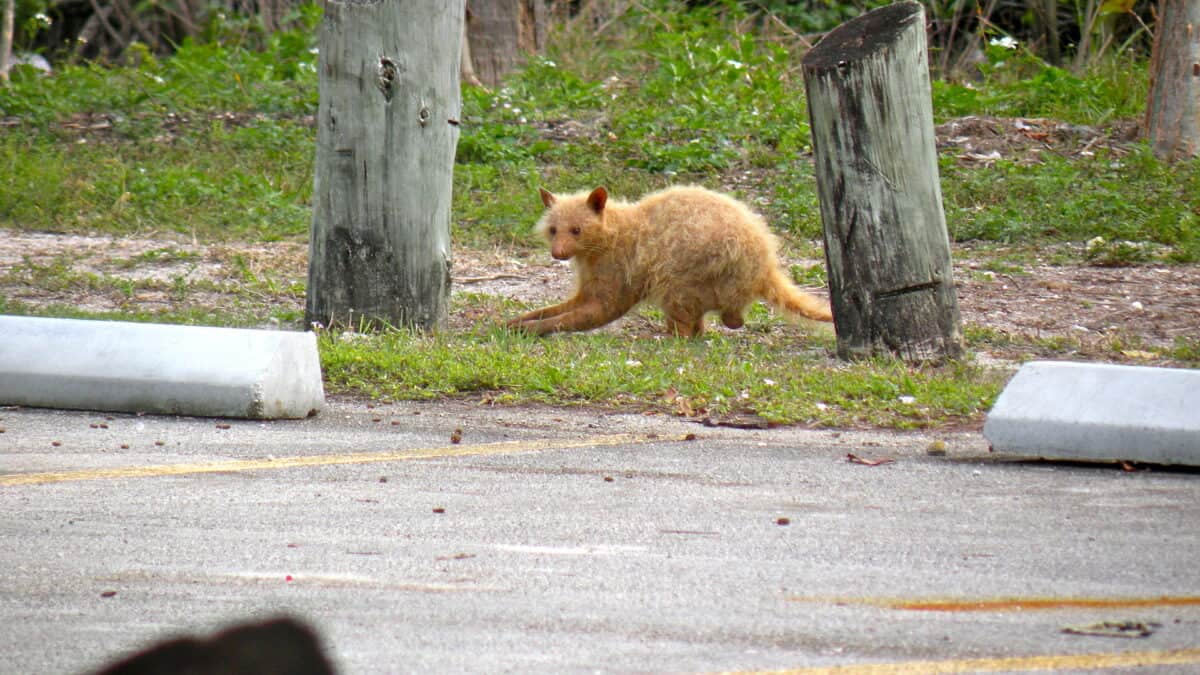
The raccoon was first spotted near a residential dumpster in the early afternoon, digging through trash under the hot Texas sun. A nearby homeowner managed to grab video footage, which quickly spread across social media. What made it even more unusual was the time of day. Raccoons are usually nocturnal, so seeing one roaming around midday was already rare—never mind one with a genetic condition that made it nearly invisible in the shadows.
Its appearance instantly captured attention. Albino raccoons are so rare that many people go their whole lives without seeing one. Residents began gathering at a distance to catch a glimpse, unsure whether to be amazed or concerned.
The Science Behind the White Fur

Albinism is a genetic mutation that prevents animals from producing melanin, the pigment that gives color to their skin, fur, and eyes. In raccoons, this condition is extremely uncommon, with odds estimated at around 1 in 750,000. These animals often struggle to survive in the wild, as their stark white fur makes them easy targets for predators and harder for them to blend into their surroundings.
On top of that, albino raccoons often have impaired vision and a heightened sensitivity to sunlight. This makes daytime movement especially risky, which may explain the raccoon’s bold and concerning behavior.
Risks, Rarity, and Community Impact
Seeing a raccoon like this isn’t just exciting—it’s also a warning sign. When rare wildlife appears in broad daylight near human homes, it could mean the animal is struggling to find food or is disoriented. Albino animals, in particular, can be more vulnerable to environmental stress, making them more likely to appear in urban areas.
What To Know If You Spot an Albino Raccoon
If you’re lucky enough to witness an albino raccoon in the wild, here’s how to handle the moment responsibly:
- Keep your distance – Approaching can cause stress and even lead to injury for the animal.
- Do not feed it – Feeding wildlife can encourage dangerous behavior and reduce their survival instincts.
- Report the sighting – Let local wildlife authorities know, especially if the animal appears sick or injured.
- Resist capturing it on your own – These animals require special care and should only be handled by professionals.
A Rare Visitor With a Message
In the end, this albino raccoon was more than a curiosity—it was a sign of how strange and wonderful nature can be, even in our own neighborhoods. Its sudden appearance highlights the importance of respecting urban wildlife and preserving natural habitats. With so few of its kind, every sighting offers a reminder that even the most ordinary animals can surprise us when they arrive in extraordinary form.

- Texas Ranchers Injured and Horses Killed in Aggressive Bee Attack - July 19, 2026
- Cougar Attack on Cyclists Shakes Washington Wilderness - July 19, 2026
- Snake Found in Arizona Toilet Shocks Homeowner - July 19, 2026