

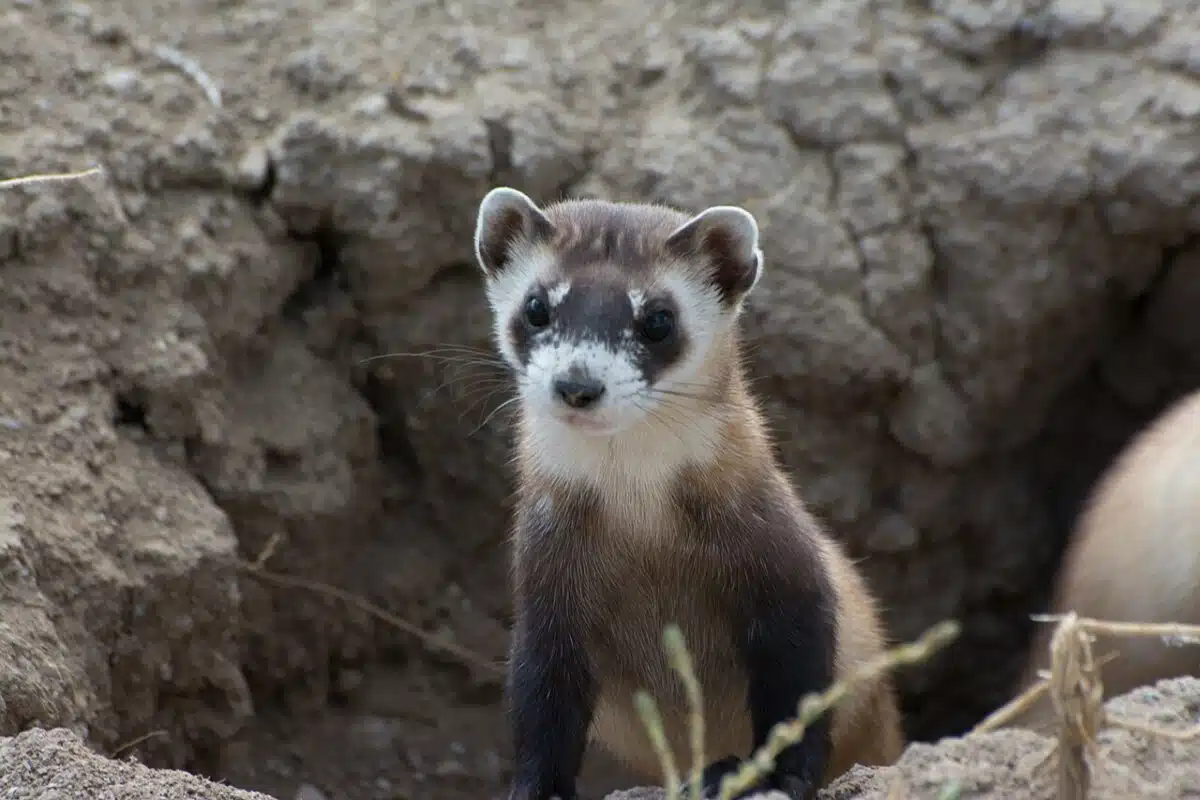
The black-footed ferret (Mustela nigripes) stands as one of North America’s most captivating yet endangered mammals. Known for its slender, weasel-like body and distinct black markings on its feet and face, this nocturnal predator once roamed the vast grasslands of the Great Plains. Originally driven to the brink of extinction by habitat loss, disease, and the decline of prairie dog populations—its primary prey—the black-footed ferret’s journey toward recovery is a testament to human intervention’s power and pitfalls in wildlife conservation.
The Path to Near Extinction

Historically, black-footed ferrets were found across a vast range of the North American prairie, spanning from southern Canada down through the Great Plains and into northern Mexico. However, by the mid-20th century, the species faced significant threats. Aggressive agricultural expansion devastated vast swathes of native prairie habitat, while extensive campaigns to eradicate prairie dogs reduced their prey base drastically. Compounding these challenges, diseases such as sylvatic plague and canine distemper took a further toll on their already fragile populations.
By the late 1970s, the black-footed ferret was declared extinct in the wild, with conservationists resigning themselves to the prospect of permanent loss. But a chance discovery in 1981 near Meeteetse, Wyoming, where a small population of ferrets had persisted unnoticed, sparked a glimmer of hope and set the stage for a remarkable conservation effort.
Conservation Milestones Captive Breeding and Reintroduction
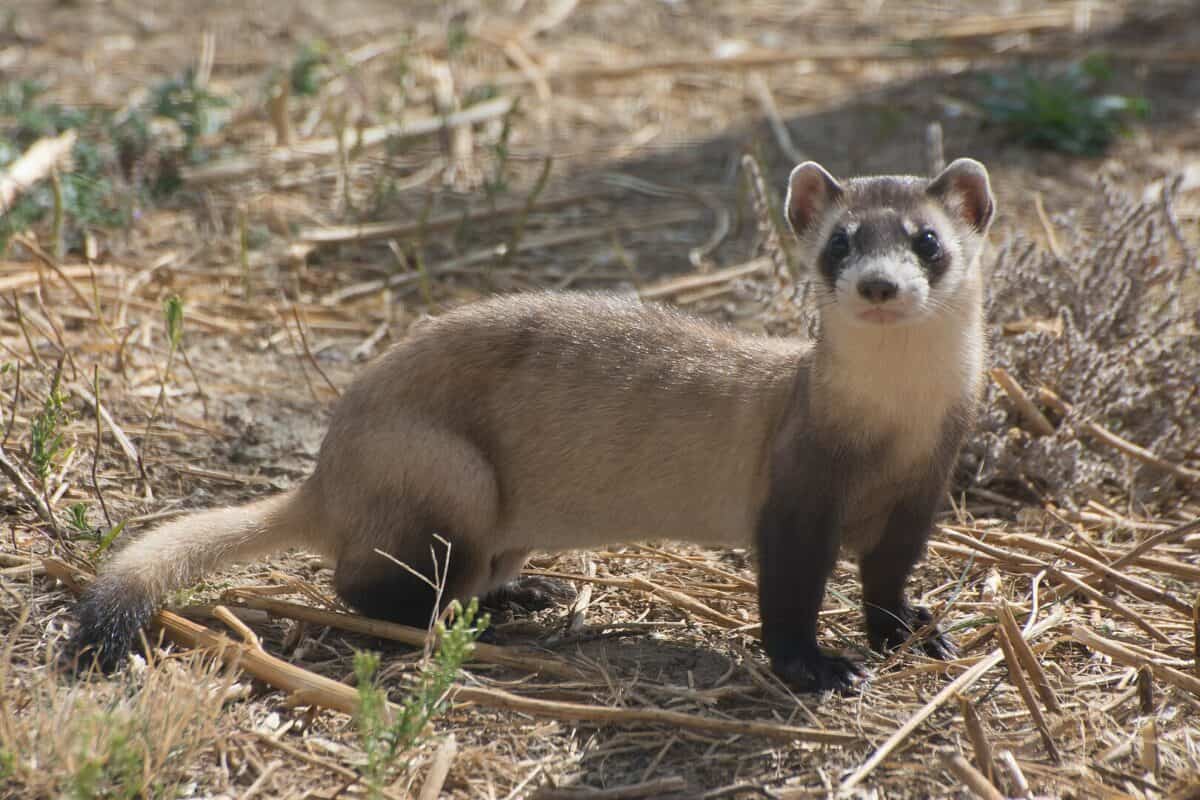
The discovery in Wyoming launched an ambitious and intensive conservation program. As the last known wild population succumbed to disease, biologists captured a remnant group of individuals, primarily for a captive breeding effort. Building on genetic diversity and health, the breeding program sought to multiply these individuals in controlled environments with the ultimate aim of re-establishing viable populations in the wild.
Major institutions like the U.S. Fish and Wildlife Service and numerous zoological and research partners spearheaded this successful initiative. By the early 1990s, captive-bred ferrets were gradually introduced across various parts of their historical range, including Wyoming, South Dakota, and Arizona, where efforts to restore prairie dog habitats were underway.
Current Challenges on the Road to Recovery

Despite significant progress, the journey to a stable recovery for black-footed ferrets continues to face myriad challenges. A major obstacle remains the ongoing threat of disease, particularly the sylvatic plague. This bacterial disease affects both prairie dogs and ferrets and is devastating to populations lacking immunity. To counter this, wildlife biologists have been experimenting with vaccine-laden bait and other immunization strategies to safeguard emerging populations.
Additionally, habitat fragmentation and competition with human agricultural activities pose persistent threats. Conservationists are continually working to foster partnerships with landowners and local communities to establish and maintain safe habitats, echoing a broader movement for ecosystem restoration and sustainable land use.
The Role of Genetic and Technological Innovation
Advancements in genetic science and technology have opened new avenues for ferret conservation. Genetic tools used to manage breeding programs ensure the genetic diversity of captive populations, reducing the risks associated with inbreeding. In a groundbreaking development, cloning technologies have emerged, exemplified by the successful cloning of Elizabeth Ann in 2020, the first-ever cloned black-footed ferret aimed at boosting genetic diversity within the population.
These breakthroughs offer a glimmer of hope, suggesting the possibility of bolstering existing conservation strategies with innovative solutions to age-old challenges.
A Collaborative Effort for Future Generations

The continued survival and flourishing of black-footed ferrets are emblematic of collaborative conservation in action. They underscore the need for sustained effort, commitment, and cross-disciplinary cooperation among government agencies, non-profit organizations, researchers, and local stakeholders. Educational outreach and public engagement are equally critical in fostering a deeper appreciation for this remarkable animal and its role in prairie ecosystems.
As black-footed ferrets continue their remarkable journey from near extinction to gradual revival, they serve as a powerful reminder of nature’s resilience and the impact of taking bold, coordinated conservation action. With ongoing support and innovation, the vision of fully restored black-footed ferret populations living harmoniously in the wild may one day become a reality once more.

As a little kid, I fell in love with nature, wildlife, and animals. Living in the USA, South Africa, Italy, China and Germany gave me the opportunity to discover the world's Wildlife. My favorite animals are Mountain Gorillas, Siberian Tigers, and Great White Sharks.
I'm a certified PADI Open Water Diver, went to Everest Base Camp and Trekked Gorillas in Uganda. I hold a Master of Science in Economics and Finance.
Please send any feedback to feedback@animalsaroundtheglobe.com
- 15 PowerfulAnimals Where Females Rule the Male - July 21, 2026
- 14 Mammals That Use Tools - July 21, 2026
- Discover the Animal that can regenerate itself: Baby Axolotl - July 21, 2026