

When discussions about strength in the animal kingdom arise, many might immediately imagine predators like lions, bears, or elephants. However, the title of the world’s strongest land mammal—pound for pound—belongs to a surprising contender: the rhinoceros beetle. But if we’re talking about pure, unadulterated strength in absolute terms among mammals specifically, the title goes to the African elephant. This magnificent creature can exert forces that would make industrial machinery seem inadequate. In this comprehensive article, we’ll explore the remarkable strength of the African elephant, why and how it developed such powerful capabilities, and how it compares to other formidable mammals on our planet.
The African Elephant: Nature’s Power House

The African elephant (Loxodonta africana) stands as the largest land animal on Earth today, with males weighing up to 6,000-7,000 kg (13,000-15,500 lbs) and standing 3-4 meters (10-13 feet) at the shoulder. Their enormous size alone grants them tremendous strength, but it’s their specialized adaptations that truly make them nature’s ultimate power machines. These magnificent creatures can push over full-grown trees, lift up to 300 kg (661 lbs) with their trunks alone, and carry loads exceeding 900 kg (2,000 lbs). Their tremendous strength serves numerous purposes in their daily lives: foraging for food, defending against predators, establishing dominance within herds, and navigating their challenging environments.
Measuring Mammalian Strength
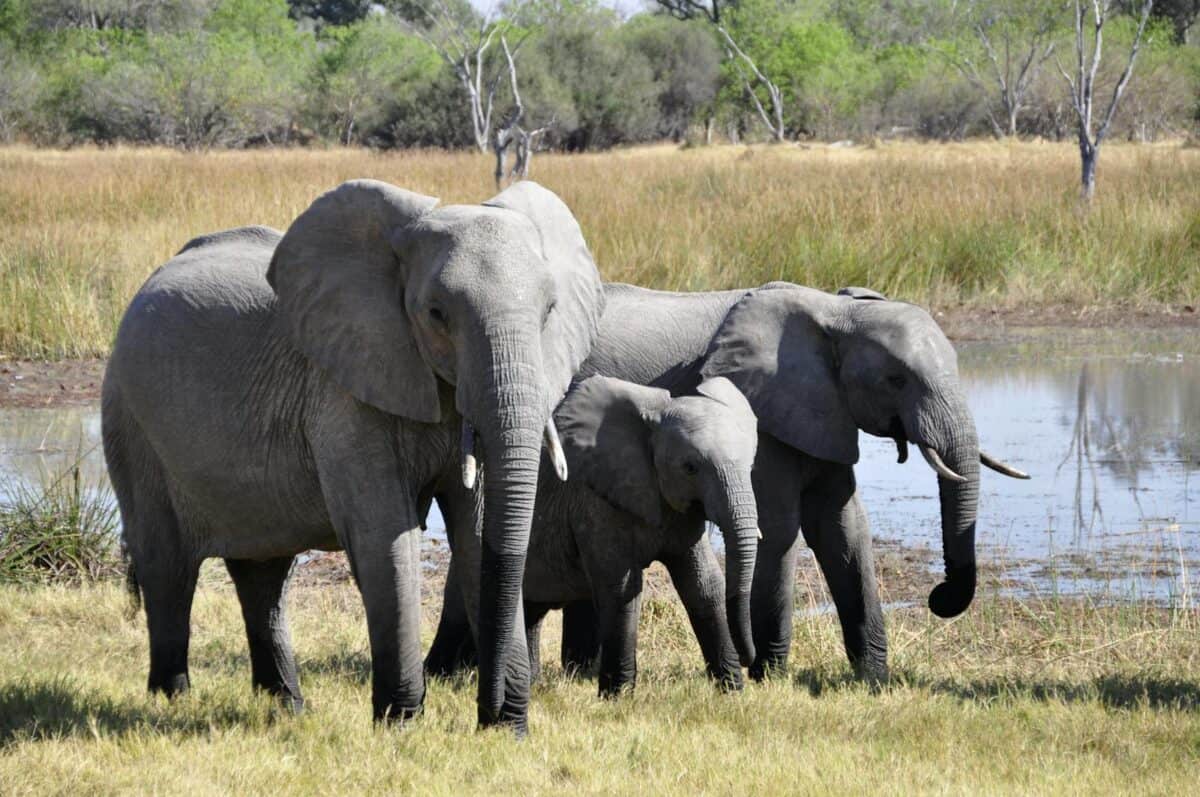
When determining the strongest mammal, scientists consider several metrics. Absolute strength measures the total force an animal can exert, while relative strength compares force generation to body weight (pound-for-pound). Elephants dominate in absolute strength terms, but smaller mammals like gorillas and ants may have greater strength-to-weight ratios. Other important factors include bite force, pulling power, pushing capability, and lifting capacity. African elephants excel in most of these categories among land mammals, particularly in pushing and pulling strength. Their ability to topple trees that would require heavy machinery to move is a testament to their unparalleled power in the natural world.
The Anatomy Behind the Power

The African elephant’s extraordinary strength stems from its specialized anatomical adaptations. Their massive muscular structure is supported by equally impressive skeletal architecture, with thick, pillar-like legs designed to support their enormous weight. Unlike human bones, elephant bones have a unique honeycomb structure that provides maximum strength while minimizing weight. Their trunk alone contains over 40,000 muscles (compared to about 650 muscles in the entire human body) arranged in complex layers that allow for both powerful and precise movements. This remarkable appendage can lift heavy objects, tear down branches, and manipulate items with surprising dexterity. The elephant’s neck muscles are also incredibly powerful, allowing them to carry tusks weighing up to 100 kg each.
Remarkable Feats of Elephant Strength

The African elephant’s strength is legendary, with documented cases that showcase their incredible power. There are reports of elephants lifting logs weighing over 700 kg (1,540 lbs) with their trunks alone. During territorial disputes or when threatened, they can push over trees exceeding 15 meters (50 feet) in height. In captivity, working elephants have been recorded dragging logs weighing several tons. One famous account describes an elephant that moved a stuck truck weighing over 5 tons by pushing it with its forehead. Their tusks can exert enormous pressure, capable of penetrating thick bark and even breaking through defensive structures. Perhaps most impressively, elephants can carry up to 25% of their body weight on their backs—equivalent to a 7,000 kg elephant carrying 1,750 kg (3,858 lbs)—while still maintaining mobility.
Comparing Elephant Strength to Human Power

To put the African elephant’s strength into perspective, let’s compare it to human capabilities. The strongest humans can lift approximately 2-3 times their body weight in controlled settings. In contrast, an elephant’s trunk alone can lift about 4-5% of its body weight—equivalent to a 70 kg (154 lb) human lifting 280-350 kg (617-772 lbs) with just their nose. When using their entire body, elephants can move objects weighing several tons, far beyond what even teams of humans could manage without machinery. The strongest human deadlift ever recorded is just over 500 kg (1,104 lbs), while an elephant can casually move objects many times heavier. This vast difference highlights the incredible gulf between human strength and that of these magnificent mammals.
The Runner-Up: Hippopotamus

While the African elephant holds the title of strongest land mammal, the hippopotamus (Hippopotamus amphibius) deserves recognition as a formidable runner-up. Despite their deceptively rotund appearance, hippos are incredibly powerful animals. Weighing up to 1,500-1,800 kg (3,300-4,000 lbs), they possess extremely strong jaw muscles capable of generating a bite force exceeding 8,100 newtons—enough to easily snap a crocodile in half or crush a watermelon like it’s a grape. Their massive bodies can charge at speeds of up to 30 km/h (19 mph), and they can flip boats or crush predators with their sheer bulk. The hippopotamus’s strength is particularly impressive considering they spend much of their time in water, yet maintain muscle mass that makes them one of the most dangerous animals in Africa, responsible for more human fatalities than any other large animal on the continent.
Gorillas: The Pound-for-Pound Champions

When considering strength relative to body size, the western lowland gorilla (Gorilla gorilla gorilla) makes a compelling case for pound-for-pound champion among larger mammals. Adult male silverbacks typically weigh 135-180 kg (300-400 lbs) but possess strength far exceeding what their size might suggest. They can lift approximately 10 times their body weight, equivalent to a human lifting a small car.
Their arm muscles are particularly developed, with a pulling strength estimated to be six times that of an athletic human. A gorilla’s bite force measures around 1,300 PSI, stronger than that of a lion or tiger. This immense strength comes from their unique muscle fiber composition and attachment points that favor power over fine motor control. In the wild, gorillas demonstrate their power by tearing down small trees, stripping bark with ease, and occasionally lifting objects weighing over 815 kg (1,800 lbs).
The Evolutionary Purpose of Elephant Strength

The extraordinary strength of African elephants didn’t develop by accident—it evolved as a response to specific environmental pressures and survival needs. Their powerful build allows them to access food sources unavailable to other herbivores by pushing over trees, stripping bark, and digging for water during droughts. This strength also serves crucial defensive purposes, as few predators will challenge a fully grown elephant.
Within their social structure, strength plays a role in establishing dominance, particularly among males during musth (a period of heightened testosterone and aggression). Additionally, their physical power enables long-distance migration in search of food and water across challenging terrains. Evolutionary biologists note that the elephant’s strength represents a classic example of adaptation to an ecological niche, allowing these magnificent creatures to thrive as megaherbivores in environments where most other species would struggle to survive.
Measuring Methods: How Scientists Quantify Animal Strength
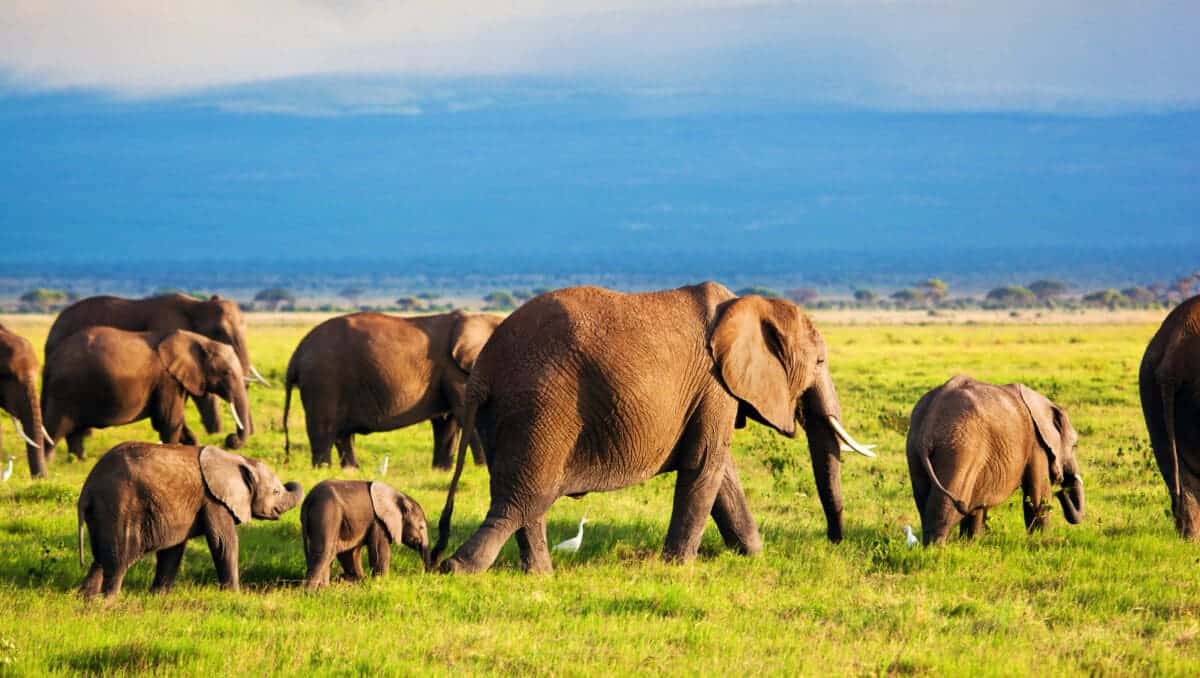
Accurately measuring the strength of massive animals like elephants presents significant challenges for researchers. Unlike humans who can voluntarily perform strength tests, scientists must use indirect methods to assess elephant power. One approach involves measuring the force exerted when elephants push against specialized force plates or pull against calibrated resistance devices. Biomechanical analysis using high-speed cameras allows researchers to calculate the force needed for observed movements like tree toppling.
Some studies measure physiological parameters such as muscle fiber type, density, and cross-sectional area to estimate potential force generation. Field studies of environmental impact provide additional data—for instance, calculating the force needed to topple trees of specific dimensions that elephants have pushed over. These multiple approaches, when combined, provide a reasonably accurate picture of elephant strength, though precise measurements remain elusive due to the practical limitations of working with such massive animals.
Other Contenders for Strongest Mammals

While elephants reign supreme in absolute strength, several other mammals deserve honorable mentions for their impressive power. The rhinoceros, particularly the white rhino weighing up to 2,300 kg (5,000 lbs), can charge at speeds of 50 km/h (31 mph) with enough force to flip vehicles. Grizzly bears possess incredible forelimb strength, capable of killing large prey with a single swipe and lifting rocks weighing hundreds of pounds.
The American bison, despite its bulky appearance, combines impressive strength with surprising speed and can plow through deep snow that would stop most other animals. Bulls, especially Spanish fighting bulls, can lift objects many times their weight with their powerful neck muscles. Among small mammals, wolverines demonstrate remarkable strength for their size, capable of breaking through frozen carcasses and even stealing kills from much larger predators. Each of these animals has evolved specialized forms of strength to survive in their particular ecological niches.
Conservation Challenges for the World’s Strongest Mammal

Despite their incredible strength, African elephants face serious threats that have reduced their numbers dramatically over the past century. Habitat loss represents perhaps the greatest ongoing challenge, as human populations expand into traditional elephant ranges. Poaching for ivory continues to decimate populations, with an estimated 20,000 elephants killed annually during peak poaching years. Human-wildlife conflict increases as elephants raid crops when their natural food sources diminish.
Climate change poses additional threats, altering habitat suitability and water availability. Conservation efforts include anti-poaching patrols, habitat protection initiatives, corridor projects to maintain population connectivity, and community-based conservation programs that incentivize protection. The IUCN currently lists African savanna elephants as Endangered and African forest elephants as Critically Endangered. Without sustained conservation action, we risk losing these magnificent examples of evolutionary perfection—the strongest land mammals on Earth—within our lifetimes.
The Intelligence Behind the Strength

What makes elephants particularly remarkable is that their tremendous physical power is complemented by equally impressive cognitive abilities. With the largest brain of any land animal (weighing up to 5 kg/11 lbs), elephants possess sophisticated intelligence that allows them to apply their strength with precision and purpose. They can solve complex problems, use tools, and demonstrate self-awareness. This cognitive capacity enables elephants to remember water sources across vast distances, anticipate seasonal changes, and develop sophisticated social strategies.
Their problem-solving abilities often involve physical strength—such as constructing bridges from fallen logs or creating tools from branches. Researchers have observed elephants carefully calculating the force needed for specific tasks, using just enough strength to accomplish goals without wasting energy. This combination of brute force and intelligence makes elephants uniquely effective at modifying their environment and represents a fascinating evolutionary development that few other species can match.
Conclusion: The Undisputed Champion of Strength

The African elephant stands as nature’s ultimate testimony to the extraordinary physical power that evolution can produce. With its ability to move objects weighing several tons, topple fully grown trees, and carry loads that would require heavy machinery, no other land mammal comes close to matching the absolute strength of these magnificent creatures.
This combination of size, specialized musculoskeletal adaptations, and remarkable intelligence has allowed elephants to thrive as ecosystem engineers for millions of years. As we marvel at their incredible physical capabilities, we must also recognize our responsibility to ensure these magnificent animals continue to roam the African landscapes. The strongest land mammal faces an uncertain future that depends largely on human choices—a sobering reminder that even the mightiest creatures remain vulnerable in our rapidly changing world.

- Essential Grooming Tips to Keep Your Pup’s Coat Healthy! - July 30, 2026
- 17 “Forever Puppy” Dog Breeds With Baby Personalities - July 29, 2026
- How Each Zodiac Sign Would Fare as an Animal in the Jungle - July 29, 2026