

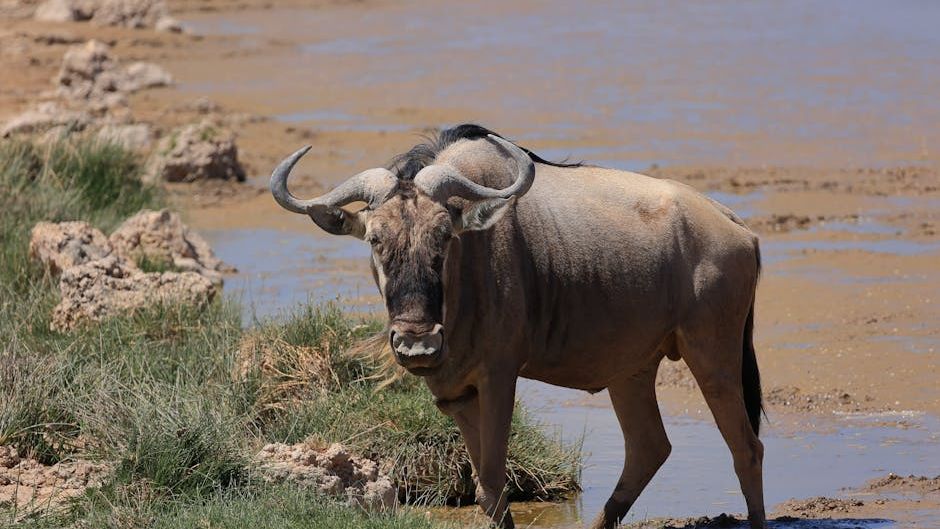
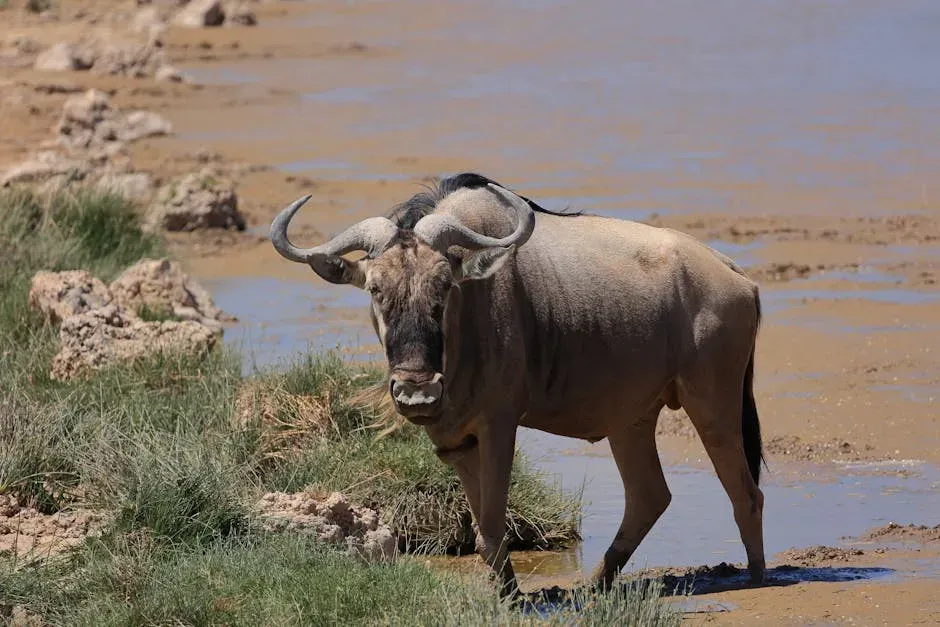
In South Africa’s Limpopo region, a wildebeest’s routine venture near a shrinking waterhole turned catastrophic when its antlers locked into thick mud. Experienced guide Lourens de Lange spotted the animal during his March 7 patrol, its struggles only worsening the embedment. Dehydration threatened under the relentless sun, turning a natural slip into a fight for survival. This incident spotlights the hidden perils of the bushveld, where even mighty herbivores fall victim to terrain’s treachery.
Let’s be real – wildlife rescues like this demand split-second decisions in unforgiving conditions. De Lange’s quick thinking rallied a team of guides, blending instinct with precision to save the day without harm to man or beast.
The Harrowing Discovery in Limpopo Bush
Lourens de Lange conducted his standard rounds in Limpopo when he encountered the wildebeest hopelessly stuck. The animal’s massive antlers had plunged deep into the viscous mud, creating an unbreakable anchor that defied its powerful thrusts. Exhaustion set in rapidly as the sun intensified, with the creature’s bellows echoing the desperation of its plight. De Lange assessed the scene swiftly, recognizing that without intervention, predators or heat would claim the victim. This moment underscored the raw unpredictability of safari terrains, where waterholes morph into deathtraps during dry spells.
Guide’s Expertise Sparks Immediate Action
Drawing on years in the bush, de Lange mobilized fellow guides for a calculated assault on the mud’s hold. They prioritized the wildebeest’s calm, approaching with ropes looped carefully around the horns to avoid injury. Vital signs stayed under constant watch, ensuring the stress remained minimal amid the chaos. Human safety factored in too, with slippery banks posing equal threats to rescuers. Their method fused traditional know-how with cautious force, proving why seasoned operators excel in these high-stakes scenarios. What stands out is how de Lange’s leadership transformed potential tragedy into triumph.
Teamwork Triumphs Over Relentless Mud
The operation unfolded with guides digging trenches to break the suction while others hauled on ropes with steady pulls. Vehicles assisted from afar, adding leverage without startling the trapped beast. After 45 grueling minutes, the wildebeest lurched free, shaking off mud clumps before stumbling to solid ground. It then bounded away vigorously, a clear sign of recovery. This coordinated push highlighted the irreplaceable value of teamwork in remote wilderness rescues. Slippery conditions tested every move, yet determination prevailed.
Mud Traps: A Growing Threat in Dry Seasons
Wildebeest often encounter these quagmires during migrations, particularly as waterholes contract in arid times. In areas like Limpopo and nearby Kruger conservancies, such entrapments surge, with antlers ironically becoming fatal liabilities. Climate shifts worsen the issue, hardening mud into inescapable pits. Conservationists stress intervention only when escape proves impossible, preserving nature’s balance. Dozens of similar rescues occur yearly across sub-Saharan regions, underscoring guides’ pivotal role. These events reveal how evolved features for survival can backfire spectacularly.
Insights from Bush Veterans and Stats
“Every second counts in the bush; hesitation can mean loss of life,” de Lange reflected afterward, capturing the adrenaline rush. Veterinary advice urges restraint, favoring natural processes unless peril looms immediate. Horned species like wildebeest comprise nearly 30 percent of mud rescues in the region, per wildlife NGOs. Training in handling proves essential for operators facing daily hazards. Successful efforts like this enhance ecotourism, attracting visitors to real conservation stories. Ultimately, they blend old-school grit with modern protocols for optimal results.
Final Thought
This Limpopo rescue exemplifies the fine line between watching wildlife and stepping in to protect it. Guides like de Lange embody the unsung guardians of Africa’s wild heart. What risks would you take to save a life in the bush? Share your thoughts in the comments.
Source: Original YouTube Video

- Urban Coyotes Show Remarkable Adaptability, Learning to Thrive in City Environments - July 22, 2026
- Beavers Are Nature’s Engineers, Creating Vital Habitats for Other Wildlife Species - July 21, 2026
- The Recovery of the California Condor Offers Hope for Other Critically Endangered Birds - July 21, 2026