
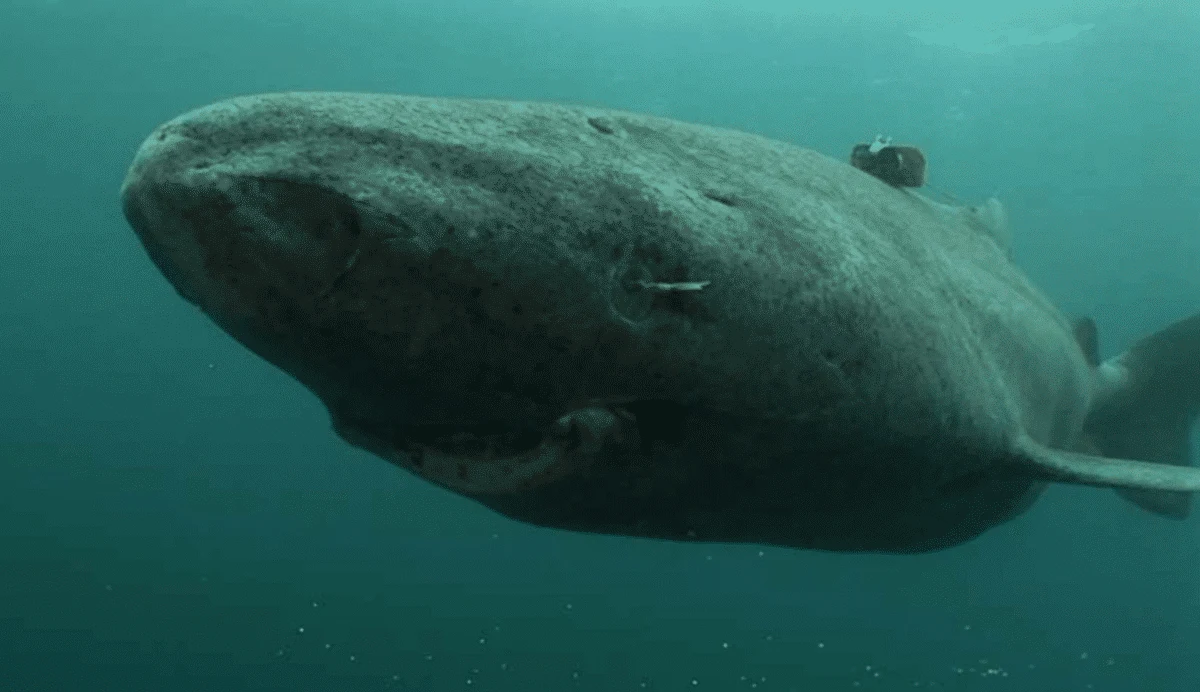
In the depths of the frigid North Atlantic waters, a remarkable discovery has captured the attention of scientists worldwide. The Greenland shark (Somniosus microcephalus), an elusive creature of the deep, has been revealed as one of the longest-living vertebrates on Earth, with a lifespan that can exceed 300 years. This extraordinary finding has revolutionized our understanding of longevity in the animal kingdom and opened new avenues for aging research. Through groundbreaking scientific techniques and persistent investigation, researchers have unveiled the secrets of these ancient ocean dwellers, whose lives span from before the Industrial Revolution to the modern digital age.
The Remarkable Discovery

The confirmation of the Greenland shark’s extraordinary lifespan came in 2016 when an international team of researchers published their findings in the prestigious journal Science. Using radiocarbon dating techniques on the eye lenses of 28 sharks, scientists determined that the largest specimen, measuring 16 feet in length, was approximately 392 years old, with a margin of error of 120 years. This places the shark’s minimum age at 272 years, with a possibility of exceeding 400 years. The study represented a watershed moment in marine biology, definitively establishing the Greenland shark as the longest-lived vertebrate known to science, surpassing even the ancient bowhead whale, which can live for over 200 years.
Physical Characteristics of the Centenarian
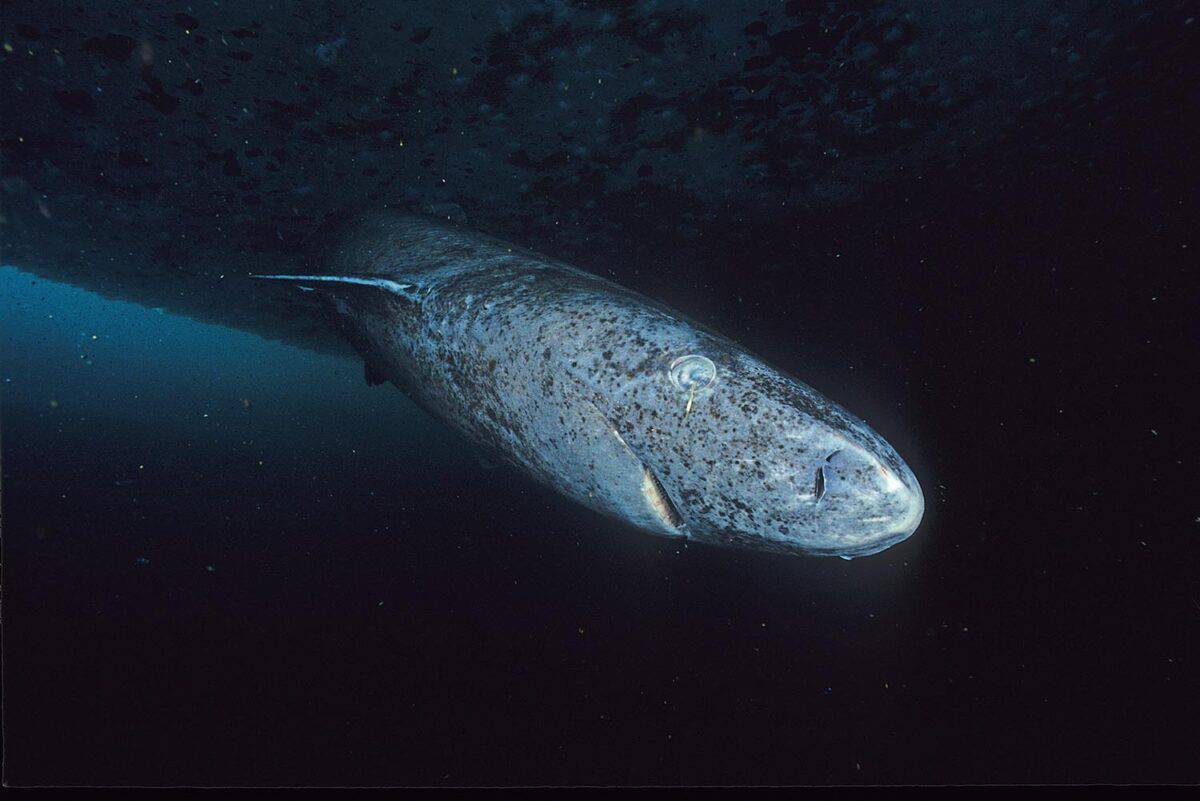
The Greenland shark possesses a physique perfectly adapted to its long, slow existence in deep, cold waters. Growing to lengths of 16-21 feet (5-7 meters) and weighing up to 2,200 pounds (1,000 kg), these sharks have cylindrical, gray to brown bodies with a distinctive snout and relatively small fins compared to their massive size. Their most striking feature may be their eyes, which often host parasitic copepods that cause a milky appearance, earning them the nickname “sleeper sharks.” Unlike many of their counterparts, Greenland sharks move at an extraordinarily slow pace—typically less than 1 mile per hour—which may contribute to their metabolic efficiency and remarkable longevity.
Habitat and Distribution

These long-lived leviathans primarily inhabit the North Atlantic and Arctic Oceans, particularly around Greenland, Iceland, and Norway. They prefer extremely cold, deep waters, typically dwelling at depths between 600-2,400 feet (180-730 meters), though they occasionally venture into shallower coastal areas. Scientists have recorded Greenland sharks at astonishing depths exceeding 7,200 feet (2,200 meters). Their preference for frigid environments corresponds with water temperatures typically below 5°C (41°F), conditions that may contribute to their slow metabolism and extended lifespan. This geographic distribution in remote, inhospitable waters partly explains why these ancient creatures remained mysterious to science for so long, despite their enormous size.
The Science of Age Determination

Determining the age of Greenland sharks presented scientists with a unique challenge, as these creatures lack the calcified tissues that typically form growth rings in other species. The breakthrough came when researchers focused on the shark’s eye lenses, specifically the proteins in the nucleus of the lens, which form during embryonic development and remain unchanged throughout life. Using accelerator mass spectrometry, scientists conducted radiocarbon dating based on levels of carbon-14 isotopes, which were elevated in marine animals during the period of nuclear bomb testing in the 1950s—creating a time marker in the sharks’ tissues. This innovative application of radiocarbon dating, combined with mathematical modeling accounting for growth rates, provided the first reliable age estimates for these ancient mariners.
Growth and Development

The extreme longevity of Greenland sharks is matched by their incredibly slow growth rate—approximately 0.5-1 centimeter per year. This glacial development means that females don’t reach sexual maturity until they’re around 150 years old, creating one of the longest pre-reproductive periods of any vertebrate. The slow maturation and growth make these sharks particularly vulnerable to population threats, as recovery from any significant population decline would take centuries. Scientists believe their sluggish metabolism, adapted to the energy conservation necessary in cold, deep environments with limited food availability, drives this extended development timeline. This remarkable life history strategy stands in stark contrast to most vertebrates, which typically prioritize rapid growth and earlier reproduction.
Feeding Habits and Predatory Behavior

Despite their slow swimming speed—averaging less than 1 mph—Greenland sharks are effective apex predators that employ ambush tactics rather than pursuit. Their diet consists primarily of fish, including halibut, cod, and redfish, but they also scavenge marine mammal carcasses such as seals, polar bears, and even whales. Analysis of stomach contents has revealed an astonishingly diverse menu, including reindeer, moose, and horses, indicating they opportunistically consume terrestrial animals that find their way into the ocean. Their hunting likely occurs during the polar winter’s perpetual darkness, when their dark coloration provides camouflage. Remarkably, many Greenland sharks are effectively blind due to parasitic copepods that attach to their corneas, suggesting they rely heavily on their acute sense of smell to locate prey in the lightless depths.
Biological Mechanisms of Longevity

The extraordinary lifespan of Greenland sharks has prompted intensive research into the biological mechanisms behind their longevity. Scientists believe several factors contribute to their age-defying capabilities. Their exceptionally slow metabolism, adapted to cold, deep-water environments, likely reduces the accumulation of cellular damage that typically contributes to aging. Additionally, research suggests these sharks possess enhanced DNA repair mechanisms and antioxidant defenses that protect against genetic degradation over centuries. Recent genomic studies have identified specific adaptations in genes associated with cardiovascular health, cell cycle regulation, and tumor suppression that may contribute to their extended lifespan. Understanding these mechanisms could potentially provide insights into human aging and age-related diseases, making the Greenland shark a valuable subject for biomedicine and gerontology research.
Conservation Status and Threats

Despite living for centuries, Greenland sharks face significant threats in the modern era. Currently listed as “Vulnerable” by the International Union for Conservation of Nature (IUCN), their populations are declining due to several factors. Commercial fishing represents a major threat, both through targeted fishing (primarily historical) and as bycatch in deep-sea trawling operations. Their extremely slow reproductive rate—females reach sexual maturity at approximately 150 years—means populations cannot quickly recover from depletion. Climate change poses additional concerns, as warming ocean temperatures and changing Arctic ecosystems may disrupt the cold-water environments these sharks depend on. Ocean pollution, particularly bioaccumulation of contaminants like mercury and persistent organic pollutants, presents another threat, as these long-lived predators can accumulate high toxin levels over their centuries-long lifespans.
Historical Interactions with Humans

Greenland sharks have figured prominently in the cultural and economic history of Arctic indigenous peoples for centuries. Traditional Inuit and Greenlandic communities historically hunted these sharks for their liver oil, which was used for lamp fuel and traditional medicine. The flesh of Greenland sharks is naturally toxic due to high concentrations of trimethylamine N-oxide (TMAO), but traditional fermentation methods in Iceland transform it into a delicacy called hákarl. Early polar explorers and whalers frequently encountered these sharks, describing them in ship logs and natural history accounts dating back to the 16th century. Despite these historical interactions, much of the shark’s biology remained mysterious until recent decades, when advanced research technologies finally allowed scientists to uncover the secrets of these ancient ocean inhabitants, including their remarkable longevity.
Research Challenges and Future Directions
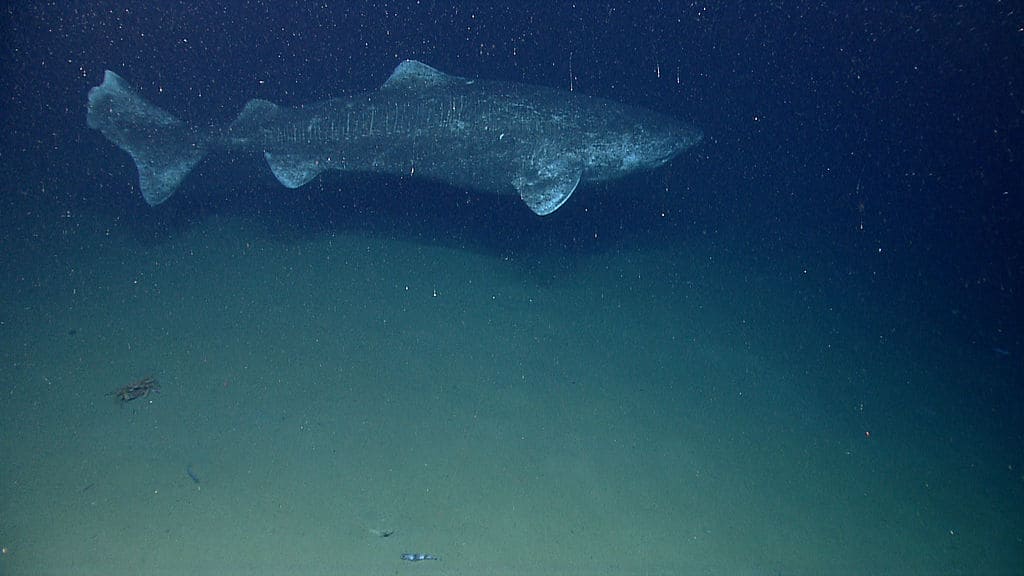
Studying Greenland sharks presents exceptional challenges for marine biologists. Their remote, deep-water habitat makes observation difficult and expensive, requiring specialized equipment like deep-sea submersibles, ROVs (remotely operated vehicles), and satellite tags that can withstand extreme pressure. Ethical considerations also complicate research, as traditional sampling methods may harm these vulnerable, slow-reproducing animals. Consequently, scientists are developing non-invasive techniques, including environmental DNA analysis and underwater photography with parallel laser systems for size estimation. Future research priorities include more comprehensive population assessments, further investigation of their physiological adaptations for longevity, and tracking studies to better understand migration patterns and habitat use. Scientists also hope to sequence the complete Greenland shark genome, which could reveal genetic factors underlying their extraordinary lifespan and potentially inform human longevity research.
Comparison to Other Long-Lived Animals

While the Greenland shark’s 300+ year lifespan stands as remarkable among vertebrates, it’s instructive to compare it with other exceptionally long-lived animals. Bowhead whales, the previous record-holders among vertebrates, can live over 200 years, while giant tortoises may reach 150-200 years. Among invertebrates, some species far exceed even the Greenland shark—ocean quahog clams can survive over 500 years, and certain deep-sea tube worms may live for millennia. What distinguishes the Greenland shark is its combination of vertebrate complexity and extreme longevity. Unlike simpler organisms with rudimentary nervous systems, these sharks possess sophisticated brains and sensory systems that have functioned continuously across centuries of environmental change. This rare combination makes them particularly valuable for understanding how complex biological systems can maintain functionality over extraordinary time periods.
Cultural and Scientific Significance

The discovery of the Greenland shark’s extraordinary lifespan has resonated beyond scientific circles, capturing public imagination and becoming a powerful symbol of the unknown wonders still hiding in Earth’s oceans. These sharks provide a living connection to history—individuals swimming today may have been alive during the American Revolution, Napoleon’s reign, and the Industrial Revolution. For conservation advocates, the species offers a compelling narrative about ocean preservation, as creatures that have survived centuries may be threatened by decades of human activity. In scientific terms, these sharks represent a unique natural laboratory for studying extreme longevity in complex organisms. Their ability to maintain physiological function over centuries, apparently without increased cancer risk or significant cellular senescence, offers potential insights for human medicine, particularly in understanding and potentially treating age-related diseases.
Conclusion: Guardians of the Deep Time

The discovery of the Greenland shark’s three-century lifespan stands as one of the most remarkable findings in modern marine biology, fundamentally altering our understanding of vertebrate longevity. These ancient mariners, silently patrolling the deep Arctic waters since before the Industrial Revolution, represent living time capsules that have witnessed centuries of planetary change. Their unique biology—from slow metabolism and growth to enhanced cellular repair mechanisms—offers valuable insights for human aging research, potentially informing treatments for age-related diseases. As we continue to unravel the secrets of these extraordinary creatures, their protection becomes not just a conservation imperative but a safeguarding of living history, ensuring that these guardians of deep time can continue their centuries-long journey through Earth’s oceans for generations to come.

- The Forgotten Lake Where Flamingos Nest in the U.S. - July 10, 2026
- This U.S. Forest Is Home to the Largest Herd of Wild Elk - July 10, 2026
- The Most Dangerous Lake in the World—And Why It Can Kill Instantly - July 10, 2026