

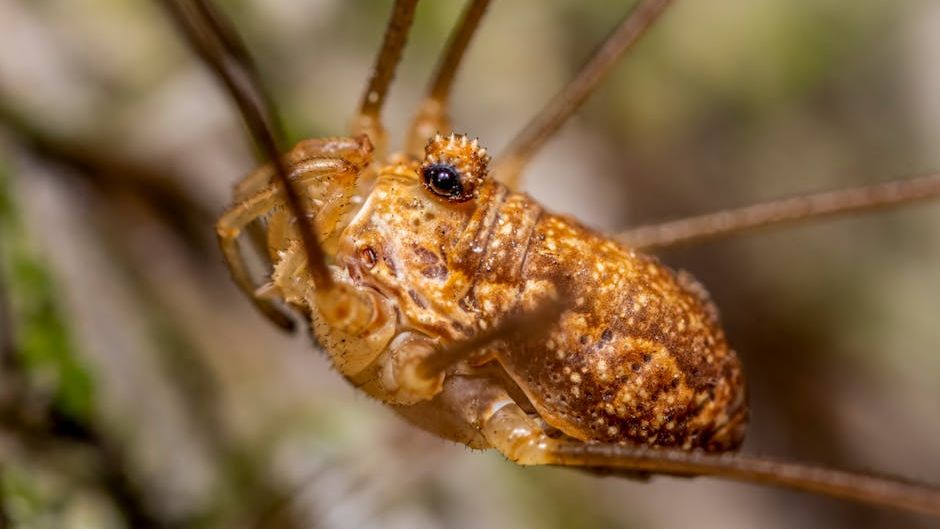
Something ancient and deeply strange has been quietly spreading , and almost nobody noticed. Hidden in plain sight among gardens, forests, and city parks, a group of spindly, alien-looking arachnids originally from far beyond European borders has been steadily making itself at home. This is not a horror movie plot. It’s real, it’s happening right now, and honestly, it’s kind of fascinating.
Harvestmen, those long-legged relatives of spiders that look like they belong in a sci-fi film, have long been a fixture of European ecosystems. Yet recent research is revealing that several exotic species have successfully colonized the continent in ways scientists are only just beginning to fully understand. Let’s dive in.
What Exactly Are Harvestmen and Why Should You Care?
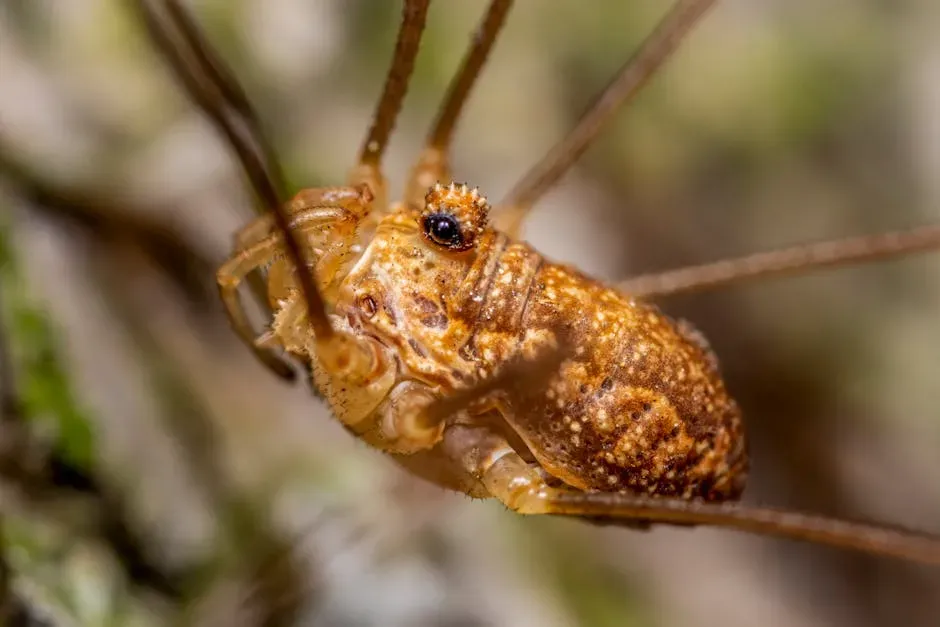
Let’s be real, most people have no idea what harvestmen actually are. They’re not spiders, even though they look eerily similar with their impossibly long, thread-like legs. They belong to the order Opiliones, a group of arachnids that has existed for hundreds of millions of years, making them one of the oldest land animal lineages on Earth.
Here’s the thing: they’re actually pretty harmless. They don’t produce venom, they don’t spin webs, and they’re not out to get you. They mostly feed on decaying organic matter, small insects, and fungi, playing a quiet but genuinely important role in soil ecosystems.
What makes them remarkable, beyond their unsettling appearance, is their incredible diversity. There are over six thousand known species worldwide, and scientists are still discovering new ones regularly. The fact that exotic species are now establishing themselves in Europe adds a whole new and slightly urgent dimension to that story.
The Exotic Species Making Waves in European Research
Recent findings have spotlighted several non-native harvestmen species that were not originally part of European biodiversity. These animals likely arrived through the global trade of ornamental plants, soil, and horticultural goods. It’s the same pathway that has introduced countless invasive insects and other invertebrates to new continents over the decades.
What’s surprising is how successfully some of these species have adapted. Rather than struggling in an unfamiliar climate, certain exotic harvestmen are not only surviving but actively reproducing and spreading across multiple countries.
Researchers studying these species have noted their presence in countries spanning Western and Central Europe, which suggests the colonization process is already well underway. The fact that they went largely unnoticed for so long is a testament to how overlooked these small creatures tend to be in mainstream ecological surveys.
Where These Exotic Species Originally Come From
Most of the exotic harvestmen now found in Europe trace their origins to East Asia and North America. These are regions with rich harvestmen diversity, where dozens of unique species evolved in completely different ecological conditions than those found in European habitats.
Think of it like introducing a plant species from the humid jungles of Southeast Asia into the mild, temperate forests of Germany. Some species simply can’t cope. Others, however, turn out to be remarkably adaptable, thriving in conditions that are different from but not entirely hostile to their natural preferences.
Some of the species identified in Europe are associated with human structures, greenhouses, and urban environments rather than wild natural spaces. That association with human activity is probably exactly what allowed them to hitch rides across oceans and establish footholds in new territories. It’s almost too clever, even if they’re doing it entirely by accident.
How Scientists Actually Found Them
Discovering exotic species in your own backyard sounds easier than it is. Harvestmen are small, nocturnal, and not exactly charismatic enough to attract the attention of casual wildlife observers. The research that brought these exotic European colonizers to light required a combination of detailed field surveys, museum specimen reviews, and modern genetic analysis.
DNA barcoding has been particularly transformative in this field. Traditional identification methods relied heavily on physical morphology, meaning the shape of body parts visible under a microscope. Two species that look almost identical might actually be completely distinct organisms, and without genetic tools, those distinctions would remain invisible.
Citizen science has also played a growing role. Platforms that allow everyday people to photograph and upload wildlife observations have quietly accumulated huge datasets of arachnid sightings . Researchers can now mine those records to track distribution patterns that would have been impossible to map through fieldwork alone. Honestly, it’s one of the more impressive success stories of amateur science contributing to real discoveries.
The Ecological Impact on Native European Species
Here’s where things get more complicated, and where the discovery shifts from purely fascinating to genuinely concerning. Whenever a non-native species establishes itself in a new ecosystem, questions about competition and displacement immediately follow.
Native European harvestmen species have evolved alongside specific predators, prey, and environmental conditions over enormous spans of time. An exotic species arriving without its natural predators from home essentially shows up with a competitive advantage that native species never had to deal with.
It’s hard to say for sure at this stage just how disruptive these exotic harvestmen will prove to be. Some invasive invertebrate introductions have had devastating effects on local fauna, while others have integrated into ecosystems without causing obvious harm. What researchers are emphasizing is that continued monitoring is critical, because the window for effective management tends to close quickly once a species becomes truly established.
The Role of Climate Change in Their Expansion
Climate change is not just warming the planet. It’s rewriting the rulebook on which species can survive where. For exotic harvestmen spreading through Europe, a gradually warming climate is essentially rolling out a welcome mat.
Species that might previously have struggled through cold Northern European winters are finding conditions increasingly hospitable. Range expansions that would have taken centuries under historical climate patterns can now happen within decades, or even faster. This acceleration fundamentally changes how conservation scientists need to approach the threat of biological invasions.
It’s worth noting that harvestmen as a group have survived some of Earth’s most dramatic climate shifts over geological time. Their resilience is baked into their evolutionary history. That’s part of what makes the combination of climate change and exotic species introduction so unpredictable. You’re essentially giving already-adaptable organisms an even more favorable playing field.
What This Means for Future Biodiversity Research in Europe
This discovery is a reminder of how much scientific attention gets focused on the charismatic megafauna, the wolves, the bears, the eagles, while entire communities of invertebrates shift and change almost invisibly beneath our notice. Harvestmen are just one corner of an enormous, under-monitored world of small creatures whose ecological roles matter enormously.
For researchers, the presence of exotic harvestmen in Europe underscores the need for expanded biosurveillance programs that include arachnids and other invertebrates as a priority rather than an afterthought. Early detection is far cheaper and more effective than trying to manage or reverse an established invasion.
On a broader level, this story also makes the case for continued investment in taxonomy, the science of identifying and classifying species. Without taxonomists who specialize in groups like Opiliones, exotic arrivals like these can go completely undetected for years, spreading quietly while the scientific community remains unaware they’ve even arrived.
Conclusion: A Tiny Discovery With Big Implications
It’s easy to dismiss a story about obscure, leggy arachnids as a niche concern for specialists. I think that would be a mistake. The arrival of exotic harvestmen in Europe is a small but vivid illustration of a much larger truth: globalization and climate change are reshaping biodiversity in ways that go far beyond the species we pay attention to.
The ecosystems we think we know are changing constantly, quietly, and at multiple scales simultaneously. These ancient creatures, survivors of mass extinctions and continental drift, are now navigating a world reshaped by human activity. There’s something almost poetic about that, even if the implications are deeply serious.
The next time you spot a spindly, long-legged figure creeping across your garden wall, take a second look. It might have traveled further than you think.
What do you think, should we be paying far more attention to the invisible invertebrate world shifting around us? Tell us in the comments.

- Urban Coyotes Show Remarkable Adaptability, Learning to Thrive in City Environments - July 22, 2026
- Beavers Are Nature’s Engineers, Creating Vital Habitats for Other Wildlife Species - July 21, 2026
- The Recovery of the California Condor Offers Hope for Other Critically Endangered Birds - July 21, 2026