

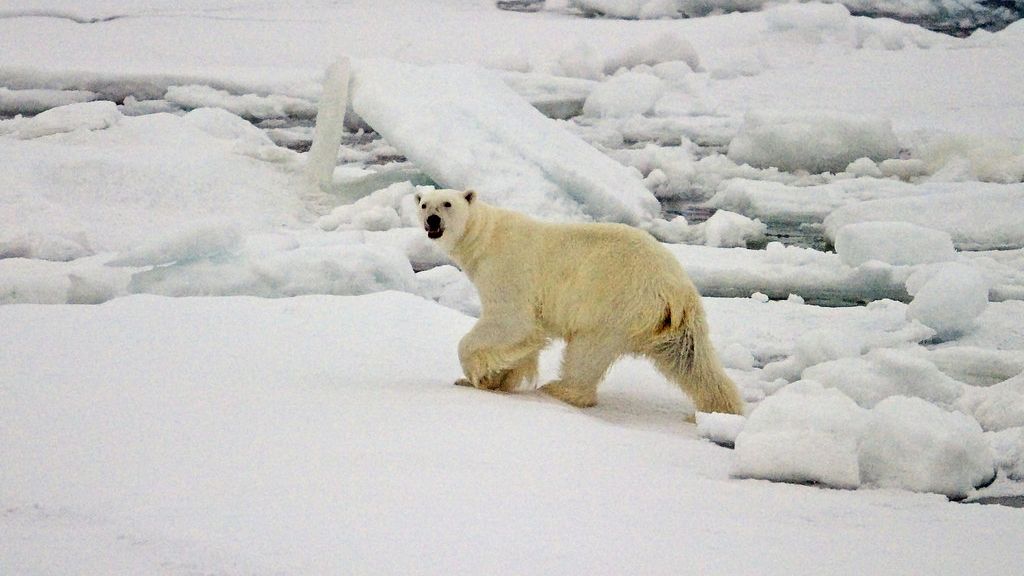
There’s something almost cinematic about a polar bear standing on a shrinking ice floe, staring out at open water. We’ve all seen that image. It’s become the face of climate change. But what if that image is only half the story?
Beneath the surface of what looks like a slow-motion extinction, something far more interesting might be happening. Polar bears could be doing what life has always done when pushed to the edge: adapt. Not metaphorically. Actually, biologically adapt. Let’s dive in.
A Species Facing Unprecedented Pressure
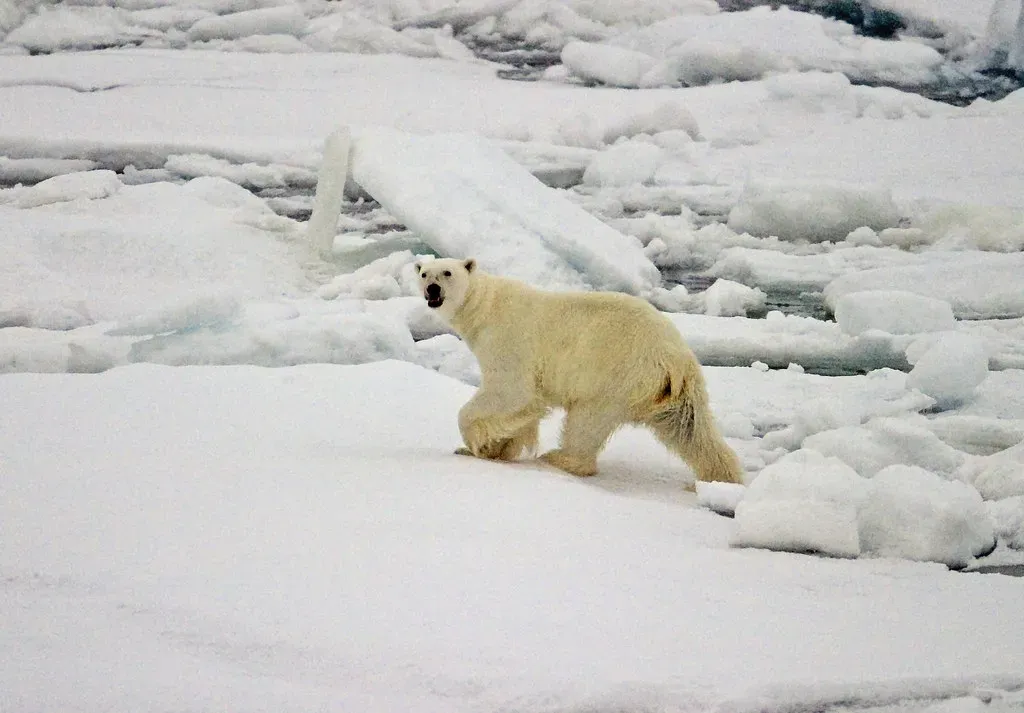
Let’s be real, the situation for polar bears is serious. Arctic sea ice is disappearing at a rate that has genuinely alarmed scientists, and polar bears depend on that ice to hunt ringed seals, their primary food source. Less ice means fewer hunting opportunities, and fewer hunting opportunities means thinner, weaker bears struggling to reproduce.
The population stress isn’t theoretical. Some subpopulations have shown declining body weights and lower cub survival rates over recent decades. It’s a pressure cooker situation, and historically, that’s exactly the kind of environment that forces evolutionary change. The question is whether bears can evolve fast enough to keep pace with the speed of climate change.
Signs of Behavioral Shifts Already Underway
Here’s the thing about evolution: it doesn’t always announce itself with a trumpet. Sometimes it starts with a quiet change in behavior. Scientists have observed polar bears in certain regions spending more time on land during ice-free months, scavenging on vegetation, bird eggs, and even whale carcasses washed ashore.
This isn’t just survival improvisation. Repeated behavioral shifts, especially those tied to survival outcomes, can become the raw material for natural selection over generations. If bears that successfully forage on land leave more offspring, those offspring may inherit both the tendency and the physical traits that make land-based feeding easier. It’s a slow process, but it’s a process.
The Grizzly Bear Connection and Hybrid Possibilities
Honestly, one of the most fascinating threads in this story is the polar bear’s relationship with its closest living relative: the grizzly bear. As the Arctic warms, grizzlies are pushing further north, and the two species are increasingly crossing paths and occasionally crossing something else too. Hybrid offspring, sometimes called “pizzly bears” or “grolar bears,” have been documented in the wild.
These hybrids are fertile, which is biologically significant. It means genes can flow between the two species. Some researchers believe that as this hybridization continues, certain grizzly traits, including adaptations for a more varied, land-based diet, could work their way into polar bear lineages. Think of it like genetic borrowing. Nature finds a workaround when the original design is struggling.
What the Fossil Record Tells Us About Past Adaptations
Polar bears are actually younger as a species than many people realize. Fossil and genetic evidence suggests they diverged from brown bears somewhere between one hundred thousand and several hundred thousand years ago, which is a geological blink of an eye. That means they evolved their entire suite of Arctic adaptations, including white fur, specialized fat-processing metabolism, and enormous paws for ice travel, relatively quickly in evolutionary terms.
That history matters. It suggests that polar bear lineages are not inherently slow to change. They’ve made dramatic physical transformations before under environmental pressure. Whether the current pace of climate change is too fast for even that level of evolutionary flexibility is the genuinely unsettling question that scientists are wrestling with right now.
The Role of Genetics in Rapid Adaptation
Modern genomic research has opened a window into how polar bears might respond at the genetic level. Studies examining polar bear DNA have identified specific genes linked to cardiovascular function and fat metabolism, traits critical for surviving on a high-fat seal diet in freezing temperatures. Some of these same gene variants have been found in ancient hybrid populations, suggesting gene flow between species has shaped polar bears before.
What’s particularly interesting is that genetic diversity within a population is essentially the toolkit for adaptation. Populations with higher diversity have more options to work with when conditions change. Some polar bear subpopulations, particularly those in the southern range like Hudson Bay, are already showing worrying signs of reduced genetic diversity, which could limit their adaptive potential at exactly the wrong moment.
Can They Really Adapt Fast Enough? The Hard Truth
Here’s where I have to be honest, because the optimistic framing can only go so far. Evolution typically operates over thousands of generations, and polar bears reproduce slowly. Females don’t reach sexual maturity until around five or six years old and typically raise only two cubs per litter every few years. That’s a painfully slow generational clock compared to the speed at which the Arctic is changing.
Some researchers are cautiously hopeful that behavioral plasticity, the ability to learn and change habits within a single lifetime rather than across generations, might buy the species meaningful time. Others are less convinced, arguing that no amount of dietary flexibility fully compensates for the loss of the ice platform that the species built its entire ecological identity around. It’s hard to say for sure which perspective will prove correct, and that uncertainty itself is uncomfortable.
Why This Story Matters Beyond Polar Bears
Polar bears have become a symbol, almost too much of one. Their plight has been politicized, simplified, and in some cases, weaponized on both sides of the climate debate. What gets lost in that noise is the genuinely extraordinary scientific story unfolding in real time, a large, slow-reproducing apex predator attempting to navigate one of the fastest environmental transformations in recorded history.
The lessons here echo far beyond the Arctic. Understanding how, or whether, polar bears can adapt gives scientists a framework for thinking about dozens of other species facing similar pressures. It forces us to ask harder questions about what “survival” actually means, whether a polar bear that survives by becoming something fundamentally different is still, in any meaningful sense, the same species we’re trying to protect. That question might not have a comfortable answer, but it’s worth sitting with.
Conclusion: Evolution Is Not a Rescue Plan
Polar bears are remarkable animals, and the science surrounding their potential evolution is genuinely compelling. There are real signs of behavioral adaptation, fascinating genetic dynamics, and a species history that suggests more flexibility than we might assume. That’s worth celebrating, intellectually at least.
Still, counting on evolution to solve a crisis driven by human activity is a dangerous kind of wishful thinking. Evolution is not a rescue plan. It’s a long game, measured in deep time, and we are moving in fast-forward. The most honest takeaway here might be this: polar bears may surprise us with their resilience, but that resilience should inspire urgency, not complacency. What do you think, are we asking too much of nature to fix what we broke?

- Urban Coyotes Show Remarkable Adaptability, Learning to Thrive in City Environments - July 22, 2026
- Beavers Are Nature’s Engineers, Creating Vital Habitats for Other Wildlife Species - July 21, 2026
- The Recovery of the California Condor Offers Hope for Other Critically Endangered Birds - July 21, 2026