

Urban environments were never designed with wildlife in mind. Yet animals have been quietly adapting to them for decades, and the changes happening now go far deeper than a fox raiding a trash can or a pigeon learning to wait at a crosswalk.
Researchers studying urban wildlife in 2026 are documenting something genuinely striking: city animals are not just tolerating human environments, they’re being reshaped by them. Behaviorally, physically, and even cognitively, the pressure of urban life is producing creatures that look and act quite differently from their rural counterparts. The science behind this shift is worth paying close attention to.
The Urban Environment as an Accelerated Pressure Cooker
Cities create an unusually intense set of pressures. Noise, artificial light, dense human activity, and novel food sources all push animals to adapt far faster than natural environments typically demand. In ecological terms, this kind of rapid selection is rare. It normally takes thousands of years. Urban life can compress that timeline dramatically.
Studies across multiple continents have documented animals adjusting their behavior within just a few generations. Birds singing at higher pitches to cut through traffic noise, rodents developing broader dietary tolerance, and insects shifting their activity patterns around artificial lighting are all documented examples. The city doesn’t wait for evolution to catch up slowly; it demands quick flexibility or elimination.
Bolder, Braver, and Less Afraid of People
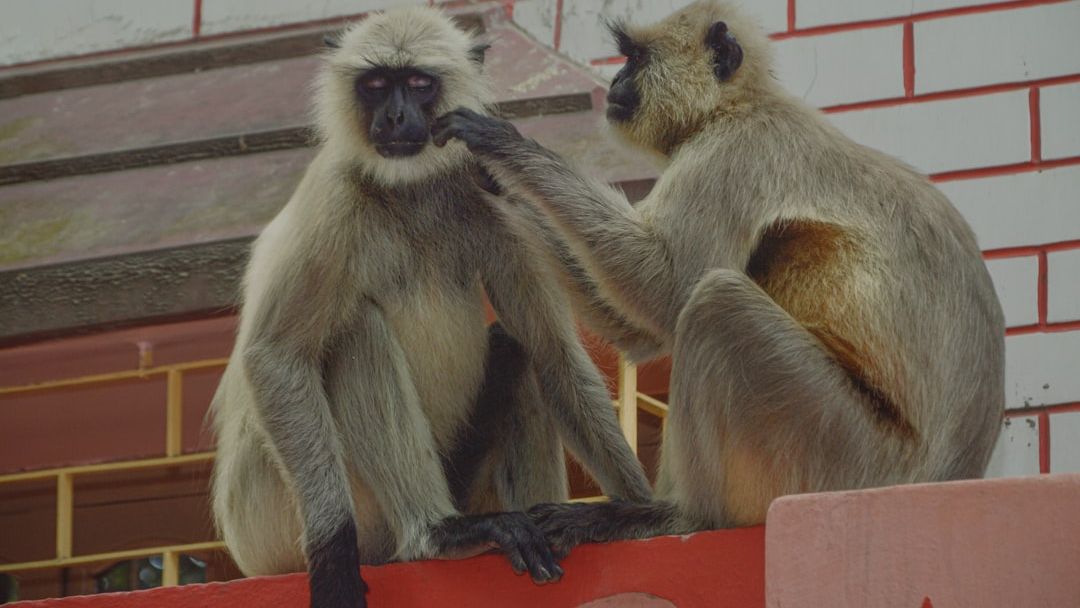
One of the most consistently observed changes in urban wildlife is a reduction in fear of humans. Animals in cities tend to have much shorter flight-initiation distances, meaning they allow people to approach far closer before fleeing. Coyotes in North American cities, crows across European capitals, and macaques in Southeast Asian urban zones have all shown this pattern clearly.
This isn’t simply familiarity. Research suggests that animals with a genetic predisposition toward lower stress responses in the presence of humans survive better in cities and pass those traits on. Over time, urban populations skew toward the bold. It’s a form of unintentional selective breeding, driven entirely by the structure of city life itself.
Brains Are Changing Too
Cognitive flexibility appears to be one of the key traits cities select for. Animals that can problem-solve, learn new behaviors quickly, and generalize skills across unfamiliar situations do much better in urban environments. Research on birds has found that urban populations consistently outperform rural populations on tasks requiring innovation and learning.
There is some evidence that brain structures are actually shifting in certain species. Urban great tits in Europe, for instance, have shown differences in brain region proportions compared to forest-dwelling populations. The hippocampus, involved in spatial memory and navigation, appears to respond to the complexity of urban landscapes. Cities are, in a very real sense, selecting for smarter animals.
Physical Changes That Are Visible to the Naked Eye
Behavioral shifts get most of the attention, but the physical changes happening in urban wildlife populations are equally fascinating. Urban animals of several species have been documented with different limb proportions, altered coloration, and changes in body size compared to rural relatives. White-footed mice in New York City parks have shown measurable skull shape changes linked to dietary differences. Lizards in urban areas of Puerto Rico developed larger toe pads within just a few decades, helping them grip smooth human-made surfaces.
These aren’t gradual background shifts. They’re occurring over timescales of tens of generations rather than thousands. It’s a vivid demonstration that evolution isn’t always a slow, invisible process. Given the right pressure, it can produce visible results within a human lifetime.
The Role of Light, Noise, and Constant Stimulation
Artificial light at night disrupts the biological clocks of many species more profoundly than researchers initially appreciated. Birds sing earlier in spring in brightly lit urban areas. Insects cluster around artificial lights in ways that alter their reproduction and survival. Even the timing of mammal activity shifts, with some nocturnal species becoming more diurnal in cities where nighttime human presence keeps them on edge.
Chronic noise pollution adds another layer. Animals relying on acoustic signals for mating, territory defense, or predator detection face real problems in a city soundscape. Some adapt by changing call frequency or timing. Others struggle and decline. What’s becoming clear is that light and noise together create a sensory environment that is genuinely alien to most wildlife, and the species navigating it successfully are doing something remarkable.
Winners, Losers, and the Species Left Behind
Not every animal benefits from urban adaptation. For every crow or raccoon thriving in city conditions, there are dozens of specialist species that simply cannot cope with the transformation of habitat. Urban ecology is not a universal success story. It produces winners and losers, and the losers often disappear quietly, with little public notice.
The species doing well in cities tend to share certain traits: broad diets, high reproductive rates, flexible behavior, and social tolerance of humans. Those with narrow habitat requirements, low reproductive rates, or highly specific feeding needs tend to vanish as cities expand. This creates a troubling homogenization of urban wildlife globally. Cities on different continents increasingly host the same handful of adaptable generalist species, while local specialists fade out.
What Urban Wildlife Is Teaching Scientists About Evolution Itself
Cities have become something unexpected in the scientific world: natural laboratories for studying rapid evolution in real time. The scale and pace of urban change forces adaptation responses that would otherwise take far longer to observe, and researchers can study them in accessible, well-documented environments rather than remote wilderness areas.
This has genuine implications beyond wildlife management. Understanding how populations respond to sudden environmental pressure, which traits get selected, and how quickly genetic change can follow behavioral change, all of this has relevance for conservation biology, climate adaptation research, and our broader understanding of evolutionary mechanics. Urban animals, unglamorous as they often seem, are quietly rewriting parts of the textbook.
Conclusion
There’s something both humbling and thought-provoking about the fact that cities, built entirely to serve human needs, are simultaneously running an unplanned experiment in accelerated evolution. The animals adapting to urban environments aren’t doing so because we invited them. They’re doing it because they have no other option, and the ones succeeding are genuinely changing as a result.
If anything, urban wildlife research is a reminder that nature doesn’t wait for permission. It bends, adjusts, and finds a foothold wherever the conditions allow. The bolder coyote, the problem-solving crow, the lizard with enlarged toe pads: these creatures are not anomalies. They are early signals of something much larger. Paying attention to them might be one of the more important things ecology does in the decades ahead.

- Urban Coyotes Show Remarkable Adaptability, Learning to Thrive in City Environments - July 22, 2026
- Beavers Are Nature’s Engineers, Creating Vital Habitats for Other Wildlife Species - July 21, 2026
- The Recovery of the California Condor Offers Hope for Other Critically Endangered Birds - July 21, 2026