

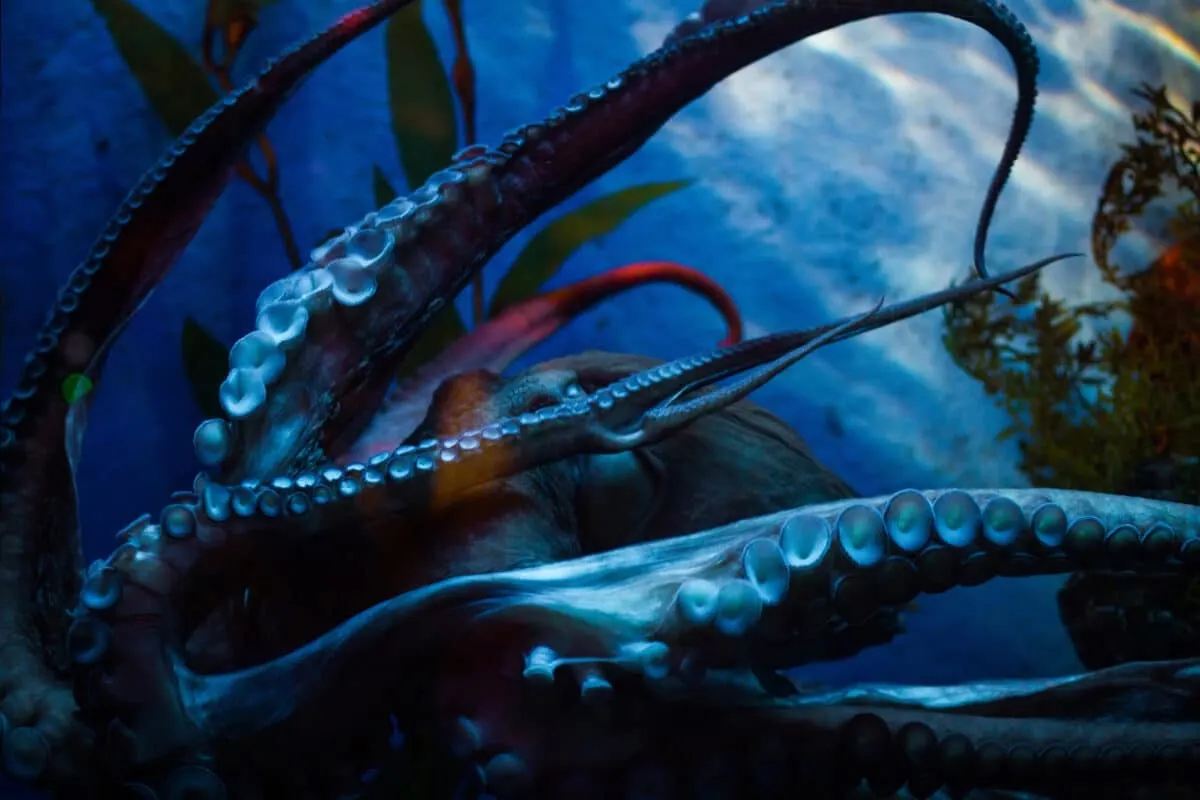
Long before humans imagined the mythical Kraken lurking beneath dark ocean waves, something far more astonishing may have actually existed. New research reveals that enormous octopus-like creatures—stretching up to an incredible 62 feet—once dominated Earth’s oceans during the age of the dinosaurs, rewriting what scientists thought they knew about prehistoric marine life.
For decades, the spotlight has been on massive marine reptiles like mosasaurs as the undisputed rulers of ancient seas. But this discovery flips that narrative. Evidence now suggests that soft-bodied, highly intelligent cephalopods were not just present—they may have been among the most formidable apex predators of their time.
Fossil Clues Reveal a Hidden Ocean Giant
The breakthrough comes from a detailed analysis of fossilized octopus beaks—rare remnants of creatures that typically leave little trace behind. Scientists examined 27 such fossils, uncovering patterns that pointed to previously unrecognized giant species.
These remains belong to ancient finned octopuses, including species now identified as Nanaimoteuthis haggarti, which may have reached lengths of up to 62 feet.
Because octopuses lack hard skeletons, their fossil record is sparse. That makes these beaks invaluable, offering one of the clearest windows yet into a hidden world of giant invertebrate predators.
Apex Predators of the Cretaceous Seas
The findings challenge a long-standing assumption that only vertebrates—like sharks and marine reptiles—sat at the top of the food chain during the Cretaceous period.
Instead, these colossal octopuses appear to have rivaled or even surpassed traditional predators. Their size, combined with powerful feeding tools, suggests they occupied a dominant ecological role.
Scientists now believe these creatures hunted actively in open oceans, competing with—and possibly preying upon—other large marine animals.
Bone Crushing Beaks and Deadly Precision
What truly sets these ancient octopuses apart is the evidence of their feeding behavior. The fossilized beaks show significant wear and damage, indicating repeated contact with hard materials like shells and bones.
This suggests a diet that included heavily armored or skeletal prey—far more challenging than the soft-bodied animals many modern octopuses consume.
Armed with powerful jaws and long, flexible arms, these creatures likely seized prey and crushed it with remarkable force, making them efficient and deadly hunters.
Intelligence in the Deep Past
Modern octopuses are among the most intelligent invertebrates on Earth, known for problem-solving, camouflage, and complex behavior. Evidence hints that their ancient relatives may have shared similar traits.
Researchers observed asymmetrical wear on some fossil beaks, suggesting a kind of “handedness”—a preference for using certain arms over others.
This subtle clue points to advanced motor control and behavioral complexity, reinforcing the idea that intelligence in cephalopods has deep evolutionary roots.
Why These Giants Remained Hidden for So Long
One of the most fascinating aspects of this discovery is how long these creatures went unnoticed in the fossil record. The answer lies in their biology.
Unlike bones or shells, soft tissues decay quickly and rarely fossilize. Only the chitinous beaks survived, scattered and often misidentified in geological deposits.
It is only with modern techniques and careful reanalysis that scientists have been able to piece together the true scale and significance of these ancient predators.
A New Chapter in the Story of Ancient Ocean Life
This discovery forces a major rethink of prehistoric ecosystems. The idea that giant invertebrates could dominate alongside—or even over—vertebrate predators adds a new layer of complexity to the evolution of life in Earth’s oceans.
In my view, this is one of those rare findings that doesn’t just fill a gap in knowledge—it reshapes the entire picture. The Kraken, long dismissed as myth, now feels less like fantasy and more like a distorted memory of a very real past. And if such massive, intelligent creatures could remain hidden in the fossil record for so long, it raises an unsettling possibility—how much of Earth’s history is still waiting to be rediscovered beneath the surface?

- Urban Coyotes Show Remarkable Adaptability, Learning to Thrive in City Environments - July 22, 2026
- Beavers Are Nature’s Engineers, Creating Vital Habitats for Other Wildlife Species - July 21, 2026
- The Recovery of the California Condor Offers Hope for Other Critically Endangered Birds - July 21, 2026