

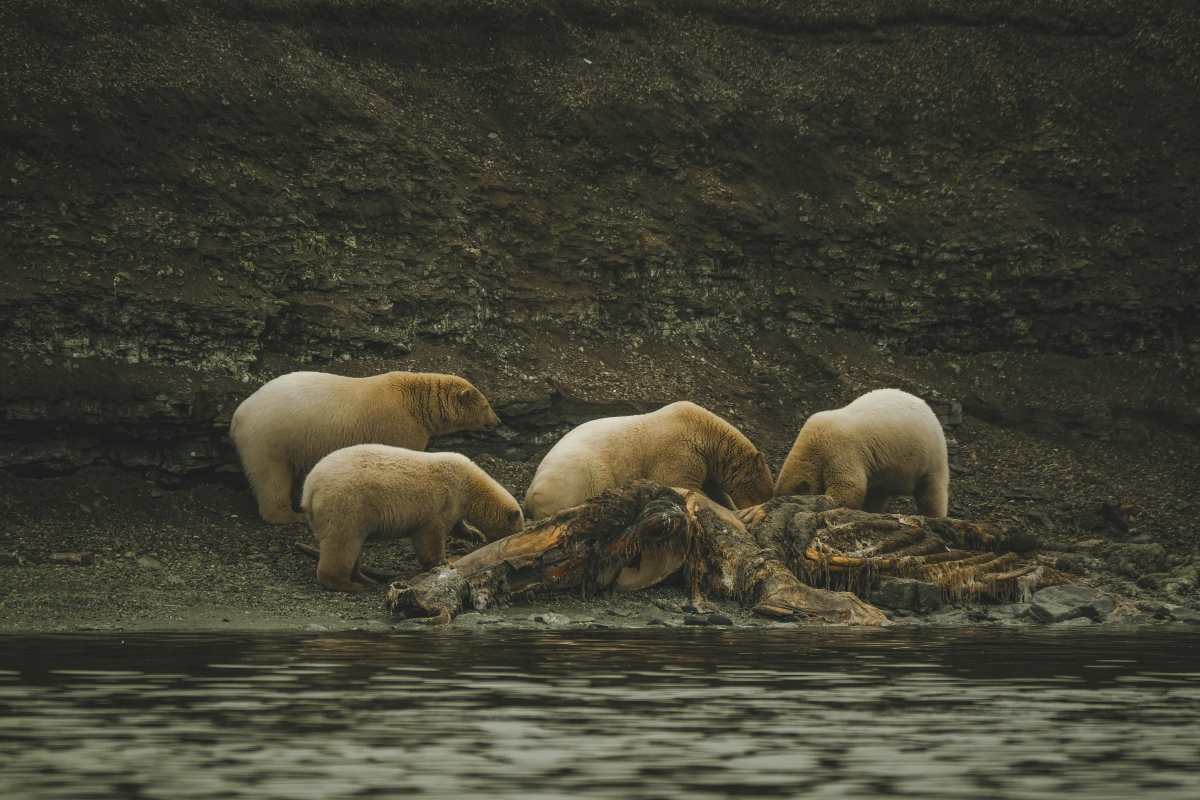
Recent studies reveal a surprising increase in Polar bear’s consumption of whale carcasses, a behavior that underscores the profound impact of melting sea ice and warming temperatures. This phenomenon is not just about survival but also serves as a stark reminder of the cascading consequences of climate change on Arctic ecosystems.
The Changing Arctic Landscape

🔥 Would you like to save this?
We'll email this post to you, so you can come back to it later!
Climate change is reshaping the Arctic at an unprecedented rate. Rising temperatures and melting sea ice are altering habitats, forcing polar bears and other species to adapt to new realities.
Polar Bears’ Dietary Adaptability

🔥 Would you like to save this?
We'll email this post to you, so you can come back to it later!
Polar bears, traditionally dependent on seals, have demonstrated remarkable flexibility in their diets. The recent shift to consuming whale carcasses highlights their ability to exploit available resources in the face of scarcity.
Tracking Polar Bear Diets

🔥 Would you like to save this?
We'll email this post to you, so you can come back to it later!
Scientists are using innovative methods like fatty acid analysis to track changes in polar bear diets. These analyses act as dietary fingerprints, revealing not only what the bears are eating but also how their food sources are shifting.
Whales in the Arctic Ecosystem

🔥 Would you like to save this?
We'll email this post to you, so you can come back to it later!
Whales, particularly bowhead whales, are becoming an increasingly significant part of polar bears’ diets. This shift suggests changes in whale migration patterns, likely driven by warming waters and diminishing ice.
The Role of Sea Ice

🔥 Would you like to save this?
We'll email this post to you, so you can come back to it later!
Sea ice is critical for polar bear hunting. Its loss has forced bears to hunt less efficiently or shift their focus to alternative prey, significantly altering their feeding behaviors.
The Impact on Prey Populations

🔥 Would you like to save this?
We'll email this post to you, so you can come back to it later!
The increased predation on whales and seals by polar bears is placing additional pressure on these populations, creating new challenges for Arctic marine ecosystems.
Nutritional Challenges

🔥 Would you like to save this?
We'll email this post to you, so you can come back to it later!
While polar bears are adapting, the new food sources do not fully meet their caloric needs. This dietary insufficiency leads to weight loss, nutritional stress, and increased mortality rates.
Long-Term Ecological Consequences

🔥 Would you like to save this?
We'll email this post to you, so you can come back to it later!
The dietary shifts in polar bears signal broader ecological changes. These shifts could trigger cascading effects, disrupting the delicate balance of Arctic ecosystems.
Monitoring Seasonal Changes

Image by Alexey_Seafarer on depositphotos.
🔥 Would you like to save this?
We'll email this post to you, so you can come back to it later!
By tracking the seasonal diets of polar bears, scientists gain valuable insights into the distribution and behavior of marine mammals, helping to predict future ecological trends.
Insights from the American Museum of Natural History

🔥 Would you like to save this?
We'll email this post to you, so you can come back to it later!
Studies from leading institutions highlight the dire implications of reduced nutrition for polar bears, including population declines and increased mortality rates.
Implications for Conservation

🔥 Would you like to save this?
We'll email this post to you, so you can come back to it later!
The changes in polar bear diets underscore the urgent need for conservation efforts. Protecting Arctic habitats and mitigating climate change are critical to ensuring the survival of these iconic predators.
A Call to Action

🔥 Would you like to save this?
We'll email this post to you, so you can come back to it later!
As polar bears adapt to a warming world, their struggles serve as a stark warning. Addressing climate change is not just about saving one species; it’s about preserving an entire ecosystem and the planet we all share.

For any feedback please message Feedback@animalsaroundtheglobe.com
- 10 Facts onMiniature Teacup Poodles - November 4, 2026
- The 12 Ugliest-Looking Animals Ever - October 29, 2026
- The Secrets of the Adorable Baby Squirrels - October 14, 2026