

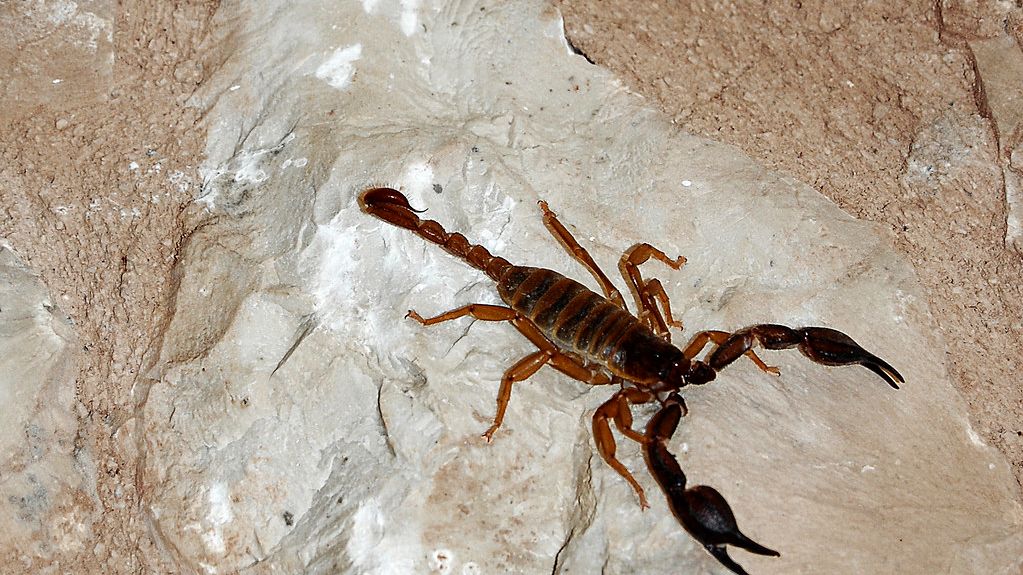
Researchers have uncovered intricate patterns of metal reinforcement in scorpions’ pincers and stingers, showing how these arachnids allocate resources like zinc, iron, and manganese based on their predatory tactics. The findings, drawn from an analysis of 18 species, demonstrate that metals concentrate in high-stress areas to boost durability without adding bulk. This work expands prior knowledge of bio-mineralization in arthropods and highlights evolutionary trade-offs in weapon design.[1][2]
Localized Fortifications Enhance Key Strike Zones
Scorpions fortify only the most critical parts of their weapons, leaving the rest of the structures unenhanced. In stingers, zinc gathers at the needle-like tip used for piercing prey or foes. Just beneath lies a distinct layer rich in manganese, creating a sharp boundary visible under advanced imaging.[1]
This layered approach resembles engineered composites, where each metal contributes specific properties. Iron, meanwhile, appears exclusively in pincers, blending with zinc along the cutting edges of the movable outer segment, known as the tarsus. Such precision ensures the weapons withstand repeated impacts, vital since adult scorpions cannot regenerate lost parts.[2]
Across the studied species, these patterns held consistent, suggesting a conserved mechanism refined over 450 million years of evolution.
Stingers Tuned for Piercing Power
Stingers showed uniform enrichment in 12 of the 18 species examined. Zinc dominated the aculeus tip, the piercing point, while manganese filled the subaculear region below. For instance, in the emperor scorpion (Pandinus imperator), imaging revealed zinc concentrated outward and manganese inward, separated by a clear line.[1]
“It really kind of looks like a layered popsicle,” noted Edward Vicenzi, a research scientist at the Smithsonian’s Museum Conservation Institute and co-author of the study. This setup likely aids penetration and resilience during venom delivery, a costly process scorpions aim to protect.
Species like the African fattail scorpion (Androctonus amoreuxi) exemplified this, with potent venom pairing well with a metal-sharpened stinger for quick subduing of prey.
Pincers Adapted for Grasping and Crushing
Pincers displayed their own specialization. Zinc appeared alone or combined with iron in the tooth-like inner edges, regions bearing the brunt of prey capture. Burrowing species such as the black-legged scorpion (Opistophthalmus fuscipes) featured robust claws reinforced for digging and crushing, relying less on venom.[1]
In contrast, an Australian spider-hunting scorpion from the Isometroides genus had slender pincers with sensory hairs and metal edges for rapid, precise grabs. Surprisingly, weaker, elongated pincers often held more zinc than bulky crushers, hinting at a focus on durability over raw strength.[2]
| Weapon Part | Primary Metals | Typical Location |
|---|---|---|
| Stinger Tip | Zinc | Aculeus (piercing point) |
| Stinger Base | Manganese | Below tip |
| Pincer Edge | Zinc + Iron | Tarsus cutting surface |
Trade-Offs Reflect Hunting Preferences
A key insight emerged from comparing species: those prioritizing stingers showed higher zinc there but less in pincers, and vice versa. “Scorpions that invest heavily in zinc for their stinger generally have lower zinc levels in their claws, and vice versa,” Vicenzi explained, pointing to resource allocation trade-offs.[1]
This aligns with observed behaviors. Venom-dependent hunters like fattail scorpions (Androctonus spp.) emphasize stinger metals, while pincer specialists invest in claws. The pattern held even after accounting for evolutionary relationships, strengthening the link to ecology.[3]
Such adaptations allow diverse strategies within the roughly 3,000 scorpion species, from venom strikes to mechanical overpowering.
Advanced Tools Unlock Hidden Details
The team employed micro X-ray fluorescence and electron microscopy on specimens from the National Museum of Natural History’s collection. Lasers finer than a human hair mapped metals at microscopic scales, revealing distributions invisible to earlier methods.[2]
Senior author Hannah Wood, curator of arachnids, credited the museum’s resources: “The National Museum of Natural History’s large scorpion collection allowed us to analyze metal enrichment in a wide range of scorpion species, more than have ever been studied before using these techniques.” Published April 28 in the Journal of the Royal Society Interface, the study sets a template for examining other arthropods.[1]
What matters now: These findings challenge assumptions about zinc’s role, suggesting it bolsters durability in fast-action weapons. Future work could test mechanical properties directly.
This research not only demystifies scorpions’ formidable arsenal but also underscores nature’s ingenuity in lightweight, high-performance materials. As tools improve, scientists may trace similar innovations across the tree of life, revealing how ancient predators thrived through clever chemistry.

- Urban Coyotes Show Remarkable Adaptability, Learning to Thrive in City Environments - July 22, 2026
- Beavers Are Nature’s Engineers, Creating Vital Habitats for Other Wildlife Species - July 21, 2026
- The Recovery of the California Condor Offers Hope for Other Critically Endangered Birds - July 21, 2026