

In the vast, seemingly featureless expanse of the ocean, sea turtles embark on some of the most remarkable journeys in the animal kingdom. From the moment they hatch on sandy beaches and scramble toward the water, these ancient mariners navigate thousands of miles of open ocean, often returning with astonishing precision to the very beaches where they began life. For decades, this navigational prowess puzzled scientists—how do these creatures find their way across the trackless sea? Compelling evidence now suggests that sea turtles possess a sophisticated natural GPS system: they can detect and use Earth’s magnetic field to navigate the world’s oceans. This extraordinary ability allows them to perform feats of navigation that would challenge even our most advanced technologies, enabling these endangered animals to complete their life cycles despite increasing environmental challenges.
The Mystery of Sea Turtle Navigation

The navigational abilities of sea turtles have long fascinated biologists and marine ecologists. These reptiles undertake some of the longest migrations in the animal kingdom, with some species traveling more than 10,000 miles between feeding and nesting grounds. Loggerhead turtles born on beaches in Florida may travel throughout the North Atlantic Ocean before returning to nest on the same stretch of coastline where they hatched decades earlier. Green turtles famously migrate between feeding grounds off Brazil and nesting beaches on Ascension Island—a tiny speck of land in the middle of the Atlantic Ocean. The precision of these journeys raises fundamental questions about how these animals navigate without visible landmarks, compasses, or maps. Understanding this navigational system is not merely an academic curiosity but essential knowledge for conservation efforts aimed at protecting these endangered species.
The Earth’s Magnetic Field Explained

To understand how sea turtles might navigate using Earth’s magnetic field, we need to grasp what this field actually is. Our planet generates a magnetic field through the movement of molten iron in its outer core, creating what scientists call a geodynamo. This magnetic field extends from Earth’s interior out into space, forming a protective bubble against solar radiation and creating a natural force that makes compasses point north. Importantly, the magnetic field varies across Earth’s surface, creating a pattern of different intensities and inclination angles (the angle at which magnetic field lines intersect Earth’s surface). These variations create a kind of magnetic map that covers the entire planet. The magnetic field’s characteristics at any given location are unique—like magnetic “signatures” or “fingerprints”—potentially providing navigational information to animals sensitive enough to detect them.
Evidence for Magnetic Sensing in Sea Turtles

Scientific evidence supporting the theory that sea turtles use magnetic fields for navigation has accumulated steadily over recent decades. Laboratory experiments have demonstrated that hatchling loggerhead turtles alter their swimming direction in response to changes in the magnetic field around them. When exposed to magnetic fields mimicking those found at different locations along their migratory route, the turtles change course accordingly, orienting themselves as they would need to in the wild to stay on their natural path. Field studies tracking sea turtles with satellite tags have shown correlations between their movement patterns and magnetic field features. Further evidence comes from genetic studies revealing that loggerhead turtle populations nesting on Florida’s east coast show patterns of connectivity that correspond to areas with similar magnetic signatures, suggesting that magnetic imprinting may influence where turtles return to nest. These multiple lines of evidence have convinced many scientists that magnetic sensing plays a crucial role in sea turtle navigation.
The Mechanism of Magnetic Detection
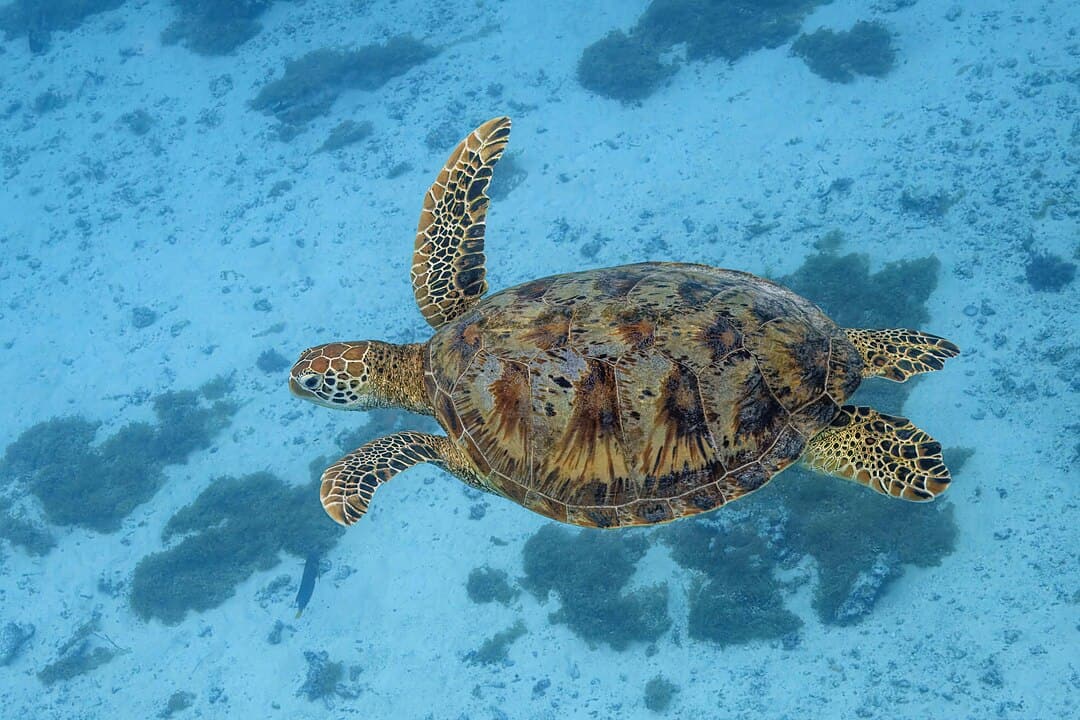
While scientists are confident that sea turtles can detect magnetic fields, the precise biological mechanism remains somewhat mysterious. The leading hypothesis involves magnetite, a naturally magnetic mineral found in small amounts in the tissues of many animals, including sea turtles. These microscopic particles could potentially act as tiny compasses, physically rotating in response to magnetic fields and triggering nerve signals. Another possibility involves specialized photoreceptors in the eyes that might detect magnetic fields through quantum mechanical effects. Some research suggests that the ability to sense magnetic fields might be linked to the pineal gland, which regulates melatonin and helps maintain circadian rhythms. Regardless of the exact mechanism, the ability appears to be innate rather than learned, as even hatchling turtles that have never been in the ocean demonstrate magnetic orientation abilities. The biological compass of sea turtles represents a remarkable example of evolution producing sensory capabilities beyond human perception.
Magnetic Maps and Navigational Waypoints

Sea turtles appear to use the Earth’s magnetic field in two fundamental ways: as a compass and as a map. The compass sense allows turtles to determine direction—which way is north, south, east, or west—enabling them to maintain a consistent heading. More remarkably, research suggests they also possess a magnetic map sense that allows them to determine their position based on the unique magnetic signatures of different geographic locations. These signatures arise from variations in field intensity and inclination angle across the globe. Studies show that when juvenile loggerhead turtles are exposed to magnetic fields mimicking those found at the northern and southern boundaries of their migratory route, they swim in directions that would, in the wild, keep them within their normal oceanic gyre pathway. This indicates they can use magnetic information not just to determine direction but also to recognize their geographic location—effectively identifying magnetic “waypoints” that guide their transoceanic journeys.
Magnetic Imprinting and Natal Homing

One of the most remarkable aspects of sea turtle behavior is natal homing—the ability to return to their birthplace to reproduce after decades at sea. Scientists believe this involves a process called magnetic imprinting, where turtles memorize the unique magnetic signature of their natal beach when they first emerge as hatchlings. This magnetic memory may be established during a critical period in early development, creating a permanent record of “home” in the turtle’s brain. Evidence for this theory comes from observations that sea turtles tend to nest on beaches with similar magnetic signatures to their birthplaces, even when those beaches are geographically distant. When Earth’s magnetic field gradually shifts over time (a natural phenomenon called secular variation), nesting patterns of sea turtles appear to shift correspondingly, following the magnetic signatures rather than the physical locations. This magnetic imprinting hypothesis helps explain how sea turtles maintain their remarkable fidelity to nesting beaches across generations despite spending most of their lives in the open ocean.
Challenging Traditional Navigation Models

The discovery that sea turtles navigate using Earth’s magnetic field has revolutionized our understanding of animal navigation. Traditional models often emphasized celestial navigation (using the sun, moon, and stars), visual landmarks, or chemical cues like ocean smells. While these factors may still play supplementary roles, magnetic navigation appears to be the primary mechanism underlying long-distance sea turtle movements. This magnetic navigation system enables a level of global positioning that was previously thought impossible without human technology. Unlike stars or sunlight, magnetic fields remain detectable regardless of weather conditions, time of day, or depth below the water surface. The magnetic navigation hypothesis also resolves the puzzle of how turtles locate tiny islands in vast oceans—they’re essentially following magnetic signposts invisible to humans. This discovery represents a paradigm shift in our understanding of animal navigation and highlights how evolutionary processes can produce sensory capabilities that match or exceed human technological achievements.
Challenges to Magnetic Navigation

Despite its effectiveness, magnetic navigation faces several natural and human-created challenges. The Earth’s magnetic field isn’t static—it gradually shifts over time in a phenomenon known as secular variation. These shifts mean that the magnetic “address” of a location changes slightly from generation to generation, potentially creating navigation errors. Additionally, magnetic anomalies—localized variations in the magnetic field caused by mineral deposits or geological features—can create confusing signals. Human activities introduce further complications. Electromagnetic pollution from undersea cables, power plants, and other infrastructure may disrupt magnetic sensing. Climate change potentially compounds these problems by altering ocean currents that normally help keep turtles on course. Perhaps most concerningly, some scientists theorize that periodic geomagnetic reversals—when Earth’s magnetic poles completely flip—could catastrophically impact magnetically navigating species. Understanding these challenges is crucial for predicting how sea turtle populations might respond to changing environmental conditions and human impacts.
Research Techniques and Technological Advances

Studying how sea turtles perceive and use magnetic fields presents unique challenges that have driven innovative research approaches. Early experiments involved placing hatchlings in water-filled arenas surrounded by magnetic coil systems that could precisely manipulate the surrounding magnetic field. More recently, researchers have employed satellite tracking technology to follow turtles in the wild, correlating their movements with magnetic field characteristics. Advanced data-logging devices attached to turtles now measure not just location but also orientation, swimming speed, and depth, providing multi-dimensional datasets to analyze navigational behavior. Genetic techniques have revealed population structures that correspond to magnetic field features, further supporting the magnetic navigation hypothesis. Neurobiological approaches, including magnetic resonance imaging (MRI) studies, are beginning to identify the brain structures involved in magnetic perception. Perhaps most exciting is the development of “magnetic displacement” experiments, where researchers capture turtles, transport them to different locations, and observe how well they correct their course—directly testing their navigational abilities in natural settings. These multidisciplinary approaches continue to refine our understanding of this remarkable sensory system.
Other Magnetically Navigating Species

Sea turtles are far from alone in their ability to detect Earth’s magnetic field. A diverse array of animals appears to possess magnetic sensing capabilities, suggesting this adaptation has evolved independently multiple times. Birds, particularly migratory species like European robins, demonstrate well-documented magnetic orientation abilities that help them navigate seasonal migrations. Salmon use magnetic navigation to find their way back to their natal streams after years at sea, similar to sea turtles returning to nesting beaches. Even invertebrates show magnetic sensitivities—lobsters can orient using magnetic cues, while bees use magnetic fields to improve their directional communication through dance language. Among mammals, research suggests that whales, bats, and even some rodents may use magnetic information for navigation. Perhaps most surprisingly, recent studies indicate that some mammals—including dogs and potentially humans—might possess vestigial magnetic sensing abilities, though these are much less developed than in specialized navigators like sea turtles. This widespread distribution of magnetic sensing across the animal kingdom highlights its evolutionary importance as a navigation strategy in a world where finding your way can mean the difference between life and death.
Conservation Implications

Understanding sea turtles’ magnetic navigation capabilities has profound implications for conservation efforts. All seven species of sea turtles are threatened or endangered, facing multiple human-caused threats including habitat destruction, fisheries bycatch, pollution, and climate change. Knowledge about magnetic navigation informs better protection strategies for these vulnerable animals. For instance, conservation planners now recognize that protecting only the physical beaches where turtles currently nest may be insufficient if the magnetic signatures of those beaches change—protection efforts may need to anticipate shifts in nesting locations that follow magnetic, rather than geographic, patterns. Similarly, understanding how artificial light pollution disrupts hatchlings’ ability to find the sea helps develop more effective lighting ordinances for coastal communities. The discovery that electromagnetic fields from undersea cables and marine infrastructure might interfere with turtle navigation raises new concerns about coastal development impacts. Perhaps most importantly, this knowledge emphasizes the need to protect entire migratory corridors and developmental habitats, not just nesting beaches, as disruptions anywhere along their magnetically guided routes could impact population viability.
Future Research Directions

While significant progress has been made in understanding sea turtles’ magnetic navigation, many questions remain unanswered. Future research will likely focus on several key areas. Neurobiologists are working to identify the specific cells and neural pathways involved in magnetic field detection, potentially revealing a entirely new sensory system. Behavioral ecologists continue to investigate how turtles integrate magnetic information with other navigational cues like ocean currents, celestial information, and waterborne odors. Long-term studies are needed to determine how sea turtles might adapt to the gradual shifts in Earth’s magnetic field over time. There’s also growing interest in how climate change might affect magnetic navigation by altering ocean circulation patterns that interact with turtles’ magnetic maps. Technological developments in animal tracking and remote sensing promise more detailed data on how turtles navigate in the wild. Perhaps most urgently, researchers are investigating how electromagnetic pollution from human sources might interfere with this ancient navigational system. These questions represent not just scientific curiosities but essential knowledge for ensuring the survival of these magnificent marine reptiles in an increasingly human-dominated world.
Conclusion

The discovery that sea turtles navigate using Earth’s magnetic field represents one of the most fascinating insights into animal behavior of recent decades. This remarkable ability enables these ancient mariners to cross vast oceans, maintain themselves within favorable habitats, and return to their birthplaces with extraordinary precision—all without maps, compasses, or GPS technology. As we continue to unravel the mysteries of magnetic navigation, we gain not just scientific knowledge but also crucial insights for conservation efforts aimed at protecting these endangered species. The magnetic navigation abilities of sea turtles remind us that the natural world contains sensory capabilities and adaptations that often exceed human perception, evolved over millions of years to solve ecological challenges. In an age where human activities increasingly threaten marine ecosystems, understanding and preserving the environmental conditions that allow these magnetic navigators to thrive becomes not just a scientific imperative but an ethical one as well.

- The Secret Language of Dolphins Decoded by Researchers - July 20, 2026
- 7 Animals That Can Survive Extreme Environments You Couldn’t - July 20, 2026
- The Longest Snake Ever Found in the U.S. - July 20, 2026