

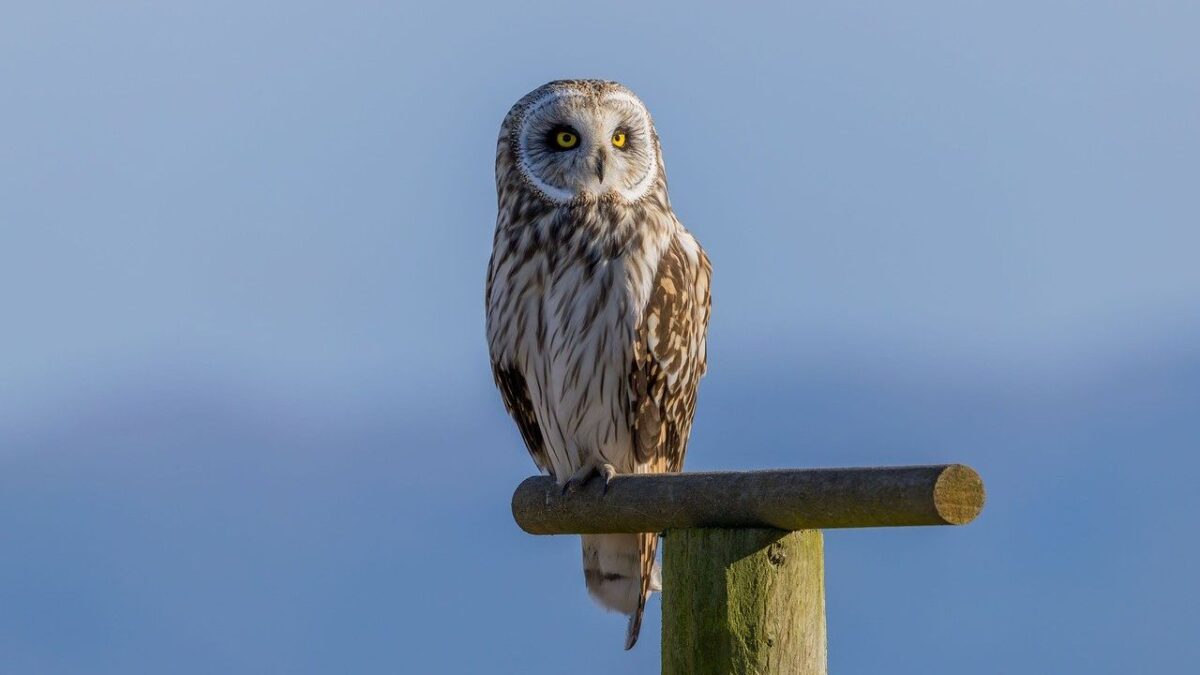
Owls have always carried a certain mystique. Something about those wide, unblinking eyes and silent flight makes them feel almost mythical. So when scientists start uncovering surprising truths about how they live and die, it grabs attention in a way that few wildlife stories do.
The short-eared owl, in particular, has become an unexpected subject of fascination among researchers. These birds are quietly rewriting the rulebook on animal survival, and honestly, the findings are more surprising than most people would expect. Let’s dive in.
A Species That Refuses to Follow the Rules

Here’s the thing about short-eared owls – they were never supposed to be this interesting from a survival standpoint. For years, researchers assumed these medium-sized raptors lived relatively brief lives, typical of many birds their size. The general assumption in ecology is that smaller animals tend to live fast and die young, almost like a biological trade-off baked into their DNA.
Recent research has completely flipped that assumption on its head. Short-eared owls are demonstrating unexpectedly high survival rates, particularly among adults, which is raising serious questions about what scientists thought they understood about lifespan patterns in wild birds. It’s one of those discoveries that makes you step back and think: how much else have we been getting wrong?
What the Research Actually Found

The study, covered by Phys.org, draws on long-term banding and tracking data collected across multiple populations of short-eared owls. Researchers carefully analyzed survival rates across different age groups and seasons, building a far more detailed picture than previous efforts had managed. What emerged was a pattern that genuinely surprised the scientific community.
Adult short-eared owls were found to survive at rates that are remarkably high compared to similarly sized bird species. It’s hard to say for sure exactly what mechanisms are responsible, but the data points toward a combination of behavioral adaptability, habitat use, and possibly certain physiological traits that buffer these birds against typical mortality pressures. The numbers don’t lie, and in this case, they’re telling a pretty compelling story.
The Role of Habitat in Keeping These Birds Alive
Short-eared owls are famously flexible in where they choose to live. Unlike many raptor species that are tightly tied to specific forest or woodland environments, these owls thrive in open landscapes: grasslands, marshes, agricultural fields, and coastal areas. That flexibility turns out to be a major survival advantage.
When one habitat becomes unsuitable, whether due to weather shifts, prey crashes, or human disturbance, short-eared owls can move and adapt. Think of it like having multiple backup plans instead of putting all your eggs in one basket. Researchers believe this ecological generalism plays a meaningful role in their higher-than-expected survival outcomes, and it’s a trait that deserves far more credit than it typically receives in the literature.
Juveniles Tell a Very Different Story
While adult survival rates impressed researchers, the picture for juvenile short-eared owls is considerably more sobering. Young birds, in their first year of life, face dramatically steeper odds. This is actually consistent with what ecologists see across many species, where the transition from fledgling to established adult represents the single most dangerous period in an animal’s life.
The gap between juvenile and adult survival in short-eared owls is notable though. Nearly half of young birds may not survive their first year, which creates a stark contrast with the relative longevity adults seem to achieve. It raises an interesting evolutionary question: once a short-eared owl makes it through that brutal first year, does something fundamentally change about how it navigates the world? The evidence strongly suggests the answer is yes.
Prey Availability and Its Complicated Relationship with Lifespan
Short-eared owls are heavily dependent on small mammals, particularly voles, as their primary food source. Vole populations are notoriously cyclical, booming and crashing in patterns that can span several years. This creates a boom-and-bust dynamic for any predator that relies on them, and the short-eared owl is no exception.
What’s fascinating, though, is that despite these dramatic swings in food availability, adult survival rates remain relatively stable. Researchers suspect these owls possess a finely tuned ability to shift hunting behavior, target alternative prey, or migrate to areas with better resources before conditions become critical. That kind of behavioral intelligence is, honestly, more impressive than it might sound. It’s not just instinct. It looks a lot like strategic decision-making.
Conservation Implications That Can’t Be Ignored
Short-eared owls are listed as a species of conservation concern across much of Europe and North America. Their populations have been declining in several regions, linked to loss of open grassland habitat, intensification of agriculture, and reduced prey availability. The new survival data adds important nuance to how conservationists should think about protecting these birds.
If adult survival is the key driver of population stability, then protecting established adult birds and their core habitats becomes an even higher priority than previously understood. Conversely, efforts to boost juvenile survival through habitat improvements during breeding season could have outsized long-term benefits. This research essentially hands conservationists a more precise tool for targeting their efforts, and in a world of limited conservation budgets, that kind of precision matters enormously.
Why This Discovery Matters Beyond Just Owls
Let’s be real: on the surface, a study about owl survival rates might seem like niche academic territory. However, the implications stretch well beyond one species. Understanding why certain animals defy expected lifespan patterns helps ecologists build better models for predicting how wildlife populations respond to environmental change. That has consequences for conservation planning on a much broader scale.
Short-eared owls, in a sense, are acting as an indicator species for how ecological flexibility and behavioral adaptability can translate into genuine survival advantages. If we can understand the mechanisms behind their unexpected resilience, those insights could inform how we think about protecting other vulnerable species facing similar pressures. Science has a wonderful habit of finding the universal lesson hiding inside the very specific one.
A Final Thought on What These Owls Are Teaching Us
There’s something almost philosophical about what the short-eared owl’s story reveals. We build models, set expectations, and assume we understand how the natural world operates. Then a medium-sized owl quietly goes ahead and outlives those assumptions.
I think the bigger takeaway here isn’t just about survival rates or conservation strategy. It’s about intellectual humility. The more closely we look at individual species, the more we realize how much complexity lies beneath patterns we thought were simple. The short-eared owl has been going about its life in open fields and marshes for thousands of years, completely indifferent to our theories about it.
What other species are out there quietly defying what we think we know? That might be worth losing a little sleep over. What do you think – does this change how you see wildlife survival research? Drop your thoughts in the comments.

- Urban Coyotes Show Remarkable Adaptability, Learning to Thrive in City Environments - July 22, 2026
- Beavers Are Nature’s Engineers, Creating Vital Habitats for Other Wildlife Species - July 21, 2026
- The Recovery of the California Condor Offers Hope for Other Critically Endangered Birds - July 21, 2026