

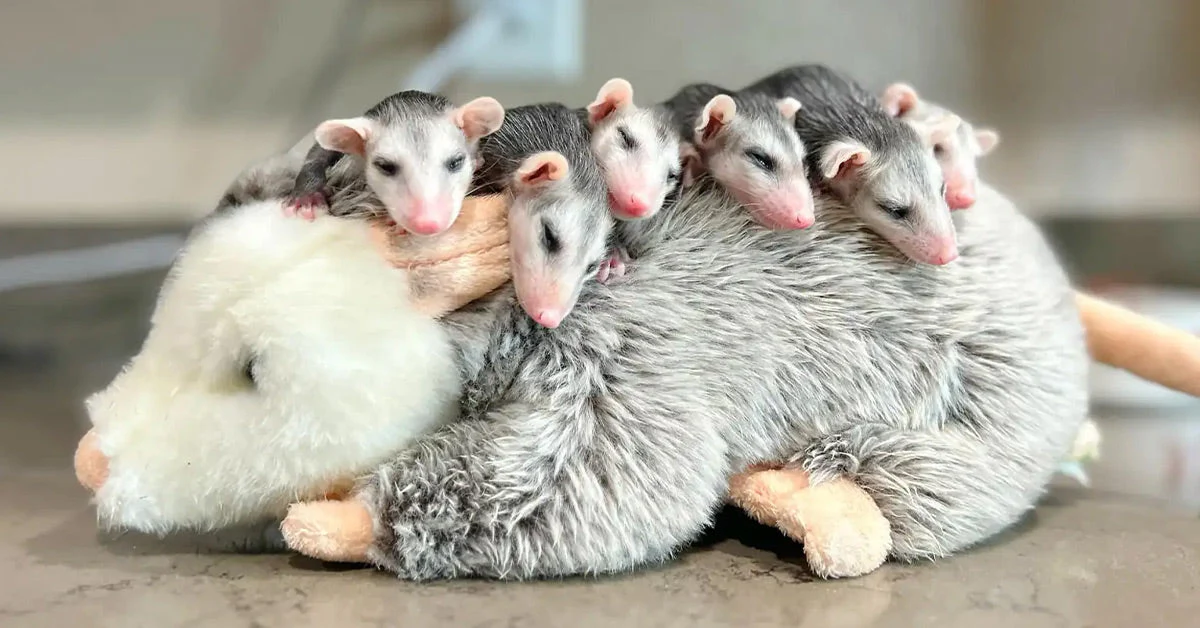
A Heartbreaking Roadside Scene (Image Credits: Facebook)
Rescuers responded to a distressing call about an injured opossum struck by a vehicle, only to discover a litter of helpless babies still attached to their deceased mother. Staff at Newhouse Wildlife Rescue acted swiftly to separate the six joeys and transport them to safety. The young opossums, tiny and vulnerable, now receive specialized care that includes an innovative touch to ease their trauma.[1][2]
A Heartbreaking Roadside Scene
The incident began with a routine report of a vehicle collision involving wildlife. Upon arrival, the team confirmed the adult opossum had sustained fatal injuries. Clustered around her body, six infant joeys gripped tightly, their small paws and tails intertwined in a desperate hold. This instinctive behavior underscored their complete dependence on the mother for warmth and protection.[1]
Rescuers faced an emotional challenge in gently prying each joey free. They wrapped the babies in a soft blanket to form a temporary nest inside a pet carrier. The quick transport to the rescue facility proved crucial, as early separation often spells doom for such young wildlife. Miraculously, evaluations revealed the joeys remained relatively healthy despite the ordeal.[1]
Creative Solution for Emotional Comfort
At the center, staff placed the joeys in a controlled incubator to replicate the stable warmth of a mother’s pouch. To address their need for physical closeness, rescuers introduced a life-size plush opossum as a stand-in parent. The babies responded instantly, piling onto the stuffed toy, burrowing into its faux fur, and napping in a tangled heap of limbs.[1]
Newhouse Wildlife Rescue noted, “It’s not mom, but it will do.” This simple tool not only provided tactile reassurance but also encouraged natural behaviors essential for development. Videos captured the peaceful scene, with tails overlapping and paws anchored to the familiar shape. Such methods highlight the blend of empathy and science in modern rehabilitation.[1][3]
Comprehensive Care Fuels Progress
The joeys follow a precise regimen tailored to their infant stage. Specialized feedings deliver vital nutrients for rapid growth, while the enclosure ensures a secure environment free from stress. Daily monitoring tracks their strength and size, confirming steady improvement over recent weeks.[1]
Rescuers report the litter thrives, piling together on the plush during rest periods. This setup mimics pouch life, fostering instincts like burrowing and group huddling. Though not yet ready for release, each milestone brings them closer to independence in the wild. The organization’s approach prioritizes holistic recovery, from physical health to behavioral readiness.[1]
Insights into Opossum Biology and Rescue Challenges
Infant opossums rely heavily on maternal contact, clinging for survival in their early weeks. Vehicle strikes claim many mothers, leaving litters exposed to cold and predation. Quick public reports enable interventions like this one, turning potential tragedies into success stories.[1]
Newhouse Wildlife Rescue handles numerous such cases annually, emphasizing prevention through driver awareness. Their work validates the impact of dedicated care, with releases serving as the ultimate reward. Supporters enable these efforts, ensuring more wildlife receives a second chance.
- Opossum joeys number up to 13 per litter but face high early mortality.
- They require precise warmth, often via incubators at 85-90°F.
- Plush surrogates reduce stress hormones, aiding growth.
- Release occurs around 4-5 months, when fully furred and foraging-capable.
- Public calls spike in spring, peak birthing season.
The Broader Impact of Wildlife Rehabilitation
Organizations like Newhouse Wildlife Rescue bridge human-wildlife conflicts with compassionate action. They rehabilitate thousands yearly, focusing on native species like opossums, often misunderstood yet vital for ecosystems as scavengers.[2]
Success stories inspire community involvement, from reporting incidents to donations. The joeys’ journey reflects resilience, honoring their mother’s legacy through survival.
Key Takeaways:
- Six joeys survived a fatal car crash thanks to prompt rescue.
- A plush opossum surrogate eased their transition to care.
- They progress toward wild release with expert nurturing.
This tale reminds us of wildlife’s fragility amid urban expansion. Stronger roadsides mean brighter futures for mothers and litters alike. What steps can communities take to protect local opossums? Share your thoughts in the comments.

- Urban Coyotes Show Remarkable Adaptability, Learning to Thrive in City Environments - July 22, 2026
- Beavers Are Nature’s Engineers, Creating Vital Habitats for Other Wildlife Species - July 21, 2026
- The Recovery of the California Condor Offers Hope for Other Critically Endangered Birds - July 21, 2026