

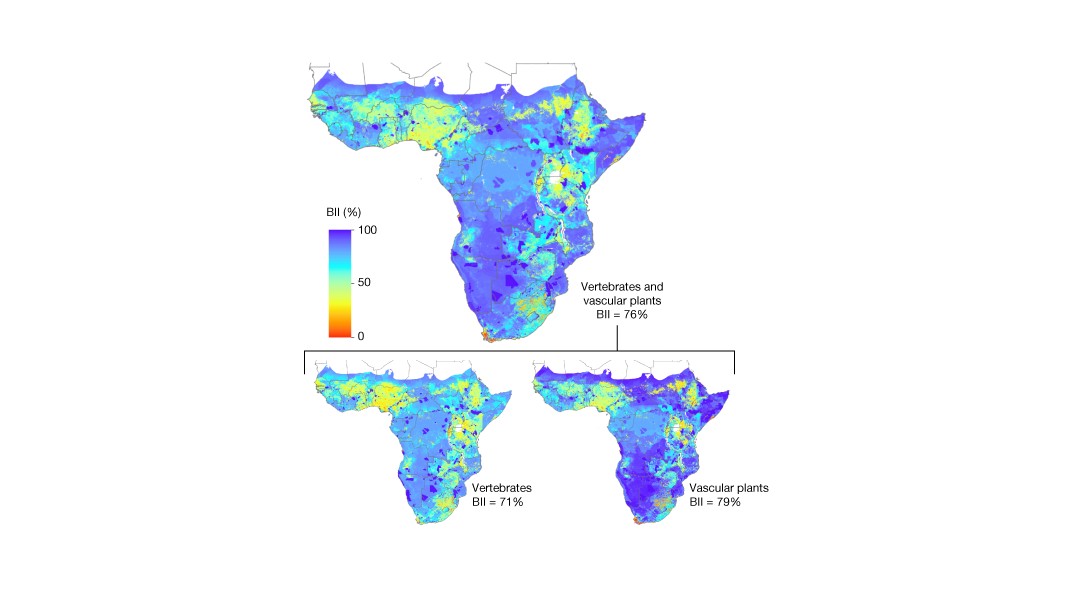

Mapping the Unseen Losses (Image Credits: Images.nature.com)
Sub-Saharan Africa – In a comprehensive new assessment, scientists have quantified a profound erosion of the region’s natural heritage, revealing that biodiversity has diminished by nearly a quarter compared to pre-industrial levels.
Mapping the Unseen Losses
The study, led by African researchers and published in the journal Nature, drew on the expertise of 200 specialists in plants and animals across the continent. These experts provided estimates of local species abundances, offering a nuanced view that traditional data often misses. This method captured variations from vast savannas to dense forests, highlighting how human activities have reshaped ecosystems over centuries.
By integrating place-based knowledge, the assessment created a multi-scale map of biodiversity intactness. It showed that, on average, populations of diverse species have fallen sharply since the pre-industrial era. Such declines threaten the stability of habitats that support millions of livelihoods and global ecological balance.
Drivers Behind the Decline
Land transformation emerged as a primary culprit, particularly the conversion of natural areas into croplands. In grasslands and Mediterranean-type ecosystems like fynbos, agriculture has fragmented habitats and reduced species diversity. Forests suffered from non-agricultural degradation, such as logging and fuelwood collection, which weakened their resilience.
Savannas faced a dual assault from farming expansion and other pressures, accelerating the loss of iconic wildlife. The report emphasized that these changes intensified over the past century, driven by population growth and economic demands. Without intervention, these trends could push vulnerable species toward extinction, altering the continent’s ecological footprint permanently.
Regional Variations and Hotspots
Countries like Rwanda and Nigeria registered the steepest drops in biodiversity intactness, where intense land use has overtaken natural landscapes. In contrast, some remote areas retained higher levels of species abundance, serving as potential refuges. The assessment pinpointed biomes where losses were most acute, urging targeted conservation efforts.
Grasslands lost ground to agriculture, while savannas balanced between cultivation and degradation. Forests and fynbos ecosystems revealed patterns tied to specific human impacts. This granular data equips policymakers with tools to prioritize actions in the most affected zones.
Implications for Policy and Conservation
The findings underscore the need for context-specific strategies to halt further erosion. National governments can use the multi-scale maps to align conservation with development goals, protecting key habitats amid rising pressures. Regional cooperation could amplify efforts, drawing on the study’s emphasis on local expertise.
Global implications extend beyond Africa, as the region’s biodiversity influences climate regulation and food security worldwide. The assessment calls for integrating these insights into international agreements, fostering sustainable practices that preserve species abundance.
- African-led research highlights the value of local knowledge in biodiversity monitoring.
- 24% average loss signals an urgent call for habitat restoration initiatives.
- Targeted policies in high-risk biomes could reverse declines in savannas and forests.
- Collaboration across borders remains essential for long-term ecological health.
- Early action now prevents irreversible tipping points in ecosystem stability.
Key Takeaways
- Sub-Saharan Africa has experienced a 24% biodiversity decline since pre-industrial times, driven mainly by land use changes.
- Place-based assessments by 200 experts provide a blueprint for policy at local, national, and global levels.
- Addressing agriculture and degradation in vulnerable biomes offers a path to recovery.
As Sub-Saharan Africa’s natural wealth hangs in the balance, this study serves as a wake-up call for collective action to safeguard its irreplaceable ecosystems. What steps do you believe are most critical for reversing this trend? Share your thoughts in the comments.

- Scientists Investigate Why Some Bearded Dragons Grow to Record Sizes - June 24, 2026
- What Research Reveals About a Cat’s So Called Sixth Sense - June 23, 2026
- 5 Essential Training Tricks to Quiet a Barking Dog - June 22, 2026